
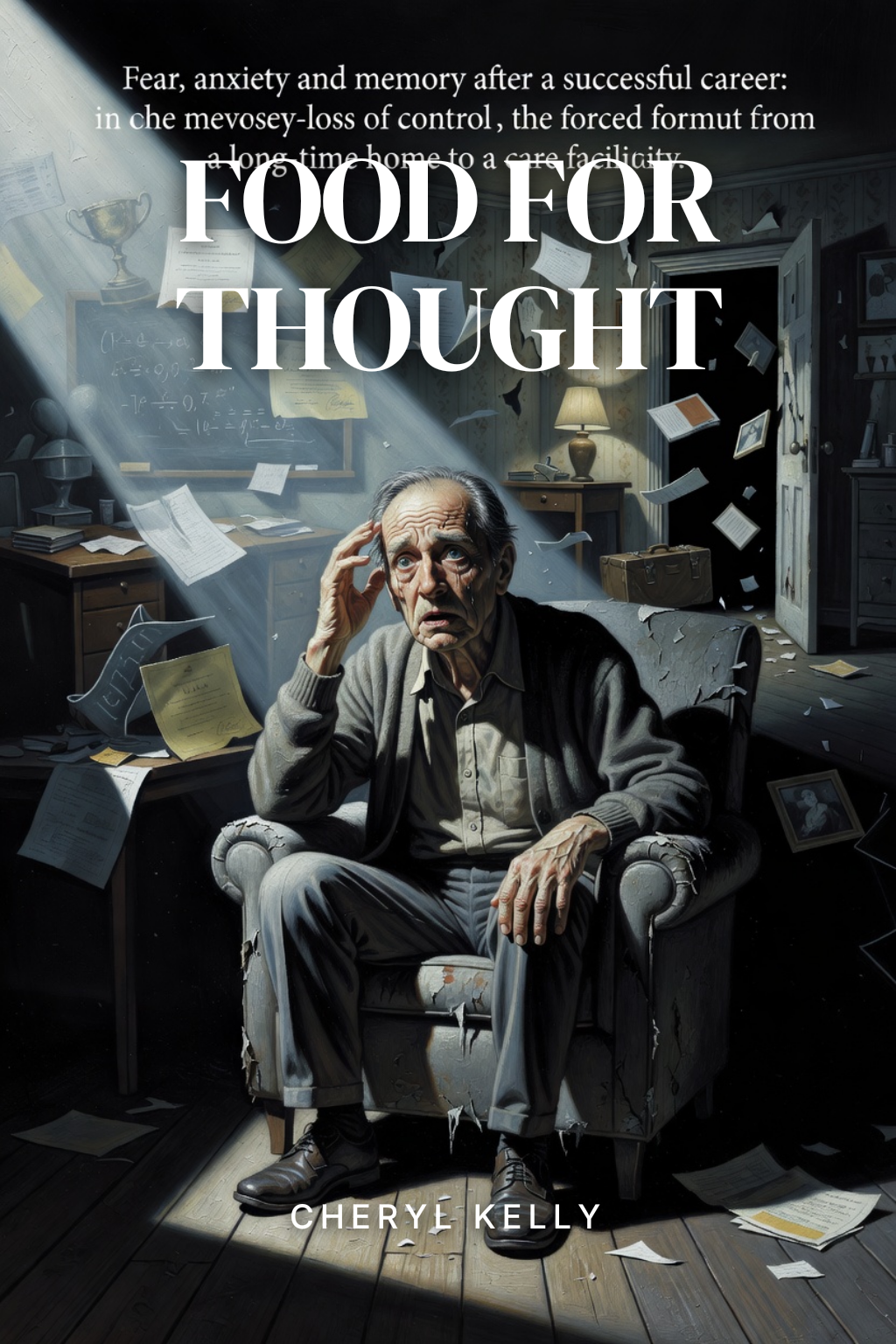
Book · 1 chapters · 859 words
FOOD FOR THOUGHT
Chapter 1
The List on the Fridge
I began to mistrust my own mind over a jar of mustard.
It was on the middle shelf of the refrigerator, behind the milk, exactly where I had left it the night before. I knew that because I had put the milk in front of it on purpose, to remind myself to buy more. Yet when I opened the door for lunch and saw the yellow lid, I felt the hard, clean shock of finding something that did not belong to me. For a moment I stood there with the cold spilling onto my bare feet, staring at the jar as if it had been planted by a stranger. I remember thinking, very clearly: who has been in my house?
That thought would have been absurd a year earlier. I had spent four decades in offices where people brought me problems with teeth in them—contracts gone wrong, staff in tears, budgets split open on the table—and I was good at seeing what was real and what only felt real. I trusted my judgment. I trusted the part of me that sorted signal from noise. You build a life on a thing like that and barely notice you are doing it. Then one day you find yourself holding a spoon in one hand, the refrigerator door open, and you are no longer sure whether the danger is outside the house or inside your skull.
I did what sensible people do when something small goes wrong. I made lists.
The first one lived on the fridge under a plum magnet from a museum shop. Milk. Bread. Tablets. Lock back door. Turn off hob. My handwriting, once sharp enough to cut paper, grew large and childish because if I wrote too fast I could not read it back. At first the list felt like a tool. Then it became a witness. I would stand in the kitchen with the pen uncapped, trying to catch hold of whatever had just slipped past me. Why had I come in here? What had I meant to write down? The room held its breath. The clock above the sink ticked with rude confidence.
People talk about memory loss as though it is mostly forgetting names. That happens, yes, and it is ugly in its own way. A neighbor you have known for twelve years appears at the gate with his spaniel and his careful smile, and his name is gone, though the dog’s is sitting there plain as a label. But what frightened me first was not losing the past. It was losing the next ten seconds. I would lift the kettle, fill it, set it down, and then have no confidence in whether I had done it at all. The mind does not merely misplace facts. It begins to fray at the point where intention becomes action.
I hid this for longer than I should have.
Pride is part of it. So is practice. If you have spent your working life sounding certain, you can go on sounding certain long after certainty has packed up and left. When my daughter asked whether I had paid the electricity bill, I laughed and told her I was old, not helpless. I said it lightly. We both pretended that settled something. Later I found the bill in the bread bin, folded into quarters, butter on one corner.
The day they said “care home,” I heard only the second word.
Care. Such a clean little word. It arrives with cardigans and leaflets and voices pitched just a touch too gently. It sits across from you at the dining table you chose thirty years ago and explains that support will help you stay safe. Safe from the gas ring. Safe from the stairs. Safe from wandering. Wandering, as if I were a shopping trolley rolling loose in a car park. My daughter cried while she talked. My son looked at his hands. The social worker placed a folder on the table and squared it with the edge as though neatness might make the thing humane.
I said no.
I said it at once, with the old authority, and for one bright second I heard myself as I had been: decisive, difficult to move. This is my house. Those were my words. My cup with the chip on the rim was in the draining rack. My coat hung behind the pantry door. The fig tree I had planted when the children were small pressed its leaves to the window. A life is not an address you can forward.
Then the social worker opened the folder.
Inside was a sheet with dates, times, and notes in clipped handwriting. Front door found open at 2:10 a.m. Pan left burning. Missed medication. Distressed, accused daughter of theft. There it was, my life translated into incidents, each one small enough to dismiss alone, all of them together forming a case against me. I reached for the paper to read it more closely and stopped, because halfway down the page was an entry I could not argue with, could not explain, and could not remember at all.
The police had brought me home three nights earlier.
Write your own novel.
ScribistIQ generates full-length novels in minutes. Type your premise, walk away, come back to a finished book.
Try ScribistIQ