
Novel · 8 chapters · 37,599 words
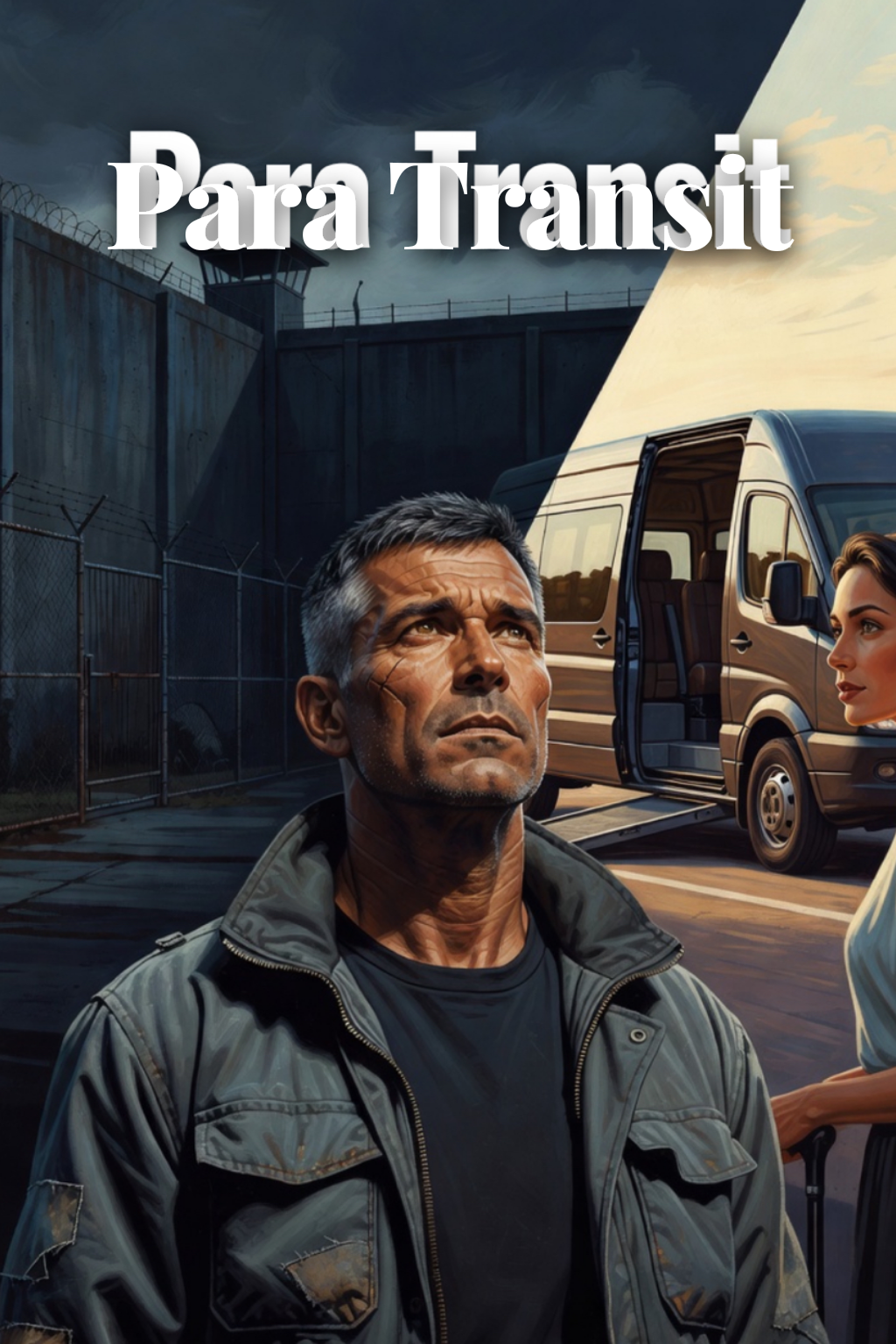
Para Transit
Contents8 chapters
Chapter 1
The Last Run to Red Mesa
The left rear tire gave one hard slap against a washboard ridge, and the duffel at Mateo Varela’s boots shifted enough to thump the metal seat frame.
He looked down once, not because he doubted what was in the bag, but because weight had its own language. Bricks wrapped in brown tape. Forty kilos in the Suburban with him, another hundred and sixty split between the two pickups ahead and the box truck behind. Not the biggest run he had ever put on the road. Big enough to bring helicopters if somebody got proud.
“Ease up on the rut,” he said.
Nico, behind the wheel, tightened both hands and did not answer. The dashboard lights painted his knuckles a sick green. He was twenty-six, broad across the chest, moustache trimmed too carefully for a man who claimed not to care how he looked. Sweat had darkened the collar of his denim shirt. He drove like a man taking a priest to a grave.
The convoy crawled between black volcanic outcrops and low greasewood, the desert spread flat and hard under a moon sharp enough to cut on. Twenty miles west of Red Mesa, no pavement, no ranch lights, nothing but old mining tracks and the occasional rusted cattle gate leaning drunk on a hinge. Mateo preferred this road because nobody sane used it at night.
He had men in three vehicles and two riders on dirt bikes running the flanks a half mile out. Radio discipline, staggered intervals, no headlights unless told. They had done the crossing from the state line clean. The border leg had belonged to other people. This stretch belonged to him.
His phone buzzed once in the cupholder, a private line with no name on the screen.
He picked it up. “Talk.”
Aurelio Cordero did not waste breath on greetings. “You’re forty-three minutes behind.”
“We changed route at mile marker twelve.”
“I know your route.”
Mateo looked through the windshield at the dark backs of the two pickups. “Then you know why I changed it.”
A small silence. On the other end he could hear music, brass horns muffled as if from another room, and the dry click of a lighter wheel.
“You smell ghosts every time a dog barks,” Aurelio said.
“That dog was a state trooper sitting in an unmarked F-150 two exits north of where he should’ve been.”
“So you adjusted. Good. Then why are you still behind?”
There it was. Not anger. Audit.
Mateo let the silence sit long enough to say he had heard the tone and would not bow to it. “We’ll reach the handoff.”
“You have something of mine in those trucks. Tonight I prefer certainty over instinct.”
“Then you put the right man on it.”
Aurelio exhaled smoke. Mateo had known him twelve years, long enough to hear moods in a breath. “Don’t make me regret that.”
The line went dead.
Nico flicked his eyes over. “Boss?”
“Drive.”
The radio on Mateo’s belt hissed. Then a voice, low and urgent. “West rider to lead. Fresh tracks crossing ours. Two sets. New.”
Mateo clicked the transmit button. “How new?”
“Sharp edges. Maybe twenty minutes.”
“Direction?”
“North to south.”
South meant toward the county road. Or away from it. He pictured the terrain from memory—the dry arroyo that split near the old gypsum pit, the ridge line where a spotter could watch the whole basin. He had run enough loads through enough empty country to know that emptiness was never empty. It only hid men better.
“Hold your distance,” he said. “Don’t chase sign. East rider?”
A crackle. “Nothing this side.”
The lead pickup’s brake lights flashed once, then went dark. A question. Mateo leaned forward between the seats and watched the truck nose left around a stand of mesquite.
“Nico, kill the dash lights.”
The cab sank into darkness except for the radio display, a dim red smear.
“You think it’s them?” Nico asked.
“I think I don’t know who them is yet.”
That was the truth of his work, and maybe the only honest thing in it. People liked stories with fixed enemies. Cops on one side, cartel on the other, as if everybody wore uniforms. But most blood came from confusion, debt, somebody trying to become indispensable before sunrise.
The radio snapped alive again, louder this time. “Lead to Mateo. We got glare.”
“Where?”
“Ridge east. Brief.”
A scope? Binoculars? Windshield catching moonlight? Mateo reached under his jacket and loosened the pistol at the small of his back. He carried a compact Glock for ease, a heavier Sig in the bag by his boots, and a short shotgun in the rear cargo under a horse blanket. He believed in options.
“How many flashes?”
“One.”
Mateo looked at the terrain. The track narrowed ahead before dropping into the wash. If someone wanted to box them, that was the place. Lead truck committed first, second stalled behind it, box truck trapped at the rear—a line of animals at a slaughter chute.
He keyed the radio. “All units halt. Engines idle only. No doors.”
Nico glanced over. “Here?”
“Here.”
The convoy stopped. Diesel rumble settled into the desert and made it seem even quieter beyond. Mateo cracked his window two inches. Cold air came in carrying creosote and hot engine metal.
He listened.
A coyote barked somewhere far off. Gravel clicked under cooling tires. Then nothing. No helicopter rotors. No distant siren doppler. No voices bouncing in the dark.
“Could’ve been a rabbit in glass,” Nico said, already wanting movement because stillness made boys confess things with their breathing.
Mateo watched the ridge. “Maybe.”
He brought up the secure app on his phone and opened the route thread. Three men had final coordinates for the handoff yard on the outskirts of Red Mesa: Mateo, his dispatcher in town, and Tomas Aguilar, who ran warehouse side and had begged to ride tonight like old times. Mateo had refused him. Tomas had sounded wounded by that, too theatrical to be real. A man insulted by caution was a man taking inventory.
Mateo scrolled up. The updated turnoff he’d sent ninety minutes ago had been read by Tomas twelve seconds after delivery. Too fast for a man supposedly supervising a load crew in another county. Waiting by the phone, then.
He locked the screen.
“Lead truck,” he said into the radio, “back up thirty yards and cut left to the wash. We’re not taking the narrows.”
The answer came after half a beat too long. “That wash won’t hold the box.”
“It’ll hold if you keep your speed and pray to the axle gods.”
Another pause. “Copy.”
The lead pickup reversed, engine growling. The second truck followed. Nico started to release the brake.
“Wait.”
Mateo held up a hand. He was watching the ridge line, the notch between two basalt humps. Moon on stone. Shadow. Shadow. Then the tiniest wink again—this time lower, where no moon should have hit anything.
“Go,” Mateo said.
Nico dropped the Suburban into gear.
The first shot took the lead pickup’s rear window in a burst of white sugar. Then the ridge opened with muzzle flashes, three positions at least, and the whole basin cracked apart.
“Down!” Mateo shouted.
Nico hunched over the wheel as the windshield starred near the passenger side. The lead truck fishtailed off the track and punched into the wash. Men on the ridge were firing too high at first, expecting them to keep driving straight into the kill lane. Mateo grabbed the radio.
“Ridge east, three guns minimum. Box, smoke if you got it. Riders push north and mark flanks. Don’t crest, don’t crest.”
The box truck driver, a nervous cousin from Deming who had never seen real gunfire, answered with a strangled “Copy” that broke on the second syllable.
Rounds hammered the hardpan around them, chips of stone ticking the undercarriage. Nico fought the wheel as the Suburban dropped into the wash after the lead pickup, suspension slamming hard enough to bite Mateo’s spine.
Ahead, the second pickup had stopped at an angle. Its passenger door hung open. Somebody was out in the dirt.
“Keep going,” Mateo said.
“There’s Chuy—”
“Keep going.”
Nico drove past the stranded truck. Mateo twisted in his seat and saw Chuy dragging himself by one arm, legs dead behind him, trying to get under the frame as rounds stitched the wash bank. The box truck came last, wide and lumbering, diesel coughing gray smoke from canisters the driver had dumped too late and too close. The wash filled with a chemical haze that smelled like spent fireworks.
“Stop here.”
Nico braked behind the lead pickup, which had found a shelf of harder ground under the bank. The wash bent west in a shallow S, giving them dirt walls chest-high on both sides. Temporary cover. Temporary had saved more men than courage ever had.
Mateo was out the door before the truck fully settled. Cold grit hit his face. He yanked the shotgun from the rear cargo, racked it once, and ran bent low toward the lead truck where Vargas and little Emiliano were returning fire uphill with pistols they were wasting.
“Long guns,” Mateo snapped.
Vargas shoved an AK up from the floorboard with one hand. Blood ran down his left forearm. Not his, Mateo guessed; too bright, no limp.
On the bank behind them the smoke thinned. He got his first good look at the ridge positions—dark outlines among rock teeth, disciplined spacing, not local thieves taking a chance. Somebody had known where to set up and where his convoy would have to bunch. Somebody had known.
The riders’ dirt bikes whined faintly to the north, moving wide. Good. If they lived.
“Chuy’s out there,” Emiliano said. His voice had gone high, nearly a child’s, though he was twenty-nine with two daughters and a tattoo of Saint Jude over his heart.
Mateo looked back down the wash. Chuy had stopped moving. The second pickup gave him partial cover, nothing more. A bullet struck the door and folded metal inward with a drumlike boom.
“We pull him now, we lose two more,” Mateo said.
Emiliano started to rise anyway.
Mateo caught the back of his vest and slammed him into the truck side. “Look at me.”
Emiliano did.
“You want to die brave or help me get everybody else home?”
That hit. Emiliano swallowed and nodded once.
Mateo keyed the radio. “Box, where are my smoke rounds?”
The cousin answered through panting. “Under the seat— jammed—”
Mateo cut him off. “Vargas, with me.”
They sprinted low along the wash to the box truck. Rounds chased them, kicking dirt off the lip above. The driver had curled under the steering wheel, forearms over his head, his face gone pale as limestone dust. Mateo reached in, hauled him by the collar halfway out, and shoved him toward the rear tires.
“Breathe later.”
He found the launcher case under the bench, cracked it open, and cursed. One tube. Three rounds.
“Good enough.”
Vargas peered over the hood. “That’s not federales.”
“No?”
“No lights, no announcements. They’d want the load.”
Mateo slid a round into the launcher. “Maybe.”
What he didn’t say: federales did not always care if the merchandise burned, provided the headlines were clean. But Vargas had given voice to what was needling him anyway. The firing cadence was wrong for panicked deputies and too controlled for ranch boys. Whoever was up there had trained together.
He braced the launcher on the truck mirror and fired into the saddle below the ridge. The round thumped out, arced, and burst in a billowing white cloud.
“Second gun, twenty feet left,” Vargas said.
Mateo adjusted and fired again. Another smoke bloom. The ridge flashes vanished behind white churn.
“Now,” Mateo said. “Emiliano, move for Chuy. Nico, cover. Everybody else put rounds on the ridge and make them hug dirt.”
The wash erupted with answering fire from his men, wild but dense. Mateo vaulted forward with Emiliano at his shoulder. They reached the second pickup in six pounding strides. Chuy was alive, eyes huge, one hand pressed to the hole under his ribs. Blood had soaked the front of his quilted vest black.
“Lift him,” Mateo said.
Chuy tried to speak and coughed red over his chin.
“Save it.”
Emiliano got under the arms. Mateo took the belt and back of the jeans. They dragged him in a stagger run while bullets snapped somewhere in the smoke behind them. Halfway back, Chuy cried out once, not from the wound but from the ground jarring him. Good. That meant there was still enough of him left to hurt.
They dumped him behind the lead pickup. Vargas had torn open a med pouch with his teeth. Nico was on the bank firing controlled pairs now, fear sharpened into competence.
Mateo took the radio again. “Riders?”
Static. Then the east rider, breathless. “I got one moving off the ridge in a side-by-side. Dark green. Heading north.”
Not federales, then. Or not only them.
“Can you take him?”
“Too far.”
“Track but do not chase beyond county road.”
A second voice cut in, west rider this time. “More lights south. Coming fast. Blue-and-red hidden till now. Three, maybe four units.”
There it was.
The federal move had waited behind the ambush. Let the convoy bunch, let unknown shooters break them open, then sweep the survivors and claim victory. Or perhaps the unknown shooters were theirs, and the lights only the public face. Mateo had lived too long in that overlap to care which version sounded cleaner.
He looked up the wash. To the south, beyond the bend, rotating color flashed against the bank walls in quick silent pulses. Too close already.
“Nico,” he said, “get the Suburban turned.”
“We’re boxed.”
“Not south. North bank. There’s a cattle cut in two hundred yards if the rains didn’t eat it.”
Nico stared at him. “The box truck won’t make that.”
Mateo took in the inventory all at once: Chuy bleeding out; one driver half useless with panic; smoke thinning; federales approaching from the south; shooters breaking off to the north; one truck disabled. The old arithmetic. What can be moved, what can be denied, what can be left without saying the word left.
He made the decision before anyone asked him to. “Burn the box.”
Silence, except for gunfire and the cough of idling engines.
Vargas looked at him once to be sure he had heard right. The box held fifty kilos in wall cavities and another twenty in tool chests welded into the floor. Enough money to buy ranches. Enough evidence to bury half the county if it came out with names.
“Do it now,” Mateo said.
The cousin driver shook his head violently. “No, no, no— Aurelio—”
Mateo stepped close until they were almost touching foreheads. “If they take it intact, Aurelio won’t be what kills you.”
The man froze.
“Diesel and tracer,” Mateo said.
Vargas moved. He and Emiliano splashed fuel from reserve cans under the truck and over the rear tires while Nico spun the Suburban in a grinding three-point turn inside the wash. Chuy moaned through clenched teeth. The police lights grew brighter, strobing blue over the smoke and making everybody’s faces look drowned.
Then a loudspeaker barked from beyond the bend.
“Federal agents! Shut off your engines! Exit the vehicles with your hands visible!”
The amplified voice rolled along the wash and came back warped. Another command followed in English, then Spanish.
Nobody moved toward surrender. Men looked at Mateo.
The thing about command was not the gun or the money. It was that other men wanted you to turn uncertainty into one clean sentence.
He took the Sig from the duffel, checked the chamber, and said, “We break north.”
Vargas touched off a tracer into the diesel slick. Flame ran under the box truck with a hungry orange whoosh. Heat punched outward. Black smoke climbed.
The loudspeaker voice sharpened. “Do not move! You are surrounded!”
Mateo almost laughed. Nobody who had truly surrounded him would announce it twice.
“Go!”
Nico drove first, the Suburban clawing over the north lip of the wash. Dirt spat from the tires. The lead pickup followed, scraping hard enough to throw sparks from the rear bumper. Behind them the box truck became a torch, flames licking through the cab. Agents started firing from the south end of the wash—not warning shots now but aimed rounds, chewing at the vehicles as they climbed.
Mateo leaned out the passenger window and fired three times toward a dark SUV with hidden strobes, not expecting a hit, only heads down. The desert opened ahead into a scatter of cholla and low limestone shelves. No road. Better.
For ten seconds it worked.
Then the Suburban’s front left tire exploded.
Nico wrestled the wheel. The vehicle slewed sideways, plowed through a creosote bush, and slammed to a stop against a rise of caliche. Mateo’s shoulder struck the door so hard his teeth clacked. Airbags did not deploy; too much money had gone elsewhere in the life of this truck.
“Out,” he said, already shoving his door open.
The lead pickup veered around them and kept going north, one taillight blown out, Chuy in the back seat bleeding onto canvas. For a second Mateo saw Vargas looking back through the shattered rear glass, waiting for a signal.
Mateo chopped his hand forward.
Leave.
The pickup disappeared into the dark.
Nico stumbled out on the driver’s side with his pistol drawn and no plan attached to it. Red and blue strobes bounced over the desert behind them now. He could have run, maybe even made fifty yards before floodlights pinned him.
Mateo grabbed his sleeve. “Drop the gun.”
Nico’s face had gone strange, emptied by shock. “What?”
“Drop it.”
“We can still—”
“Drop the gun.”
There are orders men obey because they respect you, and orders they obey because something in your voice tells them the argument has already happened somewhere else and they lost it there. Nico let the pistol fall into the dust.
Mateo set his own Sig on the hood, careful, visible. He raised his hands.
Engines roared closer. Doors slammed. Federal agents fanned out behind open vehicle doors and scrub brush, rifles up, beams cutting white tunnels through dust and smoke.
“On your knees!”
Mateo did not move fast enough for the nearest agent, who closed the distance and drove him down by the shoulder blades. Gravel bit through his slacks. A boot kicked his ankles wider. Zip cuffs ratcheted around his wrists with a hard plastic chatter he would hear later in dreams he did not yet know he’d have.
Nico was crying. Not loud. Just a wet, furious sound behind clenched teeth as agents forced him flat.
Mateo kept his face turned to the side and watched the wash burn. The box truck threw sparks into the dark like a forge. The loudspeaker had gone silent now. Real work made speeches unnecessary.
An agent with sergeant stripes crouched in front of him and lifted Mateo’s chin with two fingers in a gesture almost intimate.
“Mateo Varela.”
Mateo said nothing.
The man smiled without warmth. Forty-five, maybe, compact build, shaved head under a ball cap with no agency insignia showing. Practical. His vest carried a radio, spare magazines, flex cuffs, and a strip of duct tape looped on a carabiner. The details of competent men always caught Mateo’s eye.
“Took a while,” the agent said.
“You should’ve come with a warrant,” Mateo said.
That earned him a brief laugh from someone standing nearby.
The sergeant’s smile did not change. “You’ve got a murder scene back there, narcotics in quantity, conspiracy, firearms, flight. I can sort paper in the morning.”
“Then this wasn’t a traffic stop.”
The man studied him for a beat. “Funny. I heard you were smarter than this.”
Mateo looked past him toward the southern approach where the federal vehicles had come in. Four SUVs, one armored rescue truck staged farther back, no county units in sight yet. Tight formation. Preplanned. On the ridge to the east, he could still make out movement—one of the shooters being brought downslope by agents? Or agents retrieving their own? Hard to tell through smoke and distance.
He followed the chain backward. Ambush in the narrows timed to his original route. Federal sweep delayed until his convoy committed. One escape line left open to the north just wide enough to break the formation, scatter the load, flush leaders from vehicles. Somebody had not wanted simple seizure. Somebody had wanted confusion, casualties, and one man alive in cuffs.
He looked at the agent again. “Who sold tonight?”
The sergeant rose. “Everybody asks that when they lose.”
Mateo let the insult pass. Loss had a texture too. Usually hot. Usually immediate. This was colder. It had been building for days and had shown its face only now.
From the line of agents near the wash, one called out, “Vehicle fire is through the cab! We got secondary pops!”
Ammunition cooking off in the truck. Harmless enough if you knew the sound. Agents shifted position anyway.
Another agent jogged up holding a phone in a gloved hand. Not Mateo’s. One recovered from the Suburban, maybe. “Sir, there’s an incoming on this secure app. Name says Tomas.”
Mateo went very still.
The sergeant took the phone, glanced at the screen, then tipped it so Mateo could see.
TOMAS AGUILAR: You through the narrows yet?
The message sat there under the hard white glare of the display. Not concern. Verification. A man checking whether the trap had sprung where it should.
Memory rearranged itself at speed. Tomas pushing to ride along. Tomas reading the reroute instantly. Tomas asking twice that afternoon whether Mateo intended to use the wash road or the gypsum cut, asking casual, asking as if talking shop. Tomas and Aurelio speaking more often lately without copying him. Tomas smiling too much when a man from Sonora had visited the warehouse last week and stayed only seven minutes.
It was almost disappointing how ordinary betrayal looked when it finally stepped into light. A line of text. No poetry in it.
The sergeant watched his face. “That mean something?”
Mateo met his eyes and gave him nothing.
The agent with the phone said, “Another one coming in.”
The sergeant read the new message aloud.
Answer me.
This time there was a photo attached. Grainy, snapped inside some vehicle. Mateo recognized the dash of the lead pickup and Vargas’s hand on the wheel. Timestamped twenty-two minutes earlier.
Not Tomas alone, then. A second leak inside the convoy or a tracker placed before departure. Layers. Whoever had arranged tonight had not believed in one door when three could be left open.
The sergeant crouched again, closer than before. “Here’s how this goes. You can keep playing stone and let your friends decide what part of this story belongs to you. Or you can start early.”
Mateo looked beyond him to the north, where the pickup had vanished. If Vargas kept his nerve, some of the load would make it. If Chuy lived long enough for a surgeon with no questions, maybe one of his men would see daylight again. If Aurelio had signed off on Tomas’s play, then surviving federal custody might become the harder task.
“You think I was in charge tonight,” Mateo said.
The sergeant’s expression flattened. “Weren’t you?”
Mateo let the answer hang. Men in the business sometimes lied to protect themselves. Sometimes they lied because the truth, if spoken aloud, would force a war before breakfast. He had not yet decided which use he still had.
The agent’s radio crackled. “We got one DOA at the wash. One critical. Possible additional blood trail heading north.”
“Secure it,” the sergeant said without looking away from Mateo.
A county deputy’s cruiser finally bounced into view at the far end of the basin, too late and too lit, lightbar spraying color over stone and brush. A spectator after the fifth round. Mateo almost pitied him.
The sergeant stood. “Put him in the second truck.”
They hauled Mateo upright. His knees protested when he straightened. Dust had pasted to the blood on his sleeve; he hadn’t felt where the graze hit him until now. Nico was being walked separately, head bowed, hands trussed behind him. He looked once at Mateo with the bewildered accusation of a man discovering hierarchy at the wrong moment. Mateo gave him no comfort. Comfort could become testimony.
At the open rear door of the SUV, Mateo paused. Beyond the wash the ridge loomed black again, mute and clean under the moon, giving back nothing. He could almost place the shooters in his mind, where they’d lain, where they’d broken contact, which route the side-by-side had taken north. Almost.
Then he saw one more thing.
Down by the burning box truck, half-hidden by agents and smoke, a man in a warehouse jacket stood with his hands on his head while two officers searched him. Short, thick in the middle, hair silver at the temples.
Tomas.
Even at this distance Mateo knew the jacket: navy canvas, missing one cuff button, company patch sewn on crooked by Tomas’s ex-wife years ago and never fixed because Tomas called that sort of damage lucky.
Tomas turned his head as if he felt the look on him. Their eyes met across the dark, across the fire, across the ruined geometry of the night.
Tomas gave the smallest movement of one shoulder. Not a shrug. Not apology. More like a man acknowledging a bill had come due and had been delivered to the wrong address.
An agent shoved Mateo’s head down into the SUV. He caught the edge of the door frame hard above one eyebrow, bright pain blooming white for a second. Then he was on the vinyl bench with his cuffed hands digging into his lower back, the door slammed, and the burning truck vanished behind tinted glass.
The phone in the sergeant’s hand buzzed again outside.
Mateo could not see the screen now. He did not need to. He knew there would be another message from Tomas, or from Aurelio, or from somebody higher and colder than both, trying to learn what had survived the wash and what had been captured with him.
The SUV rocked as the driver climbed in. Radios crackled. Engines turned over. Through the smoked window, the desert strobes smeared into strips of blue and red.
Then, muffled but unmistakable, the sergeant said to someone just outside, “No, don’t log that one yet. I want to know who he calls first.”
The vehicle pulled forward, and Mateo, hands bound behind him, lowered his head and began counting the men he had left alive, then the ones who would now come hunting through the bars.
Chapter 2
Concrete Vows
The first time they tried to kill Mateo at Blackridge, it came folded inside a bar of soap.
He was in Receiving, barefoot on a painted footprint, while a correctional officer with a neck like a fire hydrant read his number off a clipboard without looking at his face. The room smelled of bleach, wet canvas, and the sweet-metal stink of forty men stripped down to what they could not hide. Plastic bins scraped along stainless counters. Somewhere behind the cinderblock wall, somebody kept coughing the same hard cough, then spitting.
“Hands out.”
Mateo held out his hands. State-issue: two gray uniforms, one blanket thin as paper money, one toothbrush soft enough to insult a dog, one soap bar wrapped in wax paper, one roll of toilet paper compressed like feed. The officer shoved the bin toward him.
“Move.”
They moved them in a line through showers that sprayed too hot, then too cold, then not at all. Through delousing. Through a corridor where old paint had bubbled and peeled around the vents. A mural near Classification showed mountains and pine trees nobody here would touch. Men read it as they passed anyway.
His temporary cell was on F-tier, top range, beside a man with a scalp map of old knife work and a voice like dry leaves. Mateo set his bin on the bunk, unwrapped the soap, and felt the difference before he saw it. The bar flexed wrong. Too light at one end.
He pinched the seam with his thumbnail and peeled it open. A sliver of hacksaw blade, wrapped in a strip of surgical tape, slid into his palm.
Footsteps went by outside. Laughter from the next cell. The flush-valve groan of a toilet.
The old-voiced man next door said, not turning from his bunk, “You got welcomed quick.”
Mateo rewrapped the blade in the soap and sat on the edge of the mattress.
A hacksaw blade was useful for two things in prison: cutting what kept you in, and opening what kept blood inside. The first was theater. The second was business.
An officer hit the bars with his baton. “Stand for count.”
Mateo stood. He kept the soap in his hand, hidden against his thigh, while the officer’s eyes slid over him and moved on.
When the tier settled again, he leaned to the bars. “Who sent it?”
The man next door turned his head a little, enough to show one eye. Pale brown, patient.
“You still think that matters.”
Mateo waited.
The man scratched at his jaw. “Some gifts are for use. Some are to see if you’ll use them.”
“What’s your name?”
“Raines.”
“You asking or telling?”
Raines almost smiled. “Telling you I hear things before they get to your door. Keep that toy, they’ll say you’re ready to work. Turn it in, they’ll say you’re scared. Throw it away, they’ll make a different plan.”
Mateo looked down at the cheap white bar in his hand. The wax paper crackled under his thumb.
“What would you do?”
Raines lay back on his bunk and laced his fingers over his chest. “Me? I’d let them wonder a while.”
An hour later, when they marched the new intake to medical, Mateo dropped the soap into the trash can outside the infirmary door without breaking stride. Not in his cell. Not at the desk. Deep under bloody gauze, paper cups, and a dented pudding lid.
By evening, three men had looked at him too long in the chow line, and one CO called him Varela with the kind of care that meant he'd been briefed.
Blackridge had his name before his file reached Records.
He learned the shape of the place in pieces. The iron breath of gate sally ports. The bitter tang of coffee scorched in ten-gallon urns. The yard’s bare patch where grass had given up years ago and only hard dirt remained, packed slick by boots and rain. The chapel with one cracked window mended by wire. The law library where men touched federal reporters as if rubbing them might change the language inside. The infirmary annex at the far end of the compound, where inmates on canes or in chairs waited under a mural of wheat fields and a sunrise painted by somebody doing life.
His cell moved twice in twelve days. Temporary to transit. Transit to C-block, lower tier. The second move came after a man from Odessa stabbed another man with a sharpened toothbrush in the shower and the unit went lockdown. The third came after a lieutenant decided too many Spanish conversations were happening in corners around Mateo. He was put in a single on D-tier with a view of the opposite wall and a slot in the door polished by years of trays.
On the fourth night there, the trap was simpler.
His evening milk carton had already been punctured.
Mateo caught it because prison taught economy, and economy taught inspection. The foil over the spout sat a little too flat. He held the carton up to the light above his bunk and saw the dark pinprick where a needle had gone in.
He set it on the stainless shelf under the mirror and pressed a fingertip to the wet dot. It smelled faintly medicinal. Not bleach. Not enough ammonia to be cleaning fluid. Something crushed and bitter underneath.
At count clear, he slid the untouched carton back onto the tray slot when the porter came for garbage.
The porter, a young white kid with a teardrop tattoo he wore like a rental, paused.
“You not thirsty?”
Mateo said, “Tell whoever asked that I’m on a diet.”
The kid’s ears went pink. He grabbed the tray and moved on too fast.
Later, long after lights-out, boots came down the tier. Not running. Not urgent. Measured. The officer on rounds stopped at Mateo’s door.
“You need to tell me something?”
Mateo stayed on his bunk, one forearm over his eyes. “About milk?”
A pause. The officer’s keys clicked once against the bars as he shifted his weight.
“Suit yourself.”
The boots moved on.
That was when Mateo understood the deeper part. The reach was not only outside men and coded calls and wives of cousins putting cash on commissary. It was small permissions. A tray switched. A gate held an extra ten seconds. A camera angle ignored. Somebody didn’t have to own the whole prison. They only had to rent enough cracks in it.
The first offer came wrapped in concern.
His court-appointed appeal lawyer brought it in, though she never touched the words with her own mouth. She was a trim woman in a navy suit with a legal pad balanced on her knees and lipstick so exact it looked printed on. The attorney booth was plexiglass and stale air. Every sentence bounced back at half volume.
She went over filings, sentencing exposure, names of districts and motions. Mateo answered what he had to and no more. Then she slid a family message to the edge of the shelf between them, as if it were incidental.
“There are people willing to make sure you’re comfortable,” she said.
“I’m touched.”
“Funds. Protection. Better placement, maybe. They’d like reassurance that certain assets are being watched.”
“By me.”
She gave a minute tilt of her head. Her manicure tapped once on the yellow paper. “They believe your guidance would still carry weight.”
Mateo looked past her through the wire-laced window in the visitation room door. Two tables over, a man in county orange was crying quietly while his mother stared at the cinderblock behind him, refusing to help him do it.
“What exactly did they say?”
She consulted nothing. She had memorized it. “They said a man does not stop being responsible because a fence went up around him.”
“Whose line is that?”
“I don’t ask.”
He leaned back on the bolted stool. “Then ask this. If they need a manager, why am I here and they’re not?”
For the first time she lost the polished neutral face. Just a flicker. Annoyance, maybe, or pity wasted by mistake.
“You’re not in a position to be proud.”
“Good,” Mateo said. “Tell them I’m not in a position to be useful either.”
Her pen stopped. “I’m advising you not to close doors.”
“Then you’re earning your fee.”
When she stood, she did not gather the yellow pad right away. “Prison is long,” she said. “Men revise themselves to survive it.”
Mateo watched her through the plexiglass. “Maybe.”
After she left, he kept seeing that phrase: a man does not stop being responsible. In the yard, in line for meds, lying on the bunk listening to some fool two cells down beat dominoes on metal hard enough to wake old resentments. It was the sort of sentence Aurelio liked—clean enough to sound moral, crooked enough to make murder seem like housekeeping.
Weeks passed. Then months, measured by hearing dates, canteen lists, the changing thickness of the sun through the high windows. Mateo pled when his options narrowed to theater and decay. Conspiracy. Transportation. Weapons enhancement folded in like a nail in bread. Years added up in the judge’s dry voice while Mateo stood with his wrists chained and his own name feeling like somebody else’s invoice.
After sentencing, Blackridge became less of a station and more of a climate.
Men sorted him. Not all at once. Through tests.
A giant named Coker tried him in the weight pit by taking the bench Mateo had chalked and loaded. Mateo let him. Two days later Coker’s card game got rolled by officers after an anonymous kite named the hiding place under the mop bucket in janitorial. Coker looked at Mateo across the yard afterward, long enough to understand and not long enough to prove. They were careful around each other from then on.
A pair of border boys on A-yard invited him to a table under the handball wall and talked around a proposition for six minutes before saying it plain.
“You still got phone numbers worth money,” one said. “You don’t need to touch a package. Just bless a list.”
Mateo tore open a ketchup packet with his teeth and squeezed it over the gray slab pretending to be meatloaf.
“I’m retired.”
The other one laughed without humor. “From prison?”
“From idiots.”
They did not laugh again. One of them stirred his beans with the handle of a spoon and said, “Men who try to become saints in here usually become examples.”
Mateo ate half the meatloaf, left the rest, and stood. “Then pray for me.”
The first beating came in laundry.
He had bid into the job because it was hot, loud, and full of moving carts—good cover if a man needed to watch who approached from where. Industrial dryers thumped day and night. Lint floated in the fluorescent air. Sheets snapped, folded, stacked. He liked the work because work had edges. Feed. sort. stack. move. Numbers attached to bins. Weight attached to carts. If he let his hands stay busy, his head quit replaying the wash and the ridge and the sound the box truck had made when the tire blew.
A man named Salgado cut in behind him between two linen cages and came low with a lock in a sock.
Mateo heard the chain links rasp the concrete half a breath before it hit. He turned enough that the first swing caught shoulder instead of temple. Pain flashed white and immediate, all light and no meaning. He rammed Salgado back into a dryer hard enough to ring it. Hot metal. A grunt. The sock came around again and clipped Mateo above the ear.
Then they were chest to chest in the roar and steam, shoes slipping on a patch of spilled detergent. Salgado was shorter but thick through the neck, his breath full of coffee and cavity rot. Mateo trapped the weapon arm with both hands, drove a knee into the man’s thigh, once, twice, then tore the sock free and wrapped it around Salgado’s wrist until the bones shifted under the skin.
Salgado screamed.
Officers stormed in late, spraying first and asking later. Orange dust and pepper heat filled Mateo’s throat. He went to his knees with his eyes burning out of his skull, hearing only fragments.
“Face down—”
“Hands—hands—”
“Who started—”
Later, cuffed to a bench outside medical, one eye swollen nearly shut, he watched Salgado wheeled past with his arm splinted and his mouth set in a line of hate gone embarrassed by failure.
The nurse swabbed the cut above Mateo’s ear.
“You got lucky.”
“No,” Mateo said.
She looked at him in the paper curtain’s shadow. “What then?”
He listened to the distant doors clanging down the corridor.
“They’re rusty.”
She snorted once despite herself and put a butterfly strip on the cut.
Segregation for ten days followed. Twenty-three hours in a box with a slot. Concrete platform for a bed. Steel toilet. The light never fully off, never fully on. Time thinned there. His thoughts got loud enough to crowd him.
On the third day a chaplain came by, a black man in his sixties with a soft belly and hard shoes, carrying a Bible so worn the leather had gone smooth. He stopped at Mateo’s door because somebody on the tier had been screaming at God for an hour and then worn himself out.
“You want one?” the chaplain asked through the slot.
Mateo was sitting on the bunk with his back to the wall, one hand over the stitched cut near his ear.
“A book?”
“A conversation.”
“Not unless it gets me transferred.”
The chaplain rested a forearm on the bars. “Everybody wants something practical first.”
“That offend you?”
“No. It makes you like the rest of us.” He studied Mateo’s face. “You’re Varela.”
Mateo looked at him without answering.
“I know enough not to repeat rumors,” the chaplain said. “I also know men sometimes get quiet when the life they built doesn’t come visit them the way they thought it would.”
Mateo almost told him to keep moving. Instead he said, “You here to recruit?”
“I’m here because concrete makes men promise things.” The chaplain tapped the wall lightly with two knuckles. “Most break them. Some don’t.”
He slid a Bible through the slot anyway. Cheap prison issue, black cover, onion-skin pages. Mateo let it lie on the floor untouched until evening count, then picked it up mostly because there was nothing else in the cell that wasn’t bolted down.
Inside the front cover, in blue ink from some other year, a hand had written:
If you keep count of what was taken, the walls help. If you want to count what remains, you have to start somewhere else.
No name.
Mateo read that line three times. Then he shut the book and set it under the bunk.
When he came out of the box, laundry was gone. So was any chance of pretending the pressure would fade if he kept his head low. He got assigned to infirmary sanitation instead—mopping corridors, hauling linens, emptying sharps containers under supervision. Men called it a downgrade. He took it.
The infirmary sat apart from the main blocks behind two extra gates and a strip of chain-link where dandelions came up through the gravel in spring. It had its own sounds. Oxygen hiss. Wheelchair casters ticking over threshold strips. The mutter of daytime television from Recovery. Nurses’ shoes. Men trying not to moan because somebody else might hear.
His first week there he saw a double amputee named Mr. Lyles parked for forty minutes outside X-ray because the orderly assigned to move him never showed. Lyles wore state denim cut and pinned at the knees. He had a narrow face and a white mustache combed straight out as if to add width he’d lost elsewhere. His wheelchair footplate was strapped up empty.
“You work here?” Lyles asked.
Mateo had a mop in his hands. “Depends who’s asking.”
“Man with an appointment at ten-fifteen and bedsores developing by noon.”
Mateo glanced toward the desk. The CO reading a hunting magazine did not look up.
“You supposed to have an escort.”
“I’m supposed to have kidneys that behave too.”
Mateo parked the mop bucket against the wall and rolled Lyles toward X-ray.
The chair pulled right. One bearing was bad. He compensated without thinking, small pressure on the left handle, same as keeping a loaded pallet jack from kissing a doorframe. Lyles noticed.
“You’ve pushed before.”
“Not this.”
“At least you don’t drive it like a shopping cart.”
At X-ray the tech took Lyles with a nod and no complaint. On the way back, a nurse in green scrubs intercepted Mateo.
“Who authorized you?”
“He was waiting.”
“That wasn’t the question.”
Mateo met her eyes. She was Puerto Rican, maybe forty, hair yanked tight enough to sharpen her cheekbones. No wedding ring. Badge said MENDEZ, R.N.
“He was waiting,” Mateo said again.
She looked past him at Lyles, who said, “If you write him up, write me in too.”
Mendez exhaled through her nose. “Bring him to Wound Care after imaging. Then get your bucket and ask Officer Trammel before you freelance.”
The next day Trammel told Mateo to push chairs if asked, because half the mobility orderlies were useless and the other half liked to disappear when poker got good in the physical therapy storeroom.
That was how it began. Not with revelation. With need.
Blackridge had a Mobility Assistance detail no one respected because it dealt in slowness. Wheelchairs, walkers, shower benches, men with braces locked on their legs, men blind in one eye feeling for handrails polished by thousands of palms. The prison was spread wide, older sections stitched to newer ones by corridors that didn’t meet right. Getting an inmate from B-yard dialysis to infirmary pod C at the hour a doctor expected him there took timing, patience, and enough authority to cut through three different kinds of delay. Most able-bodied convicts avoided it. Too much waiting around sick men. Too much smell.
Mateo put in for the assignment.
The sergeant reviewing inmate work changes peered at him over reading glasses. “You trying to look charitable for parole board notes?”
“My parole board file says conspiracy with intent. They’ll survive without my good deeds.”
“Then why this?”
Mateo looked through the office window toward the annex path where two inmates were struggling to turn a gurney under the awning without clipping the brick.
“It’s work.”
The sergeant snorted, but he signed.
The job came with a short training from a civilian contractor who visited twice a month: securement straps, transfer boards, brake locks, how not to dislocate a shoulder moving a hemiplegic patient from bed to chair. Mateo learned the names of hardware he’d never needed before. Swing-away footrests. Anti-tippers. Lap belts. He found he liked the exactness. Angle matters. Weight shift matters. You do it wrong, somebody gets dumped on tile and loses skin they can’t spare.
He learned routes too. Which elevator stuck between floors if you loaded too heavy. Which gate officer went to lunch at eleven-thirty and left the replacement confused for twenty minutes. Which sidewalk slab near Chapel cracked up high enough to stop a chair dead if you hit it square. He began carrying a folded route sheet in his shirt pocket with appointment times and housing locations in block print so neat that Nurse Mendez stole his format for the whiteboard.
He did not become popular. Reliable was enough.
Men tested that too.
One afternoon in late August, heat pressing through the cinderblock, he was rolling a stroke patient named Benally from PT back toward South Housing when two inmates stepped out of the blind corner by the old boiler room. Both broad. Both pretending casual. One wore kitchen whites under his denim shirt, flour dust still on the sleeve.
“Need a minute,” Kitchen said.
Mateo stopped the chair but kept both hands on the grips. Benally, whose right side dragged and whose speech came wet around the edges, looked up and then down at his blanket.
“Not now.”
“It is now.” Kitchen’s friend glanced at Benally. “We can finish your errand after.”
Mateo saw then what they had chosen. Not him alone in the corridor. Him with a witness who couldn’t run and probably couldn’t testify clean. Cartel math.
Kitchen lowered his voice. “Word came from outside. The old man’s tired of your silence. You make one call, pass one message, this gets simple.”
Benally made a small sound in his throat. Fear has a sound when half the face won’t shape it right.
Mateo eased the wheelchair back six inches until its big wheels touched the wall behind. No room to tip.
“I told your people no.”
“You told the wrong people no.” Kitchen looked at Benally again, letting the threat hang where even a half-broken man could feel it. “You carrying dead weight now, Mateo. That make you sentimental?”
Mateo shifted his right hand off the chair grip.
“Officer!” he shouted.
It cracked down the corridor hard enough to startle all three men.
Kitchen’s friend moved first, reaching inside his waistband. Mateo drove the wheelchair forward into his shins. Steel and body met cinderblock with a bark of pain. Benally cried out as the chair jolted, but Mateo was already on Kitchen, forearm crushing the man’s throat against the warm pipe chase on the wall. Kitchen clawed at his wrist. The other one tried to regain his feet and caught a loose front caster under his ankle, stumbled, went down ugly.
Doors banged somewhere. A whistle shrilled.
Kitchen choked, “You stupid—”
Mateo leaned closer. “Look at him.”
Kitchen’s eyes slid sideways to Benally in the chair, blanket twisted, one useless hand bouncing against his own thigh.
“That’s who you brought this to,” Mateo said. “Take that story back.”
Officers hit the corner with batons up. Bodies got peeled apart. Searches. Prone orders. Curses. In the shakeout they found a sharpened piece of vent grille in the friend’s waistband and wrote everybody up until Nurse Mendez, summoned because Benally’s blood pressure had jumped, told the lieutenant flatly who had interrupted whose appointment and who had not.
Mateo got fourteen days loss of rec and kept his job.
That night, back in his cell, he found a note under his mattress. No envelope. Torn from a legal pad.
You going to die helpful.
No signature.
He sat with it in his fingers a long time. The paper smelled faintly of tobacco and hand lotion. Somebody had handled it carefully. He tore it into squares and flushed them one by one.
After that, refusal became less theatrical and more plain. Men came through all the channels prison had—yard whispers, visiting room cousins, a transfer inmate who claimed to know Vargas and smiled too quickly when he said the name. Money, protection, leverage, forgiveness. One proposition included numbers on a commissary list that were really account codes. Another came through the chaplain’s office in reverse, a man asking for prayer who really wanted Mateo to bless an address in Tucson. Mateo sent them all away, sometimes with words, sometimes just by standing still until their own nerve made them leave.
The trouble with saying no often enough is that eventually you have to hear yourself.
Winter brought a freeze that burst a pipe in North Wing and left the infirmary smelling of wet plaster for a week. Mateo spent Christmas morning helping transfer three diabetic inmates through slush tracked in on officers’ boots because one wheelchair-accessible van from the outside specialist clinic had broken a lift and appointments still had to be kept. The civilian driver cursed the hydraulics; Mateo crouched in the cold and watched how the platform tilted, how the restraint hooks latched to the chair frame, how the safety interlock refused to let the door close unless the lift was stowed true. He asked questions. The driver, bored and grateful for anyone who knew the names of parts, answered all of them.
“You ever turn wrenches?” the man asked.
“In pieces.”
“You got a mechanic’s head.”
Mateo wiped road grit off his knuckles with a rag. Across the lot the razor wire shone dull under a white sky.
“Maybe.”
Spring sent pollen through the vents and made the yard mud stink like opened earth. Mr. Lyles got bad news from oncology and stopped combing his mustache. Benally improved enough to curse cleanly. Nurse Mendez started leaving Mateo notes clipped to the route board: Room 6 first, transport late; watch Patterson, he tries to ditch ortho. Trammel pretended not to notice that Mateo now ran the detail better than any sergeant had.
One afternoon, carrying a stack of folded gait belts to storage, Mateo passed the chapel and heard the chaplain’s voice inside. He almost kept walking. Instead he stood in the doorway.
The old man was setting out metal chairs for a grief group attended by six inmates and one bored volunteer from town. Dust moved in the slant of window light.
“You finally came for that conversation?” the chaplain asked.
“I came for a chair.”
“Then sit in one first.”
Mateo stayed by the door.
The chaplain picked up on that and did not press. “How many years now?”
Mateo named the number.
“And how many no’s?”
Mateo looked at him.
The chaplain nodded. “That many, then.”
Men from the grief group were beginning to filter in. One with tattooed eyelids. One with an oxygen tank dragging behind him on a wheeled stand. The chaplain lowered his voice.
“You still think this is strategy.”
“What if it is?”
“Then it’s a long one.”
Mateo glanced toward the yard through the chapel window. A wheelchair transport detail was crossing the concrete path outside, one inmate pushing another too fast and bouncing him at every seam.
The chaplain followed his gaze. “You know what survival does?” he said. “It keeps the body in the room. Useful skill. Nothing holy about it. But when a man starts arranging his day around other people making it where they need to go, and he does it when nobody’s keeping score—that starts to look expensive.”
“Expensive how.”
“In the currency you men worshiped before you came here.” He put the last chair in place. “Control. Prestige. Fear. Being the one others wait on.”
The grief group men were watching now, pretending not to. Mateo set the gait belts down on a chair back.
“I’m not joining your class.”
“I didn’t invite you to a class.”
Mateo’s jaw shifted once. The old man saw it and smiled with less softness than before.
“Concrete makes vows,” the chaplain said. “Maybe yours isn’t to God. Maybe it’s just this: no more making dead things move.”
That line hit harder than the sermons. Not because it was grand. Because it was plain enough to keep.
A buzzer sounded from the infirmary gate down the path. Transport time.
Mateo picked up the belts.
The chaplain said, “You can still break it.”
“I know.”
“Most do.”
Mateo stepped back into the corridor. The air smelled of floor wax and old coffee. From outside came the rattle of a wheelchair over rough expansion joints, then a voice he knew—Lyles, sharp as ever—saying, “Easy, son, I ain’t luggage.”
Mateo headed toward the gate at a quick walk.
By summer of his third year, the Mobility detail had three inmate orderlies who listened when he spoke, a route board that ran mostly on time, and a storage closet where straps were rolled instead of knotted and chair parts were labeled in black marker on masking tape. Small kingdom. Clean one. Blackridge still had knives, schemes, men whispering through vents, officers selling ten minutes of blindness for the right price. The cartel had not forgotten him; forgetting was not its habit. But its voice had grown hoarse at his door.
Then a new inmate arrived at the annex with one leg in an external fixator and a face Mateo knew before memory agreed to admit it.
Nico.
He sat in a transport chair in county khaki, wrists cuffed to a belly chain, older around the eyes but unmistakable. The same quick scan of exits. The same habit of pressing his tongue once against his lower lip when he was scared and trying to hide it.
A deputy from transfer intake handed over paperwork and grumbled about a housing delay. Mateo stood behind the chair with his route sheet in one hand and felt the old life open like a blade being tested.
Nico looked up at him. Recognition struck. Then something else, darker and more useful.
He smiled a little.
“Thought you’d be running this place by now,” he said.
Down the corridor, a gate clanged open. Nurse Mendez called for Mateo to bring Room 4 to imaging. A CO signed a form at the desk without lifting his head.
Mateo kept both hands on the chair handles and said nothing.
Nico’s smile stayed put. “Aurelio sends his love.”
Chapter 3
A Fleet with No Shadows
The auctioneer slapped the hood with a rolled catalog and said, “Unit thirty-six, retired transit cutaway, diesel, lift unknown, sold as is.”
The van stood in a row of dead municipal equipment behind the public works fence, white paint gone chalky, blue stripe sun-peeled at the edges. COUNTY ACCESS SERVICES was still ghosted on the side where someone had half-scraped the vinyl away. One rear taillight was cracked. The rubber around the lift door had curled from heat. Through the windshield Mateo could see the driver’s seat split along the seam, yellow foam showing like bone.
Three men in work boots looked it over with the same expression men used on busted appliances and old dogs. Scrap value. Parts. Maybe a church project if nobody else wanted it.
Mateo had spent forty minutes before the bidding crouched by the rear wheel well, checking rust with a thumbnail, crawling under the frame far enough to see whether the lift arms were bent. He’d opened every compartment they’d let him open. The hydraulic reservoir was low but not empty. The tie-down rails were intact. One shoulder belt was missing. Another had been knotted and cut. The fire extinguisher bracket hung bare.
He knew where hands had gotten lazy. He knew what lazy cost when somebody in a chair trusted the straps more than the man.
“Four thousand,” the auctioneer said.
One of the work-boot men lifted two fingers.
“Forty-five.”
Another nod.
Mateo kept his hands in the pockets of the jacket the prison had not given him and would not have approved of. It was secondhand wool, too warm for the season, bought at a church closet his first week out because parole wanted him dressed for interviews, not drifting around in discharge khaki and state-issued shoes. He watched the men, not the van.
“Five.”
The first man gave it.
“Fifty-five.”
Mateo raised his hand.
The auctioneer pointed. “Fifty-five here.”
The first man turned. Mateo saw the recognition arrive in stages: the face first, then the name attached to it. It happened often enough now that he could mark the beats. A squint. A half-open mouth. Calculation.
“You’re kidding,” the man said, not bothering to lower his voice. “Varela?”
The auctioneer kept going. “Sixty?”
No one answered.
The man in boots laughed once through his nose. “That your startup? Disability rides with a cartel discount?”
A couple of city employees by the fence looked over. One smiled because he knew the joke was cruel and wanted credit for not saying it himself.
Mateo lifted his hand again. “Sixty.”
The auctioneer pounced on movement. “Sixty I have. Sixty-five?”
Silence.
The man in boots spat off to the side and looked away like he’d already won something better than the van.
“Going once. Twice. Sold.”
The catalog snapped shut.
Mateo exhaled through his nose. Nothing more.
At the payment trailer, a clerk in a visor slid forms under scratched plexiglass without looking at him. “Cashier’s check only. Removal in forty-eight hours. No temporary tags provided.”
He passed the check through the slot.
The clerk finally looked up when he read the name. His eyes moved to Mateo’s face, then back to the paper. “This is all of it?”
“That’s the amount.”
The clerk stamped the receipt. “You’ll need insurance before you move it.”
Mateo took the pink carbon copy and folded it once. Behind the trailer, a forklift coughed to life. Metal clanged somewhere out in the yard.
All of it was the answer to more than the question asked. His release savings. The welding money from Blackridge. The reentry grant that had taken four months, six signatures, and a pastor who vouched with the kind of steady embarrassment honest men wore when they asked institutions for favors. Mateo slid the receipt into his wallet beside the parole conditions card. One side listed reporting rules in block print. The other carried a bus route map he had been studying because there were neighborhoods in the city he had once crossed at two in the morning and somehow never learned in daylight.
His parole officer’s office was downtown above a discount shoe store that smelled of glue and cardboard. On the waiting-room wall hung a framed poster of a mountain path with the word ACCOUNTABILITY under it. Two men sat with ankle monitors peeking below their cuffs. A woman in scrubs bounced a sleeping baby on her shoulder and stared at the floor.
When his name was called, Mateo went back to a cubicle with gray walls and one fake fern collecting dust in the corner. Officer Pike was in her fifties, blunt cut, dark suit that fit like she bought the same one five times and rotated them out of practical spite. She had a legal pad full of small, square handwriting.
“You purchased a commercial vehicle,” she said without preamble.
“Yes.”
She checked a box. “With what financing?”
“No financing.”
“That’s either good news or bad news.”
He set the auction receipt on the desk. She read it, then read it again.
“What exactly do you plan to do with this van?”
“Wheelchair transport.”
“Non-emergency medical?”
“And other disability transport if I’m licensed for it.”
Pike leaned back a little. Not disbelief. More like she was shifting the weight of him to test the chair.
“You’ve got restrictions,” she said. “No contact with known felons. No travel outside the county without approval. No cash-heavy business unless accounts are transparent and inspectable. If I smell front money, I shut it down and violate you before lunch. You understand me.”
“Yes.”
“You also need work that leaves a trail. Payroll, invoices, customers who can be called. Something boring enough to survive daylight.”
Mateo said, “That’s the idea.”
One corner of her mouth moved, not quite a smile. “Your file says you can organize transport down to the minute.”
“In a place where late got people hurt.”
She glanced at him over the rim of her reading glasses. “Don’t sell prison to me as graduate school.”
He didn’t answer.
She tapped the auction receipt with her pen. “Still. It’s not the stupidest plan I’ve heard in this office.” Then: “You’ll bring me registration, insurance, business filing, and whatever license the city wants before you carry a single passenger. You’ll also tell me where you’re parking it.”
He gave her the address of a chain-link yard behind a radiator shop on Barlow.
She wrote it down. “Owner knows who you are?”
“He knows my deposit cleared.”
“That wasn’t my question.”
Mateo let the pause stand.
Pike capped the pen. “Make sure he finds out from you before he finds out from somebody else.”
The radiator shop yard had oil-soaked gravel and a leaning security light that hummed at night. Mateo rented one bay of shade under a corrugated roof where the van looked both smaller and more damaged than it had at auction. He bought a socket set, degreaser, nitrile gloves, a shop manual thick as a paving stone, and a floor creeper with one bad wheel because the good one cost twelve dollars more.
For two weeks he worked under the van until his shoulders ached and diesel lived in his fingernails. He flushed lines, replaced belts, chased an electrical short in the lift controls, and pulled a fistful of receipts and sunflower seed shells from under the driver’s seat. He ordered used securement hardware from a medical fleet liquidation in Tucson and laid every strap out on a folding table, discarding what had frayed, cleaning buckles with a toothbrush. He painted over the ghosted county logo himself, two coats of white, then measured and taped new lettering with a string line and a borrowed ladder.
PARA TRANSIT, the side read when he was done, plain blue block letters, no swoosh, no little cartoon wheelchair, no slogan. Underneath, in smaller type: Accessible Transportation.
The bank manager at Mesa Federal sat across from him in a glass office with a bowl of peppermints she never offered. Her nameplate said R. HOLLIS. Behind her, through the window, tellers slid bills under bulletproof glass with the calm speed of practiced hands.
“I appreciate what you’re trying to do,” she said, which told him before the rest came. “But commercial credit depends on risk assessment.”
Mateo kept both hands flat on the folder in front of him. Inside were his business filing, his vehicle estimate, his projected routes, three letters of reference from the chaplain, Nurse Mendez, and Mr. Lyles dictated through somebody else’s hand after parole said mail from inmates was allowed if logged. He had put them in plastic sleeves so they wouldn’t look thumbed and hopeful.
Hollis touched the top page with one manicured nail. “Your industry has high liability exposure. You have no operating history and”—a quick glance to a second screen—“a conviction profile that makes underwriting difficult.”
“I’m asking for a small equipment line.”
“You’re asking us to believe your future over your record.”
He looked at the peppermints. Red stripes in clear wrapping. “That’s what all business is.”
She smiled the way bankers smiled when they wanted to keep the meeting civilized and the answer dead. “Some records are easier to discount than others.”
He put the folder back together slowly so his hands wouldn’t do something else. On the way out, the teller nearest the door looked up, saw his face, then lowered her eyes with almost painful speed. Either she recognized him or she recognized the kind of man who got denied in the office and came out carrying his papers too neatly.
Outside, the sidewalk baked heat through his soles. Across the street a city bus hissed at the curb and lowered itself with a soft hydraulic kneel. The driver got out, swung the ramp, and waited while a woman in a power chair backed aboard on her own terms. Nobody rushed her. Mateo stood there longer than the light required.
Resistance had a smell by then. Printer toner. Old coffee on inspector desks. Carpet shampoo in offices where people explained risk using softer words than fear.
The city business clerk sent him away because one box on his application named a storage yard that lacked a posted accessibility loading zone. Fire prevention flagged him because the extinguisher mount in the van was empty. Transit compliance rejected his first packet because his emergency evacuation plan was one page too short and did not specify secondary securement failure procedures.
He rewrote it that night at a diner booth, drinking burnt coffee and listing failures the way Blackridge had taught him to think: What breaks first. What breaks next. Who gets trapped if you guess wrong.
At the vehicle inspection lot, a man named Carrow with sunspots on his scalp walked around the van tapping things with a pen.
“Lift cycle,” Carrow said.
Mateo deployed it. The platform came down level, a little slower than new but true.
“Chair securement.”
Mateo rolled out a weighted test chair borrowed from the rehab supply store and strapped it in. Front hooks first, rear belts crossed, shoulder restraint high and snug, no twist in the webbing.
Carrow crouched and tugged the front strap hard. “How’d you learn this?”
“Job training.”
“Where?”
Mateo met his eye.
Carrow stood up and wrote on the clipboard. “People like to improvise these systems. Zip ties, cargo straps, prayer.” He yanked the shoulder belt again, nodded once despite himself. “Yours won’t kill anybody.”
“That the standard?”
“That’s the floor.”
When the city mailed the provisional operator certificate, Mateo carried it folded in his shirt pocket for a full day before framing it would have felt too much like asking to lose it. He went straight from the mailbox to Pike’s office.
She read the certificate, checked the policy binder, and said, “You still need customers.”
“I know.”
“You got any?”
“Two hospital discharge rides this week. Private pay.”
“That enough to live on?”
“No.”
Pike set the papers aside. “Then you’ve got about ninety days before idealism starts borrowing money from worse instincts.”
“I’m not borrowing.”
“Didn’t ask if you were. I told you the clock.”
The first clients came from places where paperwork outlasted sympathy. A social worker at Saint Catherine’s called because a man with brittle bones needed a ride home and the family sedan couldn’t take the chair. A dialysis clinic used him twice when their regular company no-showed and the nurse on duty had his card clipped under a magnet on a filing cabinet. Mateo drove each route himself. He wore a navy work shirt with the company name sewn over the pocket and kept the van clean enough to smell of vinyl and lemon cleaner instead of old sickness.
He learned where curbs sloped too sharply for a front-wheel chair. Which apartment complexes promised ramps and had only broken concrete. Which clinic aides rushed because they were late and which ones rushed because they were afraid of touching people incorrectly. He never rushed the passenger.
Word spread in thin ways. A daughter telling another daughter in a waiting room. A case manager who liked that he answered the phone instead of making people push through menus. A veteran with one leg who told Mateo, as he ratcheted down the chair, “Most of these clowns drive like they’re hauling drywall.”
Mateo said, “You can complain if I do.”
The veteran grinned. “If you do, I won’t be upright enough to file it.”
Then came the neighbors.
The yard owner, Ferris, met him one afternoon by the chain-link gate with his thumbs hooked in his belt and the set of a man practicing firmness before he spoke.
“Lady from the duplexes behind the alley came by,” Ferris said. “Wanted to know if I understood who my new tenant was.”
Mateo was coiling an extension cord. He kept coiling. “What’d you tell her.”
“I told her you pay on time and keep cleaner than my mechanics.”
Ferris kicked a stone. “Then she told me your full name and asked if I wanted news cameras back here.”
Mateo set the cord down. The radiator shop fans rattled on the other side of the cinderblock wall. Someone laughed, then coughed.
“You want me out.”
“I want no trouble.”
“That means yes.”
Ferris grimaced. “Don’t make me say it harder than it is.”
Mateo looked past him to the van under the shade. White sides. Blue letters. No hidden compartments, no swapped plates, no men with rifles riding in back. Just a lift, two rows of seats, and the slow stupid labor of a business that needed every piece of paper in order or it stopped dead.
“I’ve got three months paid,” Mateo said.
“You’ve got three months.”
The municipal contract notice was posted on a Thursday after five, where notices were posted when cities wanted to say they had offered fairness without anybody useful seeing it. Non-emergency accessible transport, overflow and after-hours trips for residents referred by the disability services office. Six-month pilot. Small operators encouraged to bid. Mandatory conference Monday at nine.
Mateo found it because he had taught himself to search procurement pages the way he used to search routes: every side road, every line item, every place somebody assumed most people would quit looking.
The conference room at city hall smelled of dry markers and stale air-conditioning. Three operators came. One was a large company with matching polos and a regional manager who shook hands like he was timing them. Another was a church nonprofit whose van looked held together by blessing. The third was a woman from Silver Star Mobility, blond hair shellacked in place, silver pen clicking in manic rhythm as she asked questions meant less to clarify than to stake turf.
“What’s your minimum fleet requirement?” she asked the procurement officer.
“Demonstrated capacity for the service window,” the officer said.
“So single-vehicle bidders are technically eligible even if one breakdown collapses the whole schedule.”
“Technically.”
She wrote that down with satisfaction.
Mateo said nothing. He took notes on service windows, complaint procedures, required response times. Next to him, the nonprofit pastor sighed quietly each time the insurance threshold rose.
Afterward, in the hallway, the woman with the silver pen glanced at Mateo’s badge sticker and froze on the name.
“Varela,” she said. “Well. That’s bold.”
He kept walking.
“I mean it,” she called after him. “Most people with your press history would pick landscaping.”
He did not give her the turn of the head she wanted.
He submitted the bid anyway. Lean. No fiction. One van, one relief driver available pending contract, after-hours phone answered by owner, response maps, maintenance logs, cleaning schedule, securement protocols, incident report procedure. He included customer letters from his first private rides. He did not include the prison references. Daylight only carried certain truths.
A week later the disability services office called to say his bid was under review and could he come answer operational questions on Friday. He said yes and wrote the time in three places.
Friday, he was outside the office ten minutes early when he heard shouting around the side entrance near the curb cut.
“Ma’am, I told you dispatch canceled,” a man said.
Another voice, female, older, dry as snapped twigs: “Dispatch ain’t here. You are.”
Mateo rounded the corner.
A Silver Star van idled at the curb, lift folded up. Its driver stood with one hand on the door, halfway turned away already. On the sidewalk sat a woman in a manual chair, sharp-faced, gray hair braided tight down her back, canvas tote on her lap. One rear wheel of the chair was up against a broken seam in the concrete. Beside her, an oxygen concentrator hummed from a small battery pack clipped to the frame. A file envelope stuck out of her tote with county forms spilling loose.
The driver saw Mateo’s work shirt and rolled his eyes in professional contempt. “Her paperwork’s not right. Different drop address than dispatch. I don’t work freebies.”
The woman looked straight at Mateo, not appealing, just measuring. “He told me if I wanted to get home tonight I could pay cash.”
The driver spread his hands. “After-hours change fee. That’s policy.”
“Show me the policy,” Mateo said.
“Who the hell are you.”
Mateo stepped closer and read the manifest clipped to the dash through the open door. Pickup: L. Cardenas. Destination listed on county voucher as Maple Assisted Living. Handwritten over it in blue pen: private residence. Assist level: door through door.
The woman said, “Maple was temporary after my surgery. I’ve been discharged home for three weeks. They know that. I call every Monday because they never know that.”
The driver tapped the clipboard. “Then county didn’t update the authorization. I’m not eating seventy minutes because somebody can’t keep an address current.”
He made to close the door.
Mateo put a hand on it. Not hard. Hard enough.
“Take your hand off my vehicle.”
“You leave her here, I call adult protective services and city procurement from that office right now.” Mateo nodded toward the building. “And I ask them why an active bidder is charging side cash on a county voucher.”
The driver’s face changed. Not shame. Arithmetic.
“You threatening me?”
“I’m telling you not to abandon your passenger.”
“She’s not my passenger if dispatch cancels.”
The woman in the chair said, “Funny how I was your passenger until I wouldn’t pay.”
Two county employees had come to the doorway to watch. One held a keycard and made no move to intervene. Bureaucracies loved a spectacle as long as somebody else handled the blood pressure.
The driver leaned toward Mateo. His breath carried energy drink and wintergreen dip. “You got a contract here?”
“No.”
“Then mind your one van.”
Mateo looked at the woman. “Ms. Cardenas?”
She nodded once.
“If I transport you, can you sign a statement about what happened.”
Her eyes narrowed with approval. “I can write one better than I can sign one.”
The driver barked a laugh. “Good luck getting paid.”
“I didn’t mention payment.”
That landed.
The driver yanked the manifest off the dash, crumpled it, then thought better and smoothed it with his palm. He climbed into the van, slammed the door, and pulled away from the curb hard enough that the rear tire clipped the gutter.
The county employees looked suddenly busy.
Mateo crouched so he was level with Ms. Cardenas. “You injured?”
“My pride’s got a bruise on it.”
“Need the concentrator charged before we move?”
“Battery shows half.”
“Can you tolerate ten minutes while I bring my van around from the lot?”
She tipped her chin. “I tolerated him for forty. Go.”
He parked square at the curb, set the brake, deployed the lift, checked the platform with his boot before rolling her aboard. She watched his hands the whole time. Not distrust exactly. More like she had been made to pay for other people’s shortcuts and meant to keep receipts.
Inside, he secured the chair. Front hooks. Rear belts. Shoulder restraint. He adjusted the angle of the oxygen unit so it wouldn’t knock against the wheel.
“You do know what you’re doing,” she said.
“Yes.”
“That man earlier said everyone says that.”
Mateo handed her the lap blanket she had dropped. “Everybody does say it.”
On the drive she gave directions from memory sharper than his GPS. “Left on Corona. Not the next left, the honest one. Past the mural with the trumpet player.” The neighborhood changed block by block, stucco duplexes giving way to older houses with porch posts and chain-link fences embroidered in dead vines.
At a stoplight she said, “You’re the one from the newspaper.”
He kept his eyes on the red.
“You don’t have to pretend otherwise,” she said. “I read in complete sentences.”
“Yes.”
“Are you still that man?”
“No.”
She considered this as if testing produce with her thumb. “Good answer. Too short, but good.”
Her house had a ramp built of pressure-treated lumber that had silvered in the sun. Wind chimes clicked under the eaves. Mateo got her down, checked the lip at the threshold, and followed her instructions inside only far enough to set the concentrator by the recliner.
She motioned him to the kitchen table, where stacks of medication printouts and a ceramic sugar bowl fought for territory. “Get me my legal pad.”
He handed it over. She wrote with a fountain pen in a small, exact hand, asking for dates and times and the driver’s name off the manifest. Mateo gave what he had seen. By the time she finished, the page looked like it could indict a weather system.
At the bottom she signed: Leticia Cardenas.
“You taking that where it can bite somebody?” she asked.
“Yes.”
“Good. I’m tired of men charging disabled people for the privilege of not being left at curbs.”
He folded the statement carefully. She watched him put it in a document sleeve.
At the door she said, “If the county asks whether you were professional, I’ll tell them you nearly smiled once.”
“That would hurt my reputation.”
“You’ve got one to build.”
The procurement interview became something else when Mateo laid Ms. Cardenas’s statement on the conference table.
The disability services director, a broad-shouldered woman named Denise Rourke, read it twice, lips tightening. Beside her, the procurement officer from the Monday conference stared at the page as if it might become less official if he delayed touching it.
“This occurred on county referral business?” Rourke asked.
“Yes.”
“Did you witness the request for cash directly?”
“I heard it.”
“Did anyone else?”
“Two of your employees were in the doorway.”
The procurement officer rubbed his forehead. “Names?”
“I don’t know them.”
Rourke picked up the desk phone and told someone to hold all pending movement on Silver Star review. No ceremony. No speech. Just motion.
Then she looked at Mateo. “Why did you transport her without authorization?”
He could have said because no one else would. He could have said because leaving her there would have been filth and he was tired of filth dressed as procedure. Instead he said, “Because if your vendor abandons people, your service fails in public. I was available.”
Rourke held his gaze.
“You expect me to reward freelancing,” the procurement officer said.
“No,” Mateo said. “I expect you to check my securement logs, my maintenance records, and my complaint history, which is zero. Then decide if I’m safer than the people who think a missed form lets them shake down somebody in a chair.”
Silence sat down in the room.
Rourke asked, “How many trips a day can you actually handle on one vehicle?”
“Eight if they’re clustered right. Six if they’re not. More with wait-and-return. Less if you want dignity built into the schedule.”
That got her.
She leaned back. “What does that mean.”
“It means people using chairs take the time they take. Elevators fail. Transfer boards take setup. Front doors stick. If you pack the route to impress a spreadsheet, somebody gets treated like a package and somebody else misses a ride.”
The procurement officer stopped rubbing his forehead.
Rourke said, “And if the van breaks down?”
“I have roadside backup, a relief driver with accessible experience, and a standing agreement with a repair shop on Barlow for priority turnaround.”
“Put the agreement in writing.”
“I can.”
She folded Ms. Cardenas’s statement and slipped it into a file. “You understand your history will come up if we award to you.”
“Yes.”
“Council members have long memories when cameras are possible.”
“So do passengers.”
That one he did not plan. It stayed in the air anyway.
Three days later, Rourke and Carrow from inspections visited the yard unannounced. Mateo was under the van changing a fuel filter when their shoes appeared in the light by the bumper. He slid out on the creeper, hands black to the wrists.
Rourke looked around at the oil-stained gravel, the labeled bins of spare straps, the laminated route maps clipped to a board, the broom standing bristles-up beside the bay.
“This all you’ve got?” she said.
“It’s enough to tell the truth about.”
Carrow opened the side door, checked the floor anchors, ran the lift up and down, and found a rag in the storage pocket folded to exact squares. “He keeps it right,” he said, almost annoyed.
Rourke walked the length of the van slowly. “What’s with the name?”
Mateo glanced at the side panel. PARA TRANSIT. Blue on white.
“It says what it is.”
“No logo. No slogan.”
“People who need rides already know why.”
She nodded once, more to herself than to him.
The call came the following Tuesday at 4:17 p.m. Mateo knew the time because he was replacing a cracked marker light and checked his phone with the screwdriver still in hand.
“Mr. Varela,” Denise Rourke said. “The city is awarding your company the six-month overflow pilot pending final insurance rider and council consent on the vendor slate. Silver Star’s under investigation and out. You’ll receive the packet by email within the hour.”
Mateo stood very still under the open hood while radiator fans whined next door and a freight train groaned across town. Ferris, the yard owner, was arguing prices with a man holding a busted heater core. Somewhere a dog barked and kept barking.
“You there?” Rourke said.
“Yes.”
“Don’t make me regret this.”
“I won’t.”
“That’s what everyone says.”
When he ended the call, he did not lift his arms or curse or thank God out loud where mechanics could hear. He set the phone face down on the fender and finished tightening the marker light assembly because it was loose and because loose things had a way of announcing themselves later when lives depended on smaller margins than celebration.
Only after the light was seated did he let himself look at the van as a whole.
Late sun struck the white panels and flattened every dent. The blue letters looked cleaner than the yard deserved. No tinted windows. No false compartments. No convoy, no burner phone, no men in the mirrors waiting for his signal. Just the one vehicle in hard daylight, standing where anyone could walk up to it and ask what it carried.
Ferris came over wiping his hands on a rag. “You hear?”
Mateo looked at him.
“City office called the shop landline looking for your bay.” Ferris shrugged, embarrassed by having listened. “Said congratulations.”
Mateo nodded.
Ferris scratched his jaw. “Lady from the duplexes is gonna love that.”
“Maybe.”
“Maybe not.” Ferris looked at the logo again. “Three months are up next week.”
Mateo waited.
Ferris tossed the rag into a crate. “Raise starts after that. If you stay.”
It wasn’t generosity. It wasn’t exactly peace. It was business making room where reputation had not.
“I’ll stay,” Mateo said.
After Ferris walked off, Mateo opened the email packet on his phone. Insurance rider. response-time chart. complaint escalation tree. service zones highlighted in municipal colors. At the bottom sat the first assigned referrals for the pilot start date, names redacted until onboarding, pickup windows, clinic locations.
One line caught his eye.
South Valley Rehabilitation. 6:10 p.m. discharge coordination. Therapist on-site contact: E. Cruz.
Beyond the yard gate, traffic thickened toward evening. Headlights began to show in the long lines under the overpass. Mateo read the name once, then again, while the new marker light cooled under his thumb and the white van beside him threw back the last of the sun like something finally willing to be seen.
Chapter 4
Passenger at Dusk
By 6:08 the discharge automatic doors had opened six times for people who were not his passenger.
Mateo stood beside the van with the side door rolled back and the lift already lowered to the concrete. The hydraulic pump gave off its hot-metal smell. A candy wrapper skittered under a bench and lodged against a planter full of dirt and cigarette butts. On the glass, a paper sign read SOUTH VALLEY REHABILITATION — PATIENTS MUST BE ACCOMPANIED AFTER HOURS, the corners curling where old tape had dried out.
He checked the manifest again. One chair discharge. Pickup window 6:10. On-site contact: E. Cruz.
At 6:14 the doors burst open hard enough to slap the rubber stop, and a woman came through backward, guiding a wheelchair with her hips because both hands were busy managing a tote bag, a chart clipped under one arm, and the footrests the patient kept catching on the threshold. She had dark hair pulled into a knot that was almost coming loose, and she was saying, without looking up, “Mr. Barlow, if you lean forward again I’m billing you for my spine.”
The man in the chair was big through the chest and wearing a rehab bracelet and a baseball cap with a feed store logo. One leg ended in a casted stump on an elevated support.
“Door lip,” Mateo said.
She glanced up, saw him already braced at the sill, and shifted without losing the chair. “Good. Somebody here believes in gravity.”
He lifted the front casters over the metal strip. She kept the man steady with one palm flat on his sternum.
“Hands on the armrests, Mr. Barlow,” she said. “Not on me. You graduate to independent transfers later.”
Mr. Barlow snorted like he’d heard this all day and obeyed.
She turned then, finally, and sized up the van in one sweep: logo, lift, tie-down points visible through the open door, the folded lap belt, the clean floor. Mateo saw the check happening because he knew the expression. It was the same one inspectors wore, except hers had fatigue in it and a kind of stubborn mercy.
“Elena Cruz,” she said. “Occupational therapy.”
“Mateo Varela.”
“You’re the new overflow.”
“I’m the one standing here.”
That got the smallest change at her mouth. Not a smile yet. Just acknowledgment.
She tucked the chart under the tote strap and reached for the patient packet. “He’s non-weight-bearing. Transfers with supervision, but he’s tired and he overestimates himself when there’s an audience. House has a ramp. Daughter’s there by seven, neighbor before that if he actually answers the door. Meds are in the backpack. Don’t let him carry it on his lap or he’ll drop it reaching for his phone.”
“I’ve got it.”
“You know how to secure the residual limb support?”
He pointed. “Rear straps first. Lock the chair. Shoulder belt above the peg, not across it.”
Now she did smile, though it came quick and was gone. “Miracles continue.”
Mr. Barlow muttered, “Everybody in this building talks about me like I’m freight.”
Mateo crouched to his level. “Freight gets left in warehouses. You’re getting home.”
Barlow looked at him, decided something, and held still while Mateo ran the lift. Elena stayed close anyway, one hand on the push handle, ready to correct if the chair drifted even an inch. Her scrub top had a pen mark near the pocket and a crease of sweat dark between the shoulder blades. She looked like somebody who had skipped lunch and meant to do it again tomorrow.
Inside the van, Mateo set the locks, hooked the front Q’Straints, ratcheted the rears until the frame settled, then tested each point with his palm. Elena watched without hovering. Most people either floated uselessly or tried to run the whole job from his elbow. She did neither.
“You brought the wedge cushion?” she asked.
He reached to the shelf and showed it to her.
She nodded once. “Good.”
“Everybody ask that many questions?”
“Only the people trying not to send someone back in three days.”
He swung the shoulder restraint into place. Mr. Barlow grumbled but did not fight it. Elena handed the patient a photocopied sheet and a paper pharmacy bag stapled shut.
“Read the top half before you decide I never taught you anything,” she said. “Bottom half is exercises. The page can survive your opinion.”
Barlow took the papers and looked away in the manner of men accepting help from women they’ve spent years pretending not to need.
When Mateo closed the van door, Elena was already making notes on the chart with a short green pen.
“Signature?” he asked.
She signed the transport line and tore out the carbon copy. Her handwriting was compact and severe. “You run on time like this every day, I’ll stop having to argue with case management.”
“That sounds dangerous.”
“For them, maybe.”
He folded the copy into his clipboard. “You heading out?”
“Not yet. One splint fitting, two calls to families who think curb cuts are decoration.” She jammed the pen into her pocket. “Mr. Barlow lives on Juniper, right?”
“South side.”
“There’s a dip by the church on Fifth. Take Maple over, not Fifth, unless you like replacing shocks.”
“I like keeping them.”
That brought the real smile, enough to change her whole face. Then she caught herself, gave the van one last check with her eyes, and stepped back toward the doors.
“Maple,” she said. “And if he tells you he can hop to the bathroom alone, he’s lying.”
“He’ll tell me that?”
“He tells everybody that.”
She pushed through the doors and was gone into the fluorescent wash.
Mateo stood another second with the manifest in his hand before he got in and drove.
He learned her patients before he learned much about her. A week later there was Mrs. Garza with the fixed left elbow and a grocery sack full of adaptive utensils she hated on principle. Then DeShawn Briggs, sixteen, power chair, shoulders like cable, who called everyone by their government name if they annoyed him and Elena “Cruz” even when she threatened to assign him sock practice until retirement. Elena called dispatch herself when appointments ran late and fought for people who had no talent for paperwork and less for being pitied. She wrote pickup notes that were actually useful. Door opens inward. Dog barks, no bite. Son works nights, knock hard. Not stairs — two uneven poured slabs.
Sometimes he saw her only for thirty seconds in a doorway, hair escaping its clip, saying, “Take the side lot, the front ramp’s blocked by a delivery truck because nobody here fears God.” Sometimes she rode the lift platform with a patient and hopped off before it touched down, one sneaker toe finding balance by instinct. Once she stopped him in the hall because another vendor had no-showed and a woman with a fresh shoulder repair was near tears in a molded plastic chair.
“You booked solid?” she asked.
“Until seven.”
“Can you fit one more if I buy your next week’s patience in advance?”
He looked at the woman, the sling, the discharge packet already slipping from numb fingers. “Where to?”
Elena gave him the address.
He shifted his route. Ate a convenience-store egg salad sandwich at a red light. Made the run.
A month into the pilot, the front office stopped saying “the new guy” when he came through. They said “Para Transit’s here,” or “Ask Mateo.” Elena still used his last name the first few times, like she was deciding whether familiarity had been earned. Then one evening she met him at the side entrance with a patient’s walker and said, “You’ve got room, Mateo?” as if the decision had been made somewhere offstage without consulting either of them.
He found himself listening for her voice when the doors opened.
The first time she sat in the passenger seat it wasn’t for long and it wasn’t planned.
Her car had died behind the rehab center with the hood up and a puddle of something dark under the radiator. The parking lot had mostly emptied. The sky over the overpass had gone copper at the edges, then bruised down to violet. Mateo had just finished wiping the lift rails when he saw her on the curb with a phone pressed to her ear and that same green pen tucked through her hair.
“No, I know where the tow lot is,” she was saying. “What I don’t know is why you’d tell me ninety minutes like it’s a small number.”
She listened, shut her eyes, and pinched the bridge of her nose.
Mateo leaned on the door frame and waited until she looked over.
“They leave you too?”
She ended the call. “They leave everyone. That’s the business model.” Her gaze went to the van. “You headed north?”
“Barlow.”
She gave a tired laugh. “Of course. Is he still lying about the bathroom?”
“He upgraded to lying about the porch steps.”
She looked at the sinking light, then back toward her car as if sheer dislike might restart it. “I’m five blocks past his street.”
“Get in.”
“I can call a ride.”
“You can. Or you can stop standing in a parking lot arguing with a dead engine.”
She studied him the way she studied equipment before trusting it. Not suspicion exactly. Procedure.
“You charge after-hours OT extraction?”
“Only if you spill coffee.”
“I never spill coffee.”
He took her tote from the curb before she could object and set it behind the seat. She sighed once, gave the dead car a flat look, and climbed in.
The cab smelled faintly of vinyl cleaner and sun-baked dashboard. She buckled in, then looked around the interior like she had never been in front before. The route board clipped over the visor. The roll of blue nitrile gloves. A tiny Saint Christopher medal hanging from nothing more sacred than a zip tie.
“I thought people in transport all had five phones and a bad attitude,” she said.
“Some of them have six phones.”
“And you?”
“One.”
“Progress.”
He pulled out of the lot and took Maple, just as she’d told him the first night. Traffic thickened around the bus depot. A man in an orange vest pushed nested carts across a service lane. Somebody somewhere had burned onions or brakes; the smell lay over the block.
“Where’d you learn all the transfer stuff?” she asked.
“In here and out there.” He tapped the steering wheel, then the road.
“That answer’s lazy.”
“It’s true.”
“You worked in a facility?”
“No.”
“Family?”
“No.”
She turned toward the window and let the question go with enough grace to make him more aware of it, not less. After a minute she said, “You notice thresholds.”
“Thresholds matter.”
“They do if you’re the one catching the wheel.”
He glanced at her. “You notice who notices.”
“That too.”
At Barlow’s house, the porch light was on and the neighbor really was there, arms folded, saying she’d only stepped over because somebody had to. Elena held the front door while Mateo brought the chair inside and set the brakes where the kitchen linoleum met the living room rug.
Back in the van she gave him directions to her apartment near the old railyard, second-floor walk-up over a botanica and a tax service with sun-faded posters in the window.
“No elevator?” he said.
“Not for me. Which is why all my patients think I should organize a coup.”
He pulled to the curb. For a second neither reached for the handle.
“You want to know why dispatch likes you?” she asked.
“Because I answer my phone.”
“Because you don’t perform kindness. You just do the job right.”
He looked ahead through the windshield at the laundromat across the street, rows of machines turning in blue light.
“That sounded almost friendly.”
“It wasn’t free.” She opened the door, then paused with one foot out. “There’s a place on Alameda that serves pozole after ten. Friday, if your miracles continue.”
She got out before he could answer.
He sat there watching her go up the exterior stairs, tote on one shoulder, one hand on the rail polished silver by years of use. On the landing she turned, not coy, just making sure he had heard.
“Friday,” she said.
Then she disappeared inside.
After that, it did not become easy. It became regular, which is different and better.
They ate late because her hours ran late and his routes changed by the day. Pozole at a place with cracked red booths and a jukebox missing half its buttons. Breakfast tacos from a truck by the tire shop where the salsa came in little lidded cups that never closed right. Coffee on the rehab loading dock after her lunch break had already died and his next pickup had ten minutes before window start. She told stories from work that stopped just before violating privacy but carried the shape of whole lives: a carpenter relearning buttons one-handed and furious that everyone praised him for it, a grandmother who hid her pain because her daughter had missed two shifts already. He told her about lifts that failed in August heat, about curb cuts blocked by delivery vans, about the difference between people who said “wheelchair-bound” and people who asked where the chair should go at dinner.
What he did not tell her sat between topics like a sealed room in a house.
Once, outside a diner, she touched the scar at his hairline with two fingers before he could step back.
“From what?” she asked.
He could have said desert brush. Could have said a rollover. Could have said a lot of things that weren’t lies all the way through.
“Long time ago,” he said.
Her hand dropped. “That old, huh?”
“Old enough.”
She nodded, but he felt the withdrawal as clearly as if she’d moved a chair.
Another time she came by the yard to drop off a gait belt a patient had left in the van. Ferris was pretending not to look from under the hood of a Sentra while Mateo changed a worn latch on the rear doors. Elena climbed into the van uninvited, inspected the fresh fire extinguisher tag, and said, “You catalog your spare straps.”
“I like finding them.”
“You also line up your socket wrenches by size.”
He kept working. “You disapprove?”
“I approve of anything that keeps people from becoming stories in a lawsuit.” She watched him fit the latch, then said, “You live alone?”
The question was light. The answer wasn't.
“Yes.”
“By choice?”
“By arrangement.”
“With who?”
He met her eyes then. Not enough to tell the truth. Enough to admit he had heard the deeper question under the simple one.
She looked away first. “I’m not asking for a dossier.”
“No,” he said. “You’re asking whether there’s a wife in Tucson and three children who hate me.”
“That’s specific.”
“There aren’t.”
She leaned against the door frame, sun cutting a sharp line across her cheek. “Good. I don’t date married men.”
“I don’t date much at all.”
“Also specific.”
Ferris dropped a wrench on purpose in the next bay so they would know he was not listening.
Elena smiled without showing teeth. “Then maybe we’re both out of practice.”
That night, after she left, Mateo stayed in the van with the side door open long after the latch was fixed. The yard smelled of antifreeze and hot gravel. Somewhere down Barlow, a radio was playing rancheras through blown speakers. He took out the packet he kept in a manila envelope under the driver’s seat. Release papers. Court records. One old newspaper clipping he should have thrown away years ago but had not. In the grainy photo he looked younger and colder, being moved between two agents with his wrists chained at the waist. The caption used words like regional operator and conspiracy and seizure.
He read it once, then slid it back under the seat because Pike wanted disclosure on forms, not in his personal life, and because those were two different kinds of surviving.
But not forever.
The proposal ring sat in his jacket pocket for eleven days before he took it out.
It was not extravagant. A narrow gold band with a small oval stone Elena had paused over once in a pawnshop window without knowing he saw. She had been on her way to buy a birthday gift for her mother and had said, “That’s the first ring in there that looks like it belongs to a person instead of a car salesman.” Then she had kept walking.
He did not ask her on those eleven days because each time he thought of kneeling, he saw the envelope under the seat. Her patients trusted him. She trusted him. That was not the same as love, but it fed it. If he built the next thing on omission, he would hear the hollow every time he stepped on it.
So he invited her to dinner at his place on a Sunday when the pilot runs were done by five and she had no inpatient carryovers. He cooked chicken in a cast-iron pan that had belonged to no one sentimental enough to pass it down, rice with too much cumin the first time and right the second, and charred green onions because she liked the bitter edge. He cleaned the apartment twice. Then he put the envelope on the table before she arrived and left it there where he could not pretend he had forgotten.
She came in with bakery flan in a white box tied in red string and stopped when she saw his face.
“What happened?”
“Sit down.”
She set the box on the counter without taking off her jacket.
“Sit,” he said again, softer.
She did. The chair legs scraped the tile.
Mateo stayed standing a moment because it was easier to talk while braced. The apartment was small enough that the refrigerator motor seemed too loud, the whole room listening. On the wall near the table hung the route map she had once mocked for looking military. A dish towel lay folded over the oven handle with exact corners. The envelope sat between them, plain and ugly.
“I should have told you earlier,” he said.
Her eyes dropped to the envelope, then back to him. “All right.”
“I went to prison.”
She did not move.
“For how long?”
“Eight years inside. More before sentencing and transfer.”
The refrigerator clicked off. The silence after it had weight.
“For what?”
He sat then because the answer deserved that much. “Drug trafficking. Conspiracy. Weapons attached to the case. I was not a courier. I was above that.”
He saw the word land. Above.
“You’re serious.”
“Yes.”
“You ran it.”
“I ran part of it.”
She stared at him a long time, not dramatic, not shattered. Working. He had seen the same expression when she tested a patient’s strength after a fall. Not because she didn’t care. Because caring without clear information was how people got hurt.
“Are you still in anything?” she asked.
“No.”
“Anyone still own a piece of you?”
“No.”
“That’s not the same question.”
He looked at the envelope. “Men tried. Inside. After too.”
“Tried how?”
“Messages. Offers. Pressure.”
“From who?”
He held her gaze. “People I won’t ever go near again.”
She breathed in through her nose, slow. “Do you owe anybody?”
“No.”
“Do they think you do?”
A beat. “Maybe.”
Her hand flattened on the table. “That matters, Mateo.”
“I know.”
She looked down at the papers but did not touch them. “Why tell me now?”
“Because I bought a ring.”
Her head came up fast then. He reached into his pocket, took out the small box, and set it beside the envelope without opening it.
“I was going to ask you,” he said. “Not tonight. Not before this. I’m telling you because if you say no, it should be to all of me. Not the edited version.”
Something moved across her face then. Pain first, but not only that.
“You let me go on with no idea.”
“I know.”
“At work, in the van, with my patients—”
“I know.”
She stood abruptly and went to the sink, not because there was anything to do there. Just to be somewhere else. The bakery box sat untouched by her elbow. Out the window the alley light had come on, making the chain-link fence look silver and hard.
“Did you hurt people?” she asked without turning around.
Mateo answered the wall between them. “Yes.”
She gripped the edge of the counter.
“Did you kill anyone?”
His mouth went dry. “Not with my own hands.”
She turned then, fury cleaner than tears. “Don’t do that.”
“I’m answering you.”
“You’re trimming the answer.”
He took that. “My orders put men in places where some of them died. Men I worked with. Men on the other side. Maybe bystanders in the path of it. I don’t know all the names. That’s the truth.”
Her eyes shone, but she kept them on him. “And now?”
“Now I take people home. I keep lifts working. I try not to make dead things move.”
She frowned slightly at that, hearing it was borrowed from some older vow she wasn’t part of. Then she came back to the table and pulled out the chair again, slower this time.
“Let me see.”
He slid the envelope across. She read in silence. The clipping first, then the release papers, then the parole conditions, then one typed page he had added himself months before and never shown anyone: names, dates, what he had been in plain language with no lawyer’s polish. Halfway down she stopped and pressed her thumb to one line as if testing whether the ink would come off.
When she was done she put the pages in order again. That, more than anything, almost broke him.
“You should have told me before I ever got in your van,” she said.
“Yes.”
“Before Friday pozole.”
“Yes.”
“Before I brought you to my mother’s house and let her send leftovers back with you.”
“Yes.”
He waited.
She looked at the ring box, then at him. “I hate that you were right to make me choose with the whole thing on the table.”
He said nothing.
“And I hate,” she went on, voice tightening, “that a part of me is relieved because the things I couldn’t place about you finally have names. The way you watch exits. The way you never drink enough to go soft. The way you hold silence like it’s loaded.”
He kept still.
She opened the ring box herself. The oval stone caught the kitchen light and gave it back without much fuss. Very Elena, he had hoped.
Her thumb rested on the edge of the box. “If I say yes, I’m not saying yes to some redemption poster.”
“I know.”
“I’m not your reward for behaving.”
“I know.”
“And if your past comes to my door because you got sentimental and forgot how the world works—”
“I won’t let it.”
She let out a breath that was almost a laugh and not kind. “Men always say that right before the world gets creative.”
Then she closed the box, held it in her hand, and looked at him with a steadiness he did not deserve and wanted anyway.
“Ask me properly,” she said.
He did not move at first because he had prepared himself for every answer except that one.
“Ask me,” she said again.
Mateo came around the table. His knee hit the tile harder than he meant it to. He took the ring back only long enough to open the box and hold it where both of them could see.
“Elena Cruz,” he said, and his voice was rough in a way he could not help, “I cannot offer you a clean past. I can offer you the truth from now on, even when it costs me. I can offer work done right. I can offer a house where nothing is hidden on purpose. Will you marry me?”
She watched him another second, making him stand in the full consequence of being seen.
Then she nodded once. “Yes.”
He exhaled like he had been underwater. When he slid the ring onto her finger, her hand shook exactly once. She touched his face then, not romantic, not for show. An inventory. Present, scar, beard, skin.
“Lie to me again,” she said, “and I’ll leave before you finish the sentence.”
“I believe you.”
“Good.”
Only then did she let him stand and put his arms around her. She held on hard.
They married at the courthouse on a Thursday morning because Thursdays were when her outpatient schedule ran light and his city runs could be covered by the relief driver for four hours if he paid him cash and made him swear on axle grease not to scratch the ramp. Elena wore a blue dress with sleeves and sensible shoes. Mateo wore the one dark suit he had bought for parole hearings and had altered until it looked like it belonged to this life. Her mother cried into a folded tissue and pretended she had allergies. Ferris came because Elena said every operation needed a witness who knew where the bodies of bad engines were buried. Leticia Cardenas arrived in a flowered blouse and told the clerk she would speak up if anyone rushed the vows.
Afterward they ate lunch at a restaurant with paper place mats and a fish tank by the register. Elena moved the salt shaker away from Mateo before he could ruin the soup. He watched her ring hand reach for a tortilla and felt the strange, plain shock of being allowed something decent without stealing it.
Months later she would leave spare flats in his apartment and annotate his route maps in purple pen and start ending calls with “Drive careful” as if he had ever known how not to. She would also ask hard questions at bad times and refuse easy versions of him. That was part of the yes.
The first night after they brought her things over, he made space in the hall closet and on the bathroom shelf. Lotion bottle, hair ties, a bag of dried chamomile, shoes lined by the door beside his work boots with the toes turned outward, ready to go. She found the Bible in the nightstand while looking for tape.
“What’s this doing here?” she asked.
He took it from her carefully. The pages had gone soft at the edges from years of being handled with prison-clean hands.
“It reminds me what I promised.”
She looked at him. “To who?”
He thought of concrete, steel bunks, the chaplain’s wire-mended chairs, Mr. Lyles cursing broken casters, Benally’s thin wrist in his hand.
“To the man I was trying not to stay.”
She nodded and set the tape on the bedspread. She didn’t ask to read it. He didn’t offer. Some honesty needed air before it could survive light.
That evening, after carrying the last box from her car, Mateo went back downstairs alone for the hanging garment bag she had forgotten in the trunk. The lot behind the building was narrow and oil-spotted, hemmed by cinderblock and a dumpster with one bent lid. Somebody had tagged the back wall with a looping silver crown.
He lifted the bag out and shut the trunk.
A sedan idled at the mouth of the alley, not parked, not passing through. Dark car, older model, headlights off though the sky had nearly gone. He couldn’t make out the driver through the windshield. Maybe somebody waiting for the tax service upstairs. Maybe a wrong turn. Maybe nothing.
He stood still with the garment bag in one hand.
After a few seconds the car rolled on, tires whispering over broken pavement, and disappeared past the botanica’s barred window.
From the stairwell above, Elena called his name. Not alarmed. Just looking for him.
Mateo looked once more at the alley mouth, then up at the square of yellow light from their apartment door.
He took the stairs two at a time, garment bag over his shoulder, and closed the door behind him with his palm flat against the wood as if feeling for movement on the other side.
Chapter 5
The Van with the Cut Brake Line
The puddle under Unit 12 looked wrong.
Not oil. Too thin. It had spread in a dark fan from the left rear tire and picked up a skin of dust from the yard. Mateo crouched beside it with one knee on the concrete, touched two fingers to the edge, then rubbed them together. Slick. Clean. Not diesel, not transmission fluid.
“Pedal went soft pulling into intake,” Luis said behind him. “I figured maybe air in the line.”
Mateo slid all the way under the van on a flattened sheet of cardboard. The undercarriage smelled of hot rubber, old road salt, and the iron tang of brake dust. He clicked on the pocket light and ran the beam along the steel line to the wheel. The cut sat just before the flex hose, narrow and bright, a neat opening in the grime where metal should have been dull and untouched. No fray. No burst. Somebody had nicked it clean and let pressure do the rest.
He held the light there a moment longer anyway, as if another explanation might appear if he stared hard enough.
Luis shifted his weight. “So?”
Mateo rolled out and got up too fast. The bay swayed once, then steadied.
“Keys,” he said.
Luis tossed them into his palm. Mateo killed the ignition formally, though the van was already dead, and set the keys on the workbench beside the invoice pad and a half-open box of nitrile gloves.
Ferris came through the chain-link gate carrying a coffee in a foam cup and stopped when he saw Mateo’s face. “What happened.”
Mateo pointed under the van.
Ferris knelt, muttered to himself, and came back up with his hand braced against his lower back. “That’s not wear.”
“No.”
“Maybe road trash kicked up. Piece of wire. Scrap.”
Mateo looked at him.
Ferris drank from the cup, eyes on the van over the rim. “Fine. Probably not road trash.”
Luis had gone pale under the fluorescent wash of the bay lights. He was twenty-six, thin as a fence post, careful with oxygen tanks and lift straps, and still new enough to say ma’am to every passenger no matter how many times they told him not to. “I had Mrs. Haskell first run,” he said. “If that went on Avenida—”
“It didn’t,” Mateo said.
Luis pressed the heel of his hand into his forehead and breathed through his mouth.
Mateo crossed to the pegboard and took down the red tag they used for equipment failures. OUT OF SERVICE, black letters, grease-crescent thumbprints at the corners. He hung it from the mirror, then reached for his phone.
Ferris watched him. “You calling the inspector or the cops.”
“Inspector first.”
“That answer means you thought about the second one.”
Mateo didn’t say anything. He snapped pictures: the puddle, the line, the fresh bright mark where the blade had kissed through the metal. Then one wider frame with the fleet number visible. He sent them to Carrow with a brief line asking for immediate review and independent documentation.
Luis said, “Should I call dispatch, move my pickups?”
“Go inside and print your manifest. I’ll split it.”
“You’ve got the Bernal dialysis and the school transfer.”
“I said I’ll split it.”
Luis went.
Ferris set his coffee on the compressor and lowered his voice. “Could be some competitor nonsense.”
“Could be.”
“Could be kids.”
“Kids crawl under a paratransit van with a cutting tool before sunrise?”
Ferris lifted one shoulder. “Kids with ambition.”
Mateo walked the length of the bay, counting without wanting to count. Unit 12 disabled. Unit 7 on a maintenance hold waiting for a lift motor. Unit 3 out on a long county circuit. His newest van, the white Ford cutaway with the blue stripe and the wheelchair logo, parked nose-out and ready for the afternoon site visit from the state licensing consultant. Denise Rourke had called three days earlier to say the city was backing his application for regional expansion. Not statewide yet, not in one piece, but enough neighboring counties to turn him from a yard operation into something that would need real dispatch software, two more hires, and insurance limits high enough to make lenders stop pretending they couldn’t hear him.
He had spent the last month building binders. Incident logs. maintenance schedules. complaint procedures. driver training sheets with his own handwriting turned into policy language by Elena at their kitchen table. She had taken his blunt notes and given them bones.
Now he looked at the cut line and thought of somebody lying under the van in the dark with a blade and enough patience not to rush.
Ferris followed his gaze. “You still want that consultant coming here at two?”
“Yes.”
“With this?”
“With everything.”
Ferris snorted softly. “That’s one way to do it.”
Mateo went to the cinderblock office at the front of the yard. The room fit a metal desk, two battered file cabinets, a wall map pricked with colored pins, and a window unit that rattled when it cooled. Elena’s purple notes still ran along the route board from the week before. CHURCH CURB TOO STEEP FOR REAR EXIT. MRS. G. NEEDS EXTRA FIVE MIN FOR LEG RESTS. BRING WATER TO DIALYSIS VAN. Her handwriting always looked calm, even when she was telling him he’d forgotten something obvious.
He called Carrow, got voicemail, left a message without adjectives. Then he called Denise Rourke’s office and asked for ten minutes that afternoon. Then his insurance broker. Then Officer Pike, because surprises were how men on parole learned new definitions of inconvenience.
Pike picked up on the second ring. “If this is about changing your lot address again—”
“Brake line was cut on one of my vans.”
Silence, then the scrape of a chair on hard floor. “Anybody hurt?”
“No.”
“Who’s ‘cut’ saying it’s cut? You or a mechanic?”
“Both.”
“You got photos?”
“Yes.”
“Send them. And don’t decide what it means before somebody else looks at it.”
“I’m not deciding.”
“Mateo.”
He looked through the office window at Unit 12 sitting useless in the bay with the red tag hanging from its mirror. “I know what I’m looking at.”
“I didn’t say you didn’t. I’m saying if you call it sabotage to the wrong ears without paper, it becomes your history talking instead of your facts. Send me the photos.”
Mateo sent them.
He spent the next two hours driving Luis’s route himself, lifting chairs, tightening shoulder belts, making small weatherless talk with riders who measured days in appointments and pick-up windows, not in what might be waiting under a van. Mrs. Haskell complained about the radio station. Mr. Bernal slept with his mouth open and his cap over his eyes. A girl with forearm crutches carried a trombone case bigger than her torso and asked if the company really might start going as far as Las Cruces because her uncle used a chair and kept missing post-op visits.
“Maybe,” Mateo said.
“That means no.”
“That means I don’t say yes till I can do it.”
She considered that, then nodded like she approved.
At noon he got Carrow’s reply. On my way.
By two, the state consultant was walking the yard with a tablet and a hard smile while Carrow photographed the severed line and Ferris stood ten feet away pretending to sort coolant invoices. Mateo gave the consultant the expansion binder. Maintenance logs in chronological order. Driver certifications tabbed in blue. Incident reporting matrix. Complaint response window forty-eight hours. Wheelchair securement retraining schedule. No shadows in the books, no money in envelopes, no unit leaving the lot without a checklist signed in ink.
The consultant, a woman named Prentiss with pearl studs and shoes that were wrong for gravel, stopped beside Unit 12.
“This van is on your active roster.”
“Not today,” Mateo said. “We pulled it before service.”
“Mechanical failure?”
Carrow answered before Mateo could. “Damage under investigation.”
Prentiss lifted her eyes from the cut line to Mateo’s face. “You contacted law enforcement?”
“Not yet.”
“Why not.”
“Because first I wanted the condition documented.”
“That’s careful.”
“Yes.”
She made a note. No expression. No gift in either direction.
After she left, Denise called him from city hall. “I saw Carrow’s preliminary.”
“He sent it already?”
“He does when I tell him to. What do you need from me.”
“Nothing today.”
“You don’t believe that.”
Mateo watched Luis loading a folded walker into Unit 5 with exaggerated concentration. The yard hummed with a vacuum pump from Ferris’s side and the chop of a helicopter somewhere too high to matter. “I need the state not to decide my lot is unsafe because somebody wanted to make trouble.”
“The state decides what paper lets them decide. Get me a written statement from Carrow when he’s done and a corrective action log. Security measures added, lighting checked, whatever you can document by Friday.”
“I can do that.”
Denise paused. “And if this is more than nuisance, don’t act like nuisance is the respectable story.”
He said nothing.
“That wasn’t a city-official statement,” she said. “That was a woman who doesn’t like seeing services disappear because men think they can out-stare bad news.”
When he got home late, Elena had legal pads spread over the kitchen table and a yellow highlighter tucked behind one ear. She was still in clinic clothes, sneakers gray at the toes, hair pinned up and half falling out. The apartment smelled like onions cooking down in a pan and the medicinal mint of the ointment she used on her wrists after long transfer days.
“You’re limping,” she said without looking up.
“Not limping.”
She looked now. “Fine. Dragging one side with attitude. Sit.”
He sat. She put a bowl in front of him, then came around the table and waited. He ate two spoonfuls before he told her.
She set her hand flat on the back of his chair. “Police.”
“Inspector already documented it.”
“Police.”
“I have no proof who did it.”
“You have proof someone crawled under a medical transport van and cut the brakes.”
He kept eating because if he stopped, he would start hearing the clean metallic click a blade must have made against the line. “Could be a competitor.”
“So let police tell you that.”
“Could be a thief trying to disable it and come back.”
“Wonderful. Police.”
He put the spoon down. “You’re saying the same thing louder like that changes it.”
She pulled the highlighter from behind her ear and set it on the table with more force than needed. “No. I’m saying the same thing because you are deciding what you can survive before anybody asks what happened.”
“That’s called experience.”
“That’s called habit.”
There it was. The word between them like a plate set too close to the edge.
She crossed her arms and leaned back against the counter. “You think if you name it out loud, the whole old life comes through the door.”
“I think cops come into a lot owned by an ex-con with a fleet application pending and suddenly every file in every office gets a little thicker.”
“They’ll get thicker if a van with a cut line goes through an intersection full of patients.”
“It didn’t.”
“But it could have.”
He looked at her then. Really looked. She was scared. Not of him. Of the reach of something she had accepted in words but not yet in form. Prison was a thing on paper and in the Bible in the nightstand and in the scar under his ribs. A cut brake line was fresh work done in the dark by a hand still moving in the same city they lived in.
Elena said, quieter now, “Who do you think did it.”
He wiped his mouth with the back of his wrist. “I don’t know.”
“That’s not what I asked.”
He got up and took his bowl to the sink. “I know what it looks like.”
She waited. He did not fill the space.
“Then say it.”
“No.”
“Because saying it makes it true?”
“Because saying it in this kitchen puts it on you.”
She came closer. “It is on me if it’s at your yard.”
He turned the faucet too hard. Water struck stainless steel in a flat violent sheet. After a moment he shut it off.
“I’ll add cameras,” he said.
She laughed once with no humor in it. “Great. Film whoever comes to kill us.”
He flinched before he could stop himself.
They both saw it.
Elena closed her eyes briefly, then opened them again. “That’s not what I meant.”
He dried his hands on the dish towel and folded it with care. “I know.”
“But you heard it anyway.”
“Yes.”
Neither of them moved for a few seconds. The pad on the table still had her neat notes for his expansion hearing. ACCESSIBILITY COMPLIANCE BY COUNTY. DRIVER BACKUP COVERAGE. FUEL PROJECTIONS. Lives built in bullet points. Then a blade under a van and all the margins changed.
The next morning he hired a camera company.
By afternoon he was down a driver.
Luis did not answer dispatch at ten-thirty. Not his cell, not the backup number, not the emergency contact line he had listed for his aunt. Mateo picked up his first missed passenger himself, then the second, then called again from the road. Nothing. At noon Luis’s van was still not back in the yard. Mateo had Ferris check. Empty space. No unit.
At twelve-forty, Luis finally sent a text.
Sorry. Can’t do this job anymore. Don’t call.
No period. No explanation.
Mateo called anyway. Straight to voicemail.
He made it through the afternoon by peeling his routes apart and dropping anything non-medical that could be delayed. Elena left her clinic early to ride one of the rehab discharges and help a post-op patient who needed a two-person transfer. She didn’t say I told you so. Worse than that, she worked beside him in silence and moved with the efficiency of somebody deciding what can be carried.
That evening Mateo drove to the apartment complex listed on Luis’s employment file, a stucco block west of San Mateo with a busted fountain in front and plastic grocery bags tied over two mailboxes against rain that hadn’t come. A woman on the landing was smoking beside a stroller.
“Luis Ortega?” Mateo asked.
She blew smoke to the side. “Moved out this morning.”
“Where.”
She shrugged. “Said his cousin got him construction in Tucson. Some guy in boots helped him load.”
“What guy.”
“Big truck. Black hat.” She squinted at him. “You his boss?”
Mateo nodded.
“He left in a hurry for a man with a new job.”
On the ground level, the manager told him Luis had paid the rest of the month in cash and turned in his key before lunch.
Cash.
Mateo drove back to the yard with both hands locked around the steering wheel hard enough to make the tendons in his wrist ache. It still might have been coincidence. A cut brake line and a man taking off with cash were not yet a pattern unless a person wanted one. Men got scared. Men disappeared from jobs every week in every city. Men with thin shoulders and a mother to help and no taste for trouble especially.
He pulled into the alley behind the depot because the front gate was blocked by a delivery truck at Ferris’s shop. Dusk had flattened the colors of everything. Chain-link. Oil stains. The dented dumpster. Back wall.
He braked.
On the cinderblock behind the rear bay someone had painted a mark in black house paint, still tacky where it had run. A crescent crossed by three short slashes. Small enough to fit inside a dinner plate. Old enough in his memory to make the inside of his mouth go metallic.
He got out and walked toward it very carefully, as if the symbol might change shape if he approached too fast. The wall held heat from the day. Fresh paint smell. Drips still glossy.
Ferris came around the corner wiping his hands on a rag. “I was gonna call you.”
Mateo didn’t answer.
“Couple kids maybe. Came through from the alley.”
Mateo touched the lowest slash with one knuckle. Wet.
Not kids. Not maybe.
Ferris saw something in his face and stopped talking. “You know that.”
“Yes.”
“What is it.”
Mateo looked at him. Ferris, who rented him the bay when nobody else would. Ferris, who fixed his alternator for cost and came to his wedding in a clean shirt. Ferris had earned many truths. Not all of them.
“Something from before,” Mateo said.
Ferris glanced at the mark again. “Gang thing?”
“Something like that.”
“Should I paint over it.”
“Not yet.”
“Police now?”
Mateo stood up. The alley mouth lay open to the street beyond, empty except for a shopping cart on its side and a wrapper skidding in weak circles. He thought of the sedan behind the apartment months ago. He thought of Luis paying cash he didn’t have. He thought of a blade finding brake line in the dark without fumbling once.
“Yes,” Elena said from behind him.
He turned. She had come through the rear gate carrying two patient files and her canvas work bag, her clinic badge still clipped to her collar. She had taken one look at the wall and understood enough.
Ferris looked between them. “I’m gonna be invisible for a minute,” he muttered, and drifted back toward his shop.
Elena stopped a few feet from the symbol. “This is the same people.”
He nodded once.
She reached into her bag for her phone.
A horn tapped from the alley mouth. Not impatient. Just enough.
All three of them turned.
A pickup sat half in shadow, primer hood, one headlight fogged over. Driver’s side window already down. Mateo knew the profile before his mind put a name on it. Thick neck. Cropped hair gone thinner at the temples. Left forearm resting out the window, a pale puckered scar running from wrist to elbow like old rope under skin.
Vargas.
He had put on weight through the middle and shaved the mustache he used to keep clipped close, but the eyes were the same—steady, humorless, as if always calculating distance to an exit.
“Elena,” Mateo said without looking at her, “go inside.”
She did not move. “Who is that.”
“A man I know.”
“That is not an answer.”
Vargas cut the engine. The tick of cooling metal carried in the alley. “Still talks in halves,” he called. “Some things don’t change.”
Mateo stepped away from the wall and put himself between the truck and Elena without making it theatrical. “You shouldn’t be here.”
“Could say the same.” Vargas got out. Boots on broken asphalt. Denim shirt tucked in, cheap belt buckle, no visible weapon. Which meant nothing. He glanced at Elena once, respectful enough to be more insulting than a stare. “Your wife should go inside.”
Elena lifted her phone. “I’m calling the police.”
Vargas nodded. “You can do that, señora. By the time they get here I’ll be gone, and then they’ll ask why a man with your husband’s history attracts visitors in alleys.”
Mateo said, “Say it and leave.”
Vargas smiled without warmth. “You always did like to skip the meal and chew the bone.”
He reached into the cab slowly, two fingers first, and brought out a white bakery box tied with red string. He set it on the hood of the truck. Concha shop logo in the corner, grease spot blooming through cardboard.
“El Pájaro still on Isleta?” he asked.
Mateo said nothing.
“Used to stop there before runs. Cinnamon coffee, sweet bread hard enough to break a tooth. You remember.”
“Get to it.”
Vargas spread his hands. “I came because Aurelio respects old service. Anybody else, maybe he sends a boy with a torch and a bad attitude.”
Elena’s face changed when she heard the name, not because she knew the man, but because she heard how carefully Mateo did not react.
Vargas went on. “He says prison counted as inconvenience, not payment.”
The alley seemed to go very still around that sentence. Even Ferris’s vacuum had shut off next door. Somewhere out front, a bus hissed at a stop and pulled away.
Mateo said, “I don’t work for him.”
“No.” Vargas looked around the yard. The vans, the ramps, the painted blue logo on the cinderblock office door. “Now you drive old people and chair cases and act offended by cash.”
Mateo took one step forward. “Watch your mouth.”
Vargas’s hands stayed open. “See? There you are.”
Elena came up beside Mateo despite his arm shifting back to stop her. “What does he want.”
Vargas gave her the courtesy of answering directly. “A debt.”
“For what?” she asked.
Mateo said, “Elena.”
But she kept her eyes on Vargas.
Vargas tilted his head. “For years of protection. For opportunities. For a convoy your husband failed to land. For losses that spread after. Pick one. Men like Aurelio keep ledgers in places paper never sees.”
Mateo’s jaw flexed. “Aurelio set that trap.”
Vargas’s expression did not change, which was answer enough to make the old rage move under Mateo’s ribs like something waking.
“Maybe,” Vargas said. “Maybe Tomas sold the route. Maybe feds got lucky. Maybe you still think the world owes you a clean story. Doesn’t matter now.”
He nudged the bakery box with one knuckle. “Message is simple. Aurelio has work. Real work. You will say yes when asked. If you say no, the next accident won’t stop in the yard.”
Elena inhaled sharply. Mateo heard it more than saw it.
He moved closer to Vargas until only the hood of the truck stood between them. “You threaten my wife again and I’ll pull your spine out through your throat.”
Vargas’s eyes flicked to Elena, then back. “That part didn’t come from me. That part comes from arithmetic.”
For a second Mateo was back in the wash outside Red Mesa, hearing rounds crack limestone and the ragged radio breath of men trying not to die. Same taste in his mouth. Same narrowing of the world to distance, cover, target.
Then Elena touched his arm, not to soothe him, just enough pressure to remind him where he stood.
Vargas straightened. “You’ll get a number tomorrow. Unlisted. You answer.”
“No.”
“You answer,” Vargas said again, and some of the old rank entered his voice. “Or more vans break. More drivers get bought. Maybe permits get challenged. Maybe a clinic gets an anonymous packet about your past with details your wife never asked for. Maybe someone follows one of your late routes and decides ramps burn easy. We can be patient. You know that.”
He got back in the truck.
Mateo stepped to the window before Vargas could pull it up. “Why bring this yourself.”
That made Vargas pause. His face altered by a fraction, weariness showing through the old discipline. “Because once, in Sonora, you turned around for me when you should have left me bleeding in a ditch.” He started the engine. “Don’t confuse that with friendship.”
The pickup rolled backward, tires crunching glass, then eased out into the street and was gone.
No one spoke.
Elena lowered her phone very slowly. On the wall behind them the painted crescent and three slashes gleamed wetly in the falling light. The bakery box still sat on the hood print Vargas’s hand had left in dust, white cardboard bright as a marker at a grave.
Ferris reappeared at the edge of the bay, face set. “I got enough to know I don’t know enough,” he said. “Tell me if I start locking gates or packing.”
Mateo didn’t answer him. He was looking at the box.
Elena said, “Don’t touch it.”
He touched it anyway, lifting it by the string. It was light. Empty except for one folded slip of paper inside. No pastry. No crumbs.
He opened the note.
Tomorrow. 8:00 p.m. Answer.
Below that, drawn in black ink with a steady hand, the same old crescent crossed by three slashes.
Elena read it over his wrist. “We go to the police tonight.”
Mateo looked past the note to the alley, now empty again, ordinary as dirt. A passing car sent a sweep of headlights along the far wall and the symbol shone for an instant like fresh blood under varnish.
In the office, his dispatch phone began to ring. Then the second line. Then his cell.
Three different sounds, all at once.
Chapter 6
When Elena Didn't Come Home
The dispatch phone shrilled again before the first line had finished its second ring.
Mateo set the bakery box down on the metal desk hard enough to rattle the stapler. Elena was already saying, “Don’t answer that. Call nine-one-one.”
“The riders didn’t threaten us,” he said, and picked up line one.
A hospital unit clerk came at him in a rush. “Where are you on the Romero discharge? Transport says your driver never checked in and she’s sitting here with oxygen.”
Mateo looked through the office window at the dark yard, at the wet black smear of the painted symbol on the cinderblock. Luis gone. Unit 12 dead in the bay. Vargas’s pickup already halfway across the city by now.
“Ten minutes,” Mateo said. “I’m sending another van. Keep her inside.”
He clicked over. Line two was county. A dialysis return had rolled late. On his cell, an unlisted number pulsed on the screen and stopped before he could touch it.
Elena stood in the doorway with her arms folded tight across her ribs. “Are you listening to yourself?”
He wrote Romero on the back of an oil-stained invoice. “Ferris,” he called.
Ferris appeared from the bay, a wrench still in his back pocket. “Yeah.”
“Take Unit 7. St. Anne’s pickup. Oxygen rider.”
Ferris took in Elena’s face, the note on the desk, the strip of alley visible through the side glass. “You sure you want me behind the wheel on city paper?”
“I’m sure I need someone breathing in the seat tonight.”
Ferris nodded once and took the keys off the hook.
Elena waited until his boots had crossed the yard. Then she stepped in and shut the office door behind her. The latch clicked. Small sound. Final.
“You are not dispatching around this.”
Mateo put the phone down. The fluorescent tube above them gave everything the color of old milk. “I’m keeping people from being left on curbs.”
“And what keeps me from being left in this with you?”
He looked at her. She had not taken her purse off her shoulder. Still standing as if she could walk right back out if he chose wrong.
“I know what police can do,” he said.
“No. You know what they failed to do for men you worked with. That’s not the same thing.”
He picked up the slip Vargas had left, folded it once, and put it in his pocket. “A report puts your name in a system. Address. employer. route habits. You think men like him can’t touch a system?”
“You think silence protects us?”
“It buys time.”
“For what?”
He had no answer he could say out loud. For me to decide which part of my old life to wake up. For me to choose whether I drag that filth over our floor or let it come through the walls on its own. For one night without uniforms asking where I was ten years ago and who I still know now.
Elena saw enough in his face anyway.
“You’re doing it again,” she said quietly.
“Doing what.”
“Choosing alone.”
He leaned both hands on the desk. The metal edge pressed into his palms. “If we go in there tonight, they’ll split us into two rooms. They’ll ask you what you know. You don’t know enough to lie to them and you don’t know enough to protect yourself.”
Her chin lifted a fraction. “Maybe I’m tired of being protected by omission.”
That landed. He felt it below the sternum, exact.
Outside, Ferris backed Unit 7 out with a cough of diesel and a scrape of loose gravel. Neither of them turned.
Elena said, “He threatened clinics. He threatened drivers. He threatened me standing six feet from your bay door. If we don’t report it now and someone gets hurt tomorrow, what then?”
Mateo heard Red Mesa for a second—not memory with pictures, just sound. Radio crackle. Men trying to sound steady. Somebody saying go now, go now. He shut it down.
“I’ll call Pike,” he said. “I’ll ask what goes in the report without putting us on paper tonight.”
Elena gave a short laugh with no humor in it. “A half-step. That’s what you have for me.”
“It’s what I have that doesn’t make things worse.”
“You don’t know that.”
“No,” he snapped. “I know exactly what worse looks like.”
Silence took the room and held it. The phones had stopped. Even the yard seemed to listen.
Elena set her purse on the filing cabinet and rubbed a thumb across the bridge of her nose. When she spoke again, her voice had gone level, which scared him more than if she had shouted.
“I have satellite clinic tomorrow on Alameda. Splint checks in the morning, home-safety follow-up after lunch. I am not cancelling because some ghost from your old life scribbled on a wall.”
“You’re not going alone.”
“I go where my work is.”
“I’ll take you.”
“You have a business to run because people trust you to show up. So do I.”
He came around the desk. “Elena.”
“No.” She stepped back before he could touch her arm. “You don’t get to make me smaller because men want to frighten you.”
The words hung there between them, and he could not tell her the truest thing, which was that the fear was not for himself. Not even close.
He called Pike from the office landline at 9:14. Got voicemail. Left nothing. Called again from his cell. Pike picked up on the fourth ring sounding irritated and tired.
“Varela.”
“I need procedural guidance.”
“That’s a sentence I never trust after business hours.”
Mateo looked through the glass at Elena, who had taken her purse again and was waiting without sitting. “If a business gets threatened,” he said, “with vandalism and possible tampering, but there’s no direct witness willing to state intent yet, what’s the cleanest way to document without overstating?”
Pike was quiet a beat. “You calling about that brake-line issue?”
“And related.”
“Related how.”
“Damage. A visitor.”
“A visitor you know?”
Mateo said nothing.
Pike exhaled. “You make a police report. Facts only. Photos, dates, names if you have them. Then you give me a copy in the morning before someone says you sat on it.”
Elena heard enough to close her eyes for one second.
Pike went on. “And if this is one of those hypotheticals where you’re trying to ask me permission to handle your own trouble, don’t.”
Mateo said, “Understood.”
“Do you?”
The line hummed.
“Varela.”
“I heard you.”
He disconnected.
Elena held out her hand. “Keys.”
“To what.”
“The van. We’re going.”
He looked at the clock over the filing cabinet. 9:18. County return still open. Ferris out on Romero. Another rider due from St. Jude at ten. Three drivers already short.
“It’s not a ten-minute stop,” he said. “They’ll keep us there half the night.”
“Good.”
“I have live riders on routes.”
“And I have a husband who still thinks logistics can bargain with people like Vargas.”
Her voice broke on the name just enough to show what it had cost her to keep it steady. He hated that he heard it. Hated more that part of him was still weighing clocks and units and paperwork against the look on her face.
“I’ll make the report first thing,” he said.
She stared at him as if she had not recognized the language. “First thing.”
“I need to get my people home tonight.”
“And if they take me on the way to work tomorrow, at least your manifests will be complete.”
He flinched before he could stop it. She saw that too.
For a moment he thought she might apologize. Instead she nodded once, sharp and tired.
“Tomorrow at noon,” she said. “If you’re not at the station by noon, I go myself.”
She turned and left the office.
By the time he got outside, she was already at her car. The alley light above the stairs buzzed with moths. He reached the driver-side door before she could pull it shut.
“Let me follow you.”
“I know the way home.”
He put his hand on the top of the door. “Please.”
That word made her pause. She looked at him over the roof, the lines around her mouth set hard.
“Then be at the station tomorrow,” she said.
She drove off. He stood with her taillights shrinking between the warehouses until Ferris came back with the empty oxygen rack and found him there.
Morning came with its own hard light, flat on the kitchen table. Elena was already dressed for clinic, hair pinned up, lunch container snapped shut beside her bag. The coffee in the pot had gone burnt because neither of them had heard it finish.
Mateo signed payroll checks he should have mailed two days earlier just to keep his hands occupied.
She said, “Alameda clinic till eleven. Home visit near South Valley after that. I should be back by two if traffic isn’t stupid.”
“I’ll pick you up at eleven.”
“I’ll drive myself.”
He pushed the checks aside. “We agreed noon at the station.”
“No. I said noon. You said first thing.” She zipped her bag. “One of us should keep using actual numbers.”
He stood. “Don’t do this mad.”
“I’m not doing anything mad.” She shouldered the bag. “I am going to work. Then I am going to see whether you meant a word of what you said on courthouse steps.”
He moved toward her. She kissed his cheek before he could turn it into an argument. A dry, quick pressure. Her hand stayed at his jaw a fraction longer than the kiss did.
“Two o’clock,” she said. “At the yard or the station. Don’t make me guess.”
Then she was gone.
He watched from the window over the sink as she crossed the lot to her hatchback. The left brake light blinked once at the exit and disappeared.
At 10:30 he sent Denise Rourke the corrective-action log she had asked for, stripped down to dates and unit numbers. No threats. No symbol. No Vargas. He told himself that was temporary. Noon was coming.
At 11:12 Pike called back about the voicemail that had never existed.
“You hung up on me too fast last night,” Pike said. “You filing today?”
“Yes.”
“With who.”
“City police.”
“When.”
Mateo looked at the stack of trip sheets on his desk, at the clipboard where Elena had once written in blue pen Don’t forget Barlow lies about the bathroom. “By noon.”
Pike was quiet enough to make the lie ring.
“Don’t get cute with me, Varela.”
“I said noon.”
“You’re on parole, not layaway. If someone threatened your operation, and if that someone is tied to old associates, I need that before another officer tells me first.”
“There aren’t officers in my yard.”
“No? Then why do I have a state consultant note on my desk asking why your vandalism incident didn’t generate a report?”
Mateo shut his eyes.
Pike said, “You got one hour. Then you call me from the station lobby so I know where you are.”
The line clicked dead.
Mateo grabbed his keys, called Elena, got voicemail. He left nothing and tried again. Still voicemail.
At the clinic on Alameda, the receptionist in purple scrubs looked up from behind sliding glass and recognized him from South Valley.
“She just left,” the woman said. “About twenty minutes ago.”
“With who?”
The woman blinked. “By herself, I think.”
“Think?”
A therapist passing with a stack of hand splints stopped. “Elena? She was headed to a home safety follow-up. Off Rio Verde. She said her husband might meet her later.”
Mateo felt the floor drop a fraction. “What address.”
“I don’t know the exact— hold on.” She turned to the desk. “Marcy, pull Cruz’s community packet?”
The packet gave him an address on a cul-de-sac of beige stucco houses north of South Valley. He drove there too fast, tires chirping once at a yellow. The woman at the house came to the door in a robe and said yes, Miss Cruz had been there, no, she had left about forty minutes before, no, she had not seemed upset, yes, there had been a white work van parked across the street but those men had been messing with cable two days running and she had not paid attention.
“What kind of van?”
“White,” the woman said, already defensive. “No windows on the sides. I don’t know. Men in caps.”
“Logo?”
She shook her head. “You want me to call somebody?”
He was already backing away.
He drove the most direct route from the house to the yard, then the second most direct, then the roads Elena liked because the pavement was smoother for patients with spasms. He called her every four minutes until the calls stopped ringing and went straight to recorded silence.
At 1:47 he pulled into a gas station on Isleta because his hands had started to shake on the wheel. The place smelled of hot rubber and old fryer oil. A kid behind the register watched him pace between the ice chest and the pay phone alcove.
At 1:52 his cell buzzed.
Unknown number. Video file attached. No text.
For one beat he only looked at it. The gas station compressor kicked on somewhere out back. A truck at the diesel pump coughed black into the air. Mateo opened the file.
The image jerked, corrected, steadied.
Elena sat in a metal folding chair in a room with cinderblock walls painted the yellowish color of cheap primer. A pull cord for a bare bulb hung beside her shoulder. Her wrists were bound in front with gray tape, not tight enough to cut, tight enough to make the point. There was a bruise rising along her temple under her hairline and a dark smear on one sleeve as if someone had grabbed her with dirty hands. She was breathing through her nose, slow, controlled. Trying not to give them anything.
A man off camera said, “Read it.”
A sheet of lined notebook paper moved into frame. Elena did not look at it.
“Read it,” the voice said again.
She looked straight into the phone instead. “Mateo.”
No panic. No crying. That hurt worse.
The voice said something too low to catch.
Elena swallowed. “Do not go to police,” she said, each word separate. “Do not call Pike. Do not contact city or county. Answer when told.”
A hand entered the frame and slapped the paper against her chest. On the page, written in block letters thick with marker: TODAY 8:00. ALONE.
Elena’s eyes shifted once, just off lens, and Mateo saw it then—not fear exactly. Calculation. She was trying to show him something and had no room to do it.
In the lower left corner of the frame, half cut off by the angle, sat a blue plastic mop bucket with SOUTH VALLEY REHAB stenciled on the side in white paint.
The video ended.
Mateo replayed the last three seconds three times. Bucket. White stencil worn on the R. Concrete floor with a black scuff arc. Somebody had taken her from clinic or after and put her someplace where supplies from South Valley moved through. Laundry contract? storage annex? old wing? Or they wanted him to think that.
His phone buzzed again.
Blocked call this time.
He answered.
A different voice than the video. Older, dry as paper. “You saw her.”
Mateo said nothing.
“At eight, a call. You answer. Until then you do exactly nothing that attracts badges.”
“Put her back on.”
“No.”
“If she gets touched—”
The voice cut across him. “You’re in no position to bargain, Mateo.”
Nobody had called him that in that tone for years. Not since men sat with guns visible and dinner on the table at the same time.
“She missed one return window already,” the man said. “How long before clinics start calling around? How long before your parole officer learns you’re somewhere you shouldn’t be? The clock hurts you faster than it hurts us.”
“What do you want.”
“You’ll hear at eight.”
The line went dead.
Mateo stood under the gas station’s sun-faded lottery sign while a woman in house slippers pumped twenty dollars into a minivan two islands over and never looked at him. His own reflection in the darkened convenience-store glass showed a man with his jaw locked too hard and one hand crushing a phone he could not afford to replace.
He called Pike.
The call connected. Mateo listened to one ring, then ended it.
He drove back to the yard.
Ferris met him halfway between the bay doors. “South Valley just called looking for Elena. Said she missed chart sign-out and a patient family’s asking where she is.”
Mateo kept walking.
“Mateo.”
“I need your truck.”
Ferris caught his sleeve. “That a yes to packing?”
Mateo stopped. In Ferris’s face he saw the question men asked right before trouble chose whether to include them. Ferris was not built for this kind of trouble. He knew radiators, lien sales, and how to stretch a gasket another month. That was honest work. Mateo would not soil it if he could help it.
“She’s been taken,” Mateo said.
Ferris’s hand dropped away.
“By Vargas?”
“I don’t know who grabbed her. I know who sent them.”
Ferris swore softly and looked toward the office, as if Elena might be inside on the phone making all this less true.
“Call the police,” he said.
Mateo shook his head once.
“Don’t do that macho garbage with me. Call them.”
“They told me not to. They’re watching for it.”
“Then let them watch.”
Mateo pulled his own phone from his pocket, powered it down, and set it on the hood of Unit 9 between them. Ferris stared at it.
“What’s that.”
“What I can’t carry where I’m going.”
“You serious.”
Mateo went into the office. He took the lockbox key from under the invoice tray, opened the bottom filing drawer, and pulled out the envelope taped behind the false panel. Emergency cash. Insurance deductible money. Tire money. Weeks of payroll if he stretched. He counted twelve thousand in fifties and hundreds and shoved it inside his jacket.
On the wall, the route board still held the afternoon runs in dry-erase colors. Mrs. Peña, three-thirty. DeShawn, rec center pickup, four. Two dialysis returns. A hospital discharge at six. The ordinary cruelty of appointments. He capped the marker he had uncapped without thinking and turned back to Ferris.
“Listen to me carefully. At three fifteen, call South Valley and say Elena had a family emergency. Tell them I’m trying to locate her. At four, call Denise and say I had to leave for a medical issue. Do not tell Pike anything except I stepped out and you don’t know where.”
Ferris looked at the cash bulge inside Mateo’s jacket and then at the dead phone on the hood. “That’s parole suicide.”
Mateo nodded.
“You go off book now, you may not walk back on.”
“I know.”
Ferris rubbed a hand over his mouth. “Who do you think can find her faster than cops?”
“Men I swore I’d never call.”
Ferris let that sit. Yard sounds went on around them—the thunk of a lift cycling, a driver laughing out by the fence before the laugh cut short, a city bus changing gears on the avenue.
Finally Ferris said, “Take my F-150. Less visible than your van. Toolbox has bolt cutters, tow chain, flare gun, one ugly tire iron.”
“I need a burner too.”
“There’s a place on Gibson sells them under the counter if you buy cigarettes with cash.”
Mateo started toward the gate.
“Mateo.”
He turned.
Ferris tossed him a ring with two keys and a small brass Saint Christopher bent nearly flat. “Bring my truck back,” Ferris said. “And bring her if you can.”
If. Small word. Heavy as iron.
The burner cost forty dollars and a lie about a nephew who kept losing phones. Mateo activated it in the parking lot and called a number from memory he had spent years refusing to test.
Three rings.
A man answered with music behind him, accordion and bass low in the mix. “Who’s this.”
“Lalo.”
Silence first. Then, “Wrong phone.”
“Twenty years ago on Juárez, you borrowed a green Dodge and came back with blood on the door seam. I drove you to Nogales and never asked whose. Don’t tell me wrong phone.”
Lalo breathed once into the receiver. “Mateo.”
“I need to see you.”
“I don’t see dead men.”
“Today you do.”
Another silence. Mateo could hear glasses clinking, somebody laughing too loud, a game on television.
“Where.”
“Not your place.”
“No,” Lalo said. “Never my place. Tire yard on Edith. Back gate. Thirty minutes. If you bring heat, I leave.”
Mateo disconnected and drove.
The tire yard sat behind a chain-link fence patched with mismatched panels. Mountains of used rubber leaned like black waves under a canopy of dust. Lalo came out from between two stacks carrying a cordless impact gun he did not bother pretending was only a tool. He had put on weight under his jaw and lost some hair, but the eyes were the same: quick, distrustful, already measuring exits.
“Well,” Lalo said. “Prison was kinder than I expected.”
Mateo got out of the truck. “I’m not here to trade memories.”
“No. Men never are.”
He told Lalo about Vargas. Not the business, not the parole officer, not the video in full. Just the symbol, the demand, Elena taken.
At the mention of the crescent and three slashes, Lalo’s mouth flattened.
“So it’s still them,” Mateo said.
Lalo looked toward the office trailer, where a radio played rancheras behind a dirty window. “Aurelio still marks things old-fashioned. Likes ceremony. Makes boys feel part of history.”
“Where does he keep hostages.”
Lalo barked a laugh. “You come from nowhere after all these years and ask for the keys to his cellar.”
Mateo stepped closer. “Where.”
Lalo raised the impact gun a little. Not threatening yet. Reminder only. “There isn’t one place. There are ranch houses, body shops, feed warehouses, places with legal doors and dirty rooms behind them.”
“Which ones near here.”
“Why would I know that now?”
“Because men like you never quit. They sideways into tires, towing, salvage, and cash counting, but they don’t quit.”
Lalo’s nostrils flared. “Careful.”
Mateo took the folded bills from his jacket and held them up. “I don’t need loyalty. I need names.”
Lalo looked at the money, then at Mateo’s face, trying to price desperation. At last he said, “There’s a man named Crisanto Valez. Calls himself a livestock broker now. He moves feed invoices and generator fuel for properties nobody asks about. If somebody’s being kept alive, he knows what kitchen they’re eating from.”
“Where do I find him.”
“Moving.” Lalo gave a thin smile. “That’s the point.”
Mateo said nothing.
Lalo scratched at the gray in his beard. “Tonight he’s supposed to be at Santa Gertrudis Livestock Exchange outside Belen. Private sale after regular close. He likes the back room because nobody questions cash there.”
That was south. Outside approved radius. A fresh break with every mile.
“Who runs security.”
“Two brothers from Deming, one with cauliflower ear, both dumb enough to die on instruction.”
“And Vargas?”
“Haven’t seen him. Heard he was running collections for old debt nobody can ever quite finish paying.”
Mateo tucked the cash away. “If this is wrong—”
“It won’t be wrong,” Lalo said. “It might be late. Different sin.”
Mateo turned toward the truck.
“Mateo.”
He looked back.
Lalo had lowered the impact gun. The bravado had slipped and something like pity showed through, which was worse.
“If you find her before they move her, don’t try to talk to Aurelio like a man,” Lalo said. “He doesn’t use that language anymore.”
Mateo got in and drove before the warning could settle.
At a red light on Second, he replayed the video again on the burner after sending it over Bluetooth from the dead phone before he’d left the yard. Elena’s face froze for a second in pixel grain when the file buffered. Her eyes cut left. The bucket. The line of shadow along the wall. No window visible. No outside sound. Somewhere industrial enough for mop buckets to migrate and disappear.
Belen first. Crisanto second. Aurelio after that.
His old phone, still dead in Ferris’s yard, would by now be a silence Pike could hear from across town.
South of the city line, he stopped once at a farm-supply turnout and climbed into the bed to dig through Ferris’s toolbox. Tow chain. Bolt cutters. A rust-flaked lug wrench. Under a tarp he found a pump shotgun wrapped in a horse blanket, four shells in the side saddle, Ferris’s version of optimism.
Mateo held it for one second and put it back.
Not yet.
He took the bolt cutters and the tire iron instead.
Then he got behind the wheel and headed for Belen with the burner phone on the seat beside him, screen black, waiting for eight o’clock to come like a blade lowered one measured inch at a time.
Chapter 7
Border House Siege
By eight-ten the sale ring had gone quiet except for a calf hammering a metal panel somewhere out back and the swamp-cooler thrum in the office window.
Mateo sat low in Ferris’s truck across from the Santa Gertrudis loading chutes and watched the glow from the back room door. The livestock exchange after hours looked half-closed and half-conspiring. Hose water ran black through the gutter. A stack of blue mineral tubs leaned by the cinderblock wall. Somebody had left a cigarette burning in an ashtray on a plastic chair, a red eye in the dark.
The burner phone lit.
Unknown number.
He answered on the second ring. “Put her on.”
The same dry old voice from the gas station said, “You came south.”
“I said put her on.”
A breath. Paper shifting near the mouthpiece. Then Elena, hoarse and trying for steadiness.
“Mateo.”
He shut his eyes once. Opened them. “Are you hurt.”
A pause too small to trust. “I’m here.”
The old man came back. “You will stay where you are until you are told to move. If we see police, if we hear county, if one wrong call gets made, she loses something you can count. Nod if you understand.”
Mateo said nothing.
“You still nod when spoken to?” the old man asked.
Mateo looked through the windshield. In the office window a shape moved behind the blinds. “I understand.”
“Good. There’s a man inside carrying a black accordion file. He leaves with it, you follow. You do not get creative.”
The line clicked dead.
Mateo stared at the blank screen. Then he opened the door and got out.
The night clerk at the front gate had vanished. Inside the exchange grounds the air stank of wet hay, manure, diesel, old blood gone sweet in concrete grooves. Mateo moved along the chain-link until he reached the back of the office trailer. Light spilled under the door. A man laughed inside, short and nervous.
Crisanto Valez came out with the file under one arm and a styrofoam cup in the other. He wore clean jeans, a pressed pearl-snap shirt, and a belt buckle the size of a hand. Not a rancher’s shape. Office softness under expensive cotton. He stepped off the trailer stoop, glanced once toward the parked dually near the corrals, and started for it.
Mateo crossed the gravel.
“Crisanto.”
The man turned at the sound of his name and made the mistake of looking surprised before he looked hard.
“I know you?” he said.
Mateo took the cup from his hand and dropped it. Coffee spread dark over dust. “Who’s feeding the houses.”
Crisanto’s eyes went past Mateo’s shoulder, measuring distance to his truck, the office, the chutes. “I sell cattle.”
“You move generator fuel and groceries to places with boarded windows.”
“You got the wrong—”
Mateo hit him with the heel of his hand, not enough to break anything, enough to knock him back into the trailer wall. The file slipped. Crisanto snatched for it. Mateo got there first and pinned it against the siding with his forearm.
“Where is she.”
Crisanto’s face tightened. “You don’t know what you’re in.”
“I know you don’t carry your own books unless the numbers matter.”
He ripped the file free. Inside were invoices, yellow carbon sheets, folded maps, two clipped bundles of receipts. Crisanto lunged. Mateo sidestepped and drove him shoulder-first into a stock gate. The clang rolled across the yard.
That was when the first brother came out of the shadows by the alley between the pens.
Cauliflower ear. Lalo had said that much true.
The man held a short shotgun down against his thigh like he’d been born with it there. A second one moved in behind him, thinner and quicker, work gloves still on. Mateo saw the old ally a beat later, stepping out from behind a feed bin with his beard silvered by the yard light.
Lalo.
Not even trying to look sorry.
Mateo felt something cold go level through his chest. Not fear. The shape of a fact settling.
Lalo spread his hands. “Could’ve spared yourself the drive.”
Crisanto backed away, one hand at his mouth where blood had started. “Take the file.”
“Shut up,” Lalo said.
Cauliflower Ear lifted the shotgun. “On your knees.”
Mateo didn’t move.
“Do it,” the thinner brother said. “Don’t make it ugly.”
Lalo looked at Mateo with that old almost-friendly squint, as if this were a business dispute over missing tires and not a handoff to men who would take him apart. “You came alone like they said. That was wise.”
Mateo held the accordion file loose at his side. “How much.”
Lalo’s mouth twitched. “Enough.”
“For Elena?”
“For staying alive.” Lalo shrugged. “Same product in the end.”
The brother with the gloves stepped closer to frisk him. Mateo waited until the man reached for his jacket, then snapped the accordion file up under his chin and drove his forehead forward. Cartilage cracked. The man reeled. Mateo grabbed the man’s sleeve and yanked him into the shotgun’s line.
The blast blew splinters from the trailer skirting and threw grit in Mateo’s face. Calves bawled from the pens. Mateo shoved the wounded man hard into Cauliflower Ear and ran for the chute lane.
Another shot. Metal sang inches from his head.
He hit the first gate and climbed, boots slipping on manure-slick pipe, file jammed inside his coat. Someone grabbed his ankle. Mateo kicked loose, dropped into the alley between pens, and landed against a heifer’s hot flank. The animal lurched, eyes white, driving him sideways into the rail.
Boots pounded the catwalk above.
“Left!” one of the brothers shouted.
Mateo ran bent low through the narrow lane, shoulders brushing steel. At the end was a squeeze gate with a ratchet wheel and chain latch. He got through, turned, and caught the thinner brother coming fast with blood all over his mouth.
Mateo slammed the latch. The brother hit the half-closed gate shoulder-first. Mateo caught the ratchet handle and heaved. The headgate tightened with a brutal, mechanical click, pinning the man sideways at the chest. Not enough to crush him. Enough to stop him breathing right.
The brother screamed and clawed at the bars.
“Where?” Mateo said.
Overhead, boots crossed the catwalk. Cauliflower Ear shouting. Lalo calling his name now, urgent, stripped of performance.
“Mateo.”
He looked up.
Lalo had reached the opposite side of the chute and stood above him with a pistol, both hands on it, arms stiff in the yard light. Age had put slack under his eyes but not in the wrists.
“Open it,” Lalo said.
Mateo kept one hand on the ratchet. “Where is she.”
“Open it and I’ll get you out breathing.”
Mateo turned the ratchet one more tooth.
The brother made a sound like air forced through wet paper.
Lalo’s pistol wavered. “Don’t.”
Mateo looked straight at him. “You sold me at Red Mesa too?”
That hit. Small thing, but it hit. Lalo didn’t answer fast enough.
Mateo felt the whole map redraw.
“Was Tomas yours,” he said.
Lalo’s face hardened back up. “You always wanted to know too much.”
Cauliflower Ear dropped into the far end of the lane with the shotgun. Mateo ducked behind the pinned man as the blast tore pipe shavings over them. The trapped brother howled.
Then another gunshot cracked, flatter, cleaner, from somewhere outside the pens.
Cauliflower Ear spun and went down on one knee, shotgun skidding under a gate.
A woman’s voice cut through the bawling cattle. “Federal agent. Hands where I can see them.”
Lalo fired toward the voice. Mateo heard the round slap metal. Chaos took hold all at once. Crisanto running. Cauliflower Ear crawling. The pinned brother sobbing and choking. Another shot from the dark, and Lalo dropped off the catwalk hard, hit the dirt, rolled, and came up with the pistol still in his hand.
Mateo was on him before he could aim it.
They went down in manure and gravel beside the chute wheel. Lalo smelled of sweat, Hoppe’s solvent, stale coffee. Mateo caught his gun wrist in both hands and slammed it once against the ratchet post. Bone gave. The pistol fell.
Lalo made a high, shocked sound through his teeth.
Mateo hit him again with his forearm, then got a fistful of beard and drove his face into the steel upright. Blood spread quick and dark.
“Where,” Mateo said.
Lalo spat red. “Kill me then.”
Mateo dragged him upright by the collar and jammed his ruined hand into the ratchet teeth.
Lalo understood before Mateo moved the lever. Fear finally showed, naked and ugly.
“Don’t,” he said.
“Where.”
“Mateo—”
The lever came down one click.
Lalo screamed.
“Where.”
“Los Pinos road,” Lalo gasped. “South of Animas, two miles off the pavement, old customs ranch with the green tank and a horse windmill, please—”
Mateo leaned close. “Who’s there.”
“Aurelio came in yesterday.” Lalo’s eyes watered. “Two house men, Vargas, maybe more by now. I don’t know. I swear.”
“Who did he pay.”
Lalo shook with pain. “Read the file.”
The federal agent appeared at the lane mouth with a pistol and a badge on a chain against a dark field jacket. Mid-forties maybe. Hair yanked back so hard it changed her face. She took in the pinned man, Cauliflower Ear down and groaning, Lalo in Mateo’s grip.
“Step away,” she said.
Mateo didn’t.
“Last warning.”
He let go.
Lalo sagged to the dirt cradling his crushed hand, breathing in animal jerks. Mateo pulled the accordion file from inside his coat and held it ready to run if he had to.
The agent flicked her eyes to it. “That belongs to me now.”
“Not yet.”
“Special Agent Erin Vale, DEA.” She kept the pistol level. “I’ve been on Crisanto for six months. You just broke my clean arrest into parts.”
“Then you know the ranch.”
“I know half a dozen ranches.”
“Los Pinos road. Old customs place with a green tank.”
That changed something. Not belief. Urgency.
She looked toward the dark beyond the exchange, did math, then back at Mateo. “Who told you that.”
He jerked his chin at Lalo.
“Terrific.” She keyed the mic at her shoulder, listened, swore once under her breath, and clipped it back. “Cell coverage is garbage and Belen office is forty-five out if anyone answers clean.”
“Clean?”
She held out her free hand. “The file.”
Mateo opened it enough to thumb through. Carbon receipts. Diesel delivery logs. Feed invoices. A ruled ledger with dates, initials, amounts. County vehicle numbers in one column. Sheriff unit numbers in another. A line for “SV bucket room prep” made his vision pinch.
He looked up. “You call local, they’ll warn him.”
Agent Vale read his face and didn’t argue. “You’re parole-violating across three categories and assaulting half of Valencia County. Congratulations. Hand me that file and I will still go tonight.”
“You take me in first, she dies.”
“I didn’t say I was taking you in first.”
They stared at each other over Lalo’s ragged breathing.
From outside the pens a diesel engine turned over. Crisanto’s truck maybe. Or someone worse.
Vale holstered her pistol in one smooth motion. “You have a vehicle?”
Mateo nodded.
“Then move.”
They left Lalo where he lay calling after nobody.
At a truck stop south of Socorro, under a flickering Gulf sign and the sour smell of fryer oil venting into the lot, Mateo called the yard from the burner.
Tess Molina answered on the first ring. “Tell me you found her.”
“Not yet. Put Benny on.”
Benny Solis came on breathing hard, as if he’d run from the bay. “Boss.”
“Where are you.”
“At the yard. Tess wouldn’t leave.”
Good, Mateo thought, and hated using the word.
“Bring Unit 7 and the med bag. Full tank. Meet me at the travel center on I-25 by the diesel islands. No uniforms.”
A beat. “This about Elena?”
“Yes.”
“We’re coming.”
He clicked off before they could ask more.
Agent Vale sat on the curb by the ice machine with the ledger open over one knee, reading under the blue-white light. She wore plain jeans, a duty belt under the jacket, boots dusted red from the exchange. Not one wasted motion in her.
“What do you have,” Mateo asked.
She turned a page. “Fuel invoices. Feed orders. Repair tickets. Kickouts to sheriff’s units, county roads, a customs broker retired ten years but not retired enough. Your friend Crisanto liked paper.”
“Address.”
“Not written plain. He used route marks and tank numbers.” She tapped a column. “But he wasn’t as clever as he thought.”
Tess and Benny rolled in ten minutes later in Unit 7, the white lift van clean except for a streak of road grime along the rocker panels. Benny got out first, compact and thick through the shoulders, gray at the temples, one of the men who looked built from spare parts and repetition. Tess came around the hood with her hair tied in a knot and the clinic med bag over one shoulder. She had once spent twenty years as a nursing assistant before bad knees pushed her to dispatch; she still moved with that particular hospital quickness, already scanning for blood.
She saw Mateo’s knuckles, the dirt on his coat, the stranger on the curb, and skipped past the questions.
“Tell me what you need.”
Mateo introduced Agent Vale in three words: “She’s with us.”
Vale did not love that phrasing but let it stand.
They spread the papers across the hood of Unit 7 while semis sighed in and out of the pumps behind them. Tess sorted invoices by supplier without being told. Benny stood lookout, one hand in his jacket pocket around whatever tool he had brought.
Tess found it first.
“This distributor code.” She tapped a fuel receipt. “South county ag co-op. They print tank number, not address, on emergency drops.”
Vale looked up. “You know them?”
“We used them during the freeze when city fuel contracts got delayed.” Tess pulled her phone, called from memory, waited two rings, then put on a tired cousin voice so easy Mateo almost turned to look at her. “Mando? Hey, it’s Teresa. I got a husband hollering about a charge slip and I am too old for this tonight. Tank number G-14, can you tell me what property that was before he tears apart my kitchen?”
She listened, rolling her eyes for effect nobody there needed.
“Near what road? Mm-hm. Green tank by the old crossing station? Bless you. No, he’ll still be stupid but at least he’ll be informed.”
She hung up.
Benny exhaled once through his nose. “I’m voting for her to do all the lying from now on.”
“Los Pinos road,” Tess said. “Old customs ranch. Eleven miles from the border fence if he meant the same place.”
Agent Vale gathered the papers back into order. “That’s our house.”
Benny glanced at Mateo. “Our?”
Mateo looked at both of them. They had stayed. They had come south in the company van because he asked, no contract in it, no extra pay, no duty that would survive an insurance review. He thought of telling them to leave. He thought of Elena in that room with the mop bucket.
“I need a driver who can put a van where I say without asking why,” he said to Benny. “And I need someone who can get Elena out breathing if she can’t do it herself.” He looked at Tess. “After that, you take her and go. No heroics.”
Tess shut the med bag zipper with a hard little pull. “You sign my checks. That is not the only reason I’m here.”
Vale closed the accordion file. “Here’s the part nobody likes. We go in fast, before anyone down there gets warned by somebody in this ledger. We do not call county. I’ve got one encrypted burst to El Paso if I can get signal near the state line, but that buys me maybe backup after the fact.”
“Armed?” Benny asked.
Vale showed her sidearm. Mateo said nothing.
Benny reached behind the driver seat of Unit 7 and pulled out a twelve-gauge in a soft case.
Tess looked at him. “You had that in a passenger vehicle?”
“It’s New Mexico,” Benny said.
Vale stared at them, then at Mateo. “What exactly is your hiring process?”
“Messy,” Tess said.
They drove south in two vehicles, the van ahead and Ferris’s truck behind with Vale riding shotgun beside Mateo. Past Truth or Consequences the country emptied out into long black distances broken by pumpjacks, blinking towers, the white ribs of roadside shrines. Signal came and went. Twice Vale cursed into her encrypted phone and got nothing but static. A Border Patrol truck passed northbound and never slowed.
Just before midnight they turned off the pavement onto a caliche road and killed headlights.
The ranch sat low in the dark a mile ahead, marked first by the green water tank lifting above the mesquite and then by a windmill frame black against the stars. Through binoculars Vale counted two fixed lights, one camera pole at the gate, one outbuilding with a generator hum, and movement on the porch of the main house. Cinderblock addition on the rear. Welded pipe fencing. No dogs visible.
Mateo watched the place until it settled into pieces. The habit came back easy and made his stomach turn.
“Cinderblock room’ll be in the back,” he said. “No windows or high slits. Easier to cool. Easier to wash.”
Vale nodded once. She understood what kind of knowledge that was and did not comment.
The plan they made was simple because complicated plans died on dirt.
Benny would ease Unit 7 to the gate with lights on and hazard flashers running, like a broken service call. Tess would sit in the passenger seat in scrubs she kept in the med bag and wave paper through the windshield. While porch eyes went to the van, Mateo and Vale would come in along the fence line on foot, cut the generator behind the outbuilding, and use the dark. If things went loud, Benny was to ram the gate if it stayed closed and keep the van between Tess and the porch. Get Elena. Get out.
“Not elegant,” Vale said.
“Never needed elegance,” Mateo said.
They moved.
The desert here carried sounds strangely. Gravel under Benny’s tires seemed louder than it should have been. The generator thumped steady. A moth battered itself to death against the gate light. Mateo and Vale went low through saltbush and reached the outbuilding without being seen. A rusted diesel generator sat on a pad behind hog paneling, extension lines snaking toward the house.
Mateo found the fuel shutoff by touch. Vale covered the corner with her pistol.
Porch voice: “Who the hell is that?”
Tess leaned out the van window and called, sharp and irritated, perfect clinic authority. “Transport. We got sent for a discharge and your directions are garbage. Open up or call your people and explain why I’m billing wait time.”
A man laughed on the porch.
Another stepped down the stairs.
Mateo turned the fuel valve and yanked the choke cable. The generator coughed, lugged, caught again.
He pulled the spark wire.
Dark fell over the ranch like a tarp dropped.
Vale moved first, two fast shots toward the porch, not blind but close enough to freeze men in place. Benny punched the van forward. Pipe gate shrieked, bowed, then broke from one hinge and folded inward under the bumper. Headlights blasted the yard.
Gunfire snapped from the house. Windshield glass starred. Benny kept coming.
Mateo ran for the rear addition.
A man came around the corner with a pistol and no idea who to aim at first. Mateo hit him at the elbow with the tire iron. Bone cracked. The pistol fell. Mateo kicked it away and kept moving.
He found the steel rear door locked with a commercial padlock through welded tabs. The bolt cutters from Ferris’s truck were in his hand before he remembered taking them. One bite. Two. The shackle popped.
From the front of the house came Vale shouting commands and Benny answering with the shotgun. Tess yelling for someone to get down. Another burst of gunfire. Then a woman’s cry from inside the rear room, cut off quick as if a hand had clamped over it.
Mateo shoved through the door.
The room smelled of bleach, hot concrete, urine in a drain somewhere. One bare bulb still glowed on battery backup. Elena sat on a metal chair zip-tied at wrists and ankles, face bruised at the cheekbone, hair pulled loose across one eye. Beside her stood Vargas with a revolver pressed to her jaw.
He smiled when he saw Mateo. He looked thinner, the forearmtattoo warped by age and bad healing, the crescent and slashes inked near the vein like a claim stamped into hide.
“See?” Vargas said softly to Elena. “I told you he still comes when called.”
Mateo let the bolt cutters hang from one hand. The tire iron dragged the concrete in the other with a dry, ringing scrape. He kept his eyes on the revolver.
“Elena,” he said.
“I’m okay.” Her voice broke on the second word and steadied by force. “Don’t do what they want.”
Vargas clicked his tongue. “Everybody says that until pain gets organized.”
Outside, the van engine revved hard. A shotgun boomed. Glass burst somewhere deeper in the house. Agent Vale shouted again, closer now.
Vargas shifted the muzzle higher against Elena’s face. “Drop both.”
Mateo set the bolt cutters down first. Then the tire iron. He spread his hands.
“Kick them away.”
He did.
“You always were teachable,” Vargas said. “That was your best quality. You saw the cost of a thing and paid it without pretending money was something holy.” He looked at Elena. “He was excellent before prison made him sentimental.”
Mateo took one step left.
Vargas thumbed back the hammer.
“Stop.”
Mateo stopped.
“Elena goes if I go back?” he asked.
Vargas smiled without warmth. “Not with me. With him.”
A figure filled the doorway behind Vargas, not hurrying, not needing to. Aurelio Cordero wore a tan ranch jacket over a white shirt open at the neck, polished boots dusted at the toes, reading glasses in one hand as if he had been interrupted balancing accounts. His hair had gone more silver than black. The face was leaner. The eyes had not softened. They took in Mateo, the room, the tools on the floor, and settled with something like disappointment.
“All this noise,” Aurelio said. “For a conversation.”
Mateo felt the old bodily knowledge of him before thought caught up: how every room had used to tilt toward this man, how boys mistook his attention for honor, how grown men bled trying to keep it. He hated that some piece of his spine still remembered standing straighter.
“Let her go,” Mateo said.
Aurelio glanced at Elena, then at Vargas. “In a moment.”
“No.” Mateo’s voice came out flat and hard. “Now.”
Aurelio studied him, almost curious. “Prison gave you a smaller kingdom, and you decided that made you moral.”
Gunfire popped outside, then stopped. Someone moaned. A car horn blared once and died.
Aurelio went on as if none of it touched him. “I gave you roads, crews, product, judges who forgot your names, deputies who saluted your taillights in the dark. You prospered because I understood structure. Then you got pious in a concrete box and left everyone else to absorb the damage.”
“You set Red Mesa.”
Aurelio did not blink. “Red Mesa was a correction.”
“For Tomas too?”
A flicker. Barely there. “Tomas grew frightened. Frightened men contaminate lines.”
Vargas shifted, liking where the talk was going. Mateo watched the revolver. Old blued steel. Heavy barrel. Vargas had one finger inside the guard too deep, eager. Bad habit.
Aurelio put the glasses into his jacket pocket. “I didn’t bring you here for confession. I brought you because you know transport better than any man I ever had. Legitimate fleet, clean paper, routes into clinics, county contracts, drivers nobody pats down because they carry oxygen and wheelchairs.” He tipped his head toward Elena. “You built something useful. Congratulations. Now it becomes useful to me.”
Elena made a noise through her teeth, anger louder than fear.
Mateo said, “You cut my brake line to ask for a partnership.”
“I cut your brake line to test your attention.” Aurelio’s mouth thinned. “You passed.”
Outside the rear wall, boots pounded by. Vale, maybe. Or one of his men. No shots. Too quiet now. That was worse.
“You don’t need me,” Mateo said. “You need a signature and a scared dispatcher.”
“I need obedience with judgment. Those are different.” Aurelio took one step farther in. “There will be medical shipments. Durable equipment. Grant-funded units crossing counties. Hidden capacity. You will carry what I tell you to carry, where I tell you to carry it. You will do it for eighteen months. Then perhaps your wife lives old.”
Elena shut her eyes once, then opened them on Mateo. The look was clear enough: don’t bargain me into that.
He heard Vale’s voice in his head from the truck stop. We go in fast. After the fact. No elegance.
He said to Aurelio, “And if I say no.”
Aurelio nodded toward Vargas.
The revolver pushed harder into Elena’s skin.
“I expected prison to cure you of romantic gestures,” Aurelio said. “Apparently the disease spread.”
Mateo lowered his gaze to the floor between them. A black scuff mark curved near the drain. One of Elena’s shoes lay on its side under the chair. Vargas’s right boot stood slightly ahead of the left. More weight on that side. Ready to fire, not to move.
Aurelio mistook the silence for calculation and softened his tone, which was worse than shouting. “You can still be what you are without being crude about it. Drive people by day. Build your little miracle. Move my freight inside it. Everybody wins enough.”
From the front yard came Benny’s voice, raw and furious: “Federal! Drop it!”
Then a shot. Then Tess crying out.
Elena flinched. Vargas looked toward the doorway for half a second.
Mateo moved.
He kicked the loose chair leg of a stacked folding table against the wall. It toppled into the bare bulb. Glass burst. The room dropped into dirty battery gloom. Mateo lunged low, not at Vargas’s gun hand but at Elena’s chair. He drove shoulder-first into it and tipped her backward as the revolver fired. The round smashed concrete where her head had been.
Vargas cursed. Mateo hit him at the knees. They went down tangled in chair legs and zip-tied limbs. Another shot flashed bright and deafening in the dark.
Aurelio stepped back out of the line.
Mateo found Vargas’s wrist by touch and bit down on the thumb web when the barrel scraped for Elena again. Vargas screamed, reflex opening his hand. The revolver fell, skittering. Mateo tore it away and swung the butt blind into bone until the hand beneath him stopped fighting.
“Mateo!” Elena shouted.
A shape came at him from the doorway. Taller. Controlled. Aurelio, not Vargas. Mateo rolled and the kick meant for his ribs thudded into concrete. Aurelio did not rush now. He had a knife, narrow and workmanlike, not ceremonial at all. That was his real taste. Plain tools. Clean uses.
Mateo got the revolver up.
Aurelio kicked his wrist. The gun spun under the chair. Knife point flashed down. Mateo caught Aurelio’s forearm with both hands and felt old strength still there, wiry and pitiless. The blade hovered an inch from his throat, shaking with pressure.
“You see?” Aurelio said through his teeth. “You were always yourself.”
Mateo twisted. The knife sank into the concrete beside his neck with a sound like a hammer tap. He jammed his forehead into Aurelio’s nose. Warm blood spilled over both of them. Aurelio reeled back, not far, not enough.
Mateo snatched the dropped tire iron from where it had skidded near the wall.
Aurelio saw it and stopped pretending civility. His face opened into something stripped and ancient. “Do it, then.”
Not a dare. An invitation. Permission to become simple again.
Mateo came up breathing hard, tire iron in both hands. Aurelio, blood running over his mouth, spread his empty palms a little, almost tender.
“That’s the man I paid,” he said.
Behind Mateo, Elena fought the zip ties against the overturned chair frame, plastic creaking. Vargas whimpered somewhere in the dark.
The distance between Mateo and Aurelio was three steps.
One swing would crush the side of his head. A second, if needed. The room knew it. Aurelio knew it. That was why he stood still. Dead, he could still own the choice if Mateo made it his way.
Aurelio smiled through blood. “She’ll never sleep beside you again if you take that route in front of her.”
Mateo’s grip tightened until pain shot up both forearms. Prison yard. Desert wash. Laundry cage. Choke point. Burned truck. Every old chamber in him opening at once.
Then Tess screamed outside, not from fear now but command.
“Mateo! Now!”
He lowered the tire iron.
Aurelio’s eyes changed. Not relief. Contempt.
Mateo threw the iron instead.
It spun end over end and hit Aurelio square in the temple with a flat metallic crack. Not the finishing blow the other version of him would have chosen. Enough. Aurelio crashed into the doorframe and dropped out of sight.
Mateo was at Elena in two strides. He found the zip-tie lock with his fingers, yanked the edge of a broken bulb housing from the floor, sawed once, twice. Plastic parted. Elena sucked air sharply as her wrists came free.
“Can you stand?”
“Yes.”
“Sure?”
“No,” she said. “Move.”
He got her up. Her ankles gave, then held. He slashed the ties there too and pulled her arm over his shoulders.
Vargas groaned near the wall and tried to crawl. Mateo found the revolver under the chair, pointed it at him, then thought better and kicked it farther into the corner.
In the yard, headlights from Unit 7 cut wild angles across dust and mesquite. Benny knelt behind the front wheel with the shotgun braced over the hood, blood soaking one sleeve. Tess crouched by Vale near the porch steps, hands busy at the agent’s side. One of Aurelio’s men lay face-down by the horse trough. Another was folded over the broken gate hinge. The air smelled of radiator steam, powder, and spilled diesel.
“Got her!” Mateo shouted.
Tess looked up once and pointed. “Passenger side. Go.”
Vale, pale under porch light, had one hand pressed to her lower abdomen and the other still wrapped around her pistol. “He’s running,” she said to Mateo. “South fence.”
Mateo turned.
Aurelio was fifty yards out already, moving bent through the mesquite toward the dark beyond the windmill, one hand to his head. Even hurt, he moved like somebody who had practiced leaving before anybody else knew the room was lost.
Benny saw where Mateo looked. “Leave him.”
Mateo stood with Elena leaning on him, dust in his teeth, Aurelio shrinking toward the border dark.
Elena’s fingers dug hard into the back of his coat. Not pleading. Anchoring.
He got her to the van. Tess slid across to make room, pulled Elena in, started checking pupils and pulse with hands that shook only when still. Benny kept the shotgun outward.
Vale pushed herself up against the porch post. “The ledger,” she said.
Mateo had forgotten it in the room. No. He felt the accordion file still jammed inside his coat, damp with sweat and someone else’s blood.
He handed it to her.
Vale gripped it, breathed once through pain, and nodded like a contract signed under fire. “That reaches El Paso, his network starts to bleed everywhere.”
“Then live long enough to carry it,” Mateo said.
A weak laugh escaped her. “Bossy for a civilian.”
From somewhere south, beyond the fence line, an engine turned over. Aurelio had found a vehicle or had one waiting. Headlights never came on. The sound receded anyway.
Benny looked to Mateo. “We go now?”
Mateo stood in the broken gate, chest heaving, eyes on the black horizon that had swallowed Aurelio whole. He could still run after him. Ferris’s truck was there. The old road in him lay open, terrible and familiar.
Inside the van, Elena said his name.
That decided it.
“Drive,” he said.
Benny climbed in. Unit 7 backed hard, tires spitting caliche, then swung toward the road with the bent gate dragging sparks under the bumper before tearing loose. Mateo got into Ferris’s truck with Vale because she could not fold herself into the van without bleeding out, and because somebody had to keep pressure on her side while she finally got signal and started speaking fast, clipped case numbers into the phone.
By the time red and blue lights appeared far behind them on the state road, called too late by someone not yet bought or no longer brave enough to stay bought, the ranch was already a low smear of darkness in the rearview.
Elena rode in the van ahead.
Aurelio rode nowhere Mateo could see.
And down by the seat, under Agent Vale’s bloody hand and the ledger that might crack open half the county, Mateo’s tire iron lay across the floorboard with a shallow dent in one end, catching the dashboard glow each time the truck hit a wash in the road.
Chapter 8
Routes That Stay Open
The first question the prosecutor asked was not about drugs or bodies or the ranch on Los Pinos.
It was about a wheelchair van.
Mateo sat at the end of the scarred conference table in the federal building in El Paso with a paper cup of coffee gone cold by his hand and watched Assistant U.S. Attorney Dana Mercer slide a photograph toward him. Unit 7, white paint dulled by road grit, PARA TRANSIT still visible beneath dust and bullet grazes. One rear window starred at the corner. The image had been taken in the impound lot at dawn.
“Whose vehicle?” Mercer asked.
“Mine.”
“Registered to?”
“Para Transit LLC.”
“Used for what purpose before the night at the ranch?”
“Medical transport. Wheelchairs. Oxygen riders. Discharges. Dialysis runs.”
Mercer nodded once as if that mattered in a way a jury might understand before it mattered in the way the law did. On her left, Agent Vale sat propped stiff in her chair, color returning to her face one hard-earned shade at a time. The bandage beneath her blouse pulled when she moved. Her hand stayed flat over a yellow legal pad, not because she needed it there but because she was holding herself steady.
Across from Mateo, Elena sat wrapped in a county-issued gray cardigan over borrowed scrubs, her wrists marked in thin red lines where the ties had bitten. She had said little since sunrise. Not because she was broken. Because every word cost measurement now.
Mercer tapped the photo. “Mr. Varela, I’m going to ask you things in order that may feel out of order. I need you to let me do that.”
Mateo said nothing.
Vale said, “She means don’t jump ahead.”
“I heard her.”
Mercer slid a second photograph over. The accordion file. Dried blood at one corner. Rubber band snapped and looped around itself like a dead worm. “When did you first understand Aurelio Cordero wanted access to your transportation business and not only to you personally?”
Mateo looked at the file and saw, absurdly, a dispatch clipboard on his office wall. Pickup windows in blue ink. Notes about chair widths. Which riders preferred the side door. Which ones panicked if you drove too fast over the railroad crossing on Edith.
“Before Elena was taken,” he said. “The brake line. My driver disappearing. A symbol painted on the bay wall. Vargas told me there was an old debt and said no one cared about my small business except me. That was his lie. They cared exactly about that.”
Mercer waited.
“It moved clean,” Mateo said. “No shadows. No one stops a wheelchair van unless they want a lawsuit on the evening news. No one counts oxygen tanks twice if paperwork matches. Medical routes cross county lines every day. Rehab discharges. private-pay lifts. overflow contracts. If you own enough of it, you can hide anything inside the schedule.”
Mercer’s pen moved. Vale didn’t write at all. She just watched him with the patience of somebody letting a pipe finish shaking before she cut into the wall.
“What in the file?”
“Fuel ledgers. Property names. shell vendors. repair invoices that billed the same axle three times to three different agencies. Cash entries against county subcontractors. initials. route maps.” He looked at Mercer. “You know what was in it.”
“I know what analysts say was in it. I need what you know.”
Mateo leaned back. The chair complained under him. “Aurelio was making legal routes carry illegal weight. Maybe not every day. Maybe not every vehicle. Doesn’t matter. He had ranches, feed companies, a medical supply broker, two church charities, and at least one transport dispatch office cleaning money through billing. He wanted mine because mine was clean enough to disappear in.”
Elena turned her head at that. Not toward him. Toward the wall. A fluorescent hum lived in the room like an insect trapped in a jar.
Mercer followed the movement. “Ms. Cruz, do you need a break?”
“No.”
It came out flat, almost annoyed.
Mercer glanced to Vale. Vale gave the smallest shake of her head. Keep going.
Mercer opened the file. Photocopies, tabs, bank summaries, property plats. “You’ve both seen enough now to know this doesn’t end with ranch hands and one courier. We have procurement officers, a county access coordinator, a deputy assessor, and possibly two men at the state transportation licensing office who signed things they shouldn’t have signed. We also have one dead intermediary and one fugitive cartel principal. If this goes the distance, defense counsel will say you’re a convicted trafficker who built a disability transport company as camouflage. They will say your wife was taken by your former associates because you tried to cut them out. They will say every honest witness in this case got close to you and got contaminated.”
“My wife is not contaminated,” Mateo said.
Mercer let the silence take that and set it down.
“No,” she said. “She’s a witness. Which can be worse.”
Elena lifted one hand to the edge of the table. The knuckles had a bruise the color of old plums. “Say what you need to say.”
Mercer did. She said safe house. She said chain of custody. She said federal grand jury, sealed indictments, asset forfeiture, retaliatory risk, relocation options. She said there would be reporters if the case cracked open enough county business. She said Aurelio could vanish south, or north, or into a cousin’s spare room in Las Cruces wearing a baseball cap and twenty extra pounds, but money left tracks when fear made people spend fast. She said if Mateo testified cleanly and early, if Elena corroborated process and timeline, if Vale’s team could turn the ledger into warrants before word spread, then men who had lived by being untouchable would wake up to their accounts locked and their phones hot.
When she finished, nobody reached for the coffee.
Mercer closed the folder. “You don’t get to choose whether this follows you,” she said. “You do get to choose whether you leave it intact for somebody else.”
Mateo looked at Elena then. Her hair had been pulled into a loose knot by somebody at the hospital with a rubber band that still had a little blue charm hanging off it. Her face was hollowed by the last day and night, but her eyes were steady. Not asking him. Measuring whether he was already halfway gone into some old private war.
He put both palms on the table.
“I testify.”
Elena looked at him for one beat longer, then said, “So do I.”
Mercer exhaled, not relief exactly. A clerk’s kind of grim satisfaction. Another box earned.
Vale finally picked up her pen. “Good,” she said. “Then we stop treating this like one ranch and start treating it like a system.”
By the third day, the news vans had found the building.
They lined up outside the county courthouse in Albuquerque with their masts raised, white dishes pointed at nothing visible. A cameraman smoked beside a live truck with CHANNEL 4 on the side while a producer in heels stabbed at her phone and watched the doors. Deputies moved everyone through the metal detectors in tired waves. The corridor outside Courtroom 3B smelled of floor wax and burnt copier toner.
Mateo stood in a navy suit Vale’s office had bought off a rack because his own had disappeared somewhere between hospital intake, evidence collection, and whatever counted as mercy in government storage. The sleeves were a touch short. He kept his hands still anyway.
Pike came down the hallway carrying a cardboard tray with two cups in it and stopped when he saw him.
“You look like a man trying not to break the furniture,” Pike said.
“Maybe I’m saving it.”
Pike held out a cup. “Black. Don’t thank me. It’s bad.”
Mateo took it. “You drove up for this?”
“Part of my glamorous federal-adjacent life.” Pike’s tie was crooked, his jaw shadowed. He glanced toward the closed courtroom doors, then toward Elena, who sat on a bench with Mercer and a victim-witness coordinator named Hanna going over names one last time. “She holding?”
“She’s here.”
“That wasn’t what I asked.”
Mateo turned the cup in his hand. The lid was not seated right; a line of coffee warmed his thumb. “She gets quiet. Then she gets practical. Then I think she might throw a chair through a window.”
Pike gave a short nod. “Useful sequence.”
“You knew Denise was in it?”
Pike’s face shut one notch. “I knew Denise signed off on your pilot. I knew she worked too fast around exceptions and liked consultant language when plain words would do. I didn’t know she was washing county payments through shell maintenance contracts and ghost vendors tied to Cordero properties. If I had, we wouldn’t be having this conversation in a hallway.”
Mateo watched him.
Pike looked back without flinching. “That answer disappoint you?”
“It costs less than the other answer.”
Before Pike could respond, the courtroom doors opened. A marshal stepped out and called for witnesses.
Inside, everything looked smaller than it did on television. Lower ceiling. cheaper wood. a seal on the wall with one eagle wing slightly darker where somebody had patched it. The jury box was empty for the preliminary hearing, but reporters filled the back benches anyway, notebooks open, faces alert with that hungry, disciplined attention people call professionalism when it is aimed at your life.
Denise Rourke sat at the defense table in a cream jacket she had once worn to inspect Mateo’s yard. He remembered because she had stepped over an oil stain in those same shoes and told him his tie-down logs were the cleanest set she had seen from an overflow operator. Now her hair was flatter, her lipstick gone. Beside her sat a lawyer with silver cuff links and a stack of tabs thick as a dictionary.
When she saw Mateo, she gave him a look too quick for anyone else to count. Not apology. Not fear either. Something irritated and cold, as if he had turned out to be expensive.
The hearing moved through custody, charging language, objections. Conspiracy. money laundering. bribery. false statements. misuse of federal disability transport reimbursements. Mercer stood and cut through each defense flourish with dates, account numbers, surveillance stills, warrants already executed before dawn. A commissioner from the state licensing office had been taken from his driveway in handcuffs. A procurement consultant named Prentiss had surrendered at the airport. Two deputies from a border county sat in separate holding cells deciding whether family loyalty outran federal sentencing tables. The machine had started.
Then Mercer called Mateo.
He walked to the witness stand on legs that felt reliable only because they had no say in the matter. Swore. Sat. The wood under his palm was smooth from years of the same motion by other frightened people.
Mercer began where she had promised: with the business.
He answered cleanly. Auction purchase. repairs. permit delays. pilot contract. county overflow work. He explained lift cycles, securement protocols, route manifests, oxygen riders, after-hours discharges. He made them hear the ordinary machinery of it. Tires, straps, mileage logs, invoices. Human need moving on schedule.
Then she laid the ledger pages in front of him one by one.
“Do you recognize this vendor name?”
“No.”
“Why does it matter?”
“Because they billed for mobility repairs on a van I own, on dates my van was never out of my yard. The invoice copied my unit number, but the VIN is wrong.”
“How do you know?”
“I know my VIN.”
A few jurors-to-be in the gallery—the alternates waiting for another case, maybe, or just county clerks pulled in to watch—shifted. Small things land when they sound too plain to rehearse.
Mercer showed him a map with highlighted routes. “These lines?”
“Patient corridors. Rehab to home. dialysis loops. Rural service zones.”
“And the marks in red?”
“Places where no rider was listed but mileage billed anyway.”
Defense stood. “Objection. Speculation.”
Mercer didn’t look up. “Foundation established through business records and witness operation knowledge.”
The judge overruled. Mateo went on.
He explained how a van can disappear inside paperwork. Not vanish physically. Worse than that. Remain visible and unquestioned while doing something else between one true pickup and the next. Fifteen extra miles here. Forty there. A detour through a feed lot. a warehouse. a church pantry used after hours by men with keys and no piety. Load changes. passenger counts falsified. maintenance overbilled to clean cash that smelled wrong coming in.
Mercer stepped aside at the right moments and let the room hear a mechanic’s exactness from a man they expected melodrama from. By the time she brought up Aurelio’s name, it landed not as legend but as management.
On cross, Denise’s lawyer smiled like he was doing Mateo the courtesy of underestimating him.
“Mr. Varela, you have been convicted of trafficking narcotics, correct?”
“Yes.”
“You have lied professionally for a living.”
Mercer objected. Sustained. Rephrased.
“You spent years in a criminal enterprise that depended on secrecy.”
“Yes.”
“And now the government asks this court to rely on your interpretation of billing records and route maps.”
“No,” Mateo said. “They asked what I know.”
The lawyer adjusted his glasses. “What you know. Then let’s stay there. Isn’t it true that you had every reason to redirect suspicion away from your own business after the events that harmed your wife?”
Mateo heard the choice in that verb. Harmed. As if she had tripped in a parking lot.
He looked at the lawyer until the man’s smile thinned.
“My wife was kidnapped by men tied to your client’s network,” Mateo said. “My business was targeted before that because it ran clean enough they wanted to use it. If I were redirecting suspicion, counselor, I’d be a lot less specific.”
A murmur rolled in the back before the judge cut it dead.
The lawyer tried another lane. Why had Mateo not reported the first threat sooner? Why had he answered a burner call? Why had he gone to the livestock exchange alone? Why had he once worked for the very people he now condemned?
Because shame makes delays. Because fear makes bad timing. Because men like Aurelio count on old habits and pride and the idea that no institution will get there before the blood dries. Mateo did not say it that way. He said less.
“I made mistakes,” he said. “Then I stopped making them in his favor.”
That sat in the room and stayed there.
When Elena took the stand after lunch, the courthouse air had gone stale with bodies and waiting. Mateo watched from the first row behind Mercer. He had thought seeing her in the witness chair would feel like failing her again. It did. It also did something else. It showed him a line he hadn’t known she would hold.
Mercer kept it narrow. Workday. schedule. argument. missed sign-out. the white van outside the home visit block. the video. the bucket with SOUTH VALLEY REHAB stamped on it in fading green letters. the room at the ranch. Vargas. Aurelio. the things men said when they think paperwork is stronger than conscience.
Elena didn’t perform fear. She named what happened and refused the rest. When defense tried to widen into Mateo’s history and their marriage and whether she had really known the whole man she had married, she folded her hands and said, “I know the man who came for me.”
No one asked another question for a second longer than they should have.
By the time they stepped out a side exit at dusk, the first wave had broken. Not finished. Never that fast. But broken. Federal cars moved in and out of the loading zone. Phones were ringing in offices all over the state. Search warrants had gone to the county transit subcontractor in Belen, the feed company near Deming, the church charity warehouse with the false pantry wall, and a bookkeeping service on Central that existed mostly as a mailbox with a plant dying under fluorescent light. Men who had signed papers for years on the assumption that paper dissolved guilt were finding out it didn’t.
Outside, the television lights snapped on.
Hanna raised a hand and guided Elena toward the sedan waiting at the curb. Reporters called names, then louder versions of names, then questions shaped like accusations because accusation reads better on air.
“Mr. Varela, did your criminal past make this possible?”
“Ms. Cruz, do you feel protected by law enforcement?”
“Agent Vale says more arrests are coming—”
Pike got between a boom mic and Elena’s shoulder without touching either. Mercer kept walking. Mateo ducked into the car after Elena and pulled the door.
The glass muted them to fishbowl gestures and open mouths.
When the driver pulled away, Elena stared ahead for two blocks.
Then she said, “I hated that jacket.”
Mateo turned to look at her. “What?”
“Denise’s jacket. I hated it the first day at your yard. It looked like she was dressed for an awards luncheon where she planned to touch a shovel once for a photograph.” Elena pressed the heel of her hand to one eye and laughed once, sharp and unbelieving. “That’s what I was thinking while testifying. Not terror. Not vengeance. The jacket.”
Mateo laughed too before he could stop himself, and then because he had, he had to keep going a second more so it didn’t come out like a cough.
Elena looked at him. Really looked. “You’re still in there half the time.”
“I know.”
“Come out.”
He nodded. She kept watching until she believed the nod.
The yard on Barlow looked smaller with three federal evidence seals flapping at the rear office window.
Ferris had cut the chain and met them inside the gate with a flashlight and a ring of keys big enough to anchor a boat. It was after nine. The street beyond the cinderblock wall had gone thin and hollow, just passing cars and a barking dog two blocks east.
“You sure you want to do this tonight?” he asked.
“Yes,” Mateo said.
Ferris tipped the light toward the lineup of vans. “City towed Unit 12. State’s done with 7 except for photographs. Insurance wants tears, blood, and signatures. I gave them signatures.” He glanced at Elena. “You shouldn’t be here lifting anything.”
“I’m not here to lift anything.”
“Then you’re here for the fun smell of diesel and bad life choices.”
“Elena,” Mateo said, and Ferris spread one hand in surrender.
“Fine. You’re both here because neither of you can sit in a motel room with a Gideon Bible and cable news.”
That was close enough to truth that no one argued.
They walked the row in flashlight sweeps. Unit 3 with the rattling step well. Unit 5 that always pulled left in crosswind. Unit 7 back from impound already, patched glass taped over from the inside, blood cleaned but not fully forgotten; there was still a brown crescent in the ridged vinyl near the rear threshold if you knew where to look. On the far side of the yard sat two newly purchased vans Ferris had helped locate through a county liquidation lot in Las Cruces while the case was exploding. Both ran. Both needed work. Both had lifts that groaned like old knees but came down level.
Elena stopped in front of one and read the faded transit authority lettering under primer. “This one smells like bleach and pennies.”
Ferris said, “That’s because they hosed out the back and left the floor wet for a month.”
Mateo put his hand on the hood. Cold metal, dust, a little grit under his palm. “How fast can we turn them?”
“You mean legal fast or you fast?”
“Useful fast.”
Ferris scratched his cheek. “Titles by Monday if nobody in Santa Fe decides to become thorough. Carrow owes me a favor and hates being connected to famous cases, so he’ll inspect before anyone asks him on camera. Tires, tie-down inventory, extinguisher tags, decals, radios. One week if we don’t sleep. Two if we pretend to be civilized.”
Elena moved past them toward the office. Through the glass, the dispatch wall still held route pins and a whiteboard with names half-erased. Mrs. Dominguez. DeShawn Briggs. dialysis, Tue/Thu. St. Anne’s 10:30. The place they had built by inches and invoices and all the stubborn ordinary work nobody celebrates because it looks too much like living.
Inside, the office smelled of paper dust and lemon cleaner. Someone—probably Ferris—had scrubbed the floor where Mateo remembered Vargas’s bakery box sitting open on the desk like a joke with a gun behind it.
Elena touched the whiteboard marker tray, then the stack of trip sheets bound with a rubber band. She did not cry. Mateo almost wished she would, because tears were easier to answer than the way she stood there taking inventory of what violence had entered and what it had failed to carry off.
“You can sell it,” Ferris said from the doorway.
Neither of them turned.
He went on, softer than usual. “No shame in that. Cases like this, people vanish, start over, get a feed store in Iowa, lie about their names. Maybe not you two. But you could sell the routes, clear what you can, leave the rest to lawyers.”
Elena picked up a dry-erase marker and wrote three words at the top of the board: Routes that stay open.
Her hand shook only on the final n.
Ferris read it and blew air through his nose. “Well. There goes Iowa.”
Mateo looked at the words until they sharpened.
“We don’t sell,” he said.
Ferris shifted his weight. “Then we hire harder. We add cameras you can count pores with. We make every manifest duplicate. We put panic buttons under the dash. We train every driver to call the second something tastes wrong. No freelance heroics. Not from employees. Not from owners.”
Mateo met his eyes. “Not from owners.”
“Good.”
Elena capped the marker. “And we stop pretending this is just a business.”
Ferris leaned against the jamb. “Meaning?”
“Meaning there are people whose whole day depends on whether somebody bothers to show up for them,” she said. “Meaning every cheap contract in this state has been built on the assumption they can be stranded, overbilled, ignored, shifted, left in hallways, counted like cargo. Meaning if we know exactly how those routes were used to hide rot, then we know exactly how to make them honest.”
Ferris looked at Mateo. “She always talk like a grant application with brass knuckles?”
“Only when she’s being charitable.”
That got the ghost of a smile from her.
Over the next weeks, the collapse came not in one blast but in a series of doors opening where men had counted on locks.
A county commissioner resigned before dawn and was indicted by noon. The church charity director claimed ignorance, then remembered too much in exchange for his wife’s name staying out of the first press release. Prentiss rolled on the licensing office. Crisanto’s fuel invoices matched shell accounts in Arizona. The deputy assessor had a fishing cabin no assessor salary could explain. Boxes came out of storage units. hard drives came out of walls. one bookkeeper carried two flash drives in the heel of her shoe and cried through an entire proffer session while agents copied everything she had.
Aurelio stayed gone.
His name was on every board in every task force room now, pins and strings and border crossings, but the man himself moved like smoke that had learned roads. There were sightings. Nogales. Juárez. a motel south of Las Cruces. a cousin’s funeral near Hatch. Nothing held.
Mateo gave testimony twice more. Once before the grand jury. Once in a proffer that ran six hours and left his throat raw. Each time he told it straighter. Not because it hurt less. Because he had finally quit bargaining with what was already true.
Elena returned to South Valley on restricted hours with a deputy in the parking lot for the first week and another therapist shadowing her home visits. Some patients stared at the bruises fading along her wrist. Some pretended not to see them. DeShawn Briggs took one look at the deputy and said, “That dude got district-manager shoes,” which made Elena laugh so hard she had to put a hand on the medication cart.
Para Transit reopened in phases.
First two vans. Then four. Then six, because county overflow demand had not gone away just because the contract offices had caught fire politically. Denise’s signature meant nothing now; a court-appointed administrator had stepped into the disability services division with red-rimmed eyes and a legal pad. He met Mateo in a conference room and said, “I need operators who can survive scrutiny,” like it was a request and not the only sentence available to him.
They painted the new vans in the same block blue lettering Mateo had laid out years ago with masking tape and a measuring string. Ferris handled lifts and brakes. Carrow inspected each unit like a man cleaning up after a wedding where someone had fired a shotgun into the cake. Leticia Cardenas brought tamales on reopening day and slapped one of the drivers lightly on the arm for trying to carry her own chair bag.
Mateo stopped taking the dispatch phone home.
That was Elena’s rule. The office kept an overnight line. Emergencies had procedures. No more carrying the whole map into bed like if he listened hard enough he could prevent every ditch in the county.
One evening, as they were finishing decals on the second Las Cruces unit, Pike came by in shirtsleeves and walked the yard without his usual parole-officer posture. Mateo wasn’t on paper anymore. That had changed three days earlier in a small hearing with no cameras and less ceremony than a tire rotation. His conditions terminated. Sentence complete. Supervision over.
Pike stopped by the rear bumper of Unit 14 and ran a thumb over the new reflective striping.
“You know,” he said, “most people celebrate freedom with worse decisions than adding payroll.”
Mateo was tightening the plate bracket. “I’ve made worse decisions.”
“Documented.”
Elena came out of the office with three paper cups from the taco stand down the block. She handed Pike one without asking whether he wanted it. “If you say ‘accountability’ one time, I’m charging you.”
Pike took the cup. “Parole humor. Brutal audience.”
He stood with them while dusk settled over the yard, the kind that turned windshields dark and lifted the sound of traffic from Central into a long low hiss. Six vans sat in line, washed and lettered, lifts folded up, mirrors squared. Not pretty. Not symbolic yet. Just ready.
Then headlights swept the alley mouth.
All three of them turned.
A black sedan idled there, half in shadow beyond the gate, engine low and patient. No plates visible from where they stood. Tinted windows. Familiar in the oldest bad way.
Ferris, across the yard under Unit 5 with only his boots showing, banged something metal by accident or design.
Mateo set the wrench down. Elena did not touch his arm this time. She stepped up beside him and looked straight at the car.
Nobody in it moved.
Pike spoke without taking his eyes off the gate. “You expecting company?”
“No.”
“Good answer.”
The sedan stayed where it was for another five seconds. Ten. Long enough to let memory do its work. Long enough for the old road in Mateo to uncoil, offer itself, ask nothing except speed and certainty and the use of his hands.
Then Ferris slid out from under the van holding the cordless impact like a weapon from a hardware apocalypse, saw the car, and barked, “Gate or no gate?”
The sedan rolled on.
Not fast. Not fleeing. Just a smooth turn of tires and then taillights shrinking past the corner lot where the chain-link bent inward around a dead cottonwood stump.
Pike exhaled through his nose. “Could be press. Could be curiosity. Could be worse.”
Mateo kept looking at the empty alley.
Elena lifted the decal sheet from the worktable before the breeze could catch it. “Could be all three.”
The reflective letters flashed silver in the yard light.
Routes that stay open.
Ferris straightened, impact gun hanging at his side. “So. We doing fear, or we finishing Unit 14?”
Mateo bent, picked up the wrench, and tightened the last bracket bolt until it bit and held.
“Finish it,” he said.
The alley behind them stayed empty.
But every few minutes after that, without meaning to, he looked anyway.
Write your own novel.
ScribistIQ generates full-length novels in minutes. Type your premise, walk away, come back to a finished book.
Try ScribistIQ