
Book · 1 chapters · 749 words
Addiction Moderation
Chapter 1
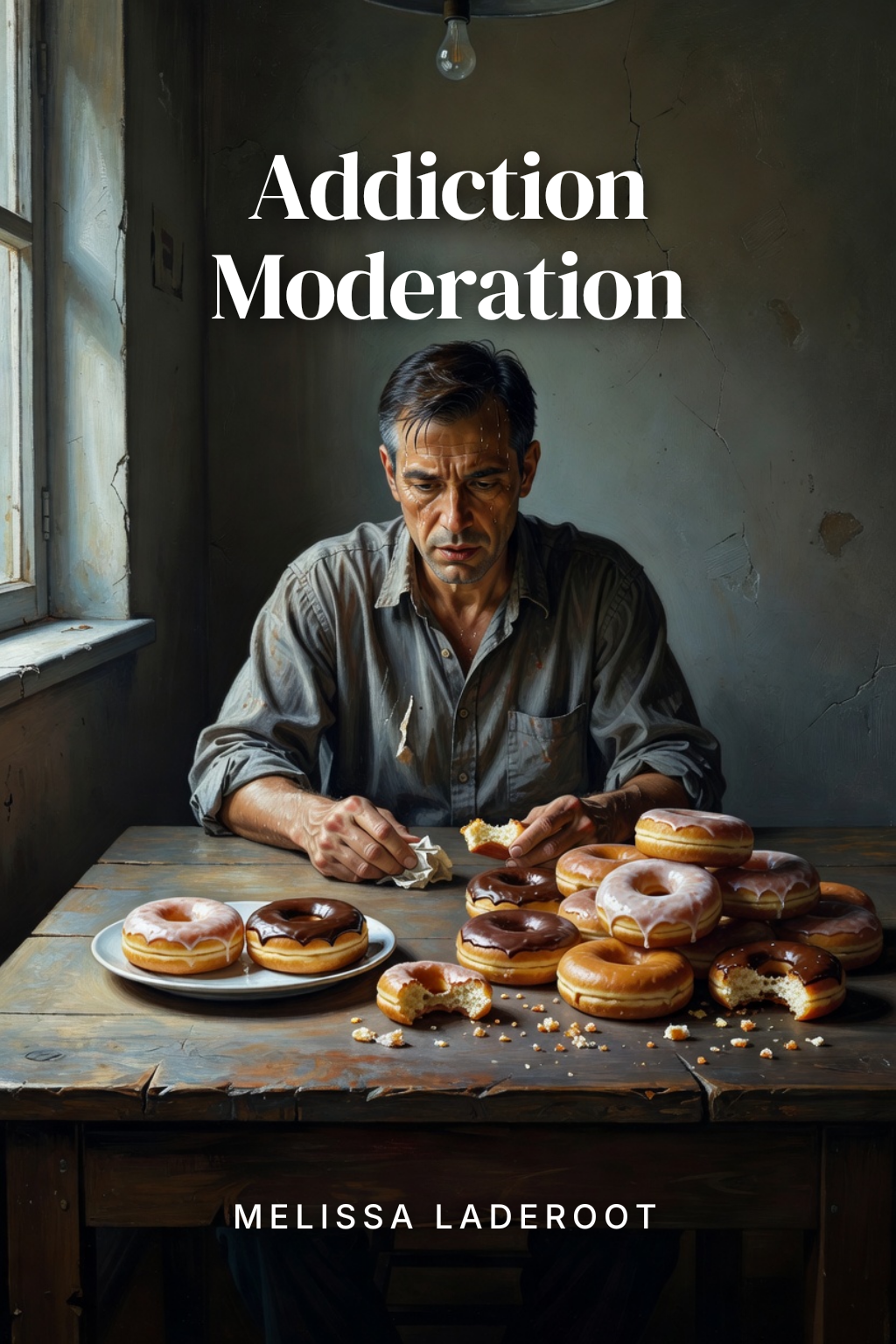
The Second Donut
The first thing people get wrong about addicts is that we do not all look like the poster in the doctor’s office. No one is there with a trench coat and a bottle in one hand and a cigarette in the other, staring tragically out a rain-streaked window. Sometimes it is a guy in a grocery store parking lot, eating glazed donuts over the steering wheel before he even puts the car in drive. Sometimes it is a woman in scrubs, promising herself she will stop at two and then standing in the kitchen at 11:47 p.m., powdered sugar on her shirt, wondering how the box went from full to empty so fast.
I know because I have lived that scene. More than once. More times than I would like to admit.
There is a certain silence that falls after the third donut. The box is still there, open on the counter, its cardboard sides bent soft from being handled too many times. The smell is sweet and greasy and somehow both comforting and embarrassing. You can hear the refrigerator humming, a spoon clinking in the sink, maybe the old kitchen clock ticking too loudly because the rest of the house has gone quiet. And there you are, with icing on your thumb, asking yourself the dumbest question in the world: Why did I do that again?
Not because you forgot. That’s the strange part. People love to say addicts “lost control,” as if control is a suitcase left at the airport. No. I knew exactly what I was doing when I opened the box. I knew what happened last time. I knew the ache in my stomach that would come later, the fog, the guilt, the vow made with full sincerity and no future. I still ate the donut. Then another. Then another, until moderation was no longer a plan but a joke somebody else told about me.
That is the whole problem with “just have one.” One is a romantic idea. One is a theory. One is what disciplined people say when they still believe the food sits in front of you as a test of character. But addiction is not a character flaw with good lighting. It is a loop. It is a bargaining table with one chair and no honest witness. It is your hand reaching before your mind has finished the sentence.
And food is polite about it. That’s what makes it so sneaky. Nobody applauds you for the tenth donut. Nobody gives you a medal for finishing the bag of chips while standing in the pantry in your socks. But nobody raises an alarm either, not until your jeans won’t button and your bloodwork comes back ugly and your knees complain on the stairs like they’ve filed a formal grievance.
I used to think the answer was shame. Shame in small doses, because shame is a powerful motivator until it isn’t. Shame can get you through one morning. Maybe two. It can make you toss the donuts in the trash and swear off sugar like a converted zealot. But shame is also a liar. It tells you you are broken instead of trained. It tells you you are weak instead of conditioned. It tells you to hate yourself for doing the exact thing your brain has practiced doing a thousand times.
Moderation, real moderation, is not a cute slogan. It is a skill. A muscle. A decision made while your hands are still sticky and the box is still open. It is the pause between the first and second donut. That pause matters more than people think. That pause is where your life changes, if it changes at all.
I am writing this because I got tired of the all-or-nothing sermon. Tired of hearing people say, “Just stop,” as if stopping is a switch on the wall and not a whole rewiring of hunger, habit, comfort, and panic. I am not here to pretend donuts are the enemy. I’m here to tell you why twelve of them can disappear in ten minutes, why two can feel like freedom, and why the space between them is where your power lives.
And I need to tell you about the day I bought a box of six, swore I only wanted two, ate four in the car, and walked into my house carrying the last two like they were evidence—because when I opened the kitchen drawer, there was something in there that made my stomach drop.
Write your own novel.
ScribistIQ generates full-length novels in minutes. Type your premise, walk away, come back to a finished book.
Try ScribistIQ