
Novel · 5 chapters · 8,292 words
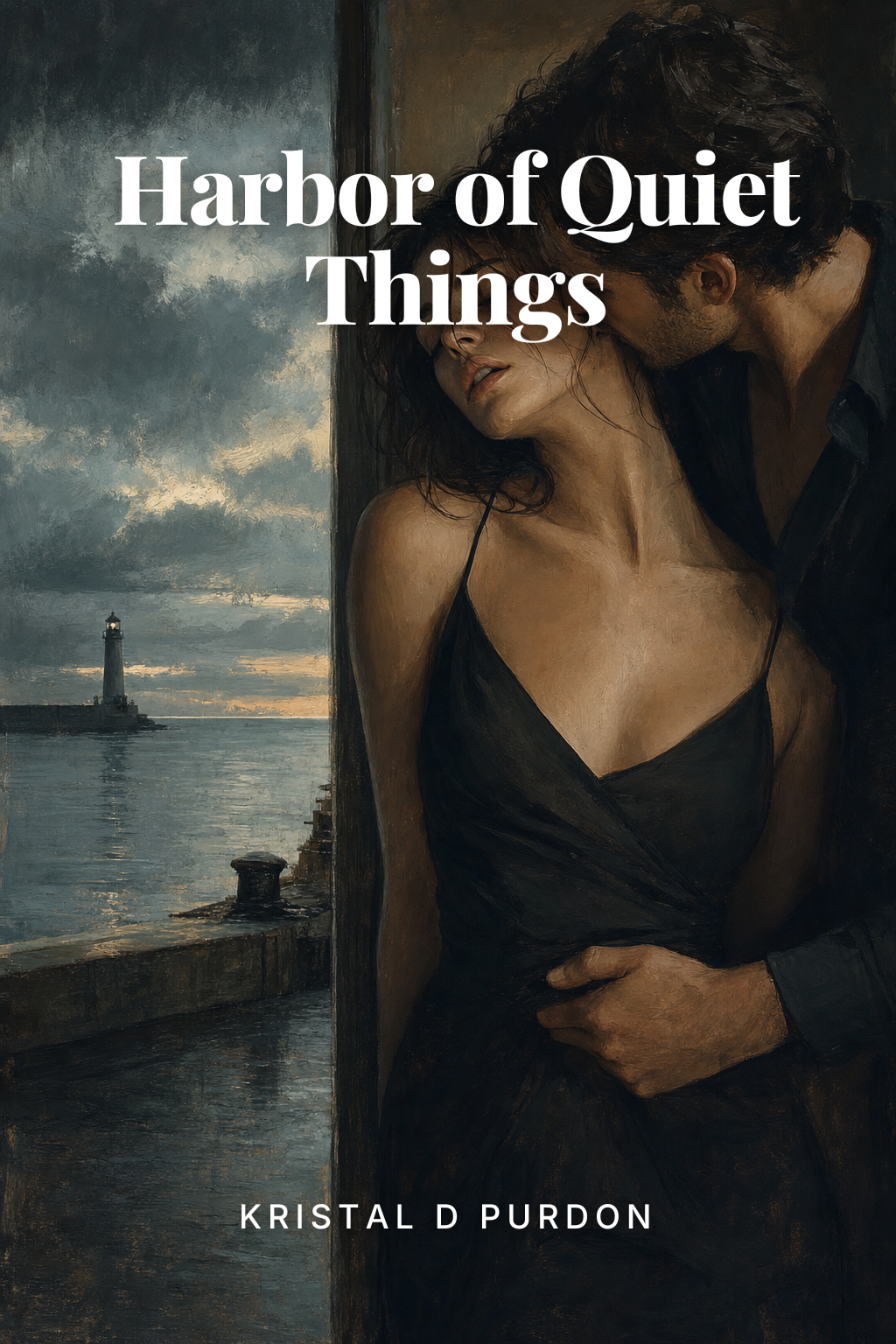
Harbor of Quiet Things
Contents5 chapters
Chapter 1
The Envelope in the Sorting Tray
By ten each morning, Mara could tell which boxes had gone untouched for years and which had only pretended to be forgotten. The old ledger books gave off a dry, papery smell like walnuts and dust. Rolled maps kept a faint tang of mildew no dehumidifier ever quite beat back. Film canisters sweated cold when the basement unit ran too hard. She liked that certainty. The city’s records behaved according to damage, age, and neglect. People were less reliable.
She was at the long worktable in the municipal archive, flattening a shipping register under glass weights, when she found the first note.
It sat in the gray sorting tray with the morning transfer slips and an invoice from the binder, an ivory envelope without a stamp or office routing mark. Her name was written on the front in block letters, neat and plain: MARA VALE.
She looked automatically toward the public desk, though the reading room beyond it stood empty except for a man in a rain-dark jacket signing a request form. Tessa from records intake was upstairs. Jonah Reed had been in his office twenty minutes ago with his door half shut, talking too loudly on the phone about procurement timelines. No one was near enough to have slipped it in without passing her.
She turned the envelope over. No seal, only the flap tucked in.
Inside was a square of heavy paper. On it, one line.
You always tap the right corner three times before you trust a box.
Mara read it twice before her body reacted. The register under her hands blurred. She did tap the right corner, with one knuckle, a habit she had never noticed becoming a habit. A quick test for loosened lids, warped board, hidden damp. Three knocks, always the same.
She set the paper down very carefully and looked around the room again.
The archive occupied the lower floors of an old customs building near the harbor, brick walls painted over so many times the corners had rounded with it. The fluorescent strips hummed. A cart squealed somewhere in back storage. The man in the reading room bent over his form and sneezed into his wrist. Nothing else moved.
Mara slid the note back into its envelope and tucked it beneath the blotter at her station. Her pulse stayed high the rest of the hour.
At eleven, Jonah appeared at the end of the table carrying a stack of accession files against his chest. He was a narrow man with clean cuffs and a face that always looked recently sharpened.
“These need preliminary descriptions by Friday,” he said.
She reached for the files. “Friday’s tight.”
“It was Monday until legal sat on them.” His gaze flicked to the glass weights, the register, her untouched pencil. “Are you all right?”
“Fine.”
“You look pale.”
“I’m fine.”
He stood there a second longer than needed. Jonah had a talent for stillness that made other people fill the silence. Mara learned early not to help him.
He put the files down in a straight stack. “Don’t let researchers wander the stacks today. Facilities is checking the back stair alarm.”
“Noted.”
When he left, she let out a breath through her nose and hated that he might have noticed that too.
The second thing came just after lunch.
Elena had texted to ask if Mara wanted soup from the place on Water Street. Mara answered too late and ate crackers from her drawer instead, standing at the sink in the staff kitchenette while the kettle rattled itself toward a boil for someone else’s tea. When she returned, a small object sat in the center of her desk pad where the accession forms had been.
A brass key tag, oval, polished by years of handling. One side was stamped with the number 14. The other had been scratched with a tiny line drawing of a gull in flight.
Her throat tightened.
Attached was another folded note.
For the locker that still sticks in damp weather.
She knew the locker. The old changing lockers in the basement corridor had remained from the customs days, though only a few were used now for oversize plans awaiting freezing treatment. Number 14 had a swollen door that caught at the top left whenever the harbor fog sat in the masonry. She had wrestled with it three days before, muttering to herself, shoulder against metal.
No one should have known unless they had been there. Or watching from somewhere inside the building.
Mara picked up the tag by its ring. Warm from the room. A little greasy in the grooves where fingers had rubbed over time. Not new, then. Found or kept.
She crossed to the basement corridor at once.
The archive’s lower hall was lined with painted lockers, radiator pipes, and framed emergency notices curling under their corners. Number 14 stood halfway down. She tried the handle. Locked.
The key turned with a scrape. The door stuck, then gave.
Inside, on the shelf above a folded drop cloth, sat a small jar wrapped in brown paper. Mara lifted it out and peeled the paper back.
Sea glass.
Not the bright tourist-shop kind tumbled to a shine. These pieces were genuine and uneven, the edges softened by years but still particular in their shapes. White, smoke green, one deep cobalt shard like a fragment from an old bottle. At the bottom of the jar lay another note.
You keep the blue pieces in the top drawer because the light gets them there.
Her hand went cold around the glass.
At home, she did keep blue sea glass in the top kitchen drawer, in an old sardine tin with a rust stain under the lid. She had collected them on solitary walks for years, mostly from the rough strip beyond the ferry terminal where no one bothered to comb the stones. Elena knew about the tin. No one at work did.
No one should.
Mara put the jar back in the paper and looked down the corridor toward the closed fire door. She could hear the building settling, pipes ticking, a forklift beeping outside by the delivery bay. Nothing human. Nothing near.
She took the jar upstairs and locked it in her satchel.
At three, Elena called.
Mara took it in the records vault between compact shelving rows where her voice would die quickly.
“You sound strange,” Elena said without greeting.
“I’m at work.”
“That wasn’t my point.”
Mara glanced over the aisle ends. “Someone left me notes.”
“A person person, or an office prank?”
“I don’t know.”
“What kind of notes?”
Mara hesitated, then read the first one aloud from memory. Then the second. When she finished, Elena was quiet long enough for Mara to hear traffic through the vault’s high window.
“That’s not funny,” Elena said.
“No.”
“Do they feel threatening?”
“I can’t tell.”
“That means yes.”
“It means I don’t know whether to be alarmed or…” Mara stopped.
“Or what?”
“Curious.”
Elena gave a short breath that might have been disbelief. “He knows where you live?”
“The blue glass could be a guess.”
“A very good guess.”
Mara leaned her shoulder against the shelving. Through the narrow gaps she could see labeled Hollinger boxes marching into dimness. “They’re noticing things. Small things.”
“That’s how people get under your skin.”
“I know.”
“Tell Jonah.”
Mara laughed once, without humor. “So he can ask whether I’ve mishandled visitor access and then lock down the whole floor?”
“Then tell building security.”
“Security is one retired ferry cop and a clipboard.”
“Then tell me everything and don’t decide this is romantic because someone has decent stationery.”
Mara pressed the heel of her hand against her forehead. “I didn’t say romantic.”
“You didn’t need to.”
After they hung up, Mara stayed in the vault another minute, listening to the hush around the boxes. Elena had known her long enough to hear danger in the place where Mara heard invitation. That irritated her because it was true.
The third message arrived where it should not have been possible for anyone to put it.
At five fifteen, after the last researcher signed out and Tessa left with her bicycle helmet under her arm, Mara went to retrieve her bag from the staff room. It was a narrow space with dented lockers, a bulletin board full of stale notices, and a sink stained tan around the drain. She opened her satchel.
On top of her wallet lay a ferry token, old brass, from the discontinued harbor line that had once run to the shipyard pier. They had not used tokens for years.
A strip of masking tape was wrapped around it. In fine pen, a single sentence.
Tomorrow. The pier with the broken green lamp.
Mara stood very still.
Someone had been close enough to open her bag. Someone who knew she would understand the reference.
The broken green lamp stood on the old service pier at the harbor district’s edge, beyond the seafood sheds and the machine shops, where the city let things wait out their demolition behind wire fencing and peeling signs. She knew it because she walked there sometimes on weekends when the tug horns rolled low across the channel and the tourists stayed to the cleaner end of the waterfront.
Tomorrow was her late shift. She was not meant to have a lunch break long enough for a harbor walk.
She looked toward Jonah’s office through the open staff-room door. Dark now. Empty.
The ferry token sat in her palm, heavier than it looked.
Mara checked the lockers, the sink ledge, under the bench, as if evidence of a body might remain after the spirit had passed through. She found nothing. No one. She stepped into the corridor and listened. Somewhere upstairs, a vacuum cleaner started. Outside, chains knocked against a flagpole.
At her desk she spread the three notes in a row, then took them away again when she heard footsteps. She copied the wording onto a legal pad instead. The paper stock matched across all three. The handwriting did not slant. Deliberately disguised, maybe, or naturally impersonal.
She sniffed the envelope from the first note and felt foolish doing it. Paper, dust, the faintest trace of machine oil.
Machine oil.
Could have come from anywhere in the harbor district. Could have come from the freight elevator rails.
She packed the notes, the key tag, the token, and the sea glass into separate sleeves from the conservation drawer and slid them into her satchel. An archivist’s reflex. Preserve first. Interpret later.
On the way out, she stopped at the front desk log and turned back two days of visitor sign-ins. Nothing obvious. Names meant little. Most signatures looked like weather reports gone wrong. She checked the facilities sheet pinned beside it. Alarm maintenance. Delivery crew. Pest inspection.
A line had been added at the bottom in blue pen.
Pier lighting survey.
No company name.
No initials.
Mara stared at the words until the letters seemed to lift from the paper.
She took out her phone and snapped a picture.
Then she locked the front door, set the alarm, and stepped onto the street with the satchel strap hard across her shoulder. The harbor was three blocks downhill, past the bait shop and the shuttered chandlery, its smell pushing inland with the evening tide: salt, diesel, fish scales ground into wood. A gull landed on the customs roof and skated sideways on the copper flashing before finding purchase.
Her phone buzzed. Elena again.
Did you tell anyone? the message read.
Mara typed, Not yet.
She stood under the streetlamp outside the archive and looked toward the dark line of cranes beyond the warehouses. Tomorrow. The pier with the broken green lamp. A meeting, or bait. An explanation, or another layer of watching.
Her thumb hovered over Elena’s name, over Jonah’s office number, over the nonemergency police line she did not really believe in. Then she lowered the phone and slipped it back into her coat.
In her bag, the old ferry token clicked softly against the brass key tag each time she moved, as if counting down to something she had already agreed to.
Chapter 2
The Pier with the Green Lamp
Mara spent the morning making mistakes small enough that only she noticed them.
She misfiled a survey under the wrong district and caught herself before the folder went into storage. She wrote 1913 where she meant 1931 and stared at the numbers until they looked equally false. At eleven, Jonah asked whether she had sent the insurance scans to legal, and she answered yes though the files still sat unsent in her drafts. By noon he was watching her with that clipped, thoughtful look he used when a staff problem seemed likely to become paperwork.
“You should take your break before one,” he said from her desk corner. “We have the donor appointment at two.”
Mara capped her pen. “I know.”
“You seem elsewhere.”
“I didn’t sleep well.”
Jonah’s gaze rested on her for a beat. “Don’t let that become a habit.”
Then he went back to his office.
At twelve forty she signed out, took the back stairs, and crossed the warehouse streets toward the harbor district with her scarf tucked close and the token in her coat pocket. The day carried a weak brightness that made every oily puddle look like a wound of color. Forklifts moved pallets of bait crates near the market sheds. Men in orange slickers hosed down a loading apron, scales flashing silver at their boots. A tug worked the channel mouth, low and stubborn, hauling a barge past rusted pilings tufted with weeds.
The old service pier lay beyond the fuel depot and a line of fenced lots full of broken concrete barriers. The green lamp at its end had not lit in years. One pane of the housing was gone. Corrosion bled down the pole in long brown tears.
Mara stopped at the start of the pier and listened.
Timbers creaked under the wash. Somewhere close by, metal rang against metal, a repeated clear strike from one of the machine sheds uphill. No voices. No footsteps except her own.
A gull perched on the lamp housing, then lifted off when she came farther out.
At first she thought the pier was empty. Then a man stood up from behind a stack of coiled line near the far rail as if he had been part of the equipment until movement separated him.
He was taller than she had expected and broader through the shoulders, dark work jacket unzipped over a gray henley, hands blackened at the knuckles with grease that no scrubbing had fully beaten. Wind had pushed his hair flat on one side. He did not come toward her right away.
“You came,” he said.
Mara stopped well short of him. “You knew I might.”
“Yes.”
His voice held no apology. It held something worse for her composure: certainty.
“Are you the one who’s been leaving things for me?” she asked.
“I am.”
“Why?”
He looked past her shoulder toward the city buildings climbing from the water. “Because if I’d walked into the archive and asked for you by name, your supervisor would’ve found a reason to keep me in the lobby.”
“That doesn’t explain the notes. Or my bag.”
A flicker crossed his face then, gone quickly. “The bag was too far. I know that.”
“You opened it.”
“Yes.”
The clean admission checked her anger for a moment because she had prepared for denial. “You had no right.”
“No.”
“Then why do it?”
“To be sure you’d come to the right place.”
“And the sea glass? The locker key?”
He put one hand on the rail, fingers curling over peeling paint. “I’ve seen you after work, down by the ferry wall collecting pieces after a hard tide. I saw you fighting that locker on Tuesday through the basement window when I was here for a lighting survey. I know how that sounds.”
“Like stalking.”
“Yes.”
The word fell between them and stayed there.
She took him in more carefully. Thirty, maybe a little older. A bruise yellowing near one wrist. Work boots whitened with salt. Not polished enough to be performing roughness. Real enough to unsettle her further.
“You know my name,” Mara said. “You know where I walk. What else?”
He met her eyes then, and it was that directness more than anything that disoriented her. “You read labels under your breath when they’re badly written. You eat the same almond biscuits every Thursday and leave the burnt ones in the tin. You cut your left thumb on a metal map case in February and still favor it when you lift something heavier than it looks.”
Heat rose under her skin, part anger, part a feeling she did not want to give a name. She folded her arms tight against it. “That is not normal.”
“No.”
“You keep agreeing with me as if that settles anything.”
“It doesn’t.” He glanced toward the machine sheds again. “My name is Theo Mercer.”
She waited.
“I work two blocks over at Calder Marine,” he said. “Engines, winches, hydraulic repair, whatever comes in busted enough to need hands. Sometimes city contractors call us in on old harbor structures because they don’t know what they’re looking at.”
“And that has what to do with me?”
He rubbed his thumb against the heel of his palm, leaving a darker streak there. “More than I could say in a note. Less than I can prove to you in five minutes.”
Mara stepped closer by one plank’s width. “Then start proving it.”
Theo’s mouth twitched, not quite a smile. “You don’t scare easy.”
“I archive tax records for a living. You’d be amazed what survives.”
That did earn a brief smile, and she hated how much it changed his face.
A truck backfired on the road behind them. Mara did not turn. If this was a trap, she had already walked into it. But Theo kept his distance, one hand still on the rail, as if he had set himself there to prevent some other impulse.
“I noticed you months ago,” he said. “Not at first because of you. Because of the building.”
“The archive?”
He nodded. “My uncle used to work customs in the old days. He talked about rooms under rooms in that place. Storage they sealed and forgot. Original fittings. Plans. There’s a section of the harbor that was meant to be protected under an early preservation agreement, but every copy I found in city records was missing pages or got me nowhere.”
“You could have requested material like anyone else.”
“I did. Twice.”
Mara frowned. “I would remember.”
“Jonah Reed handled one request himself and sent the other back for lack of citation.”
The mention of Jonah in this place, inside this charged private strangeness, steadied her more than it should have. “So this is about work after all.”
“It was. At first.”
She let that sentence sit between them. At first.
Theo reached into his jacket slowly enough that she didn’t step back. He brought out a folded photocopy in a clear sleeve and held it where she could take it without touching him.
It was a harbor district plan, old enough that the inked lot lines had thickened in duplication. Along the edge of Pier Row, one parcel had been circled in pencil. Beside it, in faded type: bonded warehouse annex and machine room.
“Recognize it?” he asked.
“No.”
“You should. That annex was folded into the customs property before the archive moved in. It sat behind your building and got knocked down in the seventies. The foundations are still there under the storage lot. There was a preservation condition tied to the transfer. If it still stands, the city can’t clear the remaining site without review.”
“And why do you care?”
His jaw worked once. “Because they’re going to clear it. Soon. Quietly. My shop got asked to inspect old lifting gear on an adjacent shed before demolition crews come through.”
Mara looked at the map again. The pencil circle had been pressed hard enough to dent the paper. “You could have said this in one note.”
“I could have.”
“Then why didn’t you?”
He was silent long enough that the water slapping the pilings filled in for him.
“Because I didn’t know if you’d believe me,” he said. “Because I didn’t know who in that building was safe to say it around. Because every time I saw you, you looked like someone who guarded every part of her life with both hands, and I still decided to pry one finger at a time. That’s the truth.”
Mara stared at him. There it was at last, something near explanation and nowhere near enough.
“You’re asking me to trust a man who followed me and went through my belongings.”
“I know.”
“And you still won’t tell me why me.”
Theo looked out over the water. A freighter was easing toward the outer berth, cranes waiting like bent necks. “Not yet.”
Her laugh came sharp. “You don’t get to choose the pace here.”
“No,” he said. “But I’m asking you to anyway.”
The nerve of it should have sent her off the pier. Instead she stood there with the old token pressing its round shape through the coat pocket lining and felt the unnerving pull of his attention, the way he seemed to have fixed on her before he ever claimed a right to speak. She did not trust it. She wanted more of it.
That was the worst part.
“Give me one reason not to report this,” she said.
Theo reached into his jacket again. This time he took out a key, long-shanked and iron, with a square bow blackened by age.
“Because this opens a room in your building no one’s using on paper,” he said. “And if I hand it over in an office with Jonah Reed in earshot, it’ll vanish before you learn what’s under it.”
He held the key out.
Mara looked at it, then at his hand. Grease in the cuticles. A half-healed split across one knuckle. Steady.
She took the key.
It was colder than the air.
“Tomorrow after close,” Theo said. “The lower loading bay door. There’s a corridor behind the condemned shelving wall. You’ll see what I mean.”
“You expect me to let you into the archive?”
“I expect you to decide whether you want the truth more than you want the rules.”
A shout carried from shore. Two men were rolling a drum toward a flatbed near the fuel depot. No one on the pier seemed to be watching them.
Mara slid the key into her coat pocket next to the token. “If this is a game—”
“It isn’t.”
“You’re very calm for someone who admits to watching me.”
“I’m not calm,” he said. “I’m careful.”
That, at least, she believed.
She started back along the pier, then stopped and turned. “Theo.”
He waited.
“When you said it was about work at first.” She kept her face neutral and her voice flatter than she felt. “What changed?”
For the first time, he seemed to search for words and dislike all of them.
“You looked back,” he said.
Mara left before he could say more, but the sentence followed her off the pier and up through the harbor streets, through the fish stink and engine noise and gull cries. At the corner by the archive she put a hand over the pocket where the iron key lay heavy against the ferry token.
Inside, Jonah was standing by her desk with the donor files open in front of him.
Chapter 3
The Shape of an Excuse
Jonah did not look up when Mara came through the staff door. He turned one page of the donor file, then another, as if time itself were an employee he expected to account for its minutes.
“You’re back,” he said.
“My break ended seven minutes ago.” Mara set her satchel down with care and took off her scarf. “You timed it?”
“I noticed it.”
He closed the file and faced her. The office lights put a clean glaze on his glasses. Beyond him, the reading room was empty. Tessa had gone to lunch. The building felt paused around them.
“The Harker donor has been waiting in conference B since one fifty,” he said. “I covered your material overview.”
“I’m sorry.”
“I imagine you are.”
Mara held his gaze and gave him nothing else. Apologies made Jonah more exacting, not less.
“Where were you?” he asked.
“Out.”
“That’s not an answer.”
“It’s the one I’m giving.”
His mouth flattened. “You’ve been inattentive for two days. You’ve missed a deadline, left accession notes incomplete, and disappeared in the middle of a donor visit. If there’s an issue affecting your work, I need to know it.”
“There isn’t.”
“There plainly is.”
Mara slid into her chair and woke her monitor, partly to break the line of his scrutiny. Her own reflection hovered faintly in the black edge of the screen before the database opened. She clicked the insurance scans with a steadier hand than she felt.
Jonah stayed where he was.
“This office has standards,” he said. “We don’t conduct private business on municipal time.”
Something in the phrasing made her look at him sharply. “What do you think I’m doing?”
“I think you’re distracted by someone, or something, you’re unwilling to name.”
The folder tabs on her desk seemed suddenly too bright. “That’s none of your concern unless the work suffers.”
“The work is suffering.”
He had her there, and he knew it. Mara swallowed whatever rose first.
“Then I’ll fix it,” she said.
Jonah bent one knuckle against the desk edge, a habit of his when he was deciding how far to push. “I saw you crossing Bay Street at lunch,” he said. “Toward the industrial lots.”
Mara’s shoulders stiffened before she could stop them.
“There are restricted demolition zones down there,” he went on. “Contractors. Salvage men. Not the sort of company a city archivist should be keeping if she expects to maintain clear professional boundaries.”
Professional boundaries. The phrase came too quickly to be improvised.
“Were you following me?” she asked.
“I was driving back from legal.”
“That wasn’t my question.”
His expression changed by almost nothing. “I observed an employee leaving work responsibilities unattended.”
“And decided to monitor my lunch break.”
“Don’t be theatrical, Mara.”
Heat climbed her neck. She hated that word from him more than outright anger. The dry implication that her reactions were clutter, something to be tidied by a superior hand.
“I took my break,” she said. “I came back. The donor was covered. What exactly is your accusation?”
Jonah lowered his voice though no one else was there to hear. “My accusation is that you are allowing some off-record contact to interfere with archive operations. If it extends to giving access, information, or materials to outsiders, intentionally or through carelessness, I will report it.”
The key in her coat pocket might as well have been a hot coin. Mara kept her face still by force.
“You have no basis for that,” she said.
“Then prove me wrong with your conduct.”
He picked up the donor file and carried it back to his office, leaving the door open behind him like a held note. Mara sat motionless until she heard him settle at his desk.
Only then did she exhale.
She spent the afternoon in a kind of bright-edged concentration that felt very much like fear. Every detail mattered because Jonah had announced he was looking. She logged the missing scans, completed two accession descriptions, answered a researcher’s questions about zoning maps from 1948, and returned three boxes to storage with exact sign-out times. Her hands did not shake until she was alone in the map room, lowering a drawer of harbor plans, and thought of Theo’s key lying against the lining of her pocket.
At four, Elena arrived unannounced with coffee in a cardboard tray and a face already set for concern.
“I was nearby,” she said, which meant nothing and everything. Elena worked two neighborhoods over at a legal aid office and only appeared in person when texts stopped satisfying her.
Mara took the coffee and led her to the side table by the oversize atlases.
“You look awful,” Elena said.
“Thank you.”
“I mean focused in a way I distrust.”
“That’s more accurate.”
Elena wore her dark hair pinned up with one pencil and had rain on the cuffs of her coat from some earlier drizzle Mara had barely noticed through basement windows. She listened without interrupting while Mara gave her the harbor-pier version of events, leaving out only the force of Theo’s attention and the way one sentence from him had lodged under her ribs.
When she mentioned the key, Elena put down her cup.
“No,” she said.
“You haven’t even seen it.”
“I don’t need to see it. No.”
“He may be right about a hidden room.”
“He may also be lying in a very labor-intensive way.”
Mara pulled the iron key from her pocket and wrapped her hand around it under the table. “Jonah already suspects something.”
“Then absolutely no.”
“That’s not an answer to the problem.”
“It is if the problem is a man manufacturing urgency so you’ll ignore your instincts.”
Mara looked toward Jonah’s office. His silhouette moved behind the glass panel. “My instincts are not unanimous.”
Elena’s face softened for one beat, then sharpened again. “Do you want him?”
The bluntness made Mara stare into her coffee. The lid had warped at the sip hole, releasing a smell of burnt beans.
“I want to know why he chose me,” she said.
“That wasn’t my question.”
Mara said nothing.
Elena leaned back. “Fine. Then hear this instead. If you do anything with that key, you do not do it alone.”
“I can’t bring you into a restricted archive area after hours.”
“You can call me before and after.”
“That I can do.”
Elena held out her hand. “At least let me take a picture of it.”
Mara placed the key in her palm. Elena turned it under the lights. Old iron, pitted shaft, one tooth worn thinner than the rest. “It looks real,” Elena said. “Unfortunately, so do handcuffs.”
Mara almost smiled.
When Elena left, Jonah emerged again as if he had been waiting for the coffee visit to conclude.
“Your friend seems devoted,” he said.
Mara filed that away with the rest of his observations she had not invited. “She is.”
He glanced at the closed outer door. “See that donor summary reaches me before you go.”
“Fine.”
“And Mara.”
She looked up.
“If there is someone using this workplace to get to you, I suggest you remember whose name appears on the access reports.”
He went back inside before she could answer. The remark sat badly in her. It could have been warning. It could have been threat. With Jonah, the two often dressed alike.
By closing time the building had emptied to its evening sounds: the low churn of the climate system, an elevator thump from upper floors, water tapping somewhere in old pipes. Mara sent the donor summary, logged her remaining tasks, and locked her desk.
She did not go to the loading bay.
Not that night. Not with Jonah alert and the warning still fresh in the walls.
Instead she walked home by the long route along the seawall, the one Theo had once watched her take. The tide had fallen enough to expose black weed on the lower stones. Lights from the container yard burned sodium orange across the channel. Couples passed her under the rail lamps, talking close. A boy on a scooter rattled by with a sack of takeout swinging from the handlebars.
At home she set the key, the notes, and the token on the kitchen table and looked at them until the room darkened around their shapes. Her flat overlooked a side street above a locksmith and a bakery that started work at four each morning. The radiator clicked without conviction. In the top drawer, the tin of blue sea glass waited under takeout menus and spare batteries.
She opened it and tipped the pieces into her hand. The cobalt shard from Theo’s jar matched none of hers exactly. It was deeper, almost violet where the light hit the thick edge. He had chosen it because he knew she would notice that. Not just a token, then. A conversation built from objects.
That thought unsettled her more than the watching. It suggested patience. It suggested someone had taken pleasure in learning the shape of her attention.
Her phone lit with Elena’s name.
Did you go? the message read.
No, Mara typed back.
Good.
A minute later another message arrived from an unknown number.
He’s right about one thing. Don’t trust access reports.
Mara stared at the screen.
Below the text, a second message appeared.
Tomorrow. After close. If you want the room, come by the loading bay alone.
No name. No signature. No need.
She called the number at once. It rang once, twice, then cut to a dead mechanical tone.
Mara set the phone down, then picked it up again and opened the staff access app the city required on all archive phones. Employees badged in and out with it after six. A simple list, usually dull enough to bore suspicion.
Tonight’s entries showed Jonah had never left the building during lunch.
At 12:31, his badge had been used at the lower loading bay door.
Chapter 4
The Room Behind the Wall
Mara arrived early the next day and went straight to the basement before she let herself think too much.
The lower loading bay corridor smelled of wet concrete and forklift exhaust. Fluorescent tubes blinked awake one by one overhead. On the wall beside the rolling steel door hung the access reader, scratched around the edges by years of badges slapping against it. Jonah’s entry from yesterday sat in her mind like a stone in a shoe.
She stood with her coffee cooling in her hand and looked down the hall toward the shelving wall Theo had mentioned.
Three ranges of condemned metal shelving blocked what had once been an open passage to disused storage. They were draped in yellow tape and loaded with empty document trays, busted binders, and cardboard cores no one had gotten around to discarding. Official neglect. The best disguise in a municipal building.
Mara crouched near the floor at the end range and found scrape marks in the dust. Recent. Narrow arcs where the shelving feet had shifted.
Someone had moved it.
Footsteps sounded on the stair. She straightened at once and turned as Tessa came down carrying a cart of outgoing files.
“You’re in early,” Tessa said.
“So are you.”
“Binder pickup.” She parked the cart by the freight elevator and squinted past Mara. “Thought that area was closed.”
“It is.”
Tessa accepted that with a shrug and started labeling folders with pink routing slips. Mara took her coffee upstairs before she was tempted to start tugging at shelves in front of witnesses.
The day dragged. Researchers wanted valuation records from the forties. A council aide called twice about photographs for a waterfront exhibit. Jonah held a ten-minute staff meeting whose only real purpose seemed to be reminding everyone that municipal property was not to be discussed with contractors without supervisory approval. When he said it, his eyes rested on Mara for half a beat too long.
She met the look, expressionless.
By four thirty, the archive had thinned to closing tasks and the tired scrape of chairs. Mara texted Elena: Going in after close. Will call before and after. If I don’t, come raise hell.
Elena answered at once. I hate this.
Noted, Mara wrote back.
At five ten, Theo sent the first direct message she had received from him in words rather than paper.
Dock delayed me. Ten minutes.
She stared at the plainness of it. No softening. No explanation. Somehow that made it easier to believe than the notes had.
At five twenty, Jonah stopped by her desk while she was finishing the last researcher sign-out.
“You can leave the remainder for morning,” he said.
“I’m staying to finish the exhibit pulls.”
“We did not discuss overtime.”
“It’s thirty minutes.”
“That is not the point.”
Mara clicked the final box in the database and logged out. “Then what is?”
He lowered his voice. “You are too intelligent to keep making me ask the same questions.”
“Then stop asking them.”
Something shifted in his face, not anger exactly, but the removal of a layer. “Be careful,” he said. “Curiosity is not a defense if records go missing.”
He turned and walked away before she could answer.
The threat in it was naked enough that her hands went cold.
At five thirty-six the outer doors locked. Tessa waved goodbye and took the stairs. The upper floor lights began shutting down in sections. Mara waited another four minutes, listening. Jonah’s office door closed. His footsteps crossed toward the rear exit. Then silence.
She counted to sixty, texted Elena a single word—Now—and headed for the basement.
Theo was waiting in the loading bay shadow, near the pallet jack and the wall clock that had stopped at 2:17 months ago. He had changed from whatever dock job delayed him only enough to pull on a cleaner jacket. There was still grease under his nails.
“You came,” he said quietly.
“You say that as if I’m predictable.”
“In some ways.”
“Don’t.”
He inclined his head once. “Fair.”
Mara took in the corridor behind him. “You know Jonah badged this door at lunch yesterday?”
Theo’s attention sharpened. “You checked.”
“Yes.”
“Good.”
“That isn’t an answer.”
“No.” He glanced toward the stairwell. “Move first. Talk while moving.”
Together they crossed to the condemned shelving. Theo gripped the end upright and pulled. The loaded range shifted with a muted scrape, wheels hidden under the frame rolling just enough to open a person-wide gap. Behind it, the wall was not a wall at all but old double doors painted over so many times the seam had nearly vanished.
Mara let out a breath she had not realized she was holding.
“The city inventory lists this as sealed storage,” Theo said. “But the original plans show a service corridor and annex access.”
The iron key bit once, then turned. The left-hand door stuck hard. Theo braced a shoulder against it and pushed. Paint cracked. A smell came out at them: old timber, cold stone, stale harbor damp.
Inside, their phone lights found a narrow passage with brick on one side and board-planked wall on the other. Pipes ran overhead wrapped in fraying insulation. The floor sloped gently down.
Mara stepped in first.
Her beam caught chalk marks on the brick, a rusted hook, the torn edge of a notice still pasted to the boards. Twenty feet ahead the passage opened into a low room.
It had once belonged to another building. She could tell immediately by the join of materials. Brick footings older than the customs walls. Heavy timber posts black with age. In one corner stood a hoist frame with a sheaved wheel seized by rust. Broken crates lay collapsed against a wall. The floor was layered in plaster dust and grit, but not untouched. Tracks crossed it. Recent boot marks. Drag marks. Someone had been in and out with purpose.
Theo swept his light over a line of bolted cabinets and a drafting table listing to one side. “This is what survives of the annex machine room,” he said. “Or enough of it.”
Mara moved toward the table. Under a sheet of cloudy plastic sat rolled plans tied with cotton tape gone brown. Beside them, a ledger with swollen covers. She put out a hand and stopped just above it, archivist habit warring with disbelief.
“These should have been accessioned,” she murmured.
“Unless somebody needed them not to be.”
She looked up. “You’re thinking Jonah.”
“I’m thinking someone with access and a reason.”
Mara turned slowly, taking in more details. Fresh pry marks on one cabinet. A new padlock on another. On the wall above the hoist frame hung a printed demolition notice in a clear sleeve, dated six days ahead, naming the adjacent storage lot and subgrade obstructions for removal. Her pulse kicked.
“The site,” she said.
Theo nodded. “If this room ties the lot to the preservation agreement, demolition gets complicated. Expensive. Public. Which means someone prefers it not come to light until the machines are already chewing concrete.”
She pulled the demolition notice free and photographed it. “Why not go to the press?”
“With what? Rumor and a hidden room? They’d ask the city for comment and the room would be cleaned before morning.”
Mara knelt by the drafting table and carefully untied one bundle. The top sheet crackled open under the plastic. Original harbor utility plan, stamped 1962 over earlier drafting layers. In the margin, a notation in red pencil: Preservation covenant attached per transfer appendix C.
Appendix C.
Her breath caught.
Theo crouched beside her, close enough that she could smell metal and soap. “There,” he said.
She looked not at the notation but at his hand resting on the table edge, the scar crossing the base of his thumb, the restraint in the way he kept his body angled away from hers though the room was narrow. Desire was too blunt a word for what moved through her then. It was more like loss of language, a clean drop away from speech. Dangerous because it came braided to evidence, urgency, secrecy—everything she should have distrusted.
She stood too fast. “You still haven’t told me why me.”
Theo rose more slowly.
“In full?” he said.
“Yes.”
His light lowered. “Because I saw your name on a processing memo years back when I was helping clear scrap from the old ferry office. You were the only person in this system who kept writing that missing things were missing. Most people wrote around holes. You flagged them. Asked where appendices went. Asked why inventories changed. My uncle remembered you from a records inquiry and said if anyone in that building still cared what had been buried, it might be you.”
Mara frowned. “Years back?”
“I noticed your work then.” He gave the words as if they cost him. “I noticed you later.”
Silence thickened around the room. Somewhere overhead a truck rolled by on the street and made the pipes tremble.
“And Jonah?” she asked.
Theo’s mouth hardened. “Twice I tried the official route. Twice he shut it down. Last week I saw him here, through the side lot fence, talking to a demolition foreman. Yesterday he came into this corridor after I sent the first notes. I think he knows there’s something under the building. I don’t know how much.”
Mara thought of Jonah’s warning about access reports. Not trust. A confession disguised as advice.
Then a sound snapped both their heads toward the passage.
Not from outside the room. From the door.
A metal click. Distinct. Followed by the scrape of the outer door moving against its frame.
Theo’s face changed at once. “Someone’s here.”
Mara killed her phone light. Darkness dropped fast, broken only by the thin bar of corridor glow narrowing as the hidden door began to swing inward.
Chapter 5
Municipal Keys
Theo caught Mara’s wrist and drew her behind the nearest timber post before the hidden door opened all the way.
His grip was firm, then gone. In the dark, the room shrank to breath and old dust. Mara could hear the water pulse through some buried pipe in the wall. The corridor beyond took on a pale rectangle as a flashlight swept once across the threshold.
Jonah’s voice came first.
“I know someone moved it.”
No reply. Then the beam passed over the drafting table, the cabinets, the hoist frame. Mara saw Jonah step into the room in his charcoal overcoat, city badge still clipped to his belt though the workday had ended. He carried a ring of keys in one hand and a flashlight in the other.
He was alone.
Theo leaned close enough for Mara to feel the words rather than hear them. “Wait.”
Jonah crossed straight to the cabinet with the newer padlock. He unlocked it without hesitation.
Mara’s pulse thudded in her throat. Inside the cabinet sat archive cartons. New ones. White board, city property labels. Jonah pulled the top box down onto the floor and opened it.
Even from their hiding place, Mara recognized the acid-free folders and the accession stamps.
He had been storing records here.
Jonah sorted quickly, as if looking for a single thing among material he already knew well. Papers whispered under his hands. A rolled plan slid halfway out and was shoved back in. He muttered once, too low to catch.
Theo’s jaw tightened. Mara could just make out the angle of it in the dark.
Jonah found what he wanted in the second folder he lifted from the box: a slim sheaf clipped together under a pink routing slip. He scanned the top page. The flashlight beam shook almost imperceptibly.
“Where is it,” he said, not to anyone present but to the page, to himself.
Mara looked past him to the cabinet interior. Other boxes waited behind the first, all labeled with ordinary series names—Facilities Misc., Transfer Notes, Photographic Duplicates. False dullness again. Excellent camouflage.
Jonah turned toward the drafting table, perhaps to compare the document in hand against the plans there, and his beam struck the edge of Mara’s shoe.
He stopped.
Nothing moved.
The flashlight rose slowly.
“Well,” Jonah said into the room. “Since we’re all here.”
Theo stepped out first. Mara followed a beat later, no use in pretending now.
Jonah’s face did not register surprise so much as annoyance that suspicion had become fact. His gaze moved from Theo to Mara and rested there longest.
“You,” he said to Theo, “should not be on municipal property.”
Theo folded his arms. “Neither should those boxes.”
Jonah clicked off the flashlight and let the room sit in dim corridor spill. “This area is under review. Restricted materials are sometimes relocated during legal assessment.”
“Without accession records?” Mara asked.
Jonah looked at her as if she had interrupted a meeting. “You don’t understand the context.”
“Then explain it.”
He drew himself straighter, recovering the administrative tone he wore like pressed linen. “Some documents are not ready for circulation when ownership claims remain disputed. Releasing incomplete material invites litigation and public confusion.”
Theo gave a short laugh without humor. “Demolishing the evidence clears that right up.”
Jonah’s eyes hardened. “This is precisely why professionals handle these matters rather than mechanics with family legends.”
Theo took one step forward. Mara held out a hand without looking at him. He stopped.
“Family legends?” Mara said. “There’s a demolition notice on the wall. There are archive cartons in a hidden cabinet. There’s a utility plan noting a preservation covenant. Which part is legend?”
Jonah shifted the papers in his hand. “The part where any of this obligates the city to preserve an unsafe subgrade shell attached to a defunct annex. The covenant language is partial at best. Appendix C is missing.”
“Missing because it was lost,” Mara said, “or because it was removed?”
A pause. Thin, but there.
Jonah answered too evenly. “Records disappear for banal reasons all the time.”
Mara thought of years of neat gaps, vanished attachments, references to attachments that never surfaced. Her own marginal notes. Request follow-ups that had gone nowhere. She had taken those silences for entropy. Now she saw fingerprints.
“Did you deny his requests?” she asked.
“Yes.”
“Why?”
“Because he had no standing, no full citation, and no idea what he was asking for.”
Theo said, “I knew enough.”
Jonah ignored him. “And because once the preservation board catches the scent of a technicality, the entire waterfront improvement package stalls for eighteen months while everyone congratulates themselves for saving a pile of rotted foundations. There are grants, contracts, public schedules. Real consequences.”
Mara heard it then. Not concern for records. For process, maybe. For control, certainly. But under that, ambition.
“You moved these yourself,” she said.
“For review.”
“You hid them.”
“I protected them from mishandling.”
“By me?”
His gaze sharpened. “By anyone with more principles than discretion.”
Theo cursed under his breath.
Mara stepped closer to Jonah until the old boards creaked under her weight. “You warned me not to trust access reports.”
“I was trying to help you.”
“No. You were telling me you knew how to rewrite the trail.”
For the first time, his composure thinned. “Be very careful what you imply.”
“Why?” she asked. “Because you can report me first?”
The silence that followed was answer enough.
Theo moved then, not toward Jonah but to the drafting table, where he picked up the plan with the red-pencil note and held it where all three could see. “You brought her into this by blocking every official door,” he said. “I used the notes because I thought if she saw the pattern for herself, she’d know who in that building still noticed missing pieces.”
Jonah glanced sharply at Mara. “Notes?”
There was satisfaction in that look, too quick to hide. He had known she was distracted but not why.
Mara felt suddenly stupid and furious on several fronts at once.
“He sent unsigned notes and gifts to my desk,” she said. “He followed me. He went through my bag.”
Jonah turned that over. “Did he.”
Theo’s expression closed. “I’ve already said that was wrong.”
“Wrong?” Jonah said. “It is actionable.”
“Yes,” Mara said. “It is.”
Theo looked at her then, and in that low room with mold on the timbers and hidden records at their feet, she let him see that the charge had not vanished because larger deceit had entered the scene.
“I needed your attention,” he said.
“You took it,” she replied.
A beat passed. No one looked away.
Jonah seized the opening. “Whatever this arrangement is, Mara, it puts the archive in jeopardy. You know that.”
“This is not about jealousy,” she said.
His face went still. “Don’t flatter yourself.”
There it was again, the habit of diminishment. But she had worked under him long enough to hear strain behind it now.
Mara pulled out her phone. “I’ve photographed the room, the notice, the plan notations, and these boxes. Elena has my timeline. If anything vanishes after tonight, there’s a record outside this building.”
Jonah took a step toward her. “You had no authority to document restricted material.”
“And you had no authority to bury municipal records in a hidden cabinet to ease a demolition schedule.”
“That remains to be established.”
“It can be.” She looked at the papers in his hand. “Especially if you’re carrying Appendix C.”
He glanced down reflexively. Small mistake. Enough.
Theo’s mouth hardened into something like certainty. “There it is.”
Jonah folded the sheaf once and slid it inside his coat. “You are both making a serious error.”
Mara said, “No. You already made yours.”
He moved then, swift for a man who preferred deliberation, angling toward the corridor. Mara blocked him without quite planning to. Theo stepped to the other side. The passage narrowed around them. No room for dignity now.
Jonah stared at Mara. “Move.”
“No.”
“This is career-ending foolishness.”
“Maybe,” she said. “But not for me.”
For a second she thought he might put a hand on her shoulder and force the issue. Instead he measured Theo, the corridor width, her raised phone, and did his math.
“What do you want?” he asked.
Truth, she thought first. Then: something cleaner than this.
“Put the appendix on the table,” she said. “Now.”
His mouth thinned. “And then?”
“Then we call the city preservation officer from my phone, with all three of us in the room.”
Jonah almost smiled. “At seven at night?”
“Elena knows a deputy in the legal department,” Mara said. “If that fails, we call a reporter. You can choose the witness, not whether there will be one.”
Theo said nothing. He did not need to.
Jonah looked from her to him and back again, as if trying to locate the fault line he could still exploit. Whatever he saw in her face changed the calculation.
Slowly, he reached into his coat and removed the clipped sheaf.
He set it on the drafting table.
Mara stepped past him, picked it up, and scanned the first page. Transfer appendix. Preservation covenant language. Review required prior to subsurface demolition within listed parcel boundaries. The lot number matched the circled site exactly.
Her skin prickled. There it was. Not myth. Not rumor. A page someone had made disappear because paper stood in the way of machinery and money.
She lifted her phone to photograph each page.
Jonah said, “You think this makes him noble?”
Mara did not answer at once. The shutter sound clicked softly in the room.
When she looked up, Theo was watching her with no defense left in his expression, only apprehension.
“No,” she said. “It makes him useful. Whether it makes him someone I can trust is a different question.”
Theo absorbed that without flinching.
Jonah, trapped between them and the evidence, gave a quiet exhale. “If you do this, there is no private version of tomorrow.”
Mara slid the appendix into a clean document sleeve from her satchel and zipped it shut.
“Good,” she said.
Then her phone began to ring.
Elena.
Mara glanced at the screen and felt the room tilt a fraction as a second notification appeared above the call.
Municipal Security Alert: unauthorized access detected, Lower Bay Sector. Response en route.
Write your own novel.
ScribistIQ generates full-length novels in minutes. Type your premise, walk away, come back to a finished book.
Try ScribistIQ