
Book · 24 chapters · 64,200 words
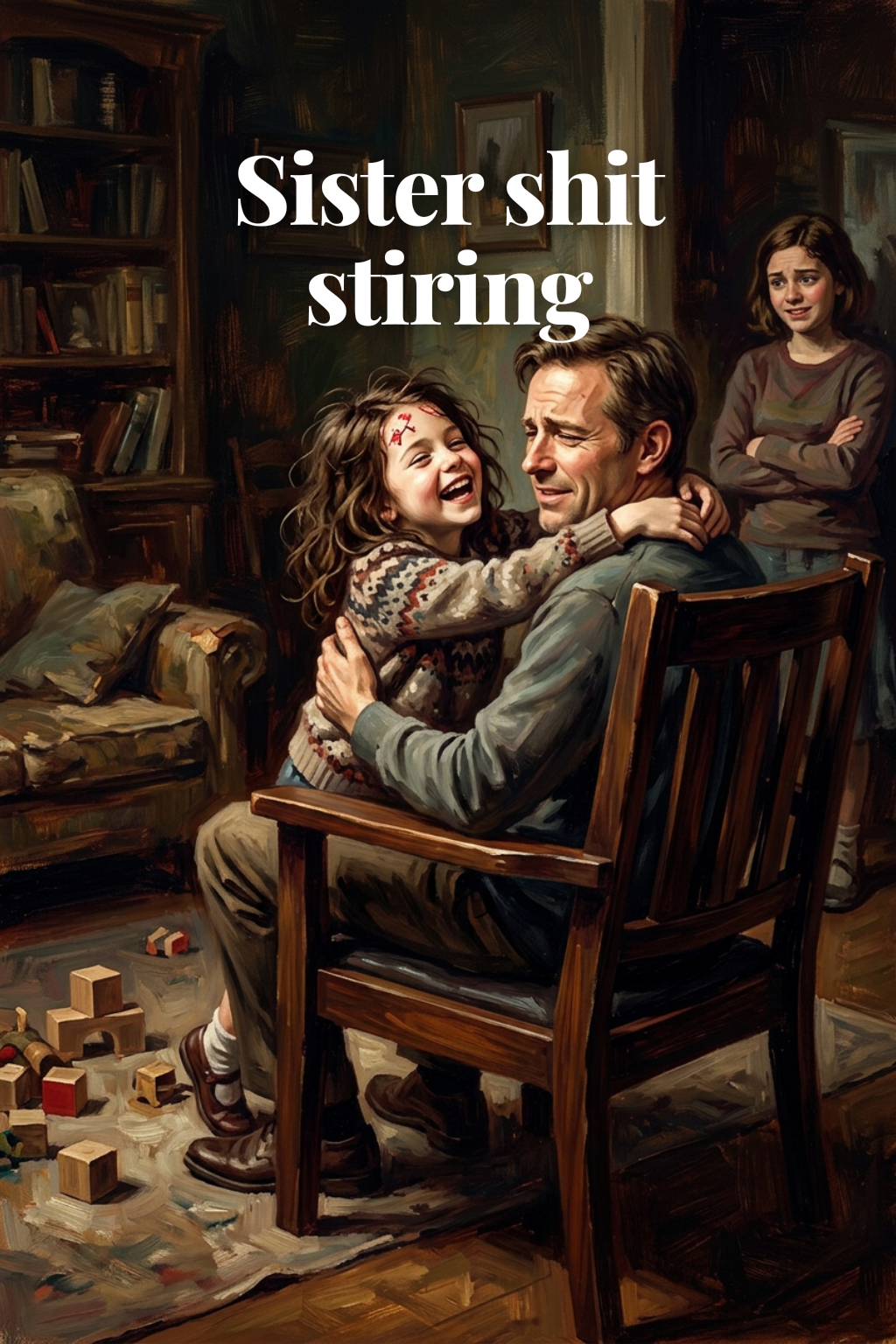
Sister shit stiring
Contents24 chapters
- 01The Chair, the Child, the Crack
- 02Five Minutes to Fine
- 03My Sister's Favorite Sport
- 04Every Room Had an Audience
- 05The Story Kept Changing
- 06Last Straw in the Living Room
- 07I Walked Out Quiet
- 08No Return Address
- 09New Number, New Rules
- 10The Lie Factory Runs Without Me
- 11Peace Feels Strange at First
- 12Let Them Talk, I'm Gone
- 13After the Number Died
- 14A Smaller Story at Last
- 15Chapter 15: Forwarding Address: None
- 16Chapter 16: Proper Size
- 17Paper Trail to Nowhere
- 18What Stays Shut
- 19Useful Things Only
- 20No Witness Required
- 21The Door in Its Proper Size
- 22Clean Break at the Clinic Desk
- 23The Version They Can Keep
- 24Routes Home
Chapter 1
The Chair, the Child, the Crack
The crack was louder than it should have been.
That is what I remember first. Not panic. Not shouting. Not blood. Just that hard, flat sound of a small skull meeting the back rail of a wooden chair, a sound that seemed to jump off the kitchen walls and sit in the middle of the room like something alive. One second there was noise everywhere—someone running the tap, somebody else half watching the telly in the next room, the child wriggling and laughing and asking again, Play, play, play—and then that crack cut through all of it.
Everybody froze because that is what people do when a child gets hurt. Time goes stupid for a second. Every adult face goes blank. Mouths part. Hands stop. Even the air changes.
I was right there.
It was one of those old wooden chairs that family houses keep for years, not because anyone loves them but because they survive everything. Thick back slats, hard seat, the varnish worn smooth by too many bodies and too many meals. If you dragged it across the floor, it made that dry scraping noise like grit under a plate. Solid enough to carry weight, unforgiving enough to remind you what it was made of.
The child had been climbing and twisting and treating the chair like it was part ride, part stage, part mountain. Kids do that. They never use furniture for its real job. A chair is never just a chair to them. It is a horse, a bus, a fort, a castle, a spaceship, whatever comes into their head in that minute. She wanted to play with me while she was there with her parent, and the whole thing was ordinary in the way family moments are ordinary right until they are not.
I was not being reckless. That matters to me, even if it does not always matter to the people who prefer a better story.
I was there, close enough to catch her if she slipped forward, close enough to keep a hand near her side while she wriggled and bounced and laughed. Her parent was right there too. Nobody in the room thought this was danger. Nobody said, Careful. Nobody rushed over to stop it. It was one of those soft, cluttered family minutes where people assume everything is fine because nothing bad has happened yet.
Then her body tipped back faster than my hand could follow, and the back of her head struck the wood.
That sound stopped the room.
She looked shocked before she cried. Children do that sometimes. Their face goes still, eyes wide, as if they are deciding what happened before they commit to how they feel about it. Then the cry came, full and offended, more from fright than injury, and everybody started moving again at once. Her parent scooped her up. Someone said, Oh God. Someone else said, She’s all right, she’s all right, in the voice people use when they are trying to persuade themselves. I stood there with my stomach dropped through the floor.
It is a sick feeling, seeing a child hurt on your watch, even for a split second, even by accident. Your body goes hot and cold together. Your thoughts get sharp and stupid at the same time. You check the same things in one glance—eyes, skin, lump, blood, breathing. You replay the exact half-second like maybe if you stare hard enough at memory you can reverse it.
I said sorry straight away. I did not wait to see if anyone blamed me first. I did not try to make it small. I did not go defensive. I said sorry because a child had hit her head and I was there and that was the human thing to do.
The child cried hard for a minute or two. Her face went red. Her little hands opened and shut against her parent’s shoulder. I could see the spot where she had hit it, though not much was visible beyond the first flush rising under the hair. No split skin. No blood. No dazed stare dragging on too long. No sickness. No collapse. Just shock, pain, noise. A nasty fright. The kind of moment that punches every adult in the chest and then, if you are lucky, passes.
And within minutes, it did pass.
That is the part I need said plainly because people like my sister can smell a dramatic version from across a room and feed it till it grows teeth. The child was laughing again within minutes. Proper laughing. Not that shaky, recovering little smile adults use to prove they are fine when they are not. Real laughter. Throwing her head back, reaching for the same game again, wriggling to get down, distracted by something bright and stupid and immediate the way children are. One minute tears, next minute asking for a biscuit or a toy or to do the exact same thing that just upset everyone. That is childhood. Sudden storms. Fast sun after.
The adults relaxed in stages. First the shoulders. Then the voices. Then the jokes came back, though thinner. Someone said she’d frightened everybody. Someone touched the back of her head again, gently. Her parent settled. The room exhaled. By any fair reading, the matter should have ended there: child bumps head, child cries, child recovers, everyone learns to watch the chair.
But fair reading was never my sister’s favorite thing.
Even then, before a word had properly spread, I could see certain faces changing shape around it. Not concern exactly. Something more alert than that. A little spark in the eye. That look some people get when an accident arrives gift-wrapped as future gossip. They tilt their head, they go quieter, they clock who was nearest, who said what, who looked guilty, who can be made into careless, who can be made into cruel. They start sorting the room into roles before the child has even finished crying.
My sister was one of those faces.
She did not need facts. Facts are heavy. They slow a person down. She preferred things that could travel fast from mouth to mouth: who let it happen, who should have known better, who was rough, who was stupid, who always causes something. She had a talent for taking one live moment and skinning it into three or four versions depending on the audience.
I knew that about her already. That is the ugly truth. This was not the first time I had watched her eyes sharpen when there was a chance to stir shit. It was just one of the clearest times, because there was a child involved and because I could feel, even while the little one was already settling, that the accident had not landed in the room as only an accident. In some people’s hands, it had already become material.
There is a special loneliness in that. Not in the fear for the child. That part is shared. Anyone decent feels that. I mean the loneliness of realizing, while you are still checking if a little girl is all right, that somebody else is already checking whether this can be used against you.
I watched my sister move closer without looking like she was moving closer. She asked the sort of questions that sound normal until you hear the edge in them.
How did she do that?
Was she leaning right back?
Where were you sitting?
Didn’t you see she was going to fall?
Each question by itself was harmless enough. Put them together and you could hear the start of a case being built. Not a concern for the child. A shape. A direction. A draft version of blame.
I answered because there was nothing to hide. I said exactly what happened. We were playing. She tipped back. Her head hit the chair. It happened quickly. She was already calming down. There was no point dressing it up. Clean truth is usually short.
My sister had no use for short truth. She liked something she could knead.
The child, meanwhile, had moved on. That is another thing people forget when they are busy writing stories over children’s lives. The child herself is often the first one back in the world. She had gone from tears to curiosity in no time. She wanted down. She wanted noise. She wanted the bright plastic thing on the floor. She wanted attention in a different direction. She was done with the shock. Kids are practical like that. They are not interested in maintaining a dramatic scene for adults who enjoy one.
I remember her laugh coming back in little bursts at first. Then stronger. Then full. A laugh so normal it made the whole room look faintly ridiculous for still hovering around the moment. That should have settled everybody for good. A child does not fake that kind of recovery. They either bounce back or they don’t, and this one did.
But a settled room is no good to a shit-stirrer. A settled room leaves nothing to carry into the next one.
The visit carried on, at least on the surface. Cups shifted. Someone wiped a counter. Somebody sat down again. The ordinary sounds came back one by one, but not in the same order as before. After a scare, the room never returns exactly to what it was. There is always a little drag in it, a little aftertaste. And in this case there was something else as well: the faint, nasty feeling that I was no longer standing inside the moment itself but inside the first retelling of it.
That is what families like mine do best. They do not let a thing stay a thing. They make it a version. Then a lesson. Then a weapon.
If you have never lived around that kind of person, it is hard to explain how quickly you start measuring your own face, your own words, your own breathing. I was still sorry. Still rattled. Still watching the child and making sure she really was fine. Yet part of my mind had already turned toward defense, not because I was guilty of anything terrible, but because I knew how my sister worked. She could take a chair and a bump and a five-minute cry and serve it up later as something darker, sharper, filthier. Suddenly I was not just in a room after an accident. I was in the first draft of somebody else’s lie.
I hated that feeling more than I can say.
It changes the way you stand in your own body. You stop being present and start bracing. You hear simple remarks as future evidence. You notice who meets your eye and who doesn’t. You clock who loves a story more than they love the truth. And the worst part is that if you speak too much, you look defensive, but if you stay quiet, your silence gets filled in for you.
So I kept myself plain.
I checked the child again with my eyes. Fine.
I spoke gently to her. Fine.
I apologized once, properly, and did not perform a breakdown for the room. Fine.
I did not rush around trying to win votes. People who know the truth do not need to campaign for it in the first minute. That is one thing I have learned the hard way. Panic gives gossip oxygen. Calm starves it, even if only a little.
Still, I could feel it starting.
My sister had that look she gets when she thinks she can milk innocence out of a situation she did not even cause. Mouth pulled down in concern. Brows up. Voice soft. But the softness was false. I have known her too long. Softness from her is often just packaging. Underneath, she is counting angles.
I saw her speak quietly to someone near the doorway. Then again to someone else a little later. I could not hear every word, but I know the rhythm of it. Pause. Tilted head. Little breath in. The face of somebody reluctant to say more while plainly dying to say more. That routine. That act. She has played it all her life.
And because families are families, people listen.
Not because they are evil. Sometimes just because drama is easier to hold than plain truth. Plain truth is dull: child hit head on wooden chair, cried, recovered, carried on. Drama has hooks in it: Who was responsible? How bad was it really? Should someone have known better? Was this an accident, or does it say something about a person? People love to turn one moment into a verdict.
I could almost hear the future versions lining up. She hit her head badly. She was dropped. Nobody was watching her. It was rough play. It was careless. It was typical. By the time a story like that goes round a few mouths, the crack of wood becomes the crack of a skull and somebody always makes sure your hands are dirtier in the telling than they ever were in life.
That day, standing in that house, I knew two things at once. The first was simple: the child was okay. The second was heavier: okay would not be enough for everyone.
That is the sickness in some families. Relief does not end the matter. Relief just removes the child from center stage and frees people up to get back to what they really enjoy, which is blame, side-taking, and polishing themselves against somebody else’s mistake.
I wish I could say I was surprised. I was not. I was disappointed in the old, familiar way. The way disappointment settles when it has been given a chair of its own in the family for years. My sister did not invent that atmosphere by herself, but she fed it. She knew how to stand in the draft between rooms and keep bad air moving.
The child laughed again, louder this time, and reached for a toy on the floor. That sound should have been the end of it. It should have put a full stop on the whole thing. I held onto that laugh because it was the truest thing in the room.
Everything else had started to bend.
When I think back now, I do not remember that visit as the day a child hurt her head. I remember it as the day I watched an ordinary accident split into two separate events. In one event, real life happened: a little girl knocked her head on a wooden chair, cried from the shock, then settled and laughed again within minutes. In the other event, the one growing in side glances and murmured questions, the facts had already begun being stretched like cheap elastic.
The first event belonged to the child.
The second belonged to people like my sister.
And once I saw that second event take shape, I knew the crack I had heard was not just wood and bone. It was the first clean sound of something else giving way. My patience maybe. My trust. That last thin idea that if the truth stood in the middle of a room plain enough, the truth would win on its own.
It doesn’t. Not in houses like that.
In houses like that, a child can stop crying and start laughing, and still the story is only just getting started.
Chapter 2
Five Minutes to Fine
Five minutes later she was laughing so hard she had hiccups.
That is the part I keep hold of because it was real, and because people like my sister depend on real parts being dropped first. The child had tears drying on her cheeks, one sock half off, hair stuck to her forehead, and she was already reaching down the side of the sofa for a plastic toy that had rolled away. She made that rough little laugh children make when they are fully back in their bodies, when the upset has gone through them and out. Not a weak smile to please the adults. Not a brave face. A proper laugh. Head thrown back. Mouth open. Gone again into whatever game she thought she was in.
Any room with sense would have let that be the finish.
Instead the room changed shape.
You can feel that happen in a family house. Nobody announces it. Nothing dramatic. A kettle gets switched on. A cupboard door opens and shuts too carefully. Somebody asks if she wants a biscuit in the same tone they use when they are asking something else entirely. Relief comes in, but it does not sit down alone. It brings suspicion with it. It brings performance. It brings people finding places to stand where they can look concerned without having to be useful.
The child’s parent seemed ready to move on. That mattered to me. She had been there. She had seen it with her own eyes. She was the one who picked the child up, checked her, soothed her, and felt that little body settle again. She was not turning it into a court case. She had that tired, practical look parents get when something gives them a fright and then, thank God, passes. Her shoulders had come down. She even said words to that effect. She was fine. She had bounced back. Kids do. The panic had drained out of her voice.
But that only works if everyone wants the truth more than they want a story.
My sister never has.
She moved around the kitchen with a tea towel in her hand as if she had become head nurse by accident. Wiping a counter that did not need wiping. Straightening things that were already straight. Busy hands, listening ears. That is one of her tricks. She makes herself look occupied so nobody notices she is collecting. She collects reactions. She collects phrases. She collects the tiny hesitations people leave lying around after a scare.
“Did she hit it hard?” she asked, not loudly.
The question itself was ordinary enough. Any sane person might ask it. It was the timing that gave her away. She asked it after the answer was already in front of us. The child was laughing, bending, wriggling down from her parent’s lap to chase a toy. No blood. No dazed stare. No vomiting. No limpness. No silence. Fine in every visible way that counted in that moment. But my sister asked like she was opening a file.
I said, “She cried from the shock. She’s alright now.”
I kept my voice level. I did not give her extra words to play with.
My sister nodded, but it was a false sort of nod, the kind that means I hear what you’re saying and I will now make room around it for my own version. Then she said, “It just sounded awful.”
That was true as far as it went. It had sounded awful. Wood and skull do not make a nice sound when they meet. But some people say a true thing only to smuggle in a bigger false one behind it. She wanted the sound to outrank the outcome. She wanted the noise of the accident to linger longer than the child’s recovery.
And that is how these things start living past their natural death. Not with one huge lie dropped in the middle of the table. That would be too easy to catch. It starts with a person rubbing the bruise of a moment long after everyone else has checked there is no serious wound.
The child laughed again, this time because someone made a face at her. She leaned against her parent’s knee, then toddled off toward the hallway and came back dragging something soft and yellow by one ear. A stuffed animal. She was not guarding her head. She was not slow. She was not frightened of the chair. She had already moved on in the clean way children do when adults let them.
I watched her and I thought, there is your answer.
Then I looked at the room and knew the answer would not be enough.
It is a strange thing, standing in a house where the facts are walking around in plain sight and still feeling them lose. You think truth should have some weight of its own. You think a child laughing five minutes after a fright should settle any grown person worth the name. But a family does not always work off facts. A family often works off old roles. Once you understand that, a lot of behaviour stops being confusing and starts being ugly.
In my family, there has always been an appetite for assigning parts. One person gets to be the steady one. One person gets to be the dramatic one. One gets forgiven before speaking. Another gets measured before breathing. The event itself matters less than who it happened around. If I knock a glass over, it means something. If my sister sets the whole table shaking, there will be a reason, a stress, a misunderstanding, a soft landing prepared for her before the water even stops spreading.
That day I could feel my part being fetched off the shelf again.
Nobody said it straight out. That would have been cleaner than what they did. What they did was worse because it wore the face of concern. A couple of the older relatives kept glancing at me, then at the child, then at each other, as if they were stitching something together in their heads. Somebody asked, “She didn’t black out, did she?” in a tone that made it sound half like care and half like bait. Another wanted to know, “How exactly did she fall?” though they had either seen it or heard enough to know. It was all that gentle repetition people use when they are not trying to understand but trying to pin.
I answered once. I did not start improving my answer to suit each listener.
That choice mattered. I know that now. In messy families, you can lose yourself trying to sound innocent to people who have already decided innocence is boring. If you keep repeating, correcting, tidying, clarifying, they do not think, oh good, now we understand. They think, look how much there is to talk about. Every extra sentence becomes raw material.
So I stayed plain.
The child climbed onto the lower step by the kitchen door and announced something nonsense and glorious in a little voice thick with leftover tears. Somebody laughed. Somebody else said, “See? She’s alright.” That should have closed the case. It should have put a lid on it tight enough to hear the click.
My sister loosened it again with one face.
She did not argue. She did not challenge anyone directly. She just gave that small doubtful look she has, chin tucked, eyes widened a touch, as if she was the only one brave enough to keep worrying. It is a poisonous little performance because it lets everyone else feel careless by comparison. If you accept the obvious, you are being too casual. If you keep circling the incident, you are caring. She has used that trick for years. She wraps meddling in concern and waits for fools to call it kindness.
I have seen her do it over smaller things than a child knocking her head. A late text message becomes evidence of neglect. A missed birthday call becomes a campaign of disrespect. Someone leaving a party early becomes proof of an attitude. She cannot let a plain thing stay plain. She has to season it. Then she stands back and acts surprised when everyone’s mouth burns.
That afternoon she kept seasoning.
When she spoke to one person, her voice dipped low. When she spoke to another, she gave a tiny sigh first. Once I caught my own name landing in a sentence I could not fully hear from where I stood by the sink. I did not need the whole sentence. I know the shape of being discussed from across a room. It has a feel. People stop looking at you naturally and start looking at you in pieces. A glance. A pause. A glance away before your eyes meet.
The child, meanwhile, was trying to put a spoon into a doll’s knitted sleeve and laughing because it would not fit. There was something almost insulting in how healthy and normal she was while adults worked to keep tension alive around her. She had returned to the business of being small. We had returned to the family hobby of making trouble.
That is when I understood the deeper problem. It was not that they believed she was badly hurt. Most of them could see she wasn’t. It was that a scare had happened, and a scare is useful. It gives people a moral ladder to climb. They get to position themselves as the wiser one, the more caring one, the one who would never have let that happen, the one who saw concerns others missed. Facts are almost beside the point. The point is status. Blame is social money in some houses. People spend it to buy a better seat.
My sister spends freely because she never uses her own money. She spends other people’s peace.
You could see her building the later conversation while still standing in the present one. Not out loud. Not with any courage. Just by preserving certain details and polishing them. The loud crack. The old wooden chair. The split second before anyone moved. Me being close by. Me not stopping it in time. Those are all real pieces. Rearranged in the wrong hands, they become a verdict instead of an accident. She knows that. She counts on people not noticing the edit.
And families help the edit along because many of them prefer a story with shape. “Child hit head and was fine” dies too quickly. “Should never have happened” lasts all week. “I was worried, you know how things are” lasts longer. “I’m not saying anyone meant anything, but…” can live for years if fed properly.
I could almost hear those future lines then, still warm from the oven.
One of the hardest things about being around habitual liars is that they do not always lie by inventing. Sometimes they lie by emphasis. Sometimes they lie by sequence. Sometimes they tell the whole thing in an order that leaves guilt glowing around the person they want blamed. They know most listeners will not ask enough questions to pull it apart. They know “technically true” can do nearly as much damage as a clean falsehood.
So when someone later says, “Well, I heard she hit her head very hard and there was all sorts of panic,” where did that come from? It came from a person like my sister, nursing the panic after the child herself had dropped it. Feeding the noise. Snipping out the laughter five minutes later as if it spoiled the plot.
That is why I remember the timing so sharply. Five minutes is nothing. Five minutes is the steam still rising off a mug. Five minutes is a song on the radio you barely notice. Five minutes is not enough time for a serious family grudge to be born if everyone acts in good faith. But it is plenty of time for a stirrer. They do not need long. They just need a crack to get their nail into.
By then I had gone very quiet inside myself.
Not shocked. Not hurt, not yet. Just watchful. There is a point in these situations where you stop participating naturally and start observing for your own survival. I knew if I got defensive too early, that would be used. If I got angry, that would be used. If I over-explained, that would be used. So I wiped a cup. I moved a plate. I answered direct questions with direct answers and left no decorations hanging from them.
That kind of restraint is lonely work in a family house. It can even make you look cold to people who mistake composure for guilt. But I would rather look cold than help light the fire they want to warm their hands on.
The child came near me once with the stuffed toy and I crouched down and asked if she was alright. She nodded with complete indifference to the whole drama and shoved the toy toward my face as if that was the only matter worth dealing with. It was a ridiculous, beautiful correction. Her world had already restored itself. Mine had not.
My sister saw that too. I am sure of it. She saw the child happy with me. She saw there was no fear, no clinging away, no sign of harm attached to my presence. And still she kept the current moving under the room. That told me everything. This was not about the child. Once it stopped being about the child, she did not stop.
That is the thing people outside these families do not always get. They think the lie has a purpose tied to the event. It often doesn’t. The event is just a hook. The real purpose is older: control, attention, rank, punishment, habit. Some people cannot let a moment pass without turning it into a little stage where they get to direct who is seen as what.
My sister likes me best when I am cornered explaining myself to people who should never have needed an explanation.
She nearly had that again.
But somewhere under the kettle noise, under the biscuit tin opening and the low voices and the child’s laugh skipping through the hallway, I felt something harder than embarrassment settle into place. Not rage. Not a scene. Just a private click. The kind a lock makes.
I thought, they are going to keep this alive.
Not because it deserves to live. Not because the child is unwell. Not because anyone truly needs answers. They are going to keep it alive because some people in this family cannot bear a clean ending. They need residue. They need a stain to point at. If the facts wipe it away, they just rub harder until something marks.
That was the answer to the question I had not wanted to ask.
Would this family accept what actually happened?
No. Not all of them. Not the ones who feast on distortion. Not the ones who need a culprit more than they need peace. Not my sister, certainly. She had already chosen the use-value of the moment over the truth of it.
And once I knew that, the child’s laughter stopped sounding like the end of a scare and started sounding like something rarer in that house: innocence carrying on despite the adults.
I wish I could say I confronted it then and there and everyone saw through her. That is not how these houses work. The mess is too fine for that. Too powdered. By the time you point at it, it has settled over everything and people act like you are the one making a fuss by noticing the dust.
So I did the only thing worth doing in a room already leaning away from truth. I remembered exactly what happened. I remembered the crack, yes, but also the quicker part, the truer part: the child crying, then calming, then laughing within five minutes. I remembered who held her. I remembered who hovered. I remembered who asked after she was already fine. I remembered the order because order is where the lie usually goes to work first.
That memory became important later.
At the time, all it gave me was clarity.
The child was fine.
The room was not.
Chapter 3
My Sister's Favorite Sport
My sister’s favorite sport is not lying exactly. Lying is too small a word for what she does. A lie can be plain. It can stand there on its own legs. What she does is fuss with a story the way some women fuss with a cushion before guests arrive, pinching at the corners, plumping one side, turning the ugly bit to the wall. She does not tell one false thing and leave it alone. She arranges. She seasons. She carries one version into one room and another into the next, and then she stands back with that innocent face as if stories grow bent all by themselves.
I knew it before the chair.
The chair just gave me another clean example.
She started almost at once, not loudly, not with some big accusation that anyone decent could challenge on the spot. She moved in the sly way she always had. In the kitchen she asked me, soft as milk, “But what were you doing when she fell?” as if she had not been three feet away, as if we were not all in the same cramped room under the same yellow light. Then when the child’s parent said the girl was alright, my sister nodded and did that little mouth twist she does when she wants to keep doubt alive without having to own it. “Yeah, she seems alright now,” she said. Not she is alright. She seems alright now. Two extra words. That is all it takes with people who enjoy worry.
She never wastes a chance to build a longer shadow than the thing itself deserves.
I watched her carry cups through the house after that, and with each trip she was gathering and dropping bits of version. In the kitchen it was concern. In the doorway it was caution. Near the front room it had become, “It was such a hard bang.” By the time she leaned into the room where one of the older relatives sat with her cardigan buttoned wrong, the sentence had grown teeth: “It really knocked her.” Not hit. Knocked. A word with aftertaste. A word meant to suggest damage even when the evidence has already run off laughing down the hall with a stuffed toy.
The ugly part was how ordinary it looked if you did not know her.
That is how she gets away with it. She does not come at you waving a flag. She comes with tea. She comes with lowered eyes and a voice people trust because it sounds measured. She asks a question she already knows the answer to. She repeats your answer later with one hinge changed, one nail moved. Suddenly a simple thing no longer hangs straight.
Families like ours make room for that sort of person. They call it concern. They call it talking. They call it just trying to understand what happened. They almost never call it what it is, because then they would have to admit how much of the house runs on it.
I had seen her do this since we were young.
If I came home late as a teenager, she would tell one person I had been “out with people,” which sounded harmless enough, and tell another that I had “stormed off again,” which gave it temper, and tell our mother she “didn’t know where I’d gone,” which put a little panic in it. Same set of facts, if you were generous. Same evening. But by bedtime I was not just late. I was difficult, moody, secretive, disrespectful, depending on who had heard which version and what they liked to add to it. If I challenged it, she would widen her eyes and say she had only said what she knew.
That phrase should have been stitched on her pillow: only said what I knew.
What she knew never stayed still long enough to be checked.
I remember one Christmas when a cheap bracelet went missing from the sideboard. It turned up later behind a photo frame, exactly where it had slipped, but before that happened my sister had already done a full round of grief and implication. She did not say I took it. She was too smart for that. She said, “Well, it was there before,” and, “It’s weird because not everyone was in this room,” and, “I’m not blaming anyone.” That last line was her favorite trick. I’m not saying X, while dragging X into the room by its hair. By the time the bracelet was found, the air had done the job. No apology. No clearing up. Just a shrug and a laugh and some little line about everyone being stressed.
The bruise remained where the accusation had touched, even after the thing itself vanished.
That was her talent. She understood that in families, correction never travels as fast as suspicion. People will repeat a nasty version with energy and then receive the truth like a receipt. Fine, alright, one of those things. They never carry the cleared name with the same heat.
She knew this in her bones. She relied on it.
There was another time with a birthday meal, years before the chair, when I said I might leave early because I had work the next morning. That was all. No scene. No slammed door. I said it while folding napkins at the table. An hour later, two people were asking me why I was in such a mood. My sister had told one aunt that I was “making a thing” about staying. She told another that I was “off with everyone for some reason.” By dessert I had become the dark cloud over a meal I had helped cook. When I asked where they had got this idea, she put on that injured look, as if I had wounded her by noticing her hand in the mud.
Once you see the pattern, you cannot unsee it.
That day with the child, I saw it in real time, almost like watching dye move through water. A person from outside would have looked at the room and seen nothing much: kettle steaming, spoon in a mug, somebody picking crumbs off a plate, the child back on her feet. I saw distribution. I saw placement. I saw my sister choosing who got which version. The practical people got a careful one, because they would reject open nonsense. The dramatic people got a heavier one, because they enjoy carrying bad news in their mouths. The older ones got the version with extra concern in it, because age gives worry status in a family. To each audience she served the angle they were most likely to swallow.
That was when my attention stopped sitting on the child completely and settled where it should have settled long ago: on the machine.
The accident had happened. Fine. Children fall. Chairs are hard. Hearts jump. Then five minutes pass, and a child is laughing again. In a healthy house that would be the end. In ours it was the opening bell. The event itself was not rich enough for all the interest it suddenly received. The extra energy was coming from somewhere. It was coming from my sister, and from the people who liked what she offered because it relieved them of the burden of checking anything for themselves.
That is the ugly little trade in some families. One person provides the poison. Others provide the appetite.
My sister had always enjoyed being the source. Not because she was brave enough to say things directly. The opposite. She liked the side power of being the one who knows, the one who heard, the one who can lean close and say, “Don’t repeat this, but—” which of course means please repeat this in exactly the right tone. She could turn boredom into a grievance in under a minute. She could take a plain misunderstanding and dress it up until it looked like betrayal.
And because she did it often, people stopped seeing each single act as serious. That is another way these things survive. If someone steals from you once, people notice. If someone steals pennies from you every day, they call you fussy for counting.
She had been stealing the shape of my life in pennies for years.
It was never one grand invention. It was bits. That I was rude when I was tired. That I thought I was better than them if I kept quiet. That I was secretive if I did not explain myself. That if I corrected a story, I was defensive. That if I did not correct it, the silence meant guilt. She built me a trap where every normal human response could be pinned to the board and renamed.
I do not think she sat at night plotting me with some master plan and red string. I want to be honest about that. Not all cruelty is theatrical. Some of it is habit sharpened by reward. She had learned, over years, that she could stir the room, move the blame, gather sympathy, and walk away cleaner than the person left scrubbing at the story. She kept doing it because it worked. Because people let it work. Because there is a kind of person who would rather believe a dirty tale than admit they enjoyed hearing it.
Still, habit does not make it small.
When something happens again and again, it stops being random. You do not need a written confession to know a stove is hot. Touch it enough times and the lesson writes itself.
I started noticing how often I was being asked to answer for moods, comments, glances, tones, things I either never said or never meant the way they were brought back to me. The source was nearly always a chain that led, sooner or later, to my sister. She never appeared at the end of the line looking guilty. She appeared tired. Hurt, if needed. Noble sometimes. “I was just trying to smooth things over.” That one nearly made me laugh whenever she used it. Arsonist with a tea towel, patting smoke.
The chair day gave me the clean chain because I was there for every link.
That mattered.
Usually family lies work because they get a head start. You hear the finished story after it has passed through three mouths and picked up furniture as it rolled downhill. This time I saw the bare event with my own eyes. I heard the crack. I heard the child cry. I watched her settle. I watched her laugh. Then I watched my sister begin the edits before the child had even stopped moving around. There was no room left for me to doubt my own memory. That is not a small thing when you come from people who survive by making you question your own.
Gaslight is too polished a word for what family bullshit often feels like. It is rougher. More domestic. A stain on the draining board that everyone claims not to see while asking how your hands got dirty.
I remember standing by the sink with a damp cloth in my hand and hearing my sister in the next room say, “It could have been so much worse.” Now, on the face of it, that is true of nearly anything. A dropped plate could have cut a foot. A missed step could break a wrist. Rain could turn to flood. The truth of a sentence is not the same as the use of it. She was not talking to comfort anyone. She was laying boards for a bridge to blame. If it could have been worse, then somebody must have failed. If somebody failed, then who? There she was, ready with soft focus and sharpened edges.
I did not confront her then because I knew the script too well.
If I said, “Stop making this into more than it was,” she would say I was overreacting. If I said, “You know she’s fine,” she would say no one said she wasn’t. If I said, “You keep changing the story,” she would ask, wounded, what story? Then she would take my objection around the house as fresh material: now I was snappy, now I was guilty, now I was trying to shut down concern. She liked getting you to defend yourself against smoke. The effort exhausts you, and the exhaustion becomes part of your case against yourself.
So I did not feed her live.
Instead I watched who lit up around her. That was useful in its own way. Some people leaned in because they were anxious by nature. Some because they were bored. Some because family systems need a regular wrong person, and I had been cast in that role enough times that they knew the lines. My sister was not operating alone. She was the striker, yes, but the house was full of dry material.
That is the part I resisted for years because it hurt more than blaming one person. If it were just my sister, then perhaps the problem could be named and cut out neatly. But families build around their patterns. They arrange themselves around the one who stirs and the one who absorbs it. One tells, one smooths, one denies, one sighs, one says let’s not start, one says that’s just how she is. By the time you understand the shape, you realize the lie is not a weed in the garden. It is in the soil.
And I was tired down to the bone of being told to grow in it anyway.
That afternoon, the child’s laughter kept floating back into the room from the hall, bright and careless. Every time I heard it, I felt two things at once. Relief, because she was plainly alright. Fury, because her being alright changed nothing about what was already underway. My sister did not need injury. She needed incident. Any little jolt would do. A missed call. A look across a table. A child hitting her head and then being fine five minutes later. She could work with scraps.
That was the deepest rotten bit of it. Truth did not stop the process. Sometimes truth hardly entered it at all.
People think if you can prove what happened, the mess will clear. In houses like ours, proof only matters to people who wanted truth in the first place. The rest are after atmosphere. Suspicion. The warm little thrill of taking a side without having to say outright that they enjoy the taking.
By the end of that day, I had stopped asking myself whether this was another stupid family flare-up that would burn out by evening.
It was not.
It belonged to a line of things. It matched the grain of older days too neatly. My sister had not suddenly become a woman who used an accident to bend people against me. She had been practicing the motion for years on smaller surfaces. This was just one more swing of the arm, and the family, out of habit, had already started making room for it.
That was the answer to the question under the question.
Was this just passing drama?
No. Passing drama ends when the facts settle. This kept moving after the facts were done. That meant it was serving something else.
It was serving her. And, in a wider sick way, it was serving the family habit of letting her bullshit become weather while I was expected to stand in it and pretend it was only rain.
Once I saw that clearly, a hard calm came over me.
Not peace. Not yet. But the kind of calm you get when a noise you have heard all your life finally reveals its source. You stop jumping at every bang once you know which loose pipe is knocking in the wall. You also stop believing people who tell you the sound is in your head.
My sister would go on stirring. I knew that now with a steadier kind of certainty. More than that, the family would go on making excuses for the spoon in her hand. They would call it concern, misunderstanding, emotion, stress, anything but what it was. That did not mean I had to keep standing there letting them taste me and call it conversation.
The chair was not the worst thing that happened in that house.
The worst thing was how quickly a child’s brief pain became my sister’s material, and how normal everyone let that be.
That was when I began, properly, to understand the scale of the rot. Not one lie. Not one bad afternoon. A repeated practice. A family trade. My sister at the center, flicking dirt, and enough people around her willing to help call it dust.
Chapter 4
Every Room Had an Audience
I first knew it had left the house by the way people looked too carefully casual.
Not one big confrontation. Nothing clean enough to point at and say there, that’s it. It came in scraps. A pause on the phone that ran half a second too long. A cousin asking, in that falsely light voice, whether things had “settled down a bit.” A neighbour of my mother’s, who had no earthly reason to know anything, tilting her head at me as if I were one of those dogs people mention after it has snapped at a child. Nobody came out with the full lie straight away. They never do when they want to keep the lie flexible.
They come with feelers.
I remember standing by the sink the next morning, rinsing a mug, when my phone went and I saw a relative’s name on the screen. Not someone I spoke to much. That by itself told me enough. We did the usual bit first—weather, sleep, how’s things—and then she slipped it in as neat as a knife through paper.
“I heard there was a bit of drama with the little one.”
A bit of drama. Not a bump. Not a scare. Not she hit her head and then was laughing five minutes later. Drama. That was my sister’s word if ever there was one, because it did two jobs at once. It made the thing sound larger, and it made me sound like the sort of person around whom scenes just somehow happened.
I said, “She knocked her head on the wooden chair. She cried, then she was fine.”
There was a silence after that. I could hear crockery on her end, a radio low, somebody moving through her kitchen. Then she said, “Well, that’s not exactly how it came across.”
There it was. Not the lie itself. The shadow of it. Meant to make me ask.
“How did it come across?” I said.
“Oh, you know. Just that it was all a bit much. People were upset.”
People were upset is one of those family phrases that means nothing and accuses you of everything. Which people. Upset about what. For how long. Did the child faint? Bleed? Need a doctor? No. But “people were upset” gives a bad smell without naming the source.
I could have spent ten minutes pulling at it like loose thread. I didn’t. I had done that before with other stories, other days, and all it ever got me was more tired and them more pleased with themselves.
So I said, “The child was fine.”
She made a little noise, the kind people make when facts are getting in the way of the version they had prepared to enjoy. We ended the call politely. When I put the phone down, I stood still a minute and let the message settle in my body. My sister had already moved it beyond the room. Fast. Faster than I had even given her credit for.
That was one of her skills. She knew the warm spots in the family, the places where a thing would hatch quickest. She never started with the most sensible person. She started with the ones who liked being told first. The ones who heard “don’t say I told you” as a little crown being set on their head. Give them concern, give them just enough detail to sound true, and off it went. By lunchtime one person’s “the child bumped her head” became another person’s “it was a terrible bang,” and by tea time someone was asking whether the girl had been watched properly.
That was the trick every time: she never had to say the worst version herself. She only had to salt the road.
You learn a lot by listening to what gets repeated back to you. Not because it is accurate. Because it shows you what kind of dirt people were willing to carry.
Another call came two days later. This one from someone who usually only rang at birthdays or funerals. He asked after me in a tone so soft it was almost tender, and that softness set my teeth on edge. He said he hoped I was “keeping alright after all that.” Again, all that. These people loved a cloud with no edges. It let them stare into it and see whatever shape entertained them most.
I asked him, “What do you think happened?”
He laughed the way guilty people do when they want to sound harmless. “Oh, I don’t know what happened. I just heard there was a bit of carrying on. Your sister was shaken.”
Your sister was shaken. Not the child’s parent. Not the child. My sister. Amazing, when you looked at it straight. A child hit her head and somehow my sister had become the injured party, the witness left trembling by my carelessness, my temper, my something. There is real craft in that kind of theft. To lift an event out of one pair of hands and set it in another until the room forgets where it came from.
I said, “She wasn’t the one who got hurt.”
He went quiet then, because some people can only manage their concern while you agree to play the role they’ve been handed. The minute you answer plainly, they lose their footing.
That was when I started seeing that every room had already had me placed in it, even when I had never crossed the doorway. My sister had a version of me she could send ahead like a smell. Moody. Sharp. Unreliable. Easily set off. If a cup broke in the kitchen and I happened to be in the postcode, some people were halfway to believing I had thrown it. Not because they had seen me do anything. Because she had been building that outline for years, little strokes added whenever she got the chance.
The ugly part was how often she did it while acting as if she were protecting me.
That was her best performance. Concerned sister. Sad little sigh. “I don’t want to say too much.” “You know what she’s like when she gets stressed.” “I’m only saying this because I’m worried about her.” If she had come in snarling, more people would have distrusted her. But she came in sorrowful. She made a face like somebody wiping a spill she had not caused. That expression bought her miles.
I saw the result of it in person that weekend. I walked into a relative’s living room and the air changed by one thin degree. It was tiny, but I knew that temperature. Two people stopped talking not because the conversation had naturally ended, but because I had arrived at the wrong line. One woman smiled too fast. A man on the armchair looked at his lap and then at me and then away again. Nobody said my name with ease.
That sort of room tells on itself.
I sat down anyway. There were cups on coasters, biscuit crumbs in the crease of the sofa, the smell of furniture polish and stewed tea. Somebody had left the television on low with the subtitles running. Ordinary afternoon. Ordinary house. But under all of it was the live wire of a story that had arrived before I had.
It came out sideways, as it usually does. Someone asked whether things had “calmed down at home.” Someone else said families “all have their moments.” Another person told me there was “no point dwelling on it” before I had even mentioned anything. That one nearly made me laugh. Don’t dwell on what? On the thing you lot had clearly been chewing over while I wasn’t here?
People reveal themselves by what they rush to smooth.
I said, “Funny, because I’m the one who wasn’t in the room when half of you started discussing me.”
That sharpened the air. A spoon clicked against a mug. One of them said, “Nobody’s discussing you.”
A child could have heard the lie in that. Of course they had been discussing me. You could see it in the way they all suddenly became students of their tea.
Then one of them tried a softer route. “Your sister was only worried. She didn’t want things getting out of hand.”
I asked, “What things?”
That is the question liars and their helpers hate most. What exact thing. Name it. Set it on the table. Let’s all look. They prefer fog. Fog lets them keep both their innocence and their excitement.
Nobody answered properly. I got bits. “The child was frightened.” “It sounded rough.” “People were concerned.” The usual mash. Not one clear claim, because a clear claim can be checked. A smear travels better.
By then I understood something I should have admitted sooner. The story did not need to be believed in full to do its job. It only needed to leave a mark. A raised brow. A doubt. A future readiness to think the worst of me. That was enough. My sister wasn’t building court cases. She was laying residue.
That is how some people wreck you. Not with one grand accusation, but with a film over everything. So when you laugh too loud, you are “worked up.” When you go quiet, you are “off with everyone.” When you defend yourself, you are “making a scene.” When you walk away, you are “proving the point.” There is no move left that is not fed back into the picture they have drawn.
I began hearing from people outside the family too, which was when the thing turned from irritating to foul. Mutual contacts. Friends of relatives. People who should never have had the child’s bump in their mouths at all. One woman, who had no business knowing a thing, asked me with bright fake sympathy whether I was “coping alright with all the upset lately.” Upset lately. As if I were some public weather system passing over the district.
I looked at her and thought: she has got to you as well.
I did not bother correcting every detail. You cannot sweep smoke out of every chimney. What I did instead was note the route. If someone outside the house knew, then it had gone from my sister to a relative to another kitchen to another phone. Passed hand to hand with each person adding their own pinch of flavour. By then the original scene was gone. No wooden chair. No child laughing with one sock half off. No parent saying she was alright. Just me, somehow, as a problem in motion.
That was when side-eyes started to matter more than words. A blunt lie can be challenged. A look cannot. It just hangs there, doing its work. Somebody hearing my name and then glancing at another person. Somebody going bright and chirpy when I enter, as if to cover the fact that I had interrupted something. Somebody saying, “Let’s not start,” when I had not opened my mouth.
I used to think I was imagining some of that. Years in that family trains you to distrust your own reading. They call you sensitive when you notice patterns. They call you paranoid when the pattern has your name in it. But there comes a point where self-doubt turns stupid. If three people in separate rooms ask if you are alright “after what happened,” and none of them can say clearly what happened, then someone has been at work. You are not mad. You are hearing the same bad bell from different streets.
The hardest part was not even the lies. It was the innocence wrapped around them.
My sister did not stomp about declaring war. She smiled. She brought cups in. She checked on people. She spoke low. She tilted her face in that hurt little way that made older relatives want to stroke her arm and say never mind, love. She knew exactly how to look like the one carrying a burden. Meanwhile I was the one left feeling rough, cornered, sharp with disbelief, which then made me easier to present as difficult.
That is a filthy arrangement, and families like mine protect it because it keeps the roles tidy.
One evening I got the nearest thing I would get to proof. A relative rang, half nosy and half guilty, and in the middle of her talking she slipped and gave me one of my sister’s lines almost word for word. She said, “Well, she said you didn’t mean it, but that you get overexcited and then things happen.”
I nearly admired it. Overexcited. Such a clean little poison. Childish enough to belittle me, vague enough to fit any event, nasty enough to stick. You could pour that over a dozen situations. Overexcited at a birthday. Overexcited in the kitchen. Overexcited in an argument. It made me sound unstable and silly at once.
I said, “Did you hear yourself?”
She went defensive straight off. “I’m only saying what I was told.”
Exactly. That was the whole machine. One person only saying what they were told. Another only repeating out of concern. Another only mentioning it because they care. Before long nobody owns the lie, yet it has owners everywhere.
After that call I sat with the phone in my hand and felt something colder than anger. Anger still hopes to be heard. This was cleaner than that. I saw, properly, that I was being discussed in rooms I would never enter, by people who liked the feel of the story more than they liked me. They did not need facts. They needed a familiar arrangement: my sister reasonable, me suspect.
Once you see that, you stop wasting breath on the wrong problem.
The problem was not how to word the truth better. I had already worded it plainly. The child hit her head, cried, recovered, laughed, played. The parent said she was fine. End of story, if stories ended where they should. The real problem was that my sister had an audience, and some of that audience had bought tickets years ago.
Not all of them, to be fair. A couple of people gave themselves away in the other direction too. One relative, quieter than the rest, caught me alone by the back door while the kettle was boiling and said, “I don’t think this is what they’re making it into.” She said it low, eyes on the garden, like even that small act of honesty had to be smuggled. I was grateful, but the shape of it still stung. Even truth in that family had to whisper.
Another told me, “You know how she is,” meaning my sister, with a helpless shrug that was supposed to pass for wisdom. I hated that phrase more every year. You know how she is. As if knowing somebody lies means you owe them more room to do it. As if familiarity cancels damage. Fire still burns, even if it always has.
By then I had stopped asking how far the story had travelled, because the answer was simple enough: far enough. Far enough that people who were not there thought they could weigh in. Far enough that I was being watched through a version of myself I had not made. Far enough that when I entered a room, I had to enter through whatever my sister had already said.
That changes your body before it changes your plans. You become tight-backed. Tired early. You rehearse sentences while driving. You think of who has heard what and from whom and whether it is worth one more correction. Then one day you realise the whole arrangement is obscene. Why should you spend your life chasing your own outline from room to room while the person smudging it gets to play innocent hostess?
That was the lesson of that stretch of days. Not just that my sister lied. I knew that. It was that the lie had seating. It had listeners who liked the show. It had people willing to nod along so long as they never had to admit what they were enjoying.
Every room had an audience, and in every room my sister knew how to look like she had wandered onstage by accident.
I was done pretending I did not see the act.
Chapter 5
The Story Kept Changing
The story changed depending on who had me on the phone.
That was when I stopped asking whether my sister had been upset and started asking what, exactly, she had said. Not what people felt about it. Not what they thought she meant. The words. The order. Who told them. What room they were in when they heard it. Once I did that, the whole thing went from nasty to almost mechanical.
One person told me the child had “gone flying backwards.” Another said she had “slipped while you were messing about.” Someone else said I had “let her climb up there too much.” That one interested me, because it carried a little sermon inside it. Not just that something happened, but that I had a character flaw attached to it. Too playful. Too careless. Too something. Always that extra smear, tucked in beside the event like it had always belonged there.
The plain truth had never needed all that furniture. A child on an old chair tipped back. Her head hit wood. She cried. Then she settled. Then she laughed. But by then the lie had started breeding little legs.
I began to hear the same parts move around. In one version, my sister had been the one nearest. In another, she had “seen it all happen from the sink,” which is not the same thing at all. In one version, the child’s parent had been “in bits.” In another, the parent had “tried to play it down.” That made me laugh, bitterly, because it told on itself. If the parent had to be accused of playing it down, then the parent had not been performing the panic my sister needed.
That was the first useful rule I learned: when a liar cannot get rid of a fact, they change the meaning of the fact. Fine becomes pretending to be fine. Calm becomes denial. A quick recovery becomes “you never know with head injuries.” Every solid thing gets wrapped in fog.
After that I paid attention the way you do when a tap starts dripping in the night. You start hearing pattern instead of noise.
A cousin said to me, all casual, “I heard she was sick after.” I asked, “Who was?” He said the child. I said she was not. He paused, did that little throat-clear people do when they realize they’ve walked into somebody else’s mess, and then said, “Well, that’s what I was told.” Not told by whom, of course. The family passive voice. The lie arrives as if the weather dropped it off.
Another relative said the child had “gone floppy for a second.” That one was so outrageous I nearly admired the nerve of it. Gone floppy. You can hear how frightening that sounds. You can also hear how useful it would be if your aim was to turn a bang and a cry into a scene of near-tragedy. I asked who said that. Silence first. Then: “I think your sister said she might have.” Might have. There it was again. The little oily hinge. Say something awful, then put a maybe on it later as if that cleans your hands.
The changing did not happen by accident. That was the point I resisted for a while, because deliberate lying is uglier to face than exaggeration. Exaggeration you can explain. People get carried away. They repeat things badly. They add colour. Deliberate rewriting is different. Deliberate rewriting means somebody is steering.
My sister was steering.
I knew it because the changes never went against her. Not once. The facts did not drift randomly, like loose bits in water. They drifted in one direction. If there was a question about who was responsible, it drifted toward me. If there was a question about who was distressed, it drifted toward her. If there was a question about who was being sensible, it drifted away from me. That is not chaos. That is design.
One afternoon I stood in my kitchen with a tea towel in my hand and made myself list what each person had said. I did it on the back of an envelope first, then on a notepad because the envelope got cramped. Not because I thought I was building a legal case. Nothing so grand. I just needed to see whether I was losing my mind. When everyone around you keeps saying some version of well, that’s not what I heard, your own memory starts getting pecked at. You start checking the floor for cracks that are not there.
So I wrote it down.
Who said the child “nearly blacked out.” Who said the child was “screaming for ages,” which was rubbish. Who said I had been “wound up” before it happened, a nice invention considering I had not been. Who said my sister had been “shaken all evening.” Who said the child’s parent was “furious underneath it all,” despite the fact that I had seen that parent’s face, heard that parent’s voice, watched that parent carry on.
On paper, it looked cheap. That was the strange relief of it. Spoken aloud, these things arrive wrapped in tone and concern and social pressure. On paper, they looked like what they were: little edits. A thumbprint on the truth here. A bent corner there. A phrase changed to make blame sit more neatly.
My sister had a gift for making one lie look like five people’s opinion.
She did it by never telling the same story cleanly. To one person she offered worry. To another she offered detail. To another she offered character judgement. Then they all met in the middle and mistook the overlap for proof. If three people say something, people think it must be solid. They do not stop to ask whether all three got it from the same mouth, just trimmed into different shapes.
That is how family lies survive. Not because they are brilliant. Because they are spread thin.
I started testing it gently. When someone repeated a line to me, I would ask one more question than they wanted. “Did she say she saw it, or did she say she heard it?” “Did she say the child cried for a long time, or are you adding that?” “What did the parent actually say?” People hated that. You could hear them recoil from the work of being precise. Precision kills gossip. Gossip likes warm edges.
One aunt, who had been very brave from the safety of her own sofa, told me, “Well, people were worried because it sounded like there was no control.” I said, “No control of what?” She blinked. I could hear it in the silence. Nobody had expected the sentence to be opened up. No control was another one of those phrases that arrived pre-soaked in blame. It sounded serious while meaning almost nothing. She stumbled about, then landed on, “Just with all the playing.” All the playing. As if we had been conducting a circus act instead of being in a family kitchen with a child climbing where children climb.
Another person told me my sister had said, very sorrowful apparently, that “she just turned her back for one second.” That was clever, because it cast my sister as the almost-saviour. The one who would have prevented it if only time had been kinder. The only trouble there was that it quietly erased the actual adults present and rearranged the room to make her central. That was one of her oldest tricks: editing herself into the middle of something, then editing herself into the cleanest role available.
In stories where she wanted sympathy, she became the witness burdened by what she had seen. In stories where she wanted praise, she became the steady one trying to calm everyone down. In stories where she wanted me marked, she became the person who had “noticed things” about my behaviour. She was never just another person in the room. She always wrote herself a better seat.
Once I saw that, old memories started lining up behind it like jars on a shelf. Times I had thought, that sounds odd, but let it pass. Times she had repeated an argument back to somebody else with the temperature changed. Times she had borrowed my reaction but switched the cause so I looked petty and she looked patient. She had been doing this for years. The chair was only useful because it gave her fresh material and a sweeter cover. Concern for a child sounds noble. People do not look too closely at nastiness when it comes dressed as concern.
There was one conversation that settled it for me. A relative rang in that syrupy voice people use when they want to collect more than they want to give. She said, “I know your sister shouldn’t have gone on about it, but she was upset because she thought you blamed the parent.”
I nearly dropped the phone.
“I did what?”
“She thought you were saying the parent should have stopped it.”
That had never happened. Not vaguely. Not by tone. Not by hint. I had apologized for the accident, checked the child, and said she seemed fine once she settled. That was all. But the lie had reached a new stage by then. It was no longer just about making me seem careless. Now it was making me seem accusing too. It was broadening my guilt so my sister could appear to be defending other people from me.
That is another useful thing to remember about a certain kind of liar: once one version starts to wobble, they do not correct it. They build another floor on top. If careless is not enough, you become careless and rude. If rude is not enough, you become rude and unstable. They keep adding until anybody trying to answer looks exhausted and suspicious just from the effort.
I said, “Who told you that?”
A pause.
Then she said, “That was the impression.”
No, it wasn’t. Impressions do not spring from bare tile. Somebody had laid that down. Somebody had decided I needed one more stain.
By then I could map the route of some of these things. Not perfectly. Families are slippery on purpose. But enough. One line would show up from two different mouths in the same week. The wording would match too closely to be chance. “Overexcited.” “No control.” “Shaken.” “You know what she’s like when she gets going.” That last one turned up more than once, and every time I heard it I felt the same mix of fury and boredom. They were not even working hard. They were using stock phrases from the family warehouse.
And still, each phrase did a job.
Overexcited made me childish.
No control made me unsafe.
Gets going made me unreasonable.
Shaken made my sister delicate and serious.
It was like watching someone dress a shop window. Move one thing here, add one thing there, soften the lighting, and before long the whole display says exactly what you want.
The contradiction that made me laugh hardest was small, but it was perfect. One person told me my sister had said the sound of the child’s head hitting the chair was “something she’d never forget.” Another told me my sister had said she “didn’t really see it properly, it all happened so fast.” You cannot be haunted by a scene you did not properly see and also be the authority on its every emotional detail. But nobody in that family cared about that sort of mismatch if the general direction still served them. Truth had never been their standard. Plausible mood was.
That was when the question changed for me. I had been asking, is she exaggerating? But exaggeration suggests one original line stretched too far. What she was doing was more active than that. She was revising. Cutting. pasting. Swapping motives. Installing herself as witness, nurse, victim, peacemaker, whatever role paid best in the room she was in.
She was not losing hold of reality. She was editing it.
And every edit had the same aim.
That was the clean pattern. The only one that mattered. No version made me look better than I had been. No version gave me the plain credit of staying calm. No version centred the child’s quick recovery in a way that shut the whole thing down. No version left my sister as merely a bystander with a loud mouth. The facts always shifted just enough to flatter her or stain me.
Once you catch that pattern, you stop wasting energy on each separate lie. You stop standing there with your broom trying to sweep smoke into a corner. The important thing is not whether she said blacked out or gone floppy or sick after or no control. The important thing is that every road she built led to the same address.
Me, as the problem.
Her, as the sensible one dealing with me.
That recognition was horrible, but it was also clarifying. It took some of the sting out of the details because the details stopped pretending to be accidental. I was no longer listening in good faith, hoping one more correction would tidy it up. I was hearing a method.
And once you hear a method, you can make decisions.
I stopped trying to defend myself to people who came to me loaded with secondhand nonsense. If somebody wanted the truth, I gave it once, plain and short. If they wanted performance, they could go back to the source and buy another ticket. I did not argue over invented moods. I did not answer for “impressions.” I did not chase every sentence my sister dropped into every waiting lap.
That chapter of it was ugly, but it taught me something worth keeping. When a story keeps changing, do not get hypnotised by each change. Ask who benefits every time. Ask who gets protected. Ask who gets dirtied. The answer comes quicker than people think.
Mine came standing by my own counter, notepad in front of me, kettle gone cold because I had forgotten to pour it. I looked at the scribble of lines and arrows and half-heard phrases and felt, not surprise, but a kind of tired certainty settle in my chest.
She was doing it on purpose.
Not because she was confused. Not because the moment had upset her. Not because families muddle things. She was doing it because every version that moved away from the truth moved toward a shape she liked better.
And that was the shape she had always preferred: her polished by concern, me blurred by blame.
Once I knew that, I knew something else too.
You cannot fix a story with somebody who needs it bent.
Chapter 6
Last Straw in the Living Room
She picked the living room on purpose.
Not the kitchen, where things can stay practical because there is always a mug to rinse or a drawer to shut. Not the front step, where somebody might arrive and break the mood. The living room was for performances. Curtains half drawn though it was still daylight, a stale sweet smell from the bowl of boiled sweets nobody even liked, the brown sofa with its dip in the middle, the glass cabinet full of ornaments that had survived three house moves and should not have survived one. That room made people sit down and take their medicine.
I had only gone back into it because someone said, “Just come in a minute, let’s sort this properly.”
That phrase alone should have had me reaching for my coat. In my family, sort this properly never meant truth. It meant pressure, chorus, correction. It meant somebody had already spoken to somebody else and now the scene was ready.
My sister was in the armchair like she owned the weather. One ankle over the other, face arranged into that injured calm she used when she wanted to look reasonable. Our mother sat on the sofa edge with both hands clasped, not looking at me directly. An older relative was near the fireplace, pretending to straighten cards on the mantel while staying close enough to hear every word. Nobody had raised their voice yet. That was part of it too. They preferred a soft setup. Soft voices can do filthy work.
I stayed by the doorway at first.
My sister said, “You can’t keep being funny about everything.”
Funny. Another family word that did too much work. Funny could mean angry, upset, difficult, suspicious, quiet, unwilling, correct. Funny was what they called you when they wanted your reaction to count against you before you even opened your mouth.
I said, “I’m not being funny. I’m tired of hearing different versions of the same thing.”
She let out a breath through her nose, almost a laugh, as if I had proved something small and sad.
“No one is doing versions,” she said. “People were worried. That’s all.”
There it was again. Not one fact. Just weather. People. Worried. A fog with no owner.
I asked, “Who was worried?”
My mother looked down at her hands. The relative by the mantel found a great need to square up a framed photo that was already straight. My sister tilted her head and said, “You know what? That right there. That interrogating tone. That’s what people mean.”
That was the trick every time. Ask for one clean detail and suddenly your tone was on trial. Ask who said what, and now you were aggressive. Ask when, and now you were making trouble. It is a good scam if you can pull it off: turn the request for truth into fresh evidence of guilt.
I sat down then, but only on the very edge of the other chair, the small wooden one with the hard seat that always caught on the rug. I could feel the heat in my face and I knew they would read it how they pleased. Too cold meant hard. Too warm meant unstable. There was no right body to have in that room.
My mother finally spoke. “It’s not what was said. It’s how things come across.”
That sentence nearly finished me by itself.
How things come across is the liar’s wet dream. It means nobody has to own the words. It means the damage exists, but the source has gone missing. It means they can put a stain on you and then blame the light.
I said, “Then tell me how it came across.”
Silence again. You could hear the little electric buzz from the lamp by the television. Somebody outside dragged a wheelie bin over uneven pavement. My sister rubbed her thumb along the arm of the chair and chose each word like she was being very fair.
“It came across,” she said, “like you were a bit rough, and then defensive after.”
A bit rough.
Not enough to pin down. Just enough to poison.
I stared at her. “That’s a lie.”
She lifted one shoulder. “I didn’t say you meant anything by it.”
“And I didn’t do it.”
“I’m saying how it looked.”
“It didn’t look like that.”
She gave that maddening little smile, the one that says everyone can see you are overwound. “Well, not to everyone.”
That was when the older relative stepped in, not to help but to spread the mud more evenly. “No one’s saying you’d hurt a child on purpose,” she said, in the soothing tone people use when they absolutely want the idea of hurting a child hung in the room.
It landed exactly as intended. The nastiest lines in families often come disguised as reassurance. No one thinks you stole it. No one says you drink too much. No one believes you’d do that on purpose. They lay the thought down like a tablecloth and expect you to thank them for smoothing it.
I said, “I never said anybody thought that. Why are you even saying that?”
She blinked at me as if I were the one who had made the leap.
My mother said, “Don’t start.”
I laughed then, a short dry thing with no joy in it. “Don’t start? I walked into a room where everyone’s already sat down with a script.”
“No one has a script,” my sister said quickly.
“You do.”
“Oh, here we go.”
There was always an oh, here we go waiting for me, as if my noticing the mess was more exhausting than making it.
I looked at my mother. “Did she tell you I blamed the child’s parent?”
My mother’s eyes flicked once, fast, toward my sister. That was enough. I did not need an answer after that. A whole line of rubbish stood up in that one tiny glance.
I turned back to my sister. “So you did say that.”
She came alive then, because denial with details was not safe for her, but offence was. “I said you were talking in a way that sounded like you were putting it elsewhere. And if that’s how it sounded, I’m allowed to say that.”
Elsewhere. Sounded. Allowed. She could not tell a story plain if her life depended on it. Everything had to come wrapped in cotton wool and loopholes.
“I never blamed anyone,” I said. “I said what happened. The child fell back. She cried. She was fine in five minutes. You know that.”
“I know it upset everyone.”
“It upset you because you wanted it to.”
She leaned forward. “See? There it is. You always do this. You make out everyone else is twisted and you’re the only straight one in the room.”
That one was old. If I objected to being lied about, I was claiming sainthood. If I wanted one version instead of six, I was arrogant. They did not have to prove me wrong. They just had to make accuracy sound vain.
I could feel myself getting tired in a deeper way than ordinary tired. Not sleepy. Bone-sick. The kind that starts behind the eyes. I had been carrying separate conversations in my head for days by then, matching one person’s wording against another’s, hearing my own name bent out of shape in voices that sounded concerned. I had tried being calm, brief, polite, factual. It had got me here, in that dim living room, being told that lies were merely impressions and my asking about them was the real strain.
The thing about family peace is that in some houses it means one person shuts up so everybody else can stay comfortable.
That was the rule being offered to me in that room. Swallow this and we can all have a biscuit. Swallow this and Sunday can still happen. Swallow this and nobody has to admit anything ugly about how this family works. Just take your place. Take your wording. Be the one who “got a bit much.” Be the one who “means well but.” Be the one who absorbs it so the rest of us can keep the table laid.
I had done that job before, though not always as cleanly as they liked. I knew the shape of it. You smooth over. You let the bad sentence pass. You tell yourself they do not mean it the way it sounded. You go home with your stomach tight and wake up at three in the morning replaying it. Then a birthday comes, or Christmas, or somebody’s child has a school thing, and you go back because you tell yourself family is family and maybe next time will be easier if you are easier.
Next time is almost never easier. Next time they only know the system works.
My sister crossed her arms. “Honestly, if you’d just said sorry properly and left it there, none of this would have happened.”
That hit me so hard because I had apologised. Immediately. In the moment. To the child, to the parent, to the room. I had checked the child. I had kept calm. I had not hidden. I had not shouted. And here she was, trying to redraw even that, to make me not just clumsy and suspect, but cold.
“I did say sorry properly.”
She gave me a look of pure false pity. “You said the words. It didn’t feel sincere.”
That was the point where I understood there was no floor under this. She could always go lower. If facts failed, she would judge my face. If my face failed, she would judge my tone. If my tone failed, she would judge the atmosphere. Sincerity, concern, upset, how it seemed, how it felt, what people picked up on. She had built herself a little kingdom where no proof could touch her because she ruled mist.
I said, very quietly, “Nothing I do will ever be enough for you if the truth gets in the way of your story.”
My mother flinched at that, not because it was harsh but because it was close. Truth makes a different noise when it lands. Even people who plan not to hear it feel the impact.
But she still did not come with me. She sighed, tired in that stage-managed way parents do when they want both children to be at fault because choosing would cost too much. “I just want this stopped,” she said.
Stopped. Not sorted. Not faced. Stopped. Like a dripping tap. Like a barking dog. The problem was not the lying. The problem was that I would not silently sponge it up.
My sister jumped on that at once. “Exactly. We all do.”
No, we did not all do. She wanted it fed, but she wanted it fed without being named as the feeder. That was different.
I looked around that room then, properly looked. The yellowing net curtain. The remote with the back missing and batteries held in by tape. A mug ring dried pale on the side table. Dust caught in the fake flowers. The family photos. School uniforms, weddings, one beach trip from years ago with everybody squinting in the sun. So much effort had gone into looking like a family that stays together. But together is not the same as honest. Together is not the same as safe.
The older relative said, “You know what would help? If you just let it go.”
Another line from the warehouse.
Let it go meant let her keep what she said.
Let it go meant stop asking us to notice what we already noticed.
Let it go meant carry the bruise quietly so the person who made it does not have to look at her hand.
I asked, “What exactly am I meant to let go? The part where she told people I was rough? The part where she said I blamed the parent? The part where she made herself the shaken one? Which bit should I be quiet about so everyone else can relax?”
Nobody answered that cleanly because they could not. Clean answers are dangerous when you are in the wrong. My sister muttered, “You’re twisting it now.”
I nearly smiled at that. Twisting. From her. It would have been funny if I had not felt so suddenly finished.
That was the breaking point, though nothing dramatic happened on the outside. No glass broke. No one stormed. The television stayed black and blank in the corner. Somewhere upstairs a floorboard clicked as the heat shifted in the house. But inside me something shut and locked.
I saw, all at once, the full bill for staying.
Not one argument. A future. More rooms like this one. More chairs pulled into little circles. More “that’s not what I meant” after something vicious had clearly been meant. More calls that begin with concern and end with my character on the table. More family events where I walk in and feel the air has already been arranged. More trying to explain plain things to people invested in fog. More losing sleep because somebody else enjoys making doubt. More being told peace is possible if I offer up my own reality as the price.
I could not pay that anymore.
The odd thing was how calm I felt once I knew it. Not happy. Not relieved exactly. But the fight changed shape. I stopped wanting to win the room. That urge drained out of me right there in front of the fake flowers and the taped remote. I stopped believing one perfect sentence would turn their heads. It was like putting down a bag I had been carrying so long I had forgotten it was there.
My sister was still talking. I caught only the tail end. “…always take everything so personally.”
Of course I did. It was personal. She had made it personal on purpose. Another trick, that one: stab somebody and then accuse them of being tender.
I stood up.
My mother looked up quickly, wary. “Where are you going?”
Home, I almost said, then realised this still counted as home in the technical, family, old-key sense. But not in any sense worth preserving.
“I’m done with this,” I said.
My sister gave a little laugh and shook her head, as if I were being theatrical after she had spent days turning a child’s bump into a travelling one-woman show. “There you go. Walking off instead of talking.”
“No,” I said. “I talked. You lied.”
That put a sharp stillness into the room. They hated direct words. Direct words spoil the upholstery.
My mother said my name in a warning tone, but it had no grip on me anymore.
I picked up my bag from beside the door. I did not rush. I did not slam anything. I did not need to. The decision itself had more force than a scene.
Behind me my sister said, “For God’s sake, you’re making this into something it doesn’t need to be.”
I turned then, just once.
“It already is something,” I said. “You just don’t want it named.”
Her face changed for a second. Not into guilt. I do not want to flatter her. But into that cold caught-out look people get when the mirror arrives before they are ready. It vanished fast. She reached for offence again because that was her best coat.
I did not wait to hear it.
At the front door my hand shook slightly on the latch, not from doubt but from the body catching up late. That house had a way of making you feel twelve years old no matter your age. Even leaving a room could feel like rebellion when the family script required your return, your apology, your smoothing over. I opened the door and the evening air hit my face, damp and cooler than inside. Somebody nearby was frying onions. A dog barked two gardens over. A car went past with music leaking thinly through shut windows.
Normal life, right there, carrying on without committee approval.
I stood on the step for a second and understood something simple and final. Family peace that depends on me accepting lies is not peace. It is obedience with a nicer name.
I had run out of obedience.
I did not go back into the living room. I did not go back to explain my expression, or soften my words, or hear one more sentence about how things felt to the people who had turned me into a story and then complained that I would not admire the writing. I walked away from that door knowing the worst part was not that my sister lied. It was that the house made room for it, cushioned it, called it concern, and asked me to sit down inside it.
That was the last straw.
Not because it was the loudest thing they had ever done.
Because it made the rule plain.
Stay, and swallow it.
Or go.
Chapter 7
I Walked Out Quiet
I did not slam the door because slamming would have given them something useful.
That is the ugly little truth about families like mine. Noise helps the wrong people. A slammed door becomes the story. A raised voice becomes the proof. Tears become instability. Anger becomes aggression. If I had thrown the door wide and told them all to go to hell, my sister would have had enough material to feed herself for six months. She would have dined out on it. She would have tilted her head for an audience and said, See? This is what I’ve been dealing with.
So I left quietly, which was not the same thing as leaving weak.
The latch clicked behind me with hardly any sound at all. It was one of those swollen front doors that stuck in damp weather, painted too many times, the brass worn dull where hands had pushed it for years. I eased it shut so softly you’d think I was sneaking back in after curfew instead of walking out as a grown adult who had just had enough. The step was still wet from old rain. The concrete had that dark soaked look and a cigarette end had gone mushy in the corner by the drainpipe. Across the road, somebody’s kitchen blind glowed yellow. Somewhere close, onions were still frying. It was the most ordinary evening in the world, and that helped me more than any speech could have done.
I stood there long enough to feel my heartbeat in my throat.
My body was behind the decision by a few minutes. My mind had gone clear in that living room, but my hands had not been informed. They still shook. My stomach still had that dropped-out feeling, as if I’d missed a step in the dark. My face was hot, then cold. That is another thing worth saying plain: sometimes you know you are doing the right thing and your body still reacts like you are in danger. Both can be true at once. Relief does not always arrive with violins. Sometimes it arrives looking a lot like shock.
I walked to the gate and half expected someone to come after me.
That was old training. In that house nobody lets anything end cleanly if they can turn it into a second act. I could almost hear how it might go. My mother at the doorway, hiss-whispering my name so the neighbours would not hear but I would. My sister behind her, already crying on command, saying she had only tried to sort things out. An older relative with palms up, asking me not to be silly. A little parade of damage control, less to stop me going than to make sure my leaving got folded back into their script.
No one came.
That told me plenty.
The gate gave its usual rusty scrape and shut behind me with more force than the front door had. I walked to the end of the street with that strange, stiff pace people get when they are trying not to look like anything has happened. Past the pebble-dashed houses, past the front garden with the stone swan, past the van with one tyre on the curb, past the bus stop with old takeaway wrappers under the bench. My bag knocked my hip every few steps. A boy on a bike came wobbling round the corner and did not look at me twice. Good. Let the world stay uninterested. I had been over-observed all week.
By the time I reached the main road, I knew I was not going back that night.
That sounds small, maybe. Temporary. Like deciding not to answer a text until morning. But it was not small in me. It was the first clean refusal. I was not circling back once everyone had calmed down. I was not going to return for tea and a softer version. I was not going to walk back into that living room and do the family task I had been assigned since forever, which was to absorb whatever had been thrown and then help tidy up after. They were all waiting for the old shape of me to reappear. The one that explains herself, smooths the edges, gives everyone a way to save face. I could feel the expectation sitting there in the house even with a street between us.
I kept walking because movement made the decision real.
At the crossing I pressed the button and watched the red man stand there while traffic went by in bursts. A woman in a puffer coat was dragging two children along, one whining for crisps. A lad in work boots was carrying a crate of lager against his chest. A bus hissed to a stop and opened its doors with that warm diesel breath. Nothing in the scene knew I had just left my family home with something final in me. I liked that. The world does not stop for your revelations. It keeps handing out green lights and litter and chip grease and people arguing over nothing. There was comfort in that. My sister’s theatre had always depended on making her chosen drama feel central. Out there on the pavement it shrank to size.
I got on the bus without thinking much beyond getting warm.
I sat downstairs near the middle, where the heater under the seat always blasts too hard at your ankles. The windows were clouded at the edges. Someone had scratched a heart into the plastic by the bell. A teenager at the back was playing tinny music through his phone speaker because apparently shame is dead. I put my bag on my lap and stared at my own reflection in the glass: face set, mouth thin, eyes brighter than usual. Not crying. Not triumphant. Just done.
And then the old doubt came in, right on schedule.
Was I being dramatic? Was I making a permanent decision from one bad evening? Would I look stupid tomorrow if I woke up calmer? Was this just me proving my sister right about me taking everything personally? Family poison works because it knows your voice and can wear it. Even when you are alone, it can still talk in your ear using your own grammar. That is why people stay too long in bad rooms. Not because they cannot see what is happening, but because they have been trained to distrust the part of themselves that sees it clearly.
So I did something simple. I went back over the facts.
A child hit her head on a wooden chair. It made a bad sound. She cried, then recovered quickly. Her parent said she was fine and I saw with my own eyes that she was laughing again within minutes. My sister turned that into a travelling story. She changed words depending on who she spoke to. She planted doubt where none was needed. She made herself the concerned one and me the problem. Relatives repeated lines that did not come from nowhere. Then they sat me in a living room and tried to sell me fog as fairness. Those were the facts. I did not need to embroider them. They were enough.
Once I laid them out that plainly, the doubt lost some shine.
The bus rattled over a pothole and I laughed once, sharp and humorless, at the thought of how often I had mistaken endurance for maturity. That is another family trick. They call your silence strength when your silence is useful to them. They call your tolerance kindness when your tolerance gives them room to keep misbehaving. They call your return proof that everything is not so bad. Then one day you stop returning and suddenly you are the cruel one. Funny, that.
I got off two stops early and walked the rest.
I wanted air. I wanted pavement under my feet. I wanted to feel the decision enter my legs, not just my head. The night had gone colder and there was that clean damp smell after evening rain, concrete and leaves and distant smoke. A takeaway by the off-licence had steamed up windows and three men were standing outside with their collars up, talking rubbish. One of them laughed so hard he bent double and slapped his knee. At a corner house, someone was dragging a wheelie bin back in. The little domestic noises of other people’s evenings kept landing around me, one after another, and every one of them seemed to say the same thing: life goes on without permission from your family.
By the time I let myself into my place, the choice had settled lower.
Home has a smell of its own when no one else has been in it all day. Cold fabric, yesterday’s washing powder, the faint stale trace of toast. I put the kettle on out of habit and stood in the kitchen without taking my coat off. The light above the sink made everything look a bit washed out. There was a mug on the draining board from that morning. A tea towel half hanging from the oven handle. My own quiet, my own mess, my own air. Nobody in the next room rehearsing my motives. Nobody waiting to tell me what I had really meant.
That was when I knew I was not taking a break. I was leaving.
Not in the legal sense. Not with paperwork and speeches and boxes by dawn. I mean in the real sense, the one that matters first. I was withdrawing my body from the place and my consent from the pattern. I was done going back into that house to be translated. I was done offering myself up to people who wanted me editable. I did not need one more spectacular betrayal to justify it. The smaller repeated ones had already done the job.
The kettle boiled itself stupid while I stood there.
I made tea, then forgot to drink it. I sat at my table and looked at the wall for a while. If anyone imagines a moment like that feels noble, they should know it mostly felt quiet and tired. Big decisions are often sold to us as cinematic. Mine was a mug cooling beside me and the hum of the fridge and the sound of a neighbour dropping something heavy upstairs. But plain does not mean weak. A quiet decision can cut cleaner than a dramatic one because there is less performance mixed into it.
I thought about what would happen next, and the answer was obvious.
They would expect me to come back around. Maybe not that night, maybe not tomorrow, but soon enough for the old machinery to restart. My mother might ring with that exhausted voice she used when she wanted me to help her avoid choosing a side. My sister might send a message dressed up as reasonableness. Something like, I don’t know why you’ve taken it this way. Or, We all said things. Or the classic family fraud, Life’s too short. As if life being short is a reason to swallow more nonsense rather than less. Somebody else would probably act as middleman. They always do when liars want distance closed but not truth examined. A cousin. An aunt. One of those people who says they hate drama while carrying it from house to house in a Tupperware dish.
I could already hear the lines and none of them moved me.
That was new. Usually I would have started preparing my defence. Drafting replies in my head. Sorting the exact order of events. Trying to find the one neat sentence that would make a dishonest person behave honestly. This time I felt the futility of that so fully it almost bored me. My sister had never needed facts to make a mess. Why was I still acting like facts alone could clean one up? The child laughed five minutes later. I know it. The parent knows it. My sister knows it too, which is exactly why she had to work so hard.
I slept badly, but I did not wobble.
I woke in the early hours with that familiar dread, the one that feels like someone has tipped cold water into your chest. For a second I did not know where I was, then the room came back: my curtains, my chair, the stripe of streetlight on the floorboards. And with it came the memory of leaving. I waited for panic. Instead I felt something closer to steadiness. Thin at first, but there. Like the first patch of hard ground after a stretch of mud.
In the morning I checked my phone and saw nothing yet.
That almost made me laugh. They could stage an intervention in a living room but overnight they had gone silent. Maybe they were sleeping. Maybe they were regrouping. Maybe my sister was already polishing her version, putting yesterday in the wash so it would come out cleaner for other people. It did not matter. The silence itself gave me one clear hour in which my own thinking could stand up before anybody else’s reached for it.
I used that hour properly.
I made another tea. I opened the window over the sink and let in cold air. I wrote one sentence on the back of an envelope because I needed to see it outside my own head: I am not going back there to be lied about and then corrected for reacting. It was not poetry. Good. I did not need poetry. I needed a handrail. Something plain enough to hold when the usual guilt came sniffing round.
Then I looked at the sentence and made it simpler.
I am not going back.
That was the truth of it.
Not until? No. Not unless? Also no, though I did not yet need to decide the whole length of forever in one go. People get trapped by thinking boundaries only count if you can swear they will last to the grave. That is another bad trick. Sometimes the honest thing is this: I am done now. I am done for the next call, the next dinner, the next fake sorting-out, the next holiday, the next ordinary Sunday where someone passes salt with one hand and poison with the other. You do not have to map ten years to take one clean step out of a burning room.
Mine felt permanent because the rule had become too plain to ignore.
If I went back, I would not be going back to solve one misunderstanding. I would be going back to re-enter a system. A house rule. Lie if it suits. Hint if direct accusation would look bad. Spread it wide. Then act wounded when the target objects. Finally, gather everyone in one room and call that resolution. I had seen the whole machine with the casing off. Once that happens, you cannot unsee the gears.
So I made my first proper choice after leaving. I would not return to that house.
That was the line. They could tell themselves it was me cooling off if that helped them sleep. They could call it a phase, a sulk, me being oversensitive, me proving a point, me making a fuss. Families like mine always rename your boundary to make it sound childish. Let them. The name they gave it did not change the fact of it. I was out.
And I stayed out for one very simple reason.
Every time I had gone back before, I had paid with a piece of myself. A little clarity. A little sleep. A little faith in my own memory. A little more willingness to accept being handled. People talk as if staying loyal costs nothing and leaving is the expensive move. In some families it is the reverse. Staying is what bleeds you. Leaving is the first stitch.
That night on the wet step, with the onions in the air and the dog barking two gardens over, I did not make a scene because I did not need one. Quiet was enough. Quiet got me out. Quiet kept the facts mine. Quiet denied my sister her encore.
Most of all, quiet let me hear myself.
And what I heard, once the room was behind me, was not confusion.
It was no.
Chapter 8
No Return Address
The first message came at 9:12, just as the toast popped and made me jump harder than it should have.
It was from my mother.
Call me when you’ve calmed down.
Not Are you home. Not Are you alright. Not even What happened from your side. Straight to the script. I was the one who had left a staged little trial in the living room, and by breakfast I had already been cast as the person who needed to come back in a better mood.
I stood at the counter with the knife still in my hand and read it twice. The butter softened in one corner of the plate. The kettle clicked behind me. Outside, a bin lorry ground its way up the street, all that metal crashing and lifting and dropping, and I remember thinking how honest that noise was. Loud, ugly, but at least it admitted what it was doing.
I did not reply.
That mattered more than people think. In families like mine, the first reply is the hook. It does not even need to be an angry one. A simple What do you mean? will do. A hurt But I was calm is enough. Once you answer, they have your ankle in their hand. Then comes the correction, the soft scold, the revised memory, the call from someone else saying nobody meant it like that. Before you know it, you are back in the dock explaining your own face to people who have already agreed what it looked like.
I ate my toast standing up and let the phone sit on the side.
By ten o’clock there were three more messages.
My sister sent, I think we all need to speak properly because this has got silly now.
That was her talent in one line. She could spill petrol everywhere and then wrinkle her nose at the smell.
An older relative sent, Life’s too short for all this.
And a cousin, doing his usual middleman act, sent, Give your mum a ring, she’s upset.
None of them mentioned the actual thing. Not the child laughing five minutes later. Not the wooden chair. Not the way my sister had worked the room like a woman walking table to table with a tray of poison sweets. They always did that. They moved straight past the facts and onto atmosphere. Tension. Drama. Upset. As if emotion had fallen from the ceiling by itself and no one had climbed up there to hang it.
I put the phone face down and washed the plate.
What I knew by then was simple. If I answered one person, I would be answering all of them. Families like this never ask for one conversation. They ask for access. One reply gets screenshot in somebody’s kitchen. One call gets retold with additions. One apology grows branches. I had seen it too many times. You say, I’m sorry the child got hurt, which I already had said in the room, plainly and at once. By teatime that becomes, She admitted she was too rough. You say, I don’t want this twisted. By evening that turns into, She accused everyone of lying. You say, I’m staying away for now. By night it is, She’s punishing us all.
I knew the exchange rate. I was done paying it.
Around midday my aunt rang.
I watched the screen light up on the arm of the sofa and let it ring out. She rang again two minutes later. Then she sent a message with that false casualness people use when they absolutely do care: Just wanted a quick word love x
A quick word in my family was never quick and never just a word. It was a hand through the letterbox feeling for the lock.
I did not answer that either.
Instead I sat at the table with a pen and an old receipt and wrote down who had contacted me, when, and with what angle. Mother: calm down. Sister: speak properly, silly. Older relative: life’s too short. Cousin: your mum is upset. Aunt: quick word. It looked almost funny there in blue ink. Five people circling one hole, each pretending they had arrived for a different reason.
By half one the calls moved from direct pressure to bait.
A number I knew but did not have saved came up. I let it ring and then listened to the voicemail. It was a soft male voice, kind on the surface, all concern spread like too much margarine.
Just checking in. Hate to think of you on your own making this bigger in your head. Give us a call back, yeah? We can sort it.
There it was again. Bigger in your head. Sort it. As if the central problem was not what had been done but my refusal to sit still and swallow it neatly. I replayed the message once, then deleted it. Not because it hurt me. Because I knew if I kept it, I would start composing a response in my head. A point-by-point correction. A clean little speech explaining that I had not imagined anything, that I was not alone with my thoughts in some fever, that the child was fine and the lies were not. The trap was not only their words. The trap was the part of me that still wanted to be understood by people committed to misunderstanding me.
That part of me had caused a lot of overtime.
At three, my mother called again. This time she left a voicemail.
I don’t know why you’re doing this. Nobody’s against you. You’ve taken it all the wrong way and now everyone’s worried. Just ring me back.
Nobody’s against you is one of those family sentences that only appears when several people have just spent a lot of energy standing in formation. Everyone’s worried meant everyone had been talking. You’ve taken it all the wrong way meant they had settled on the safer version already: no lies, no stirring, just my tragic inability to receive normal concern like a sane person.
I sat on the edge of my bed and listened to that message with my shoes still on. The room was warm from the weak afternoon sun. A siren went by somewhere far enough away not to matter. My coat was over the chair. All ordinary. All my own. And still I felt the old pull, strong and stupid, to pick up and explain.
That pull did not mean they were right. It meant I had been trained.
When people have had years to make you defend plain reality, silence feels rude at first. It feels unnatural, almost dangerous. Your body expects consequences. Your hand itches toward the phone because somewhere under the ribs sits the old instruction: respond, smooth it over, answer the accusation you were not even directly given, make yourself legible, make them less uncomfortable, give them one more chance to act right with the truth. It can feel moral, that urge. Mature. It is not always either. Sometimes it is just the reflex of a person who has been rung like a bell for too long.
So I did something small and useful instead.
I turned off voicemail notifications.
Not forever. Not dramatically. I just removed one little pipe they used to pour themselves through.
That afternoon a neighbour from my family’s street messaged me on social media. We were not close. We had never once met for coffee, never once chosen each other outside of geography. Still there she was in my inbox, all soft shoes and nosy eyes.
Hey lovely, heard there was a bit of upset over the weekend. Hope you and your mum sort things soon. Family’s family at the end of the day.
That one made me laugh, and not kindly. Family’s family. A sentence so empty it can be used to excuse nearly anything. Theft, cruelty, lying, humiliation at Sunday dinner. Family’s family, as if blood were Dettol and cleaned every dirty thing it touched.
I did not answer her either. I blocked her.
That was new for me. Not the anger. The speed.
Usually I would have hovered. Wondered if blocking looked harsh. Worried that someone would notice and call me dramatic. Thought of the chain reaction. She tells my sister. My sister says, See? She’s unstable. The old calculation. But I had started to understand something plain: people who carry poison between houses do not become innocent because they smile when they deliver it. If your job in the mess is courier work, you are still part of the mess.
So I blocked what needed blocking.
By evening the messages changed tone. Less soothing, more wounded.
My sister wrote, I can’t believe you’d leave things like this when everyone was only trying to help.
Then, forty minutes later, another one.
I said from the start we should just talk normally but you always make everything into something bigger.
That phrase always. That was another trick. Take one event and smear it backwards over the years until the other person feels buried under a character assessment. Not this happened. You are like this. Then the conversation stops being about a chair, a child, a lie, a room full of pressure. It becomes about your personality, which means they can drag in any old evidence they fancy. Your tone three Christmases ago. That time you cried in the car park. The birthday where you left early because your head hurt. Once they move it there, truth dies of exposure.
I looked at her words until they blurred, then I put the phone in the kitchen drawer and shut it in.
The quiet after that was not pure peace. I want to be honest about that. It was twitchy. I kept thinking I heard the drawer buzz. I went to make tea and ended up just standing with the mug in my hand, not moving. Part of me still believed that if I did not manage this properly I would become the villain by default. That is another lie difficult families teach you: if you do not perform your innocence hard enough, guilt will stick. As if justice in a family comes from the best defence rather than the strongest alliance.
But I knew better by then, even while feeling worse.
I knew that no message I wrote would be read in good faith. I knew my mother would hear what she needed to hear and miss the rest. I knew my sister would not meet truth halfway; she would sand it down, rename it, and pass it on still damp. I knew the middlemen would carry only the bits that caused the most movement. Most of all, I knew that defending myself had become one of the engines of the whole thing. They threw something at me; I bent to pick it up and explain it; then everyone gathered round to discuss how I had bent.
I stopped feeding that machine.
The next morning I sent exactly one message.
Not to my sister. Not to the cousin, the aunt, the floating concerned extras. To my mother. Short enough to leave no handles on it.
I’m home. I’m fine. I’m not discussing this through other people. I’m not coming back.
I read it three times before sending. Not because it was unclear. Because it was clear enough to scare me.
The reply came within minutes.
You’re being cruel now.
There it was. Boundary as injury. Refusal as attack. Distance as something done to them, not for me.
I stared at the screen and felt a hot rush up my neck. Cruel. That word has a special sting when you have spent years being the one who explains, smooths, carries, forgives, doubles back. They know where to press. Cruel makes you want to prove your tenderness. Makes you reach for examples. But I did this, and I came there, and I said sorry, and I never meant—. It is bait with good manners.
I put the phone down on the bed and walked into the bathroom just to look at a different wall.
The tiles needed wiping. A towel was half off the rail. There was a line of toothpaste dried near the plughole. Small, dull, normal things. I fixed the towel. I rinsed the sink. I let my body do useful work while my mind kicked at the fence. Then I came back, read the word cruel one more time, and did not answer.
That was the first proper cut.
Not dramatic. Not loud. Just a clean refusal to step where they had laid the boards.
After that the secondhand traffic thickened for a day or two, then began to show its real shape. It was not concern. Concern asks what happened. This was retrieval. They wanted me back in the line, back on the phone, back in the room, back available for correction. One relative said my mother was beside herself. Another said my sister felt awful and things had been “misread on all sides.” A cousin tried, Wouldn’t hurt to clear the air. That one almost admired itself for sounding balanced. As if air clears because the only person telling the truth agrees to stand in the fog longer.
I stopped listening to voicemails. I muted the family group chat I had barely used in months anyway. I turned off read receipts on the few apps that still had me reachable. I unfollowed people who treated my life like a village noticeboard. None of it solved the bigger thing. That would come later, with harder choices. But each small act took away a familiar door.
And each closed door taught me something.
People who want access to you will call silence unhealthy when silence is the only thing interrupting their pattern. They will call you stubborn because they preferred you porous. They will say this is not like you, when what they mean is this is not convenient for us. If you have spent years answering at the first ring, your pause will look aggressive to people who benefited from your speed.
Let it.
By the end of the week, the noise had changed pitch. Less command, more performance. A message from my sister landed late one evening.
I’ve done nothing but try to keep the peace and I won’t be made into some villain for caring.
I read that one and felt, for the first time in days, not hurt but boredom.
That surprised me. Boredom can be a kind of healing. There is nothing for a liar to do with your boredom. Anger gives them heat. Grief gives them depth. Defence gives them material. Boredom gives them a flat wall. I had heard all of this before in different clothes. Caring. Peace. Worry. Misunderstanding. My roughness. My sensitivity. Her good intentions. The family caught in the middle as if by weather. Same song, different kettle on in a different kitchen.
I did not answer.
That night I slept better.
Not perfectly. I still woke once and reached for the phone before remembering I had put it in the other room on purpose. But the panic had thinned. The house was quiet. My quiet. No one in the next room building a version of me out of tone and scraps. No one waiting for me to come back and consent to being told who I was. That mattered more than any clever response I could have sent.
The thing I learned in those days was not heroic. It was practical.
You do not have to attend every hearing held about your character.
People will convene without you. Let them. They may do it anyway. They may do it especially when you refuse to appear. But there is a difference between being talked about and reporting for processing. One hurts your pride. The other trains your soul to present itself for cutting.
I had done enough presenting.
So when the phone lit again, and again, and again, I let it be a light in another room.
That was the beginning. Not peace yet. Not freedom in full. Just the first real break in the old delivery routes. They still had my number then. They still believed they could reach me if they tried enough doors in the right order. Mother first. Then sister. Then cousin. Then aunt. Then the soft-voiced concern brigade. Then whoever happened to share a pavement or postcode with the family and fancied a peek.
But the doors were starting to stick.
And for the first time in a long time, I was not opening them just because someone knocked.
Chapter 9
New Number, New Rules
I changed my number on a Thursday because my sister had turned nine digits into a front door.
Not a metaphor. A real door. Knock, knock, knock at all hours, and if she was not the one knocking herself, she had handed the address round. My phone had become a corridor full of other people’s slippers. Mother. Cousin. Aunt. Soft-voice concern. Someone from two streets over who had no business knowing anything. Even when it stayed silent for an hour, it did not feel quiet. It felt watched. There is a difference.
I had put it off because changing your number sounds dramatic when you say it out loud. It sounds like one of those things families use against you later. She changed her number. Imagine doing that to your own mother. Imagine making people worry. Imagine being that cold. I could hear the lines before anyone said them. My sister liked a line she could carry around in her mouth and show people like a polished stone.
But by that Thursday I was tired of managing access as if access itself was a noble right. I was tired of muting, blocking, checking settings, seeing unknown numbers bloom on the screen like mould. Every small fix helped, but each one still assumed the same basic lie: that my job was to stay reachable while they tested new ways to reach me.
It was a wet morning, thin rain needling the bus shelter glass, and I stood outside the phone shop with a coffee I did not want. The lid kept ticking under my thumb. A lad in a red jacket unlocked the shutter with the dead look of somebody who had not yet become a person for the day. Behind me, two schoolgirls were sharing crisps at half nine. Vinegar in the air. Diesel from the road. My phone buzzed once in my coat pocket and I did not take it out. That was how I knew it was time. My whole body had started reading that buzz as a threat.
Inside, the shop smelled of warm plastic and floor cleaner. Cases lined up like sweets. Chargers hanging on pegs. A woman at the far counter was arguing about a cracked screen and insisting she had barely dropped it. The boy in the red jacket asked if I needed help, and I heard myself say, “I want to change my number.”
He did not blink. No drama. No concern face. No little speech. Just, “Course,” and then, “You keeping the phone?”
That steadied me more than anything my family had said all week. Sometimes a stranger saves you by refusing to make a theatre out of the thing you already know you need. I said yes. He tapped at a screen, asked me for proof of account, and slid a form across the counter with a pen that had a fake silver chain on it.
Reason for change, one box said.
I stared at it.
There were neat little options. Lost phone. Unwanted contact. Business. Other.
Unwanted contact covered it, but not enough. It did not say: sister stirring poison through the family because a child knocked her head, recovered in five minutes, and somehow that became my character on trial in three postcodes. It did not say: too many lies have learned your ringtone. It did not say: the people who raised you think access is love even when access is being used as a weapon.
I ticked unwanted contact.
That was plain enough.
The boy asked if I wanted to transfer everything over and whether there were any numbers I needed to keep. I laughed at that, once, through my nose. Needed. I thought of the old phone full of names that came with weather attached. If I saved them, I knew exactly what would happen. At some weak hour, maybe just after tea, maybe in bed, maybe after a bad dream, I would scroll and tell myself I only wanted one practical thing. One message. One clarification. One shot at saying it properly. That is how people walk back into the same fire. Not by grand forgiveness. By admin.
So I said, “Only a few.”
He nodded and left me to do it.
I sat on the little stool by the accessories wall and made a short list. Work. Doctor. Landlord. The woman who cuts my hair and always squeezes me in when I leave booking too late. My friend Lorna, who never once asked me to explain the family properly and only said, when I told her I was done, “Good. Come over if you need quiet.” The school office for my boy’s emergency contact. A man from work whose surname I could never spell without looking. That was about it.
Then I looked at the rest.
Dozens of names, some with little bits after them so I could remember which Karen was which, which cousin belonged to which side, which number not to answer after wine o’clock. Whole webs of people who had expected lifelong rights to my attention because they had once stood in a kitchen with me passing sandwiches or sat beside me at a funeral or known me at fourteen. A family can build a net out of tiny obligations. Most of the knots look harmless on their own.
I did not transfer them.
I wrote down the ones I wanted with the chained pen. The rest could stay buried in the old number like crockery in a house fire.
When the new SIM clicked into place, the phone came back on with that small sterile brightness devices have after a reset. Same scratches on the screen protector. Same photo of the sea as the background. Same phone. New mouth. I sat there while the signal bars woke up under a number nobody in my family had. It felt illegal for a second. Then it felt clean.
The boy said the old number would stop working soon enough. He told me to restart if there was a delay. He said if I had messaging apps tied to the old one, I should update them in settings. Again: no theatre, no moral concern, no Why ever would you need that? Just steps. Do this, then this, then that. It turns out peace often arrives disguised as boring admin.
Outside, the rain had turned fatter. I stood under the awning and sent the new number to the people I chose in short plain messages.
New number. Same me. Save this one.
To Lorna I added: Finally did it.
She replied in under a minute. About time. Proud of you. Kettle on if needed.
I put the phone back in my pocket and waited for the panic to arrive. I had expected it. Some rush of guilt. Some sick, daughter-shaped feeling. Some voice in my head in my mother’s tone asking how I could do this. Instead I felt the strange lightness of having made a thing harder. Not impossible. They could still find ways if they really wanted. Letter. Email. Somebody at work if it came to that. Nothing is foolproof with people who believe boundaries are insults. But I had removed the easiest road. I had taken away the family motorway and left them footpaths.
That matters.
People talk about boundaries as if saying no should do the job. It does not always. Some people hear no as the start of a sales call. They think they can outlast it, soften it, shame it, or crowd it. With people like that, a boundary you have to keep speaking is not a boundary for long. It becomes a debate. Debates are catnip to liars. They can live in them for years.
A proper boundary changes the conditions.
A locked gate says more than a speech ever will.
I went home with the receipt in my purse and the dead SIM wrapped in tissue from the shop. The flat smelled faintly of yesterday’s washing and toast. I stood at the kitchen counter, took the old SIM out of its little tray, and looked at it on my palm. Such a tiny thing to have held so much nonsense. I snapped it with the back of a spoon because scissors were in the drawer under the tea towels and I could not be bothered opening it. The crack was soft. Mean little sound. Satisfying.
Then I made a list of new rules because a new number without new rules is just a shorter route back to old trouble.
I wrote them on the back of an envelope, the same way I had written that first boundary in the night.
No giving my number out.
No passing messages.
No replying through third parties.
No answering unknown numbers.
No explaining a boundary twice.
No emergencies that arrive wrapped in gossip.
That last one mattered because families like mine love a false emergency. Ring me. It’s important. Your mum’s upset. Your sister is in bits. Can you just call for two minutes. The emergency is often only this: they have lost control of the story and want it back. Real emergencies use facts quickly. Fake ones use urgency and fog.
I stuck the envelope in the fruit bowl under two tired bananas and left it there where I would see it.
By teatime the silence had shape.
Not total silence. The fridge hummed. Pipes clicked once. A car door slammed outside and a dog barked itself hoarse at the postman. But the electronic layer had dropped away. No screen flare from the arm of the sofa. No low dread before checking a notification. No little courtroom in my hand. I kept noticing the absence of interruption the way you notice pain leaving after a tooth stops throbbing. At first you keep prodding for it because you cannot trust relief. Then, slowly, you stop.
That evening I walked to the shop for milk and realised halfway there that I had not brought my phone. I nearly turned back on habit. Then I didn’t. The sky was bruised purple over the roofs. Someone nearby was frying onions. A boy on a bike skidded the back wheel and laughed when his mate shouted at him. I had forgotten that a walk can just be a walk when no one owns your pocket.
At home I checked the old phone before the number died fully. A few last scraps had come in. One missed call from a blocked unknown. A cousin’s message asking if I was “still doing this.” My sister, of course, with a final polished piece: I’ve tried everything and you’re leaving me no choice but to step back now.
That one nearly made me smile.
Liars love to announce the boundary you already set as if it were their idea. It lets them save face. Fine. Let them have the script if it gets them off your step. I did not answer. I switched the old phone off and put it in the drawer with spare batteries, takeaway menus, and two keys I no longer knew the purpose of.
The hardest part was my mother.
Not because she deserved access. Because she knew which guilt to wear. My sister would come in all innocence and injury. My mother came in age and obligation. She could make simple refusal feel like neglect if I let her. Before the old number went fully dead, I sent one last message to the only route I knew she still had.
I have changed my number. I need space and I will make contact if and when I choose. Do not ask others to contact me for you.
I read it three times before sending, not to soften it, but to make sure there was no handle on it. No apology. No opening. No accidental invitation tucked into a polite phrase. Then I sent it and watched the little bar move across. A minute later the old phone rang in my hand.
I let it ring.
That was the proof.
Not the message. Not the change itself. The ring. The speed of it. She had read do not ask others to contact me and heard call now. She had read I need space and heard persuade. That is what finally cured me of the word cruel. Cruel would have been staying available so they could keep pulling my face apart and handing pieces of it round.
Necessary can look rude from the outside.
A locked door is rude if your whole life has been built on walking in.
That night I sat on the floor to sort a basket of clean clothes I had ignored for days. Socks in pairs. My son’s school tops folded badly, then folded again. One pillowcase still warm from the radiator. Ordinary work. Useful work. The new phone lay on the sofa and did not light up once. Every so often I looked at it anyway, as if it were a dog I had just adopted and wanted to make sure was breathing. Quiet. Still quiet. Not dead. Just mine.
I slept hard.
No 1:17 check. No jolt awake with a hot chest. No rehearsed defence speeches at the ceiling. I woke just before six because a gull was going mad on the roof and the room had that thin grey light of early morning. For a moment I did not know why I felt different. Then I reached for the phone and saw nothing waiting there except a weather alert and a message from Lorna with a thumbs-up and a kettle emoji.
That was all.
That was enough.
Silence gets sold as loneliness by people who profit from your access. It is not the same thing. Loneliness is being surrounded by people who insist on a version of you that hurts to occupy. Silence is the first room where you can hear your own cutlery again. Your own breath. Your own judgment.
I made tea and stood at the window while the street woke up. Bins out. A van reversing. A woman in a dressing gown calling a cat in with no success. Nothing had changed for anybody else. My sister would still be telling her stories. My mother would still be doing that tired little queen act for whoever rang first. The cousin would still be hovering at the edges of things, pretending neutrality with gossip in his pocket. The lie factory had not burned down because I stepped outside it.
It was just no longer running through my handset.
That is all a clean break has to do at first. It does not have to fix the whole family. It does not have to produce justice. It does not have to make them admit what they did. It only has to protect the bit of ground under your own feet.
People who have never had to do it call that harsh.
People who have had to do it call it Thursday. Call it survival. Call it finally getting some bloody peace.
I called it a new number.
And the new rules were simple: if you lie about me, you lose access to me. If you send messengers, they lose access too. If you confuse love with entry, you can stand outside and be confused.
By breakfast, I knew I had done the right thing because my body knew before my pride did. My shoulders were lower. My jaw was not clenched. I buttered toast without holding my breath. No one gets to argue with those facts. Not my sister. Not the family chorus. Not even the sad old voice in me that had once mistaken endurance for goodness.
Protection is not cruelty because somebody dislikes the shape of it.
Sometimes protection is a changed number, a dead SIM in the bin, and a quiet kitchen where your tea tastes like tea again.
Chapter 10
The Lie Factory Runs Without Me
Three days after I changed my number, a woman I barely knew touched my arm in the freezer aisle and gave me that look people use when they want credit for being kind before they’ve even said the cruel bit.
“You alright now?” she asked.
Not hello. Not how are you. Alright now. As if I had come through some public event. As if there had been bulletins. She had a basket with fish fingers and cat food in it. I knew her face from school pickup, one of those women you nod to because your kids once stood near each other in a nativity line. She leaned in like we were already in the middle of something. “I heard things got a bit much.”
That was when I knew the story had legs without my phone in its mouth.
I said, “I’m fine,” and took my peas out of the freezer.
She stayed planted there another second, waiting for the extra bit. The bit where I fill the silence for her. The bit where I either confess to a version she has already been fed or perform recovery in a way she can carry back out into daylight. I gave her nothing. She did that little pressed-mouth nod people do when they want you to know they tried. Then she rolled away toward the yoghurts, disappointed of her meal.
That was useful.
Not pleasant. Useful.
It showed me the machine had not stalled because I stepped off the belt. It had simply found other raw material. Silence from me did not produce silence from them. It produced invention. That sounds unfair until you understand that invention was always the point. Truth was never the fuel. Attention was.
My sister could run a story on fumes. Give her one crack of a child’s head on wood, one room full of relatives, one old family appetite for blame, and she could keep everybody fed for a fortnight. Maybe longer if she threw in concern. Concern lasts. Concern makes gossip put on a cardigan and call itself decent.
By then I had already had one message come through the side door. Email, because of course. The subject line was just my name. No hello. No question mark. Just my name sitting there like a summons. It was from a cousin who had never once emailed me in his life. The body of it was worse.
He wrote that he hated being “put in the middle” but had heard I was “still very upset about what happened with the little one” and thought I should know “people are worried about how this is all affecting Mum.” Then, in the next line, without any sense that he had changed lanes, he said maybe if I “owned my part” things could calm down.
Owned my part.
That was the phrase this time.
Not what happened. Not what did you see. Not are you alright after being rung and prodded and discussed like gristle at a table. Owned my part. Family language is funny that way. They act like they are bringing you something solid when what they are really handing you is fog in a bowl.
I did not answer him either.
I stared at the screen while the kettle boiled. The flat had that late-afternoon light that makes everything look slightly tired: the tea towel over the oven handle, the spider plant with its one brown tip, the school letters I had not yet sorted. For a few minutes my hands itched to reply. Not because I thought it would work. Because I wanted the clean feeling of a correction. I wanted to type: What part, exactly? The child cried, then laughed five minutes later. Her own parent said she was fine. I apologized at once. I never blamed anybody. Your version is rubbish.
That urge is the hook.
It feels noble because it comes dressed as self-respect. It says stand up for yourself, put the facts straight, don’t let them get away with it. But families like mine are not courtrooms, and liars like my sister are not waiting to be defeated by evidence. Every correction you send becomes another object they can hold up under the light. Another phrase to quote wrongly. Another sign you are “still going on.” Another excuse for a soft-voiced phone call about how worried everyone is that you cannot let things lie.
They do not receive your rebuttal as closure. They receive it as stock.
I learned that properly the next week when Lorna rang me from her lunch break and said, “Don’t be mad, but did you know your aunt has been saying you’ve cut everyone off because you can’t face what you did?”
I stood at the kitchen counter peeling carrots for tea. The peelings had started to gather in that damp orange ribbon against my wrist. Outside, somebody was mowing in short, annoyed bursts. I said, “What did she say exactly?”
Lorna knows me. She does not tidy things on the way to your ear. She said my aunt had been in the pharmacy talking to a woman whose sister-in-law knew someone on my street. That is how family stories travel when they have exhausted the family. They grow little legs and start crossing roads.
According to Aunt, I had “gone very cold” after “the incident,” changed my number “out of guilt,” and was “punishing” my mother because I could not bear to hear the truth.
There is a kind of lie that is almost elegant in its cheek. That one had shape to it. I nearly admired it. Every move I had made to protect myself had been turned round and nailed up backwards. Space became sulking. privacy became guilt. refusal became proof. If I laughed I was heartless. If I answered I was unstable. If I blocked them I was cruel. If I stayed open I was available for more.
That is another useful thing to learn, though it stings.
When somebody is committed to making you wrong, your behavior does not decide the story. The story decides how your behavior will be used.
Once you see that, you can stop auditioning for innocence.
I said to Lorna, “I’m not chasing that round the chemist.”
She snorted. “Good.”
Then she said the best thing anybody said to me in that whole stretch of time. “Let them entertain themselves.”
It sounds flippant. It was not. It was medicine.
Because the family I came from treated each lie like an urgent spill that I had to run behind with a cloth. There was always an implied duty to correct, soften, explain, reassure, tidy, submit, return. If someone said I had shouted, I had to clarify my tone. If someone said I blamed the parent, I had to deny it properly. If someone said I was overexcited, I had to prove calmness with my own body. The job never ended because the point was not cleanliness. The point was to keep me bent over.
A week after the freezer-aisle woman, I found out the story had reached school in the stupid sideways way everything reaches school. Not from a teacher. Teachers usually have better things to do. From another parent at pickup, a man who wore too-bright trainers and liked hearing his own concern out loud. He asked whether everything was “settled at home now.” He did it while children were spilling out through the side gate with cardigans tied round their waists and half-finished glue still on their sleeves.
I said, “Sorry?”
He shifted from foot to foot and lowered his voice, which only made him more obvious. “Only because the family thing sounded intense.”
The playground smelled of wet bark and squash. Somebody’s child was crying over a broken cracker. A dinner lady was stacking cones. All at once I could feel the old pull to defend myself rising in me like heat. Not here. Not with my son two yards away trying to get his jumper on. Not with this man, who had no right to a single atom of the truth.
So I just said, “It’s handled.”
That answer changed something.
Not in him. He looked mildly cheated and wandered off. In me.
Because “it’s handled” is different from “here are the facts.” “It’s handled” does not enter the ring. It does not take the bait that says if you explain yourself well enough to this random bystander, your name will come home washed and folded. It puts the whole dirty bundle back where it belongs.
That became one of my rules after that: not every lie deserves my fingerprints.
I do not mean become passive. I mean choose your doors. If a lie threatens your job, your housing, your child, your safety, then yes, you deal with the person who matters and you deal in plain facts. If a lie is being traded for pleasure between women in cardigans beside a reduced shelf, let them choke on the crumbs. There is a difference between protecting your life and trying to win a popularity contest you never entered.
My sister, of course, hated empty space, so she kept filling it. I heard through Lorna that she had started crying to people now. Not full sobbing, just the damp-eyed version of herself she uses when she wants to look burdened by other people’s chaos. She was “heartbroken.” She was “at a loss.” She “didn’t know what else to do” after I “refused to take accountability.” There is a certain kind of woman who can say accountability with her chin tucked down and make an entire village think she’s a saint in a pinny.
I used to believe those performances had to be interrupted or they hardened into fact.
That was my mistake.
Most gossip does not harden into fact. It curdles into weather. People half-hear it, repeat a shape of it, then move on to somebody’s cheating husband, somebody’s debt, somebody’s daughter who came home at three in the morning with no shoes. Family drama feels huge when it is on your skin. From the outside, most people are only borrowing it for the bus ride.
This does not make it harmless. It just means your exhaustion will outlast their interest if you let it.
There was one slip, though. One evening I nearly gave the machine what it wanted.
I had put a wash on and was fishing wet socks off the rubber seal when my email pinged. It was from my mother this time, sent from an address she only used for receipts and junk. Two lines.
Your sister is beside herself. I don’t know why you are doing this. People are talking.
I laughed when I read it, and the laugh had no joy in it. People are talking. As if weather had simply occurred. As if mouths had opened by natural force. As if she herself had not stood in enough kitchens in her life with that pinched expression and that breathy little tone that can launch a week of damage.
I started typing before I had even thought. My fingers were angry and fast. I wrote that people were talking because my sister had fed them. I wrote that the child was fine within minutes. I wrote that changing my number was not “doing this” to anybody; it was stopping them doing it to me. I wrote three decent paragraphs and one excellent sentence about how concern is still gossip when it arrives wearing slippers.
Then I stopped.
The washing machine thudded once behind me. The sock in my left hand dripped onto the lino. My heart was going hard enough that I could feel it in my throat. I read what I had written and saw, all at once, not truth but labor. More labor for me. More material for them. My mother would not read it and think, yes, fair point, we have been wicked little liars. She would forward it. Or quote bits of it. Or ring someone and sigh that I was “still very angry.” My best lines would come back to me through third mouths with the edges bitten off.
So I deleted the whole lot.
Not because it was untrue. Because it was too true to waste.
That is the hard answer, if anybody wants one. No, you do not always have to keep correcting the record to reclaim your name. Sometimes reclaiming your name means refusing to drag it through every room they have spat in. Sometimes the cleanest thing you can do is let false people say false things and stay unavailable for the encore.
I did not answer my mother.
Instead I finished the washing, hung the small things on the airer, and made spaghetti. Steam fogged the kitchen window. Garlic hit the oil and filled the room. My son sat at the table drawing a dinosaur with six legs and asking whether dinosaurs could swim. That was my actual life. Not the version being passed hand to hand by bored adults with tea in them. The ordinary sounds of forks, radiator ticks, pencil on paper. You can lose sight of that if you spend too long trying to manage your reputation in other people’s mouths.
A few days later, the freezer-aisle woman saw me again and behaved as if she had never spoken to me in her life.
That was instructive too.
Gossip wants appetite, not memory. Once it has had its chew, it goes looking elsewhere. The shame of that is also the relief. You are not as central to other people’s little dramas as it feels when they are all pointing. A lot of them just want movement. If you stop jerking, they get bored.
My sister did not, I’m sure. People like that never fully get bored of a person who has stopped answering. But even her energy had limits. With no number, no reply, no tears from me, no apology performance, she had to do all the work herself. And lies are less satisfying when there is nobody left at the other end trying to mop them up.
That was the part I had not understood before. My rebuttals had helped. My explanations had fed her. Every time I rushed in with facts, I proved there was still juice in the fruit. Still outrage to squeeze. Still access. A machine that gets no input starts to clatter on memory. It can keep going, yes, but not with the same force.
So I stopped imagining my silence as surrender.
It was starvation.
If there is anything worth carrying from that time, it is this: you do not have to attend every trial held in your absence. Some of them are not trials anyway. They are puppet shows for people who enjoy being moved. If you run into the hall each time to shout that the strings are visible, they do not thank you. They just pull harder.
Protect what is real.
Correct what can do damage.
Ignore what only wants motion.
And learn the look of bait even when it comes powdered with sympathy.
By then my days had begun to fill with other things. Packed lunches. Work emails. A form for school trips. Running out of washing powder. A blister on my heel from shoes I should have thrown away last winter. None of it glamorous. All of it honest. That was the best part of being out of their reach: life stopped becoming material. It went back to being life.
They were still talking, no doubt. Let them. The lie factory had never needed truth to survive, and it did not need me either. That had hurt to learn. Then it set me free.
Because if my presence would not fix it and my absence did not stop it, then I was released from the stupid job of trying.
I could leave them to their smoke and keep my own air clean.
That turned out to be enough. More than enough.
It was peace, with the kettle on and my name back in my own mouth.
Chapter 11
Peace Feels Strange at First
The oddest part was not the silence. It was how long my body kept arguing with it.
For the first couple of weeks, peace did not feel peaceful. It felt like I had forgotten something important. I would put the kettle on and, before it even started its little grumble, I would have that sharp, stupid jolt in my chest: who have I not answered, what have they said now, who is upset, what story is running today. Then I would remember there was no one to answer. No fresh little summons waiting. No cousin doing neutral. No aunt wanting “a quick word” that would somehow take forty minutes and leave me dirtier than before. Just the kettle. Just my own kitchen. A spoon on the counter. Rain on the window. The actual size of my life, instead of the bloated family version of it.
That is the first thing nobody tells you about getting out of a mess like that. Relief arrives before your nerves believe it. Your mind can understand a boundary in one afternoon. Your body takes longer. Mine was still living in the old house long after I had left it.
I noticed it in stupid places. The buzz of somebody else’s phone in the staff room made me look up too fast. A car door outside after dark made my shoulders come up round my ears. If someone at school pickup said my name in that lowered, “just checking in” tone, I could feel my face go cool before I even turned round. I had grown used to trouble arriving dressed as concern. It takes a while to stop expecting poison in a teacup.
Once, in the supermarket, I saw a woman from two streets over tilt her head like she might come over. I actually braced. I braced by the potatoes. For what? For a sentence. For a look. For some secondhand family crap landing between onions and washing-up liquid. She only wanted to ask whether I knew where the gravy granules had been moved. I told her aisle six and then stood there feeling half foolish, half furious. That is what prolonged bullshit does. It trains you like a dog to flinch at footsteps.
The house itself changed before I did. That was interesting.
When nobody was ringing, texting, relaying, hinting, or waiting for me to defend myself, the rooms got bigger. That sounds dramatic, but it is true. My evenings stopped having that crowded feeling, even when I was the only adult in them. I could hear the washing machine finish and not feel it competing with a voicemail. I could sit through a full children’s programme with my son without checking for a screen lighting up beside me. If I chopped carrots, I chopped carrots. If I folded school jumpers, I folded school jumpers. My attention came back in pieces, like birds returning once the banging has stopped.
And because my attention came back, small things got pleasant again.
Not blissful. I am not going to sit here and lie like a wellness leaflet. But pleasant. Manageable. Clean in the hand.
Making toast in the morning and eating it while it was still hot instead of over the sink with one eye on a message. Walking to school with my son’s hand in mine and actually hearing the nonsense he was saying about worms and buses and whether clouds get tired. Coming home and noticing the smell of fabric conditioner in the hall. Putting on a lamp early because the afternoon had gone grey. None of this would make a thrilling family story. Good. That was part of the comfort. My life stopped performing.
I had to learn that calm was not the same thing as emptiness.
For years, in that family, upset had passed for closeness. Reaction had passed for importance. If voices were raised, if three people were ringing, if someone was “devastated,” then suddenly everything had weight. You could feel yourself being dragged into the middle of it and mistake that drag for love, or duty, or meaning. It is a nasty trick. Chaos makes itself feel valuable. So when the chaos stops, there is often a gap where your brain expects significance to be.
Some afternoons I would look round and think, is this it? Is this what I blew up the family for? A quiet flat, a shopping list, a packed lunch to sort, nobody begging me to explain myself? And then, almost at once, I would hear how warped that sounded. Blew up the family. Even in my own head their language tried it on. As if leaving lies alone with the liars was some act of destruction on my part. As if not volunteering for more humiliation was cruelty. They are very good at that, people like my sister. They throw a brick through the window and then ask why you are making such a fuss about the draft.
The truth was less dramatic and more solid. I had not lost anything good. I had only stopped being available for bad.
That distinction matters. If you do not make it cleanly, guilt will creep in wearing slippers.
Sunday was the hardest day at first. Sunday had always belonged to family by default. Somebody’s roast, somebody’s birthday tea, somebody dropping in, somebody staying too long, somebody carrying a grievance in like a casserole dish and setting it in the middle of the table for everybody to spoon from. Even when there was no official gathering, Sunday carried that stale expectation of contact. Calls. Visits. Obligation. A whole day with too much room for them in it.
The first Sunday after things went quiet, I kept waiting for the mood to turn. It was a bright, cold day. The kind where the light looks clean but the paving stones still hold damp in the cracks. My son had cereal in his lap because he never could keep a bowl where it belonged, and the milk smell had already started turning sweet on his pyjama top. I cleaned that, put a wash on, changed the beds, and all the while part of me was listening for intrusion. For the knock. For my mother’s voice. For some emissary sent round to make concern at the door and take my measure with their eyes.
No one came.
By late morning the absence had become almost loud. So I did the only sensible thing. I put coats on both of us and we went out.
We walked to the park with a bag of slightly stale bread heels for the ducks, though the ducks were ungrateful little thugs and mostly ignored us in favour of a man with a proper loaf. My son ran ahead and back and ahead again, talking to himself. A dog with a grey muzzle nosed my hand and then moved on. Two dads were arguing mildly over a scooter. Somebody had dropped a mitten by the bench. The pond smelled of mud and cold water and that faint green rot you only get in winter. It was ordinary. So ordinary it almost made me cry.
Not because I was sad. Because it struck me how much of life I had spent waiting for the next emotional ambush while all this plain, decent stuff was available. Not glamorous. Not worthy of a poem. Just a Sunday in the park with bread in a bag and mud on a buggy wheel and my son laughing because he had found a stick shaped like a sword. That was enough. More than enough, if no one was busy poisoning it.
Peace also showed me how tired I had been.
I started sleeping properly. Not every night, because I am a parent and also a person with a brain that likes to wake at three and begin filing drawers that do not exist. But properly enough to notice the difference. I stopped doing that startled surfacing at dawn with my heart already halfway through an argument. My jaw hurt less. The headaches behind my eyes eased off. The skin on my shoulders, which had lived somewhere near my ears for months, came down to a more human place.
I even got ill properly, which sounds backwards but isn’t. One week I caught a rotten cold. Sore throat, thick head, tissues everywhere, the glamorous lot. In the middle of it I realised this was the first time in ages I had been sick without also having to manage some family nonsense over the top of it. I could just be ill. I could make honey and lemon, look rough, go to bed early, and not once think, oh great, now I also have to field bullshit. It was almost luxurious. That is how low the bar had got.
My son noticed before I admitted it to myself.
He became easier in the house. Less watchful. Children know more than adults give them credit for, especially about tension. He had not sat me down and said, Mother, the emotional climate is unstable. He had just gone a bit quicker, a bit louder, a bit more likely to hover when my phone used to light up. Once that all stopped, he spread out again. He sang to himself more. Left his crayons everywhere. Asked for friends over. Sulked properly when he was cross instead of testing the edges of the day first. That told me plenty. Home felt safer because it was safer.
That made me angry too, in a clean way.
There is one kind of anger that keeps you trapped, spinning, rehearsing speeches in the shower and whole arguments while you butter toast. Then there is another kind. Cooler. More useful. The kind that arrives when you see clearly what someone has cost you and you stop calling it confusion. I had some of that. Not all at once. In flashes.
I would be wiping the table or sorting school forms and suddenly think: she did this on purpose. Not the chair accident itself, obviously. But the mess after. The nudging, the wording, the little concern-performance, the farming out of versions to different mouths. She did that on purpose. She knew exactly what she was doing. And all the people who helped because it suited them, or entertained them, or let them feel wise and central and needed—they were not innocent either. Weak, maybe. Cowardly. Addicted to a drama that was always safer when it was happening to someone else. But not innocent.
That anger did not make me want to go back. It made me less likely to.
People imagine peace as soft. Sometimes it is stern. Sometimes peace looks like a locked door and you not apologising for it.
After a while, I stopped measuring every good day against the possibility of relapse.
At first, if I had a nice morning, I would spoil it by thinking, well, this won’t last. Or if I laughed properly at something silly—my son trying to teach the cat to sit, Lorna’s voice note about a date so bad it deserved a certificate—I would feel that old suspiciousness. Am I really alright? Or am I just distracted? Is this healing or is this denial? Family mess teaches you to cross-examine your own ease as if joy itself is evidence tampering.
Then one evening I was making spaghetti, same pan, same hiss of garlic in oil, and my son was at the table colouring in a shark blue because “he likes blue better than grey,” and the window had gone black with our reflection in it, and I realised I had gone nearly three whole days without thinking about my sister at all.
Not pushing thoughts away. Not bravely refusing to check something. Just not thinking about her.
That was when I knew the calm was real.
Because numbness is noisy, actually. Numbness takes work. It is a held breath. A fixed jaw. A constant little guard posted at the gate. This was different. This was absence in the true sense. My life had become occupied by itself again. Dinner needed draining. Reading folder needed signing. Bin day was in the morning. The shark needed a darker blue. I was not in hiding from pain. I was busy living.
And living, it turns out, is a much better use of time than being a rebuttal.
I am not pretending sainthood. There were still moments. If somebody mentioned family in that loaded way people do, I could feel old heat flicker under my ribs. If I passed the turnoff to their street, my hands tightened on the wheel. If I heard from Lorna that some fresh stupidity had leaked out of one of their mouths, I still had to sit on my reply until the first bitter draft passed. Peace did not make me holy. It just made me less available for bullshit. That was enough.
I also stopped asking the wrong question.
The wrong question was, do I miss them?
Of course I missed things. You do not cut off a whole side of your life and feel nothing. I missed old versions of people that may never even have been fully real. I missed a few jokes, a few recipes, the useful bits of shared history, the ease of not having to explain who belonged to whom. I missed what family is supposed to be often enough to feel it in my throat.
But that was the wrong measure.
The better question was, am I better without this version of them in my life?
Yes.
Yes in the way I slept.
Yes in the way my son moved round the flat.
Yes in the silence after dinner.
Yes in not checking my phone in the toilet like a criminal.
Yes in not having to prepare closing statements for ordinary conversations.
Yes in the simple fact that my name sounded like mine again when I said it.
That is the kind of answer you trust. Not a dramatic epiphany. A stack of plain little yeses.
I think some people stay miserable for years because they are waiting for estrangement to feel pure. Clean. Noble. Free of grief, doubt, memory, habit, love, and all the other threads that make humans human. It does not. It feels mixed. It feels rude sometimes. It feels like eating your tea in peace while knowing someone somewhere is calling you heartless. It feels like not showing up to defend yourself. It feels like buying bin bags and school socks while an old version of you still twitches toward the family fire.
Do it anyway.
You are allowed a complicated peace. It still counts.
By spring, the light changed in the flat. It came in earlier, thinner at first, then gold along the windowsill in the late afternoon. Dust showed itself. So did fingerprints on the glass. My son wanted the windows open even when the air was still mean. The whole place smelled less shut in. One Saturday I cleared out the cupboard under the sink, which I had been meaning to do for about a year, and found three nearly empty bottles of spray cleaner, a dead battery, half a pack of tealights, and a receipt gone soft with damp. I threw most of it away. I remember kneeling there, hair falling in my eyes, carrier bag open beside me, and thinking this is what my life is now. Not defending myself in circles. Not decoding silences. Not bracing for the next version of events. Just clearing rubbish out from under the sink.
I felt grateful in a hard, unsentimental way.
Not grateful for what happened. I am not one of those people who wants every injury gift-wrapped into a lesson. Some things are just ugly and unnecessary. My sister’s lies were ugly and unnecessary. The family appetite for them was ugly and unnecessary. Full stop.
But I was grateful for the line I finally drew. Grateful I believed my own exhaustion before it killed all the softer parts of me. Grateful I changed the number. Grateful I did not go back for one more talk, one more “sort this properly,” one more cup of tea with accusation dissolved in it. Grateful that peace, once it arrived, turned out not to be a trick.
It felt strange at first because I had spent so long earning every hour the hard way.
Then it just felt like life.
Not a perfect one. Mine. Clean enough. Quiet enough. No longer arranged around someone else’s performance.
That is happiness for some of us. Not fireworks. Not forgiveness speeches. Not everybody gathered round admitting what they did. You can die waiting for that sort of ending.
Sometimes happiness is much less showy.
Sometimes it is the front door staying shut.
Sometimes it is your phone not ringing.
Sometimes it is spaghetti, steam on the window, and nobody in the room trying to turn you into a story.
I learned to trust that.
I learned that calm is not a pause before punishment.
I learned that home can stop feeling like a witness stand.
And once I learned that, really learned it in my bones, there was no going back.
Chapter 12
Let Them Talk, I'm Gone
The last thing I heard was stupid enough to set me free for good.
Not the first stupid thing. Not even the worst. Just the one that showed the machine still running exactly the same without me stood there feeding it facts. I was by the bins outside the flat, one trainer half on, hair not brushed, tying up a black bag that had split at one corner. A woman from two streets over, someone who knew my aunt better than she knew me, said, in that dipped little voice people use when they want credit for concern, “I heard you never forgave them over that little girl’s head.”
I looked at her. The bin lid banged once in the wind.
That little girl’s head.
As if there had been a fracture, a siren, a blood-soaked towel, a surgeon in a bright room. As if I had stood over a child and done something wicked and then fled like a villain from a bad daytime film. Not what happened. Not even close.
What happened was this. We were messing about in the kitchen. The child was playing, climbing, wanting turns, wanting up, down, up again, the way little kids do when their whole body is a question. There was an old wooden chair there, solid and stupid and heavier than it looked. In the play and shuffle of it, she went back and caught her head. There was the crack of wood meeting skull, that clean hard sound that makes every adult in the room stop breathing for a beat. She cried. Of course she cried. Her parent picked her up straight away, checked her, soothed her, kept an eye on her. Within minutes the child had tears drying on her cheeks, one sock coming loose, and she was laughing again, dragging herself back toward play like nothing in the world had happened except a shock. She was fine. Not “fine now” in that oily way my sister liked to say it. Fine.
That was the truth. It never changed. Everyone else’s version did.
I stood there with the split bin bag in my hand and understood something so plain it almost made me laugh. They were still telling it because the point had never been the child. The point was me.
Once you see that clearly, a lot of old guilt falls off.
I used to think if I found the perfect wording, the exact order, the right calm voice, I could pin truth to the table and make everyone look at it. Here: the child cried, then settled, then laughed, then played. Here: her own parent said she was alright. Here: my sister changed one word at a time until concern became accusation and accusation became family folklore. Here: none of you were half as interested in the child’s actual condition as you were in the chance to repeat something with my name attached.
I thought precision might save me.
It does not save you when people are using vagueness on purpose.
That was the lesson underneath all of it, and I wish I had learned it younger. Lies do not always come dressed as lies. Sometimes they come in cardigans. Sometimes they arrive with a worried face and a lowered voice. Sometimes they start as a question that has poison folded into it. Did she black out? Did she go floppy? Was she sick after? Did you blame the parent? Why didn’t you apologize properly? Why did you leave like that? Why are you punishing your mother? Why did you change your number if you’ve done nothing wrong?
You can spend years answering questions like that and never once be heard.
I do not owe that kind of performance anymore.
That is the plainest thing I have to say at the end of this. I do not owe endless access to people who keep inventing me. I do not owe my sister fresh material just because she shares my blood. I do not owe relatives a front-row seat to my explanations so they can carry them into someone else’s kitchen and come back with a twisted version in a tea towel. I do not owe attendance at little family trials where everyone speaks softly and means something hard. I do not owe my mother comfort if the price is my own mind. I do not owe anyone a return to the house I walked out of just because they prefer a story where I came crawling back and helped them tidy up the mess they made.
What do I owe?
The truth, once.
After that, people choose.
That is as generous as I know how to be now.
For a long time I made family into a moral emergency. I treated every message like a fire alarm. Every call had to be answered or managed or at least worried over. If somebody was upset, I took the bait and stood in the middle of it, explaining myself till I was thin with it. There are people who live like that for decades. They call it keeping the peace. It is not peace. It is hostage work.
Real peace is quieter and much less impressive.
It is leaving the phone in another room and not feeling your stomach jump every five minutes.
It is hearing your own key in your own front door and knowing no conversation is waiting behind it with its jaw already set.
It is making tea because you want tea, not because your hands need a job while someone tells you what they heard about yourself.
It is your child eating toast at the table without watching your face for weather.
It is boring, in the best possible way.
There are people who will hear that and still say, yes, but family.
I know. I know the script. Family forgive. Family overlook. Family do not cut each other off. Family sort it out. Family should not be so hard. Family’s family.
That line gets used like a crowbar.
Here is what I think now. Family is not a free pass to keep lying on someone and expect open access to them forever. Family is not a special licence to grind a person down and then call them cruel when they step away. Family is not a magic word that turns repeated harm into duty. If anything, family should have been the place where truth got treated more carefully, not less.
Mine failed that test.
My sister especially. She liked the edit more than the event. She liked the audience more than the person. She liked the little rise she got from being the sensible one, the shaken one, the one carrying concern from room to room in a cup. She did not need a big dramatic lie every time. She was cleverer than that. She only needed a bend. A slant. A phrase placed just so. “Seems alright now.” “It came across badly.” “People were worried.” “You know what she’s like.” “Overexcited.” “No control.” “Still upset.” “Punishing their mother.”
Those are small words. Small words can do filthy work.
Once I stopped trying to scrub myself clean in front of people who enjoyed the dirt, my life got easier very fast.
Not easy. Easier.
There is a difference. I still had to sit with grief. I still had moments where a smell or a recipe or a street took me sideways. I still had to explain to my son, in age-right bits, why we were not going there. I still had to see that some relatives preferred convenience to truth and probably always would. Some days that landed hard. Some days it did not.
But hard is not the same as wrong.
That is worth remembering if you are ever the one who walks away. A thing can hurt and still be the right thing. People mix those up because they want comfort to be proof. It is not. Sometimes the right choice scratches all the way down your arms while you make it. Sometimes the clean break feels rude. Sometimes peace arrives with grief sitting beside it on the sofa. Let both things be true if they are true.
I did not need a perfect ending. I needed an ending that held.
This one did.
The proof was not in any apology because none came worth having. The proof was not in some family meeting where the facts got lined up and stamped official. That never happened and never will. The proof was in the months after. In my body. In the flat. In my son. In ordinary days that no longer had someone else’s thumbprint on them.
I stopped rehearsing conversations in the shower.
I stopped checking who had seen what online.
I stopped flinching when the phone lit up because mostly it did not.
I stopped feeling like I had to get there first with my own character reference before someone else gave theirs.
That is a massive way to live, once you have lived the other way.
And the lies? Let them run.
That sounds grander than it felt. Most of the time it looked like peeling potatoes while someone somewhere said I’d “gone cold.” It looked like standing in the school playground hearing a bit of my own weather pass between other people and not stepping toward it. It looked like deleting a draft. It looked like buying shampoo. It looked like not defending myself to women near freezer doors. It looked like not explaining to cousins who liked the taste of neutral when it cost them nothing.
Silence is not surrender in every case. Sometimes it is refusal.
I refused to co-author any more of it.
I also refused one other thing by the end: the fantasy that if I just made myself smaller, calmer, kinder, less direct, more patient, less “difficult,” then my sister would stop. She would not stop. People like that do not stop because you improve your tone. They stop when access stops, or they move on to easier ground.
Changing my number was not dramatic. It was practical. So was not going back. So was not replying. So was letting them be wrong in public if being right in private meant I could eat, sleep, work, laugh, and raise my son without that constant acid drip. People who have never been hounded by family lies think boundaries are a speech. Usually they are admin. A blocked contact. A dead SIM card in a drawer. A door not opened. A text not answered. A route not taken. A Sunday kept free.
That is how I got my life back. Not through a big scene. Through repeated refusal.
If I sound hard about it now, good.
Softness nearly cost me more than hardness ever did.
I used to hear “be the bigger person” and feel myself already disappearing. In my family it meant absorb this quietly. It meant let her say it. It meant do not make everyone uncomfortable by naming what just happened. It meant take one more crooked version of yourself and carry it with grace. No thanks. I have been the bigger person. She stood on my back to get taller.
I am not offering that service anymore.
The older I get, the less impressed I am by performances of concern that require a victim. My sister needed one. So did some of the others, if I am honest. It gave them a shape for the day. A role. The worried one. The mediator. The soft-voiced peacemaker. The one who hates drama while passing it from hand to hand like a plate of biscuits. Take away the person willing to defend themselves inside that setup and the whole thing starts looking what it is: idle, mean, hungry.
Let them have each other.
I do not say that with flames in my eyes. I say it like someone shutting a cupboard.
There are things I still know without liking. They will talk about me again. Someone will bring me up at a funeral, a christening, a chemist counter, a garden wall. My number change will still be proof of guilt to somebody who needs it to be. My leaving will remain “harsh” to people who liked me better available. My sister will tell some polished version where she tried and tried and I would not “meet her halfway.” Fine. Let her. Halfway to where? Her version always had me doing the walking.
I am done walking that road.
By the time I knew that fully, it no longer felt like loss every day. It felt like ownership. My life had edges again. My home was mine. My name was not community property. Even the old story of the chair had started to shrink back to its actual size in my head: a child took a knock, recovered fast, and got turned into family fuel by adults who should have known better. That is all. That is enough. I will not carry their embellishments as if they are my burden.
People who lie about you often hope exhaustion will do their work for them. They hope you will get so tired of correcting things that you either give in or blow up. Then they can point at the giving in or the blow-up and call it proof. The only move they hate is stepping out of reach and staying there.
So I stayed there. Out of reach.
I stayed through birthdays I did not attend. Through messages sent other ways. Through updates I did not ask for. Through the little stings. Through the quiet. Through the guilt as it weakened. Through the first time I realised I had gone a whole week without running any of them through my head. Through the day that became normal.
That is the ending, if you need one.
No courtroom win. No dramatic confession. No sister at the door admitting what she did. No family choir singing my innocence. Life is stingier and better than that. What I got instead was my own mind back. My own home back. My own days back. A phone number they did not have. A front door that stayed shut. A child who laughed easily in a calmer house. A self I recognised again.
That is enough ending for me.
What do I owe people who keep inventing stories about me?
Nothing beyond the truth I already lived.
I gave that.
They did what they wanted with it.
Now I will do what I want with the rest of my life.
And what I want, more than anything, is this: no more coping with lies. No more sitting still while somebody else sharpens me into their favourite shape. No more returning because someone says family in the right sad voice. No more.
Let them talk.
I’m gone.
Chapter 13
After the Number Died
The last of it fit in a cereal box.
Not the whole mess, obviously. Just the paper remains. A small stack of printed emails and screenshots I had kept in the early days because I still thought proof might save me. Thin white sheets with black words on them. My mother’s little guilt-hooks. My sister’s “can we please just be adults” rubbish. A cousin’s slippery half-neutral nonsense. A voicemail transcript where concern was used like a crowbar. I kept them because when people lie about you long enough, you start wanting a file. Not for revenge. For balance. For the horrible private moment when you think, maybe I imagined the pattern. Maybe it wasn’t that bad. Then there it is on paper in plain font, bad in exactly the way you remember.
Months later, I stood in the kitchen in socks with one heel gone thin, tore those pages once across the middle, then again, and dropped them into the cereal box with the dust from the bottom and one stale cornflake stuck in a corner.
That was the right size for it in the end.
I had expected closure to feel grander when I was younger. A speech. A reckoning. Somebody finally cornered by facts. What I got instead was a Tuesday morning and a bin bag looped over the cupboard handle while the kettle clicked behind me. Fine by me. Grand gestures are for people with audiences. I was finished with audiences.
The first job was the email account I had started dreading before I even opened it. Not my main one. The old one they had learned to reach because a cousin had it, then an aunt, then my mother had somehow “only emailed because she was worried,” which is how all bad access in families gets dressed up. I opened the laptop at the table after the school run, moved the fruit bowl so I’d have room for my elbows, and signed in.
There they all were. Subject lines trying to look reasonable.
Just reaching out.
Please read.
No one is attacking you.
For your own sake.
Can we not do this.
Your mother is heartbroken.
I did not open most of them. That was new. Before, I would click and brace. This time I just made folders. Family. Screenshots. Keep. Then Archive. Drag, drag, drag. It took less time than I expected, which annoyed me in a useful way. So much upset. So many rearranged afternoons. So much acid in my stomach for words that could be moved by the handful in under twenty minutes.
One message I did open because it was recent enough to still have heat on it. From my cousin. Subject line blank. That alone told me what mood he’d written it in. The body was six lines long and managed to say nothing straight. He hoped I was “doing better.” He said people were “still a bit hurt by how things were left.” He said no one wanted “bad blood forever.” Then the real point, tucked in as if it had wandered there by accident: perhaps I could at least let Mum know “the door isn’t bolted.”
That family loves a door metaphor when what they mean is surrender.
He did not ask what had been done to me. He did not ask whether anything said about me had ever been corrected. He did not mention the original lies, because he never mentions the original lies. Middlemen like him only become poets when they need you to climb back onto the hook. Hurt. Healing. Doors. Time. Life’s too short. All that soft furniture shoved in front of the actual thing.
I archived it without replying.
Then I searched my mother’s name.
That brought up the old lot and one more recent email from an address I had almost forgotten she used. The kind people make years ago to get receipts or online orders and then drag out later for side entrances. The message was short enough to be mistaken for harmless if you didn’t know her.
I’m not asking for anything. I just think it’s sad when doors are closed completely. You never know when people might need each other.
That line sat on the screen like a damp tissue.
You never know when people might need each other. In our family that always meant: leave us a way in. Leave a latch loose. Leave a crack in the frame. Do not make us face the full fact that you meant no. Need had always moved in one direction there. Their need for access. Their need for response. Their need for me to stand in the place assigned and answer to my name when called, even if what followed was nonsense.
I did not reply to that either. I moved it to Archive and then, after a second’s thought, into a folder marked No Action. That pleased me more than it should have.
No action.
A whole history reduced to two plain words.
After the emails, I dealt with voicemail. I had been putting that off for no good reason except that old fear has a smell and mine still clung to that little red badge on the screen. I had turned notifications off ages ago. The messages themselves were just sitting there like bags left in a hallway, ugly and waiting. Some were months old. Some had already been converted to that pinched, incorrect text phones make out of speech. Others were audio only, little triangles I did not intend to press.
I called voicemail from the new phone, listened to the menu woman with her dead cheerful voice, and chose delete, delete, delete without hearing a single one.
That mattered to me. Not because I was scared of the content. I could have guessed it. Concern in a careful tone. A cousin pretending not to take sides. My mother sighing before saying my name. Possibly my sister doing that flat, false-calm voice she uses when she wants a witness later that she was the reasonable one. None of it was information. It was bait in different coats.
Delete unheard felt cleaner than listening just to prove I could bear it. I do not need medals for endurance anymore. I have endured enough. The point was not strength. The point was no access.
When the mailbox finally said there were no new and no saved messages, the quiet after it was ordinary. Fridge hum. A car door outside. Spoon against mug. I stood there a second longer than necessary because I had expected some little kick in the chest. Nothing came. The body does learn, if you give it time and repetition.
There were forms next. This part was dull in a satisfying way. School records. Emergency contact details. GP notes where they still had an old next-of-kin field hanging about from years back. Workplace contact sheet in a drawer at home because I had brought it back to fill in after a policy update and never bothered. That afternoon I bothered.
My pen kept making the same small scratching sound.
Name removed.
Number removed.
Relationship removed.
In some places you cannot leave a line blank, so I replaced where I could. Lorna in one slot. Work colleague in another. On one form I put my landlord for property access and laughed at how much more practical that was than blood ever turned out to be. On another I left the family doctor’s section untouched because systems lag and life is annoying, but I noted to fix it on the next appointment. That is how these endings happen when they are real. Not in one clean cut. In correction after correction. Record after record. Little pieces of administration that stop a story from reaching your door by default.
I found old names in places I hadn’t expected. A paper tucked into the back of a folder with my mother still listed. An online account with security questions built around family details I no longer wanted sitting there. A contact card in my purse, soft at the corners, with my sister’s old number on it from when she used to pick my son up once in a while before I accepted what she was. I stood by the sink and ripped that card in half too.
There was no rage in any of this by then. That was the part I liked most. I was not shaking. I was not making brave speeches to an empty room. I was just doing maintenance.
The printed messages were in a drawer with batteries, a takeout menu, two elastic bands fused together by age, and a birthday candle shaped like a five. I had shoved them there after the number change, meaning to sort them when I had the stomach. When I lifted them out, I could tell from the weight which ones were screenshots and which were full email threads. There was one page where my sister had written, Speak properly and stop making everything worse. Another where my mother had gone with cruel, because once “calm down” fails they often head for accusation. A cousin had produced a masterpiece of fog: nobody’s blaming anybody but people are upset and it would help if you just said your bit. That family’s idea of “just” could carry a wardrobe.
I sat down with the stack and read only the first line of each. That was enough. Every one of them leaned the same way. Tone over fact. Access over truth. Harmony over honesty, so long as the harmony was built on my silence. Even months apart, sent through different routes, dressed in slightly different manners, they all shared the same spine. Come back where we can reach you. Come back where the story can keep working on you.
Nothing new was coming. That was the useful thing to know.
People imagine no contact as drama stretched out forever. In my case it became boring, and boring was one of the best things that ever happened to me. Once you stop hoping for the right message, you can see the wrong ones clearly. My cousin’s sideways email was not a bridge. My mother’s line about open doors was not love. They were repeats. Factory output. Same mould, fresh batch.
I fed the papers into the cereal box and pushed them down with the back of a wooden spoon. One sheet sprang up at an angle and for a second I could see my own name in an email header, stark and official-looking, as if a computer had more authority than a lie told in a kitchen. Then it folded under.
Out it went.
I took the bin down that evening when the light was going grey and the air smelled of wet brick. The box made a dull little weight in the bag. Not heavy enough for all it had held in my head, but enough. The bins outside the flats were lined up with their lids half-open like bad teeth. Somebody had thrown away flowers gone brown at the edges. There was a broken lampshade leaning against the wall. I dropped the bag in and heard it land on glass and peelings and whatever else people no longer wanted in their houses.
That sound finished something.
Not everything. I am not simple enough to claim one tidy moment erased the whole history. Families like mine leave a residue. You hear a phrase in the wrong tone and your back stiffens before your mind catches up. Somebody says, she means well, and your teeth go together. Paperwork still throws up old names now and then like weeds through cracks. But the active part was over. No live line. No open channel. No old voicemail waiting to be heard on a weak day. No inbox sitting there like a side gate. No printed evidence kept like a private courtroom exhibit in case I needed to argue my own memory into shape.
I did not need the exhibits anymore because I had already believed myself.
That was the shift, really. Not courage. Not hardness, though there was some of that. Belief. I no longer needed their confirmation that what happened had happened. I no longer needed one decent relative to finally say, yes, she twisted it, yes, they all let her, yes, that was unfair. That would have been nice once. It was no longer necessary.
That night I wiped the table, answered a work email, soaked lentils for the next day, and helped with spellings at the same square of light under the kitchen fixture where I had once sat reading messages that made my pulse kick. Same room. Same chair. Different life.
Later, before bed, I checked the archived email account one last time, not because I needed to but because endings sometimes ask for ceremony even if you are trying not to be theatrical. Nothing new had come in. Good. I changed the recovery details to ones that led nowhere useful to them, wrote the password down in the back of a notebook I never use, and logged out.
Then I switched the phone off.
Not my current phone. The old one I had kept in the drawer with its dead number and dead use, mostly because throwing it away had felt bigger than I wanted at the time. I charged it once every so often out of habit, as if an object could still be on standby for a life I had already left. That night I powered it up, watched the blank uselessness of it, no signal, no purpose, then held the button until the screen went black again.
I put it back in the drawer and shut it in.
People ask, sometimes without asking, whether I regret making it final. They use softer words than regret. Sad. Difficult. A shame. As if the problem was the ending, not what made an ending necessary. I do not bother explaining much. If I say anything, I say this: I did not cut off love. I cut off access to a machine that ran on distortion and called itself family.
That machine can run without me if it likes.
It just cannot use my number, my inbox, my forms, my home, my voice, or my attention anymore.
That is what closure turned out to be. Not being understood at last. Not winning. Not hearing them admit anything. Just withdrawing the fuel, one practical step after another, until there was nowhere left for the fire to catch.
The number died first.
Everything else followed it, quietly, like sensible things leaving a bad room.
Chapter 14
A Smaller Story at Last
The chair was ugly, if I am honest. Dark varnish gone tacky in places, one back spindle a bit loose, the kind of heavy wooden chair people keep because it is still a chair and nobody has time for replacing things that still technically work. It made a hard sound on the kitchen floor when it scraped. That was all it was. A chair in a kitchen. Not a crime scene. Not a family legend. Not proof of my character.
I can see the moment now without the fog they blew over it.
The child wanted paying attention to. That was the size of it. She was small, lively, asking in that repetitive way children do when they have decided they want your face turned toward them and won’t stop until they get it. We were in the kitchen. There was ordinary noise: cups, somebody moving near the counter, the low clutter of people in a house. She was playing around the chair with a parent right there. There was that half-messing, half-performing energy children get when adults are nearby and they know they are being watched.
Then she knocked her head.
Not launched. Not thrown. Not dropped. She caught the wood with a crack that sounded worse than it was, because wood does that. It gives you a frightening sound for a small injury. She cried at once, shocked more than anything, that hot immediate child-cry with no build-up to it. Her parent scooped her, checked her, soothed her. There was no delay, no confusion, no collapse, no scene beyond the one any child makes when something hurts and then begins already to pass. A cold cloth. Arms around her. A pause. A face pressed into a shoulder.
Within five minutes she was laughing.
That is the whole thing, really. That is the thing they made a trade out of. Five minutes later she was back in the room with that rubber little bounce children have, tears gone as cleanly as rain off a plastic slide. Not stoic. Not brave in some tragic little way. Fine. Annoyed for a moment, then diverted, then laughing her head off at something else. The body returning to itself. The day moving on, exactly as it should have done for everybody else.
Adults should have let it end there.
That is the part that matters to me now. Not the bump. Not even the first cry. Children knock into life all the time. They clip tables, miss steps, run into doors, roll off sofas, catch corners with impossible accuracy. You check them. You comfort them. You keep an eye. You carry on if they are fine. What should have happened in that kitchen was simple: make sure she was alright, give her a cuddle, maybe keep her a bit quieter for ten minutes, then get on with the day. Instead, the accident was lifted out of its proper size and dressed up in family meaning.
Distance has done something useful for me. It has made the original shape visible again.
When you are inside a family like mine, scale gets ruined first. A look becomes a campaign. A misunderstanding becomes an accusation. A child’s head knock becomes a floating object people can pass from hand to hand, each person adding finger marks. You start trying to answer not just what happened but what it has been made to mean, and that is where they beat you. They are never only talking about the thing. They are talking about your tone, your face, your history, what you are “like,” how things “come across,” what other people “felt.” They take a teaspoon of fact and stir a pan of old grievance with it until the whole meal tastes of them.
I do not live in that kitchen anymore, even when I am remembering it.
That is how I know the chair incident has shrunk back to the size it always deserved. I can think of it now the way I think of a chipped mug or a scraped knee or a child slipping on wet grass: mildly unpleasant, briefly important, then over. My sister’s version does not sit opposite mine like some rival witness statement with equal weight. It feels like what it always was: a family habit in her voice. A bend. A slant. A way of taking something plain and making it useful.
Useful for what? Attention first. Position second. Audience always.
She liked the arrangement of people around a story more than she liked the story itself. That is clearer to me now than it was when I was still trying to correct details. The details mattered to me because they were true. They mattered to her only so far as they could be placed. If one version earned more sympathy, she used that one. If another made me sound rougher, she used that one. If a softer wording made her look burdened and reasonable, out that came too. It was never confusion. It was craft, though not a noble kind. Cheap craft. Kitchen craft. The sort done with lowered voice and widened eyes and the phrase I’m not saying, but.
Some people are very good at building a little stage out of almost nothing.
I used to think the win would be having that admitted. I thought peace would arrive dressed as justice. Somebody would finally say, yes, she lied, yes, we repeated it, yes, you were right. I could stop carrying the thing because a verdict had come in my favor. That fantasy kept me tied there longer than I like admitting, because it still let them set the terms. I was still waiting for my release papers from the same people who had locked the door.
That was never coming.
The real relief turned out to be much less grand and much more solid. It came while wiping a counter. While buying socks. While finding the right lunchbox lid. While hearing my son call from the other room and not having my stomach drop because the phone might ring in the middle of it. It came in all the places where I stopped arranging my day around possible defence.
That is the change I can touch.
My son asked me last week where the blue tape was. He was on the floor with a cardboard box he had decided was either a submarine or a dog hospital; it changed every few minutes. The room had that late-afternoon look where every crumb on the rug shows itself. There were felt-tip pens without lids, one sock under the radiator, a biscuit gone soft on a plate. I stood in the cupboard doorway thinking, top shelf or junk drawer, and it hit me cleanly: this is what my mind is for now. Blue tape. Tea. Dinner in an hour. Reading book in his school bag. Not pre-arguing with people who are not in my house.
That sounds small. It is not small.
When you have lived in defence, ordinary thought feels like wealth.
There used to be a second track running under everything. If I chopped onions, I was also rehearsing a reply. If I folded washing, I was also re-ordering an event in my head in case someone challenged the sequence. If a message came through from any unknown number, my body went ready before my eyes had even focused. Even on calm days, I was allocating shelf space in my own mind to nonsense I had not made. The lies did not only travel through phones and kitchens and relatives. They lived in my attention. That is what they cost.
They do not live there now.
I still think of my sister sometimes, but not as a problem to solve. More like weather in another town. You hear it is raining there. Fine. Take a coat if you are going there. I am not going there. That is the difference. She can still be herself somewhere else. She can still lean over somebody’s counter and make a face and say she never meant any harm. She can still do the sad-eyed version, the practical version, the wounded version, the I’m-only-telling-you-because-I’m-concerned version. Let her. I no longer feel compelled to run ahead of her with a bucket, trying to catch every drip before it spreads.
A lie can go a long way in a family that enjoys the journey.
But it cannot furnish my flat.
It cannot sit at my table unless I drag it in and feed it. It cannot tuck my son into bed. It cannot decide what kind of mother I am on a Tuesday morning when I am plaiting hair badly or hunting for a missing shoe or scraping burnt bits off toast because I put it down and forgot it. It cannot make me guilty in my own kitchen unless I hand over the room.
I stopped handing over the room.
Sometimes that still feels almost rude, the way health can feel rude in a sick system. There are families where stepping back from distortion gets treated as aggression. Refusing to explain becomes “cold.” Not returning for one more talk becomes “cruel.” Closing your door becomes “punishing.” I know that language now. It depends on one trick: it pretends access is love. If they can still reach you, question you, pass you around, correct you, soften you, tire you, then the family is “close.” If you refuse that, you are the one breaking something.
I do not believe that anymore.
A home is not proved by how much damage it can absorb and still call itself loyal.
Mine is quieter than that. Smaller too, in a good way. Small enough that I know where the scissors are most days. Small enough that one person’s mood does not have to become everybody’s weather. Small enough that when my son laughs in the next room it is just laughter, not a cue for someone to start rewriting the scene before it has even finished happening.
That, more than anything, is why the chair has gone back to being just a chair.
This evening my son tipped himself backward on the sofa arm because he was pretending to fall out of a helicopter. I told him to pack it in before he cracked his head, and he grinned, did it once more for the joy of disobedience, then flung himself onto the cushions properly. That was the whole exchange. No omen. No family script. No hidden meaning waiting to hatch. Children play too hard, get warned, cry sometimes, recover often. Adults are meant to be sturdy around that. Not careless. Not dismissive. Just proportionate.
Proportion would have saved a lot.
Not all of it. I am not naive enough now to pretend one sane response in one kitchen would have cured the wider habit. My sister would still be my sister. The family taste for distortion would still have been there, ready for some other object. If not that chair, then another thing. If not that child, then another moment. People who need an audience do not retire because one story ends. They look for the next stool to stand on.
Still, I think about the adults in that room sometimes and how easy it would have been to be decent. How little effort it would have taken. The child was comforted. The parent was there. The crying stopped. The laughter came back. Anyone honest could have said later, she bumped her head on the chair, gave us a fright for a minute, then she was alright. That sentence would have held the truth and let it rest. No heroics. No villains. No afterlife.
That was denied to me then. It is not denied to me now.
I can say it myself and be done.
The child bumped her head on a wooden chair. She cried. She was comforted. Within minutes she was laughing again. My sister took that small event and fed it into the family’s old machine. I left. I changed my number. I stopped returning. My life got better.
There. Whole story. Proper size.
The strange thing is how unspectacular freedom looks once it settles. It does not come with music. It looks like buying washing powder because you are nearly out. It looks like no one interrupting your Saturday morning. It looks like not checking your phone before your feet hit the floor. It looks like a parent at school pickup talking to you about PE kits and nothing underneath it. It looks like your son asking for pasta and you saying yes without carrying six imaginary conversations in your spine.
It looks, in other words, like a life.
A smaller one than the drama wanted for me, maybe. I can live with that. I prefer it, actually. Small enough for truth to stay the size it is. Small enough that if somebody bangs their head, we deal with the head and not the mythology. Small enough that peace does not have to announce itself. It can just boil the kettle and sit down.
I do not need clearing in public. I do not need the neighborhood women to revise their opinions over the avocados or by the bins. I do not need cousins forwarding repentance. I do not need my mother arriving one day with a face full of tired enlightenment. I do not need my sister to run out of stories. That would place my future back in their hands, waiting for them to become people they have shown me they are not.
My future is quieter than that and much safer.
If they are still talking, let them talk. People like that often need the sound. They need the hum of exchange, the little spark of being the one who knows, the sweetness of concern when it is draped over judgment. Maybe somewhere my name still comes up over tea. Maybe the chair grew sharper edges in the telling. Maybe I have become colder, harsher, stranger, guiltier, depending on who is speaking and what they need. They can keep every version. I am not applying for a part in any of them.
Here, in my actual home, the story is short.
A child got hurt for a minute and then was alright.
Adults should have left it there.
Some did not.
I left instead.
That is the ending. Not dramatic. Not tragic. Clean.
The lies may still be out there, walking around in other people’s mouths. Let them. They do not open my front door. They do not sit on my bed when I wake. They do not turn my son watchful. They do not make me explain myself while the kettle boils. They do not get first claim on my thoughts anymore. They had that once. They do not have it now.
What shapes my home now is smaller and stronger: dinner steam on the windows, socks drying on the radiator, school letters on the side, a child laughing in the bath, my own voice sounding normal in my own rooms.
That is enough.
More than enough, really.
It is my life, back in its proper size at last.
Chapter 15
Chapter 15: Forwarding Address: None
The last of them was hiding in a stapled school pack between a lunch menu and a letter about non-uniform day.
I found it on a Tuesday after tea, when the table was still sticky in one patch from juice and my son had gone to find a missing trainer upstairs. The form was ordinary to the point of insult. Update your contact details. Confirm who may collect your child. Advise us of any changes. Blue boxes. Black print. A line for mother, a line for father, a line for emergency contact, and then, lower down, the quiet old trap: additional family members.
I looked at that phrase for a second longer than the others.
It was not dramatic. No sudden wave through the chest. No music, no revelation, no hand to forehead while I stared out of the kitchen window. Just that small, dry thought: are they still on anything?
That was all it took.
I got a pen, crossed out what needed crossing out, and wrote in what was true. My number. My address. Lorna for emergency contact. No additional family members. No pickup rights. No alternate house. No one to be called because they share blood and would enjoy hearing something first.
The kettle clicked off behind me. The washing machine thudded into spin. Upstairs my son shouted that he had found the trainer under the bed and, from the sound of him, three other things he had lost in winter. Real life kept moving. That was the useful part. It showed me exactly what this was: not a crisis, not some grand stand, just a loose end with my name on it.
I used to think cutting contact happened once. You leave, you stop answering, you change your number, done. That is the dramatic version, the version families like mine prefer, because then they can point to a single day and call you rash. But real cutoff comes in bits. It comes in admin. It comes in tiny boxes on forms filled out by people who still assume “family” means “safe by default.” It comes in old records no one has looked at in years. It comes in places where access sits quietly, waiting.
I finished the school form and set it by the fruit bowl. Then I pulled my folder from the sideboard drawer. Brown card, bent at one corner, full of the normal paper life of a parent: school letters, dentist reminders, rent stuff, immunisation slips, one ancient receipt for shoes that had long since fallen apart. I sat down and went through it page by page.
The first surprise was how little was left to fix.
I had already done more than I remembered doing. The old emergency contact card from nursery days was gone. The GP had my number and Lorna’s. The dentist had the same. Work had my details and nobody else’s. The landlord had my mobile, email, and office contact. My son’s after-school club had me first, then Lorna. Piece by piece, over the last months, I had been removing the old assumptions without even making a ceremony of it. I had not only left them; I had been quietly unscrewing their names from the frame.
That pleased me more than I expected.
There is a particular relief in discovering your own past good sense. I sat there with papers spread in front of me and realised I had already been building a life that did not have spare family entrances cut into the walls. At some point, without fanfare, I had stopped assuming every system needed my mother tucked into a corner “just in case.” I had stopped putting my sister down because forms ask for next of kin as if biology settles character. I had stopped translating obligation into contact details.
Still, I checked everything.
I logged into the school parent portal and read each tab with the patience of someone unpicking a hem. Contacts. Permissions. Collection. Medical. There, in a greyed little field half buried at the bottom, was an old name from years ago attached to “family connection.” Not active, but present. The kind of thing no one thinks about until a child is sick, upset, delayed, or standing in a reception area while adults reach for the fastest available number.
I deleted it.
The portal asked, Are you sure?
Yes, I was sure.
That was another thing I had learned: computer systems often ask with more respect than people do. A screen will at least pause and let you confirm. A family like mine barges past the question and calls it concern.
I went on.
Old school app, updated. Swimming club, checked. The library card account, nothing there. The council records for housing benefit and school meals, all current. My own workplace file needed one change because an old emergency contact line still held my mother’s first name and a landline I had not rung in ages. Seeing it there gave me no ache at all. Only annoyance, like finding a dead battery in a drawer that still has enough charge left to leak on things.
I emailed HR.
Please update my emergency contact details. Remove the current secondary contact and replace with Lorna [surname]. Number below.
Simple. Sent. Done.
That was the whole afternoon, in the end: one cup of tea gone cold, one reheated, a stack of papers shifting from untidy to sorted, and a nice steady feeling under it all. Not happiness exactly. More solid than that. Satisfaction, maybe. The kind you get when a door that used to stick finally shuts cleanly on the latch.
Lorna texted while I was halfway through the folder.
You alive under your paperwork?
I sent back: Apparently I was one school form away from an audit.
She replied with a laughing face and then: Need me to send my details again?
I had them already, but that was Lorna all over. No performance, no fishing, no “what’s happened now then?” No secret appetite for being brought close to the heat. Just practical help, offered once.
I asked her anyway so I had the most recent work number.
She sent it straight over. Mobile. Work. Home address. Then another message: If school ever rings me I will say sensible things and wear a cardigan voice.
I laughed into my tea.
Trust feels different when it is clean. That was what I thought then, looking at her message. It is lighter. There is no grit in it. No second track running underneath where you have to wonder what gets repeated, softened, sharpened, or carried elsewhere for interest. With Lorna, if I tell her something, it stays told. It does not travel in a prettier coat. It does not come back to me from a cousin with extra flourishes on it. It does not reappear in a pharmacy queue with concern pinned to its lapel.
It also does not demand to be fed.
That matters more than people admit. A lot of what passes for family closeness is only constant access dressed up nicely. A lot of “I’m here if you need me” really means “Leave the door on the latch so I can come through when I like.” I had lived inside that confusion for years. A person calls themselves caring while counting your movements. A sister says she worries while spreading your business in little edited bundles. A mother keeps herself informed through side doors and acts injured when you bolt one. They call that love. I do not.
Lorna never needed to know things she had no reason to know. That is one reason I trusted her.
By half three I had finished the folder and moved on to the little tin where I keep cards and passport photos and random official scraps I cannot quite throw away. In the bottom was an old laminated contact card from my son’s first school year. His name on the front in faded marker. On the back, my number, then beneath it, in my own old writing, my mother’s. I stood at the counter with that tiny square in my hand and remembered how automatic it once felt. Put family down. Of course. That is what people do. Even when family had already shown itself to be nosy, porous, hungry, and unreliable, I still obeyed the form in my head.
I cut the card in half with kitchen scissors and dropped it in the bin.
The sound was almost nothing.
That suited me.
My son came in then, pink-cheeked from tearing about upstairs, and asked if he could have a biscuit before homework. I said yes. He took two because his hand is quicker than his face. He sat opposite me at the table swinging one leg and asked why there were so many papers out.
“Just updating boring grown-up stuff,” I said.
He nodded as if that answered everything, which for him it did. Then he bit the head off a chocolate biscuit and opened his reading book. That is another mercy of this life now: he does not live braced for tone. He does not scan my face for which relative has rung, what version has arrived, who has said what. He has the luxury of hearing “boring grown-up stuff” and believing me.
The indirect attempt came two days later and landed with all the force of a moth hitting closed glass.
I was in the playground after pickup, standing near the gate while my son argued with another boy about whether dragons count as dinosaurs, when the reception teacher came over with that careful school smile adults use when they are trying to be discreet in public. She held a clipboard to her chest.
“Just a quick one,” she said. “We had a phone call earlier from a woman saying she was your child’s auntie and wanted to make sure we had the right contact details for the family.”
I looked at her.
The teacher, to her credit, looked faintly embarrassed already, as if she had heard enough in the caller’s voice to suspect it was not really about safeguarding or admin.
“And?” I said.
“And we told her we can only discuss pupil information with the named contacts on file.” She lowered her voice. “I just wanted to check with you that everything on the system is current.”
“It is,” I said. “If anyone calls claiming family and they are not listed, they are not to be given anything.”
She nodded at once. “That’s what we did.”
“Good.”
There was nothing else to say.
No rush of panic came. No sick feeling. No urge to explain my whole family tree beside the climbing frame while children yelled around us and someone’s little one dropped a water bottle on the tarmac. If anything, I felt a mean little flicker of satisfaction. The route had been tested and failed. Whoever rang had met a wall made of one updated form and a woman in a lanyard following policy.
That is all a boundary often is in practice: not a speech, not a healing circle, not tears in a doorway, just a person on the other end saying, sorry, I can’t give that out.
I thanked the teacher and left it there. She seemed relieved I was not going to drag her into a drama. That made two of us.
On the walk home, my son jumped to hit the low brick walls with the side of his trainer and told me in detail about a picture he had made from tissue paper. I listened properly. That was the thing I noticed most after contact ended and then really ended: attention came back. Before, part of my mind was always occupied by who might ring, who knew what, what had been said, whether I needed to correct something, whether silence would be used against me, whether speech would. It took up room like damp. Once it went, ordinary life got sharper edges in a good way. Pavement, school bag, half-finished art project, dinner plan, missing sock, weather turning colder. The world was made of the things in front of me again.
At home I logged into the school portal one last time and added a note to the contact section: Information to be shared only with named contacts. No extended family authorisation.
Maybe it was overkill. I do not care. Overkill is turning a child’s bump on the head into a travelling morality play. Overkill is phoning schools under the flag of auntie concern because a direct route has been removed. One extra sentence in an admin field is just housekeeping.
After that I checked my own assumptions more than my records.
That was the last loose end really. Not the forms. The reflex. The old training that says leave a crack, just in case. Keep someone family-shaped nearby, just in case. Do not be too final, because what if one day you need them, what if one day they change, what if one day a decent version appears. I sat with that for a minute while the oven heated and my son drew monsters at the table with his tongue caught in concentration.
No.
People who misuse access do not get it saved for emergencies. They do not get permanent standing because of a surname. A door is not kinder because the wrong person has a key. It is just less safe.
That sounds harsh only if you have been trained to rate family feelings above your own peace. I had been trained that way. I am not now.
Dinner that night was sausages, peas, and mash because it was Thursday and Thursday had gone cold. Steam fogged the window over the sink. My son asked if peas counted as one of his greens if he squashed them first. I said no. My phone stayed face down on the side and made no demands. Lorna sent a voice note later about someone in her office burning toast and setting off the alarm. I listened while wiping the table and laughed in the right places.
That, too, is trust. Not only who you would list if school rang because your child was ill. Also who can appear in the middle of your life without trying to run it. Who can be let in without rearranging the furniture of your mind.
A few days after the playground phone-call business, the updated school form came back stamped and filed. That small rubber mark gave me more pleasure than it should have. Received. Processed. Current. The office had accepted the reality of my life exactly as I had written it. No one asked whether I was sure I wanted no one else. No one suggested I should not be hasty. No one softened the line for family harmony. On paper, as in practice, it was now plain.
There is something almost funny about how dull the final stages of freedom can be. You expect some last grand challenge, some showdown at the gate, some message so outrageous it confirms everything and lets you slam the lid shut with flourish. Sometimes you get no such gift. Sometimes all you get is a contact update, a failed fishing call, and an ordinary Thursday tea.
That is enough.
Better than enough, actually.
Because drama is their preferred weather. They know how to stand in it with their hair flying and their stories ready. Calm is much harder for them. Calm gives them nothing to climb onto. Calm says the numbers have changed, the forms are updated, the named contacts are named, and that is the end of the matter. Calm is a locked filing cabinet. Calm is a receptionist who follows instructions. Calm is a mother in her kitchen crossing out an old name and not trembling while she does it.
By the weekend, I had put the folder back in the drawer. The table was clear except for crayons in a mug and a supermarket list with milk underlined twice. If there were still people out there trying my old shape against the edges of my new life, they would have to keep doing it without help from me. They could ring schools, ask around, mention my name in careful voices, sniff for openings through other people. Let them wear themselves out. I had taken away the useful routes.
That was the point.
Not revenge. Not punishment. Not a lesson. Just architecture.
Build your life so liars cannot move easily through it. Put trusted names where they belong. Remove inherited access. Check the quiet corners where old assumptions sit. Then shut the folder and get on with your evening.
I did.
And nothing happened.
Which was how I knew I had done it right.
Chapter 16
Chapter 16: Proper Size
One Saturday morning my son dragged a cushion off the sofa, dropped it in the middle of the floor, and turned it into an island.
That was all it was. A cushion on cheap laminate. A plastic dinosaur stranded on top. Two socks abandoned by the radiator. Morning light on the arm of the chair. But I stood at the sink with my hands in washing-up water and watched him cross the room from rug to cushion to chair leg to sofa without that old part of me lifting its head. I did not track every movement waiting for a cry, waiting for blame, waiting for some witness to turn an ordinary bump into a character reference. He wobbled, corrected himself, and kept going. He made his dinosaur roar at the curtains. I rinsed a plate. The kettle ticked as it cooled. Nothing in me tightened.
That is how I knew the size of my life had changed.
Not because anyone apologized. Not because the family saw sense. Not because some last dramatic proof arrived in the post with my name on it and their guilt pinned neatly beside it. None of that happened. What happened was smaller and more useful. My shoulders dropped and stayed down. I stopped listening to the air as if trouble could announce itself through the wallpaper. My son moved around our flat like it belonged to him, which it did, and I moved around it like I belonged there too.
For a long time I had lived as if every room needed explaining. Even alone, I was readying a case. If I made tea, part of my mind was still in some fake hearing, lining up facts, remembering exact words, preparing to be misheard again. If my phone lit up, my stomach went hard before my hand even moved. If my child fell, spilled, cried, sulked, shouted, any normal bit of living, there was always that extra layer under it: what would be made of this if the wrong person got hold of it. That is no way to keep a home. It makes everything feel supervised.
I do not live like that now.
I can tell in the dullest moments. That is where the truth sits. Not in speeches. Not in the story other people tell over gates and counters and school office phones. Truth sits in whether you can peel potatoes without rehearsing your defence. Truth sits in whether your child can knock over his juice and you reach for a cloth before shame. Truth sits in whether a Saturday can stay a Saturday.
Mine mostly do.
The child at the centre of all that family theatre was hurt for a minute. That is the fact. She knocked her head on a wooden chair. She cried because children cry when something smarts and shocks them. The grown-up with her picked her up, checked her, comforted her, put a cold cloth there, soothed her through the sting of it. Within minutes she was laughing again. Then the day carried on. That should have been the whole shape of it. A knock, a cry, a cuddle, fine. Kitchens are full of corners. Children move quickly. Accidents happen and then, very often, stop happening.
My sister did not leave it that size.
She took that small thing and puffed it up with tone and pause and implication. She knows how to do that. She always has. She never needs a clean lie if she can get more mileage out of a dirty maybe. She can take an ordinary moment and hold it up to the light until everyone is squinting at shadows. Then she steps back and lets the room do the rest. Suddenly nobody is discussing what happened. They are discussing how it felt, how it looked, what was meant, what should have been said after, who came across badly, who made things worse by not performing remorse in the approved style.
That is her favorite sport. Not truth. Not even lies in the simple sense. Distortion. She takes the corner of a fact and pulls until it covers the whole table.
My family fed it because they like a story that asks nothing hard of them. A real account would have required someone to say, it was an accident, the child was fine, and this should end here. That would have left my sister nowhere to stand. It would also have forced the others to give up their parts: peacemaker, messenger, softener, witness, hurt mother, neutral cousin, aunt who hates drama while carrying it from house to house like a hot pie. Families like mine are full of jobs people never applied for and refuse to leave. My leaving did not end those jobs. It only meant they had to perform them without me.
They may still be doing it now. They may always do it. Maybe my name still turns up in careful voices at tills and school gates and over somebody’s overbrewed tea. Maybe my sister still tells the chair story with that damp look she can put on, making herself sound burdened by concern. Maybe my mother still sighs as if she cannot understand what went wrong, as if truth simply became impossible all by itself. I do not know. More to the point, I do not need to know.
That took me longer to learn than changing a phone number or blocking a contact. Silence is not only about stopping them reaching you. It is also about stopping yourself from leaning toward the wall to hear what is being said on the other side. In the beginning I still did that in my head. I would imagine fresh versions forming in other mouths and feel my body prepare to run after them with a bucket. As if if I just corrected one more person, gave one more plain account, pointed out one more contradiction, the whole stupid machine would grind to a halt.
It does not work like that.
People who enjoy the story do not lose interest because you bring facts. They only get more material. A correction becomes a sign of guilt. A refusal becomes cruelty. Calm becomes coldness. Distress becomes instability. Any move you make gets chopped and carried into the next room. I learned that the only winning move, if you want to call it that, is not noble or dramatic. It is practical. Remove access. Stop feeding it. Let people who need a performance entertain themselves without your body on the stage.
That sounds easier written down than lived through. At first, peace felt thin. I distrusted it. If a day went by with no message, I thought one would arrive after dark. If a week passed quietly, I wondered who was gathering what. If the school phoned for anything ordinary, my chest jumped before reason caught up. You do not come out of a house like that and switch off in one clean click. Your body keeps the old rules longer than your mind wants to.
Then the body catches up.
One evening I noticed I was sitting with both feet flat on the floor. That seems nothing, but it was not nothing. I used to perch without knowing I was doing it, ready to get up, ready to answer, ready to explain. That evening I was halfway through buttering toast for my son, listening to him tell me a long, serious story about a crab he had drawn in blue pen, and I was simply there. Weight in the chair. Knife in hand. Butter soft from the counter. No invisible court. No second conversation under the first one. Just toast.
Another day I heard my own name in a shop and did not flinch. Some other woman, same name, being called from two aisles over. I reached for pasta, compared two prices, and carried on. It is almost funny, the things that mark recovery. Not grand breakthroughs. A loose jaw. A full exhale. Going to the bins without rehearsing a rebuttal. Letting your phone charge in another room.
And my son changed too.
Children know when a house is holding its breath. They may not have the words, but they know. Mine had got used to me glancing at screens, going still at certain tones, drifting away while still in the room. He had learned not to ask too many questions when my face changed because children are clever in sad ways when they need to be. Then, slowly, he unlearned it. He started singing nonsense again while he built things. He called for me just to show me a bent sticker or a tower of blocks, not to check what mood was coming down the hall. He forgot to monitor me. That was one of the best things I got back.
There is grief in that too if I let myself look straight at it. Not melodramatic grief. Just the plain sore fact that he had ever needed to be watchful in his own home because grown adults elsewhere could not leave me alone. But grief does not get the last word here. Relief does. He is louder now. Children should be louder when they are safe.
So this is the account I keep, and I keep it because it is true, not because I expect it to convert anyone.
A child knocked her head on a wooden chair.
She cried.
An adult comforted her.
She was fine within minutes.
My sister inflated it.
My family fed on it.
I left.
That is the full thing, stripped back to its frame.
Everything added after that came from appetite. Appetite for drama. Appetite for moral position. Appetite for making me come back into rooms where facts were less important than obedience. Once I saw that clearly, the whole structure shrank. It had looked huge because it was wrapped around my nerves. Once I stepped out of it, it was only what it had always been: a family story doing laps around itself, hoping I would stand still in the middle and call it love.
I do not.
I call it what it cost.
It cost time. It cost sleep. It cost ordinary afternoons that should have belonged to me and my son. It cost pieces of confidence I had to grow back slowly in private. It cost the easy idea of family as automatic safety. Once that goes, it does not come back in the same shape. I do not miss the fantasy as much as I thought I might. Fantasy is expensive. It charges rent in your head.
What I have instead is smaller and better.
I have a home where nobody can summon me to a trial in the living room and ask me to apologize for how their lie sounded in public. I have a phone that mostly carries boring things: school reminders, Lorna asking if I need milk, a delivery slot, a weather warning, a picture of somebody’s burnt lasagne from work. I have cupboards that hold exactly what they hold and are not haunted by archived nonsense. I have forms filled in properly. I have evenings that end where they should end. I have my own version of events intact because I stopped handing it over to be chewed.
Peace, when it is real, is not exciting. That is one reason some people do not know what to do with it. They keep poking it to see if it will perform. Mine does not. Mine looks like folded washing on a chair. Mine sounds like the bath running while I pack tomorrow’s lunch. Mine smells like tomato sauce catching slightly at the bottom of the pan because my son is trying to tell me three things at once and one of them matters more than stirring. Mine is so ordinary that if you were raised on chaos you might miss its value at first.
I do not miss it now.
The lie factory can run without me until the roof comes in. Let them retell it, soften it, sharpen it, pass it hand to hand. Let them take turns sounding noble over a child’s five-minute upset from long ago. Let them enjoy the importance of being involved. They can keep every last bit of it. None of it reaches my kitchen unless I carry it in myself, and I have learned not to.
That is the final part people do not always say aloud: peace is kept, not found. You keep it by refusing bait. You keep it by updating the forms and then not reopening the file for comfort. You keep it by not checking blocked folders on lonely nights. You keep it by believing your own plain memory over somebody else’s embroidered version. You keep it by accepting that some people will think badly of you no matter how carefully you speak, because thinking badly of you suits their arrangement. You keep it by letting that be their furniture, not yours.
I used to think leaving would feel like loss with maybe a little relief tucked inside it somewhere.
Mostly it feels like room.
Room on the table. Room in my chest. Room in the week. Room for my son to sprawl on the floor with pens everywhere and not once look up to see if I am about to be pulled away by someone else’s need. Room to be thought rude by people who mistake access for love. Room to say no cleanly in my own mind without adding a soft cushion under it for their benefit.
This is the proper size of it in the end: one child’s brief hurt, one sister’s long habit, one family’s taste for a story, one woman leaving and not going back.
I chose the smaller life and got more of my real one in return.
This evening my son fell asleep sideways across the bed with one foot still in his sock. I stood in the doorway a minute looking at him, his hair damp at the temple, his hand open against the blanket. The flat was quiet except for the fridge humming and a car door shutting outside. No one was due to call. No one could get through by pretending concern. No one had a key to the shape of our life anymore.
I picked up the fallen sock, drew the blanket over him properly, and turned off the landing light.
Then I went back into my own small, true home and closed the door behind me.
Chapter 17
Paper Trail to Nowhere
The envelope sat on the floor just inside my front door like it had let itself in.
Plain brown. My name in my mother’s handwriting. Not her best writing either, not birthday-card careful, just the slanted, pressed-down version she used for forms and complaints and things she meant to look official. There were two old address labels ghosting through on the front where it had been sent somewhere else first and then redirected on. That was the part I looked at longest. Not her name. Not mine. The route.
I stood there with my keys still in my hand and felt the old lift in my body try to happen. That ugly quick rush: heart up, stomach gone light, skin gone hot. The old instruction followed right behind it—open now, deal now, don’t let it sit, don’t let them be saying something somewhere while you are not prepared. I knew that feeling too well. It had wasted whole days of my life.
So I stepped over it.
I put the milk in the fridge, hung up my coat, washed my hands, and filled the kettle. The envelope stayed where it was for another hour while the washing machine thudded in the kitchen and my son sat at the table making a paper snake out of strips he had cut too thick. Every now and then I glanced at it and noticed something useful: it was only paper. It was not a person at the door. It was not a voice in the room. It was not power. It was an object with my mother’s handwriting on it, and objects can wait.
By evening I moved it onto the sideboard by the fruit bowl because I was sick of looking at it on the floor. I did not open it then either. I made fish fingers and peas. I found a missing school sock under the radiator. I signed a reading log. I wiped jam off the cupboard handle with the tea towel hanging over my shoulder. The envelope stayed there all through that, stupid and flat and patient, like it thought patience counted as dignity.
It stayed there overnight.
That was the first win and I knew it. A small one, but mine. There was a time when that thing would have had me opening old messages, checking blocked folders, going over dates in my head, building imaginary rebuttals while my tea went cold beside me. There was a time when one bit of handwriting could turn the whole flat into a waiting room. This time I slept.
Not perfectly. I am not pretending sainthood because a scrap of paper failed to drag me under. I woke once around three because my son coughed in his sleep and for a second I thought of the envelope on the sideboard in the dark. But the thought passed through. It did not pitch a tent.
In the morning the light hit it full on. Brown paper gone gold at the fold. One corner bent. A smudge by the seal. I made toast, packed lunch, found the water bottle that had been left in the bathroom for no reason any person could justify, and got on with the school run. I came back with ten quiet minutes before I had to leave for work, and that was when I opened it.
I did it with a butter knife because I did not want to tear anything and then have to touch it more than needed. Inside was exactly the sort of rubbish I expected.
A family-group card. Cream front. Cheap little printed flowers in one corner trying to look tasteful. Inside, different handwriting in different pens, all pretending to be one soft body of feeling. Love you always. Doors are always open. Life is short. We need to sort this properly. Thinking of you. Mum x. One from an older relative that managed to sound weary and superior in six words. One from someone else who had clearly signed after asking, “What shall I put?” because it said nothing at all. No facts anywhere. Not one plain sentence about what had happened. Not one honest question. Just open doors and sorting and love, all those words that ask to be respected without ever doing any work.
Tucked behind it was a separate note folded in half.
That was from my sister. I knew before I opened it because the fold was too neat. She always did that careful crease when she wanted her part to look reasonable before anyone had read a line. The note was in blue ink, written slowly enough to disguise itself as hurt. I have no idea how we got here. I’m devastated that you’ve chosen this. I have replayed that day over and over. Nobody wanted any of this. We all said things in upset. The family are broken-hearted. Please stop punishing everyone and come speak properly so we can move on. The bit that nearly made me laugh was the line about replaying the day over and over. Of course she had. That was her hobby. Replay, edit, cast, release.
No facts there either.
Not one mention that the child cried, was checked, was comforted, and was laughing again within minutes. Not one mention of the wooden chair. Not one mention of what she said after, or how fast she began laying out versions for other people to stand in. Not one mention of me leaving quietly because I knew anything bigger would be used. Injured language all through it, though. Devastated. Broken-hearted. Punishing. Properly. The whole note was a stage whisper in paper form.
I did not sit down with it like it deserved ceremony. I stood at the counter and read both things once. Then I looked at the envelope again, at the old forwarding stickers and the route it had taken to get here, and I felt something cleaner than anger.
Admin.
That was all this was, in the end. Not fate. Not a sign. Not a crisis. A loose end with my mother’s handwriting on it.
People who like mess depend on you treating every contact like revelation. If you do that, they own your weather. A card arrives and your day belongs to them. A message pings and your dinner tastes of them. Somebody says, “They do love you really,” and now your afternoon has their fingerprints all over it. I had already learned not to answer. That morning I learned the next bit: use the contact to find the hole.
I took out the brown folder from the sideboard drawer. Not the old family nonsense folder; that was gone. This was the boring one. School forms. tenancy renewals. dentist reminder. the printout with my new number on it from months ago. I put the card and the note on top, not as sentimental artifacts but as evidence that there was still one path left open somewhere, and I started checking.
The first thing was the GP.
I had changed my number there, but I had not checked the named contact on the online system because I hate logging into medical websites and being told my password wants a capital letter, a symbol, and a blood sample. I made myself do it anyway. There it was: my details right, my address right, and under emergency contact, an old family entry still hanging around from years back like mould in a corner you stop seeing. Name, relationship, number. Not current. Not welcome. Gone. I replaced it with Lorna and saved it twice because I do not trust any system that thanks you too politely.
Then the dentist.
That one still had my current phone, but the paper form they made me fill in last time had a next-of-kin line I had scribbled through because I was in a hurry and my son was trying to lick the aquarium glass in reception. I rang them on my lunch break. The receptionist sounded half asleep until I said I needed to remove a contact from my file, and then suddenly she had Purpose Voice. Can I take the name? Yes, you can. Remove it. No replacement needed unless there’s some true emergency, in which case ring me, and if I don’t answer ring Lorna. She typed. I listened to keys clicking. Done, she said. Lovely, I said, though I did not mean lovely. I meant sealed.
Then school.
Most of that I had already cleaned properly, but there was a school trip slip shoved in the folder with a blank on the back for daytime contact during the outing. Those little scraps are how old access survives. Not through grand betrayals. Through lazy forms and old assumptions. I filled in my number and Lorna’s and put a line through the rest. No additional family. No alternate pickup. No aunties. No “just in case.” Just in case is where a lot of nonsense enters wearing a sensible coat.
At work I checked my file again too. I had already emailed HR once, but systems breed copies. Old spreadsheets. manager-held printouts. emergency forms in a cabinet from before a software update. I sent a short message asking them to confirm all secondary contacts had been updated and all prior family contacts removed from every record, including hard copy. Short messages work best with admin. If you explain, people start trying to understand your life instead of doing the task. I did not give them a story. I gave them a job.
Back home that evening I went through online account recovery next. Email first. Recovery email, fine. Recovery phone, current. Backup codes printed and tucked into the folder. Bank app, done already. Utility account, fine. The delivery app still had an old alternate contact number buried under account details from two flats ago. I changed that. The landlord’s emergency details were next. His office had me, my work number, and, for reasons nobody could explain now, my mother as a historical “if tenant unreachable” contact from when I first signed after the split and everyone still acted like family meant backup rather than breach. I rang and removed it. The woman in the office said, “Do you want to add someone else?” and I said, “No. If I’m unreachable and there’s water coming through the ceiling, use your key and your judgement.” She laughed like I’d made a joke. I hadn’t.
Doing all that did something useful to my head.
It put the card back in its proper size.
That is what practical action does when people are trying to drag you into fog. It returns shape to things. A card is not a summons. A note is not truth. Handwriting is not authority. If contact finds you, ask where through. Then close that route. You do not need to answer the content in order to answer the problem.
Later, when my son was in the bath making a beard out of bubbles and calling himself Captain Foam for reasons known only to him, I read my sister’s note one last time. I wanted to be sure I was not missing some hidden plainness. I was not. It was the same trick she always used: make the emotional weather so thick that the missing facts look rude to ask for. How we got here. We all said things. The family are broken-hearted. Move on. When people write like that after doing damage, they are hoping you will rush to defend yourself against the feeling and forget to notice what has been left out.
I noticed.
Then I tore the note in half, then in half again, and dropped it into the kitchen bin under the potato peelings.
I binned the card too. Not angrily. Not with a speech. Just enough.
I kept the envelope.
Not forever. I am not building a museum to this rubbish. But I kept it long enough to write down where it had been forwarded from and which old route I had missed. I rang the old letting office the next day and told them any post for me was to be returned, not passed on. I updated one last account attached to that address, a boring one I had forgotten because it only ever sent annual statements. I changed the correspondence setting to email-only and checked the address line twice.
That was the real use of the whole thing. Proof, not persuasion.
Proof that distance was still being tested.
That mattered. Not because it hurt my feelings, though it was irritating in exactly the way a shoe stone is irritating—small, stupid, persistent. It mattered because it confirmed the pattern had not changed on their side, which meant my boundary did not need softening on mine. There had been no revelation. No remorse. No sudden respect for facts. Just a new route and the same old hand reaching through it.
I think some people imagine no contact is a dramatic wall with thunder around it. It is not. It is maintenance. It is boring, if you are lucky. Check the records. Change the number. Remove the old names. Do not answer bait. Repeat when needed. Peace is sometimes nothing more glamorous than making sure the dentist does not ring your mother because a filling appointment moved.
The difference now is this: contact and consequence are not the same thing.
They can still try. A card can arrive. A caller can ask a question. Somebody can fish around at a school gate or through an old file or with a receptionist who likes to help. None of that means they get into my house in the old way. None of it means I lose an evening. None of it means I owe a response or a performance or another chance to say the plain thing I have already said.
They can make contact.
They cannot get consequence out of me.
That gap is freedom.
The week after the envelope came, nothing happened. That was almost the nicest part. No follow-up. No second letter. No one at the door. I had done the checks. I had closed the route. Life returned to proper subjects: packed lunches, a missing PE top, a damp patch on the bathroom ceiling that turned out to be nothing serious, Lorna texting me a picture of reduced-price tulips as if that were breaking news. My son came home one afternoon with glue in his hair and a drawing of a lopsided rocket. I stood at the sink that evening rinsing tomato sauce off plates and realized I had not thought about the envelope all day.
That is how you know a thing has lost.
Not when it says sorry. Not when somebody else finally sees it clearly. Not when the family choir stops humming its tune. Those things may never come. A lie can keep walking around in other people’s mouths for years after it has stopped having any room in your actual life. What matters is whether it can still knock the air out of your kitchen.
This one could not.
A piece of old access found me. I used it to close the last loose door. That was all.
The paper trail led nowhere in the end, which is exactly where I wanted it.
On Sunday I took the bins out. The weather had turned mild enough that the air smelled faintly of wet dust and cut grass from somewhere beyond the car park. I dropped the bag in and heard jars knock together at the bottom. Back upstairs, the sideboard was clear except for a crayon, two hair ties, and a folded letter from school about a trip to the farm. I put the letter in the folder, checked the contact line once more out of habit, and smiled at my own fussiness.
Then I shut the drawer.
That is all a closed route sounds like, most of the time. A drawer. A click. The kettle starting up. A child in the next room asking where his green pen’s gone now. A life too solid for someone else’s careful little note to get through.
Chapter 18
What Stays Shut
I knew the gate before I meant to.
Not because I was looking for it. I was carrying a thin plastic bag with two birthday cards in it and a packet of screws I had gone out for and nearly forgotten to buy. My son was beside me, talking at knee height about whether worms sleep and whether a fox would eat a jam sandwich if you left one in the grass. We had cut down the long road because the butcher’s queue had been ridiculous and the shortcut would take us to the bus stop faster. I turned my head to check for traffic and there it was: the sag in the hedge, the chipped green paint, that particular front gate with one hinge always lower than the other so it never shut quite straight unless you lifted it a bit first.
Your body knows places before your mouth does.
A few steps later I saw the front door too. Swollen at the bottom same as ever, paint thick along the panels, the brass gone dull. In wet weather that door used to stick and then give all at once with a little wooden groan. I had slipped through it a hundred times carrying bags, carrying plates, carrying somebody else’s mood. I had gone in cheerful and come out scraped raw. I had gone in tired and come out blamed. I had gone in with the facts in my hand and watched them leave wearing different clothes.
I did not stop walking.
That is the whole thing, really, though it took me too long to learn it. I did not freeze. I did not duck behind a car like a fool in a farce. I did not stand there giving the place a speech in my head while my son tugged my sleeve. I saw it, knew it, and kept my pace.
My son had moved on to snails by then. He wanted to know whether they get lonely in their shells. His hood was slipping sideways and one lace had come loose and he kept half skipping, half stamping around a cracked bit of pavement as if the line in the concrete was a river he had to cross without falling in. The ordinary weight of him next to me saved me from any temptation to turn the moment into theatre. Children are useful that way. They do not care about your old family myth unless you hand it to them. They care about a puddle, a bus, a biscuit, a grazed knee, whether the blue cup is clean.
I looked once more as we passed. Not longing. Not fury. Just recognition, the way you might recognize a school you no longer attend or a flat where the boiler always packed in. It was smaller than it used to be. That surprised me. The front window was meaner. The path was shorter. Even the house number looked less important than the number in my memory. I do not mean the building had shrunk. I mean it had lost the swollen size I gave it when too much of my life bent around it.
That house used to act like weather. If there was a call from there, the day changed. If somebody wanted me there, things had to be moved. If my sister had started one of her sly little edits and my mother had taken up her post as referee of a match no one else agreed to play, then everybody was expected to orbit the mood. Facts came second. Timing came second. Children came second. Dinner, work, headaches, plans, your own decent sense of what had happened right in front of your face: all of it came second to whatever version was currently being polished up for the room.
You can live like that for years and call it family.
Then one day you pass the house and it is brick, wood, bad paint, net curtains. Nothing more blessed or cursed than that.
I am not saying my heart never kicked a bit. It did. I felt it once, clean and quick, like missing a step. My shoulders tightened before I told them not to. That is old training. The body keeps bad lessons longer than the mind wants to. But there is a difference now between a reflex and a command. Once, that jolt would have had me half inside the old story before I knew it. I would have started thinking who might be at the window, whether they had seen me, whether a message would go round by teatime saying I had been lurking, provoking, making some sort of point. I know the genre. My sister could make a scene out of steam from a kettle if enough people were willing to stand around nodding.
This time the thought arrived and found nowhere to sit.
If they saw me, they saw me.
If they didn’t, they didn’t.
Either way, I was still on my way to the bus stop with screws, cards, and a child asking if slugs have cousins.
That is what freedom turned out to be. Not a big feeling. Not a trumpet. Not a courtroom moment where the truth finally rose from its chair and cleared its throat and everybody had to admit I’d been right all along. I used to think closure might come with some proper recognition attached to it. An apology, maybe. A message with no hooks in it. A relative saying plainly, yes, your sister lied, yes, your mother enabled it, yes, we all helped stretch a small thing into a weapon and then acted surprised when you would not stand still for it anymore. Something clean. Something adult.
It did not come.
Of course it didn’t. People who live off rearranging the truth do not suddenly become neat because you deserve it. My sister was not going to knock on my door one bright afternoon and hand back the years. My mother was not going to ring and say she had chosen peace over performance too late but had at least noticed the difference. The floating relatives with their careful voices and polished concern were not going to gather themselves into honesty. They liked the softened version. It kept their hands clean while still giving them a part.
That used to hurt me more than the lie itself.
Now I think it was just the final wrong expectation to put down.
We crossed the road at the lights. My son asked for the cards bag and held it against his chest like it contained state secrets. A woman with a buggy stood picking at the edge of a parking ticket on the machine. Somewhere nearby somebody was drilling into a wall, that harsh stop-start bite of it. The bus shelter smelled faintly of damp wool and old chewing gum. A teenaged boy in school trousers was eating chips straight from the paper with vinegar lifting off them in the cold air. Nothing in the world had shifted because I had walked past one old front door and kept going. That was the point. The day held.
I think some people mistake closure for a feeling of completion, as if the past clicks into place like a lid. Mine did not. The past stays a bit untidy. There are still things I could name if I wanted: the chair, the crack of wood against a child’s head, the crying that lasted minutes not hours, the laughing that returned before the tea had properly cooled, the way my sister’s face changed when she realised an accident could be worked into material. There are still the messages, the calls through other people, the concern spoken with one eye on the audience, the way my mother could always skip over the fact and go straight to tone. Those things do not vanish because I got stronger.
They just stopped being the room I lived in.
By the time we got off the bus, my son had forgotten snails and moved on to whether he could have toast before tea because toast was not really food-food and so surely did not count. He ran the last few steps to the door, then remembered the rule and came back to wait while I got the keys out. His cheeks were pink from the wind. One of the birthday cards had bent slightly at the corner where he’d hugged the bag too hard.
Inside, the flat smelled the way a home smells when it has belonged to itself for a while. Washing powder in the hall. Last night’s pencil shavings near the sideboard. The faint oniony warmth left in the kitchen from soup at lunch. No stale panic. No sense of incoming weather. I hung up his coat, then mine. His scarf dropped once, and I picked it up without irritation. That still matters to me, those tiny signs. There was a time every small domestic thing arrived already carrying the weight of somebody else’s nonsense. A dropped scarf could feel like one more demand in a day crammed with them. Now it was just a scarf on the floor.
I put the screws on the counter, slid the cards out of the bag, and set the kettle on.
My son started talking before his shoes were off. Not one story. Three at once. He wanted to tell me about a dog we had seen from the bus and also whether we could make paper aeroplanes after tea and also that he had remembered, actually, what he wanted to be if he could not be a diver, which was a man who fixes traffic lights because then everyone would have to listen when he said stop and go. He talked over himself, serious as a minister, hopping on one foot to peel off his sock. I stood by the sink and watched him and thought: there it is.
Not closure like a gift handed over.
Closure like a door that stays shut because I shut it and keep shutting it.
That is less romantic than people want. Tough. It is still true.
The best things I have now came from refusal. I refused the group performance. I refused to answer “calm down” as if tone were the crime and lying were a side issue. I refused the cousin’s hovering neutrality, the aunt’s pharmacy version, the soft-voiced men and women who always somehow wanted me to be the flexible one because flexibility is cheaper when it is purchased from the person already being bent. I refused to keep my number open as a hallway for everybody else’s access. I refused to leave school records, doctors, forms, old addresses, hidden little admin doors standing wide because somebody might think it was harsh to close them.
Harsh compared to what?
Compared to being lied about in installments for public consumption?
Compared to being expected to absorb it nicely because a child had bumped her head on a wooden chair, cried, been soothed, laughed, and carried on while the adults around her built a whole side industry from the retelling?
No. People like that rely on your embarrassment. They rely on your wish not to look severe. They rely on the way women especially are trained to leave one crack in the door so everyone can say access was not fully denied. Then they put their foot in it and call you difficult when you object.
I learned to like the sound of a proper latch.
The kettle clicked off. I made tea. My son asked for toast after all and I said yes, one slice, because it was too early for a fight and because hunger sounds different from boredom if you listen properly. Butter softened on the bread in ridged yellow lines. He resumed his traffic-light speech from the table, now with a pencil in hand, drawing circles in red, amber, and green so hard the paper nearly tore.
I did not tell him where we had walked.
Maybe one day, when he is older and asks, I will tell him plainly. Not the family folklore. Not the dressed-up part where everyone was very hurt and very worried and somehow that made lying permissible. I will tell him what happened in the proper size of it. A child had an accident. She was checked and comforted. My sister saw an opening. The rest of them preferred the version that made me useful as a villain. So I left. Then I kept leaving in all the boring grown-up ways that matter: numbers, forms, gates, drawers, files, unanswered messages, changed routes, no forwarding address.
That is not bitterness. That is record-keeping.
People hear “no contact” and think rage, punishment, grudge. Mine was simpler. I wanted my life to stop being available for other people’s edits. I wanted my son to grow up in rooms where the temperature did not change because a relative fancied a scene. I wanted to make pasta, answer school emails, buy screws, lose hair ties, wipe the bathroom mirror, go to bed, get up, live. I wanted ordinary peace, and ordinary peace is greedy in the best way. Once it gets in, it asks for more room.
So I gave it more room.
I stopped feeding any lane that led back there. I let the lies walk around in mouths not mine. I stopped trying to win over people who enjoyed misunderstanding because it let them feel tender and superior at once. I kept the practical things tight. That was enough. More than enough, as it turns out.
My son bit the corner off his toast and announced, apropos of nothing, that if he ever owned a shop it would sell only useful things and dinosaur stickers. I laughed. A proper laugh, automatic, not dragged through mud first. The late light was sliding across the table, catching the scratched patch in the wood near his elbow. Somebody upstairs dropped something heavy and then swore softly. A bus sighed at the stop outside. The house on that old street, with its crooked gate and swollen door, was already shrinking in my mind again, returning to its correct dimensions.
A place I once went.
A place I no longer go.
That is all.
And all can be a lot.
I used to think keeping a door shut meant standing braced against it, muscles locked, listening on the other side. That is how it feels at first, maybe. You change the number and still flinch when a phone lights up. You remove names from forms and still expect them to pop back in through some helpful clerk or chatty teacher. You walk through the supermarket waiting to be stopped by someone eager to borrow the glow of secondhand concern. Early peace is tiring because you do not trust it yet.
Later, if you are stubborn, the shut door becomes quieter than that. It becomes habit. You no longer stand with your back against it. You are in the kitchen making tea while it stays shut behind you. You are buying screws. You are listening to a child explain foxes and sandwiches. You are passing an old street and noticing that the front door you once thought could summon your whole body with one sight of it is just a front door after all.
That is where I have got to.
Not healed by apology. Not blessed by family insight. Not held together by some grand act of forgiveness I can display like a polished plate. I am here because I refused what was poison and kept refusing it. Because I learned that peace sometimes looks rude to people who profited from your availability. Because practical boundaries work better than emotional speeches. Because a closed route stays closed only if you do the dull little jobs required.
And because once I got free enough to hear my own life again, I liked the sound of it.
Tea poured. Toast crumbs. School letters in the drawer. Coats drying by the radiator. My son talking too fast, then faster, because he has not learned yet that some thoughts can wait their turn. Evening coming on in that pale, ordinary way it does. No dread threaded through it. No demand attached. No permission needed.
The door stays shut.
I keep it that way.
Inside, our life goes on.
Chapter 19
Useful Things Only
The letter came home bent in the middle and damp at one corner from the water bottle, which felt about right for a primary school assignment. Draw a shop you would own, it said, in cheerful photocopied font, and underneath: What would it sell? Why would people come there? Please bring in by Thursday.
My son read it standing by the counter while I tipped fish fingers onto a tray.
“A useful shop,” he said at once.
“Right,” I said. “Like a hardware shop?”
“No. A useful shop.” He looked at me as if I was being dense on purpose. “It sells only useful things and dinosaur stickers.”
I laughed before I could stop myself. Not a dragged-out laugh, not one where you check the room first. A quick proper one. He pointed at me with the letter.
“I said that before.”
“You did.”
“And it’s still true.”
The oven clicked on. Outside, a bus sighed at the stop and moved off again. The kitchen had that early-evening look where everything honest shows itself: crumbs on the table edge, one fork under the radiator, fingerprints in the glaze of the back door, the tea towel beginning to smell faintly of old dishwater because it needed changing. He was still holding the letter with both hands like a contract.
“What counts as useful?” I asked.
He thought hard about it, lips pushed out. “Tape. Batteries. String. Plasters. Scissors, but not sharp ones for children. Sellotape. Water bottles. Dinosaur stickers.”
“One of those things is not like the others.”
“They are useful if you like dinosaurs.”
Fair enough. I put the tray in the oven and set the timer. He climbed onto his chair and spread the letter flat on the table with his palms. It had spelling words on the back from last week and a faint boot print in one corner. School had sent its usual drift of paper too: a trip slip, a reminder about PE on Wednesday, something about recycled materials for a model village no one in their right mind wanted in the house. I made tea and left mine too long. By the time I sat down it had gone that flat stewed colour, but I drank it anyway.
He chose the green felt tip first because, he said, useful shops needed a green sign. Not bright green. Dark green, “like serious.” He drew a square building that leaned a little to the left, a bell over the door, two wide windows, and a long sign across the top in block letters that began large and ended cramped when he ran out of room. USEFUL THINGS ONL DINOSAUR STICKERS. He looked at it, offended by the missing Y, then shrugged.
“People will know.”
“They’ll get the general idea.”
He nodded and uncapped the brown pen for shelves.
I sat opposite with the permission slips and a biro that only worked if I pressed too hard. Sign here. Emergency contact here. Inhaler? No. Packed lunch? Yes. Consent for photographs? Internal use only. There was comfort in the dullness of it. The forms asked plain questions and wanted plain answers. They did not tilt their head and fish for confession. They did not say they were only asking because people were concerned. They did not need the whole family version, only whether he would need a raincoat on Friday and if I could send in two pounds in a named envelope.
He drew shelves full of tape, then separate shelves full of more tape in case the first tape ran out. The dinosaur stickers got a special spinner by the till, each sheet carefully rendered as a green blur with claws.
“Nobody steal those,” he muttered.
“Will there be security?”
“Yes. Me.”
That made me smile into the tea. He looked up to make sure I had heard him, then bent back to his work with his tongue tucked into his cheek.
It struck me then, with no fanfare, that his rule was better than most grown-up ones. Useful things only. Keep what helps. Keep what mends. Keep what gets a child through a school day, keeps a drawer working, stops a box splitting, holds together what needs holding together. And then, because life would be unbearable otherwise, allow one bright unnecessary thing if it gives real pleasure and does no harm. Dinosaur stickers qualified. So did a laugh. So did the cheap lemon biscuits I sometimes bought and pretended were for packed lunches.
I have lived the other rule before. Keep everything. Every message in case you need proof. Every explanation in case one finally works. Every tie “just in case.” Every person who says family as if it settles the matter. That rule fills drawers with dead batteries and heads with noise. It gives mess the same rights as use. It lets rubbish sit among the forks because you are too tired to sort it.
This was better. Useful things only.
Not cruel things. Not dramatic things. Not things that arrive wrapped as concern and leak filth all over the counter. Not stories that ask to be displayed in the front window, polished and repeated. If it didn’t help the running of this house, if it didn’t keep us safe, fed, warm, on time, steady, then out it went or stayed out.
He tapped the paper. “What do people come here for?”
“That’s on the sheet, isn’t it?”
“Yes, but what do I write?”
“For useful things,” I said.
He gave me a patient look. “That’s obvious.”
“People like obvious more than they admit.”
He considered this with grave suspicion, as though I might be trying to sneak homework philosophy into his tea-time. Then he wrote in shaky capitals: THEY COME HERE IF SOMETHING BROKE OR IF THEY LIKE DINOSAURS.
I had to turn away for a second because the laugh came again, and behind the laugh was something else, not sad exactly, but tender in a place that used to get hit often. The child had made a whole business model out of common sense and small joy. Breakage and repair. Need and delight. Nothing extra.
The kettle had left a crescent of water on the counter. The fish fingers smelled nearly done. Upstairs, someone dragged furniture or a box, that blunt scraping sound through floorboards. I signed the trip form, put two pounds in an old birthday-card envelope, and wrote his name on the front. My pen tore the paper a little on the downstroke. Ordinary damage. Ordinary fix.
When my phone buzzed I felt it in the table before I heard it. Not dread. Not the old jolt that went straight into the neck. Just notice. Lorna.
I let it buzz twice while I found the fish fingers and split them between plates. My son wanted peas “not touching,” which was a fantasy arrangement because peas rolled where they liked, but I gave the effort anyway. Then I called her back on speaker while I buttered bread.
“You alright?” she said.
“Yeah. You?”
“At the thrilling centre of commerce,” she said, and I could hear the till beeping behind her. “Listen, I only rang because I thought I’d rather tell you than have it land stupidly somewhere else.”
There was a time my stomach would have dropped through the lino at a sentence like that. I would have braced before the content even arrived, like a person lifting their shoulders for a blow. Instead I kept buttering.
“Go on.”
“I heard,” she said, lowering her voice, “that your sister’s still doing the wounded act somewhere. To some friend of your aunt’s, maybe. Or a cousin’s wife. One of those long spaghetti routes. Same old thing. How upset she is. How she never meant any harm. How people are shocked by how cold you’ve been. That sort of wallpaper.”
I put the knife down. My son was arranging peas into a barricade around the fish fingers. The green pen had bled through his shop paper and marked the table faintly. Nothing in me reached toward the story. I could picture it running on without me, like a machine left on in an empty room. Noise, heat, waste.
“Right,” I said.
Lorna waited. “That’s all.”
“I know.”
“I didn’t know if you’d want details.”
“No.” I picked up the knife again and cut his bread into triangles because tonight he cared about shapes. “I’m making fish fingers.”
Lorna laughed. “Good. Keep doing that.”
“I plan to.”
“She must be exhausted, honestly.”
“That’s her hobby.”
We left it there. She told me to enjoy my glamorous evening. I told her not to let anyone die in aisle three. We hung up.
That was the whole thing. A piece of information came in, knocked once, and found nothing to grip. I did not start sorting faces in my mind, trying to work out who the friend of the aunt of the cousin’s wife might be. I did not rehearse what I would say if confronted, or build one of those detailed internal affidavits with times and chairs and tears and exact wording. I did not wonder whether this latest audience believed her, or half-believed her, or preferred the lie because it made them feel involved.
People who enjoy that sort of story can keep it. They can sit in kitchens not mine and nod over mugs and say it’s all very sad. They can admire their own softness while passing around rubbish. I am not there. They are not using my spoons. They are not tightening my child’s shoulders before school. They are not standing in this kitchen deciding if the peas count as touching. Their version does not cook our tea.
My son had already moved on.
“Mum,” he said, mouth full, “should the shop sell glue?”
“Yes.”
“Good glue or school glue?”
“Both.”
He nodded, relieved the matter had been settled at management level.
After tea we went back to the table. He added glue. He added a small fridge “for drinks if builders come in thirsty.” He added a basket of socks near the till, because “sometimes that happens suddenly.” It made more sense than half the corner shops I’ve been in. I filled in the last box on the trip slip and checked the calendar on my phone for non-uniform day. The tea had gone cold enough to forget. A skin formed on top. I left it.
The useful shop took on detail. He drew a woman buying batteries. He drew a man buying tape. He drew a child buying dinosaur stickers with what looked like a frying pan.
“That’s money?”
“It’s a shiny pound.”
“Of course.”
He drew me behind the till by mistake, then scratched over it and drew himself instead. “You can visit,” he said. “But I work there.”
I looked at that little block figure with its straight-line fringe and square shoulders, standing in charge of a place where people came when something broke. My chest tightened for a second, not from grief, from recognition. Children say plain things before adults train them into nonsense. He had built his own answer already. If something breaks, you mend it. If something is useful, keep it. If something is only there to make a mess, why would you stock it?
I thought of all the things I had removed in the last year in drab, unglamorous stages. Numbers. contacts. alternate pickups. emergency names. old routes. old envelopes. whole corridors of access shut one at a time. None of it looked dramatic from the outside. No speeches. No slammed doors. More crossing out than storming off. But the result was real enough to sit in. This kitchen, these forms, this child arguing for glue inventory. This is what the clear-out bought me. Not triumph. Function.
There is a lot to be said for a life that works.
Not performs. Works.
The washing goes on. The school bag gets packed. The dentist has the right number. The teacher rings the named contact only. The person at the gate says no to the wrong aunt. Tea gets made. Toast runs out and gets bought again. There is almost no glamour in any of it, which is one reason people who like family theatre dismiss it. They prefer grand injury. They prefer tears on the phone and phrases like after all we’ve done. They do not respect a woman quietly updating forms because there is no stage light in it.
But the forms hold.
That matters more.
My son wanted help colouring the dinosaur sticker spinner because “green on green disappears.” We chose orange. He pressed too hard and snapped the tip, then looked appalled, as if the universe had betrayed trade itself. I found another pen in the junk drawer after moving past two dead markers, an elastic band, a takeaway leaflet, and a key I still needed to test. Useful things only, I thought. A drawer is never pure, but you can improve it.
When the picture was done, I wrote his name on the back and slid it into his book bag between the reading record and the PE letter. He checked that I had not bent it.
“Will the teacher like it?” he asked.
“Yes.”
“Even though it’s not a normal shop?”
“It sounds more normal than most shops.”
He accepted that. Children are kinder than adults about rules if the rule makes practical sense.
At bath time he shouted from the other room that maybe the useful shop should also sell capes, but only for rainy weather and dinosaurs. I shouted back that we could review the range tomorrow. The taps ran. Pipes knocked in the wall. I rinsed the plates and set them in the rack. The felt tips lay uncapped on the table like a tiny drunk army. I put their lids back on one by one.
The thing about plain rules is they free up your mind for the task in front of you. Once you stop treating every outside noise as a summons, you can hear what needs doing inside your own rooms. Permission slip. Uniform in the wash. Lunch bits for tomorrow. Toothpaste getting low. Bin needs taking out. Child needs clean socks. None of this is poetic, but it is a life. And because it is mine again, I am fond of it in a way I never used to be. Even the cold tea. Even the pea under the chair. Even the school letter with its watermark stain and bossy Thursday deadline.
I did not need to know who was still listening to my sister. I did not need to know where she had carried her wounded little performance this week, or who had offered her the proper gasps and poor-you face. Let her tell it at the far end of town. Let her shape herself as the hurt one, the worried one, the baffled one. Let her carry that basket from room to room until her arms ache. I am not taking it off her.
Our house runs on plainer rules now. Name what is needed. Do the next useful thing. Don’t open channels that leak. Don’t store what rots. Keep what helps. Allow the dinosaur stickers.
When my son came out of the bath in a towel cape and wet footprints, I held up the finished picture for one last look before tucking it away. The shop front leaned left. The shelves were crooked. The sign still missed its Y. The spinner of stickers looked like a small orange fire by the till. It was perfect.
He grinned at it and then at me, already half-thinking of something else.
“Can we buy stickers tomorrow?”
“Maybe,” I said.
“Useful ones.”
“There’s no other kind.”
He seemed satisfied with that. I packed his bag, zipped it shut, and set it by the door. Then I tipped the cold tea down the sink, wiped the table clean of green dots and bread crumbs, and turned off the kitchen light.
Nothing knocked loose inside me. Nothing followed me down the hall.
The story can go on without me.
So can our life.
That is the point.
Chapter 20
No Witness Required
The first thing I noticed was the smell of damp coats and poster paint.
It was one of those ordinary school things done in a hurry at the end of the day, where children’s drawings get Blu-Tacked to walls and the hall fills with parents pretending they can hear over the scrape of chairs and the squeal of the microphone. Nothing dramatic. Paper stars taped crookedly. A table of squash in plastic cups. Teachers smiling with that brave, fixed look they get when fifty adults arrive at once and all want to stand in the doorway.
My son had been talking about it since breakfast as if he’d been shortlisted for Parliament. He was not performing, exactly. He was six, which is close enough. He wanted me to come, wanted me to see the display, wanted me to know in advance that his picture was “not the biggest but maybe the most organised.” I said I would be there. Then I spent the afternoon at work thinking about whether I’d remembered cash for the donation tin and whether his coat still had a zip that liked to jam halfway.
By the time I got to the school yard the sky had gone the colour of old washing-up water. Parents stood in clumps near the gate, stamping in place, talking about reading levels and packed lunches and one child’s new obsession with horse facts. A buggy wheel clicked over a broken bit of paving. Someone had brought a baby wrapped in a yellow blanket, only the round red face showing. A teaching assistant held the door open with her hip and called, “Mind the step, please,” every twenty seconds whether anyone was near the step or not.
I saw her just as I was reaching for my son’s sleeve.
Not my sister. Not my mother. Not anyone close enough to count as family. Worse, in a way, because she was one of those side-on people from the old orbit: familiar enough to carry messages, familiar enough to have heard versions, familiar enough to look at you with that little extra knowledge in the face. I knew her from years back through my aunt’s street, then later through the blur of school gates, chemists, Christmas cards sent via other hands. The kind of woman who always seemed to know who had moved, who had split up, who was “having trouble,” though she never admitted she liked being the wire the current ran through.
She stood near the outside gate with a wool hat pulled low and a long navy coat that had gone shiny at the pockets. She was half-turned, talking to a man I didn’t know, but she looked up at exactly the wrong moment and saw me.
My body knew before my mind did.
That old drop in the stomach. That stupid, instant tightening as if I had been caught doing something. My shoulders rose. Heat came into my face. For one second the whole old machine started up again: What has she heard, who told her, is she here because of me, will she come over, will I have to hold my expression in place, will this become A Moment.
Then my son tugged my hand because his cuff had folded into the sleeve of his coat, and there was the answer.
He needed his arm found. That was the actual event.
So I bent down and pulled the lining straight.
It sounds small because it was small. That is the point. My life used to get stolen by giving large importance to people who had not yet done anything except appear. Seeing a face was enough to knock the day off its rails. A woman from the old orbit could stand twenty feet away, and I would begin writing my defence speech in my own head before she’d opened her mouth. I had spent years living as if an audience might emerge from behind any hedge. You cannot keep your footing that way. You become half-actress, half-security guard in your own life.
My son shoved his hand through too far and laughed when only fingertips came out. “I did monster hand,” he said.
“Do normal hand,” I said, and folded the cuff back.
The woman by the gate was still there. I could feel it the way you feel a draught under a door without looking directly at it. That old reflex said: leave now. Or brace. Or move into a better position. Or make sure a teacher is nearby. Or become very visibly cheerful so that if she says anything, there are witnesses to your pleasantness.
That last one used to run my life more than I admitted.
Not just with my sister. With all of them. I always felt I had to be seen being reasonable. Seen being calm. Seen answering kindly. Seen not starting anything. As if good behaviour only counted if another adult could later say, Well, she seemed fine to me. I thought if I collected enough tiny character references in public, the truth would protect itself. It doesn’t work like that. People who want a story will still choose the story. The witness only becomes another chair dragged into the theatre.
Inside the hall the children’s work had been pegged along string lines with tiny wooden clips. Some pieces curled at the corners. Some names were written by children in felt tip so thick it bled through the paper. My son pulled me at once toward a table display on habitats, then veered off because he saw his teacher by the library corner.
“Can I show her my reading badge again?” he asked.
“You’re wearing it,” I said.
“I know, but properly.”
“Go on then.”
He ran off with that strange stiff speed children do when they’re wearing school shoes on polished floor. I followed more slowly. The hall was hot in the middle and cold near the doors. Someone behind me said, “Don’t touch the glue model, darling,” in the exhausted voice of someone saying it for the ninth time.
I thanked his teacher for putting on the event. That was not tactical. It was true. She looked tired and pleased and had a streak of silver paint on the cuff of her cardigan. She said he had been very serious about his shop drawing and had explained to another child that batteries were “for emergencies and race cars.” I said that sounded like him. We both smiled. She crouched to say hello to him. He immediately forgot his reading badge and began explaining a paper traffic-light display with the urgency of a man giving evidence to Parliament.
And still I knew that woman was somewhere by the door.
This is what changed: I let both things be true at once.
I was aware of being seen, maybe. I was also standing in a school hall hearing my son say that red means stop unless you are a fire engine. Both existed. Only one deserved the centre of the room.
Years ago I would have kept half my attention outside myself, monitoring. I would have checked whether the woman was speaking to anyone and whether they glanced my way after. I would have wondered if she knew which child was mine. I would have rehearsed lines in case she approached with one of those poisonous soft openings. You alright now? How are things with your lot? Your mum worries, you know. All bait, all fishing line dressed as concern.
Instead I looked at the work on the wall.
There was his useful shop, still leaning left, with the orange sticker spinner by the till like a little sunburst. The teacher had mounted it on blue paper. Underneath, in her neat writing, she’d added his dictated sentence: My shop sells tape, bottles, batteries, string and stickers because people need things. One of the Y’s in batteries was backwards. I loved it so much I nearly laughed.
“Mine’s better than Dylan’s because mine has stock,” he whispered.
“Don’t say that where Dylan can hear.”
“He knows.”
A mother beside me snorted into her sleeve. Not unkindly. Just because children tell the truth like they’ve invented it. I smiled at her, and she smiled back, and that was all. An ordinary exchange. No reading between lines. No coded concern. No one trying to pull a curtain back and reveal a scandal under the display boards.
That should not have felt new, but it did.
There is a point after family mess where you stop fearing the people involved and start fearing the spread. Not what your sister says to your face, but what her version does once it gets legs and shoes and starts walking about in other mouths. The damage comes from the secondhandness of it. From not knowing who has heard what edit. From feeling that any public place might contain someone who has a trimmed, polished, sympathetic version of your life in their head. It makes you self-conscious in the ugliest way. You begin trying to manage people before they have even acted on what they know.
That is still giving the lie too much room.
I saw the woman again when we drifted back toward the entrance for squash. She had come inside now and stood near the noticeboard with a paper cup in one hand. She looked straight at me. Not warm. Not hostile. Measuring, maybe. Or maybe I only thought so because I remembered too much. She gave the sort of half-recognition nod adults use when they don’t want to commit to a conversation. Then she turned to say something to the man beside her.
That was it.
No approach. No message. No soft trap.
My son wanted squash and missed his mouth with the first swallow so a purple line ran down his jumper. I wiped it with the edge of a tissue and told him not to tilt the cup like a cement mixer. He said he wasn’t. A little girl nearby cried because another child had stood on her paper crown. A father asked where to put empty cups. Someone laughed by the raffle tub. The microphone squealed once and then died. Life went on in the plain, incompetent way it always does.
You do not heal in grand speeches. You heal by standing in a room that used to make you brace and then discovering you can still open a tissue, wipe a chin, thank a teacher, collect a child’s cardigan, and leave.
On the way out, my son got snagged in the pile-up by the coat pegs and put both arms into one sleeve in his hurry. I untangled him while children barrelled past in wool hats and damp wellies. One mother said excuse me three times without moving any more carefully than if she’d said nothing. Somebody’s lunchbox fell and burst open, sending a satsuma and two biscuits skidding under the bench. The teaching assistant with the patient face fetched them out with one ruler and one shoehorn. Real life, in other words. No soundtrack. No revelation.
The woman from the old orbit stood a few feet from the gate when we finally came through. Close enough now that if she wanted to stop me, she could have. I saw the moment she recognised that I had seen her. Her face prepared itself slightly. That tiny setting of features adults do before conversation. My own old self would have met that with equal preparation, some brittle ready-smile, some internal tightening that said Right then, let’s get through this.
I did nothing.
Not rude. Not performative. I just kept helping my son with the stubborn zip at his neck, then said, “There,” and tucked his hat down over one ear. I thanked the teacher by the gate for staying late. She said, “No problem, see you tomorrow.” Then I took my son’s hand and walked on.
If the woman watched me go, she watched me go.
That was all the consequence there was.
Halfway down the road my son asked if useful shops should sell hot chocolate “for after weather.” I said yes, but only in sensible cups. He considered this. A bus passed too close to the kerb and threw dirty water against the gutter. A man came out of the off-licence carrying a multipack of crisps under one arm like files. Somebody upstairs in the flats opposite shook a dust cloth from a window and then realised people were below and pulled it guiltily back in.
My pulse had already settled.
That surprised me less than it would have once. The body learns new habits if you stop forcing it through the old ones. I did not spend the walk home re-running the sighting. I did not ask myself whether I should have looked more direct, less direct, nicer, colder, stronger, less obvious. I did not compose a statement for a conversation that never happened. I did not need my own behaviour notarised by a roomful of parents. Calm had happened whether anyone certified it or not.
This, I think, was always the lever my sister liked best: the drag toward explanation.
She never needed facts as much as she needed my participation. If she could get me to answer, defend, correct, plead, protest, clarify, then she had me in the story. Even denial served. Especially denial, sometimes, because it gave her something to quote, trim, retell. Look how upset she still is. Look how she goes on. Look how she has to have the last word. She could work with any material so long as I handed her some.
Being seen only mattered when I believed I had to answer what might be said about what was seen.
Once I stopped doing that, a lot of ordinary fear lost its job.
That does not mean the world became safe. It means I became less available to nonsense. A woman from the old orbit can spot me at a school event and carry whatever opinion she likes back to whichever kitchen or phone call she prefers. She can say I looked well, looked cold, looked thin, looked fine, looked like I was making a point with my coat buttons. She can report that I thanked a teacher. She can report that I didn’t stop. None of it reaches me unless I build a road for it.
I stopped building roads.
At the crossing my son pressed the button twice because he believes extra presses show commitment. We waited while traffic hissed over wet tarmac. He leaned against my side, warm and squash-sticky, and told me Dylan’s shop had sold “cakes and that’s not really an emergency.” I said perhaps Dylan serves a different market. The green man flashed. We crossed.
By the time we got home the windows of our block had begun to light up one by one. Cooking smells met us in the stairwell. Someone had made onions. Someone else had burnt toast badly enough for the smell to turn metallic. My son hopped the last three steps and then remembered at the door that he wanted to carry his own picture folder. I let him.
Inside, the flat felt the same as it had before the event, which pleased me more than any victory would have done.
No aftertaste. No shaking. No need to ring Lorna and say, You’ll never guess who I saw. No urge to write the sighting into a case file in my head. I hung up my coat. He dumped his shoes in two different directions. I put the kettle on. He laid his folder on the table as if it contained treaties.
This is another thing people don’t tell you: peace becomes real when even the potential interruption fails to interrupt much.
Not because you are numb. Not because you are above it all. Just because your attention has somewhere better to live.
I made tea. He asked for toast. I said yes, but only if he put his school trousers in the wash basket instead of leaving them in a spiral on the floor. He did a poor job of this and called it done. The kettle clicked off. I spread butter to the edges because otherwise he complains of dry corners as if filing a report. Outside, a siren passed and kept going.
The woman at the gate was now nowhere.
Not because she had vanished from the earth. Not because she had changed. She was nowhere because I had not given the moment a spare room inside me.
My sister’s power had always relied on more than her lying. Plenty of people lie. Her special trick was getting everyone else to stand in relation to the lie. To answer it, soothe it, argue it, carry it, react to it, place themselves around it like chairs around a bad table. I had finally understood that refusing the arrangement matters more than winning at it.
No witness required.
Not at the school gate. Not in the hall. Not on the walk home. Not in my own kitchen with butter on the knife and a child asking whether tape counts as a Christmas present.
I know if I am calm. I know if I am kind. I know what happened and what did not. That knowledge does not become more true because a woman near a gate saw me zip up my son’s coat and keep walking.
Toast popped. My son shouted from the bathroom that he had remembered to wash his hands without being told, in the tone of a man expecting honours. I told him well done. I put his toast on the plate. I stood for a second in the warm kitchen light and felt the evening hold its shape.
Being seen had once felt dangerous because I thought it created a duty to explain myself.
It doesn’t.
Sometimes someone sees you and nothing follows.
Sometimes that nothing is the whole lesson.
Chapter 21
The Door in Its Proper Size
The last scraps were in the sideboard drawer with the dead pens, elastic bands gone furry with age, and a single birthday candle bent in the middle.
I found them because I was looking for nothing more serious than sticky tape.
The drawer stuck halfway, as it always did, and then gave with that dry wooden jerk that makes everything inside slide forward at once. A takeaway menu from a place that shut two years ago. Two screws. A key that belonged nowhere I live now. And under a folded receipt, there it was: a small white scrap with a phone number written in blue ink, an old appointment card with the same date printed twice because somebody at reception must have fed it through again, and a bit of paper torn from the corner of an envelope with an address on it in a hurry-up hand.
Nothing dramatic. No hidden confession. No final threat. Just old access in paper form.
The radiators had the coats steaming gently by the door. Wet wool and school air. Upstairs, someone dragged a chair or a box across their floor and then dropped whatever they were carrying, followed by the brief, blunt silence people make after making a noise in a building full of other people. My son was in the living room kneeling on the rug with felt-tips, singing something tuneless about a bus driver and a dinosaur sticker. The kettle had not gone on yet. The sky outside the kitchen window was already flattening into evening, the sort that turns every lit window opposite into a small stage you can’t hear.
I stood there with the three bits of paper in my hand and felt nothing useful enough to call a feeling.
That was how I knew they could go.
There was a time I would have held each one up to the light as if it contained clues. I would have tried to remember who wrote the number, why I kept the card, when the address got shoved in there. I would have built importance around scraps because I had been trained to expect attack from leftovers. Old route, old number, old contact, old witness. My family could make use of anything. A half-heard sentence. A delayed reply. A child’s bump on a chair. Give them a seed and they’d turn up with a hedge.
I did not owe these papers a trial.
I put the kettle on first because that felt more sensible than making a point of binning anything. Water in. Switch down. Click. Then I tore the number in half, then again, not angrily, just enough that it stopped being a number. The appointment card went after it. The address scrap last. They dropped into the pedal bin on top of a tea bag wrapper and onion peel. That was all. No speech in my head. No ghost choir. Just paper hitting paper.
My son shouted, “Mum, if a bus had stickers all over it would the driver still know it was a bus?”
“Yes,” I said.
“What if the stickers were on the windows?”
“Then less well.”
He accepted that. Children do that sometimes. They ask the biggest question in the room and if you answer plain, they move on.
I made tea and started dinner. Not proper cooking, just what a weekday allows: pasta, peas, grated cheese, the last of the cherry tomatoes cut in half so he’d eat them without acting as if I’d handed him a dare. He came in with one sock half off and a green felt-tip mark along the side of his hand.
“Don’t lean on the counter,” I said.
“I’m not leaning. I’m standing very close.”
“That is leaning with ambition.”
He grinned because he likes it when I say things as if I am reporting to a committee. He climbed onto his chair and then immediately climbed back off because he had forgotten his dinosaur from the living room and could not possibly eat without it attending. His life is still full of emergencies of the correct size.
The old house used to make every feeling bigger than the room it belonged in.
I know that now because I can measure against this place. Here, a spill is a spill. A school form is a school form. A woman at a gate is a woman at a gate unless she opens her mouth and even then she is only one mouth. Back there, every object could be turned into a stage prop. Doors weren’t just doors. They were statements. Visits weren’t just visits. They were messages. Silence wasn’t peace. Silence was loaded, watched, discussed later. If someone cried, there had to be guilt attached to somebody. If somebody left, there had to be a villain so the others could stand around and agree on one.
My sister loved that work. Not the truth of a thing. The arrangement around it.
That little girl hit her head on a wooden chair. That happened. The sound was horrible in the moment, a blunt crack of wood meeting skull, the kind that makes everyone near it inhale at once. She cried because children cry when they are shocked and hurt and frightened by the noise they themselves have made. A parent scooped her up. Cold cloth. Checking eyes, checking comfort, checking whether the crying changed shape into something worse. Within minutes she laughed again, because children also come back fast when they are all right. That was the whole event in the world where events are allowed to stay their own size.
But my sister could not leave size alone. She could get an audience out of steam.
By the time her version had gone round, the chair was almost a weapon, the child nearly ruined, me somehow the axis on which all concern had to turn. Not because she believed it in any honest way. I don’t give her that excuse. She liked what the story bought her. That soft intake from listeners. That head tilt. That chance to say she was only worried, only upset, only trying to keep the family together while somebody else made things hard. There are people who lie badly and people who lie well. She lied socially. That was her skill. She made other people feel useful when they carried it.
So I left her to her sport and stopped being the ball.
My son came back with the dinosaur and asked if foxes ever get lost.
“Yes,” I said, draining the pasta. “Probably.”
“But don’t they know where they live?”
“Not all the time.”
“Do buses get lost?”
“Sometimes.”
“How? They’re on roads.”
“People are on roads and still get things wrong.”
He sat with that for a second, fingers on the table, dinosaur balanced on the salt shaker. “Maybe a fox could go on a bus if it was very tired.”
“Maybe at night.”
He nodded in satisfaction, as if transport planning for wildlife had been settled.
I used to listen to him with one ear and the hallway with the other.
That split in attention wears you down more than shouting does. Shouting at least admits itself. This was different. It was the constant keeping-ready. The listening under the listening. The part of me that stayed by an imaginary door while I buttered toast, folded socks, signed reading records, stood at crossings, blew on fish fingers, answered teachers, paid for milk. Any knock could be them. Any unknown number. Any message delivered sideways through somebody who “just thought you should know.” Even when nothing came, I lived as if something might. That is a bad way to run a body. You pay for it in your shoulders, your jaw, your stomach, your sleep.
Tonight I listened to my son tell me about stickers as if stickers were the first and last topic on earth.
He wanted to know whether puffy stickers count as useful or only normal stickers. He wanted to know whether the number 17 bus was faster than the number 9 if the 9 driver had “more confidence.” He wanted to know whether foxes have best friends. I grated cheese while he talked. I put his cup out. I wiped the ring of tomato seeds from the board with the side of my hand and rinsed it under the tap. I did not once leave the room in my head.
That is what winning turned out to be, by the way. Not some grand scene where everybody admits what they did and I walk away shining with vindication. People who trade in bullshit rarely refund it. They just move stock. If one version stops selling, they put out another. I did not get a clean ending from them because they do not produce clean endings. They produce residue.
Fine. I binned that too.
We ate with the window blackening over the sink and the neighbour’s television murmuring faintly through the wall in the room opposite. Somebody laughed on the landing. A child ran past outside and then back again, the little thunder of feet in the corridor of the block. Normal noise. Other people having evenings. My son left three peas because he always leaves either three or four as if governed by law.
“Can foxes be brothers?” he asked.
“Yes.”
“What if one is orange and one is more brown?”
“They can still be brothers.”
He considered the family politics of foxes. “That’s fair.”
Fair. There’s a word.
Families like mine love that word when they mean obedience. They love “hurt” when they mean control. They love “worry” when they mean access. They love “forgive” when they mean come back and stand where we left you so the story can keep using your shape. Once you hear the swap clearly, a lot of their language goes slack in your hand.
It does not stop stinging at first. It just stops ruling.
After dinner he drew at the table while I washed up. He made a bus with three foxes on it and told me the driver was “calm but alert,” which I suspect he stole from school or from hearing me say something about roads. The bus had too many wheels and all the foxes were smiling in a way foxes never do. He gave one a blue backpack and another a hat. The third fox, he said, was going to see his cousin but “only if the cousin is not annoying.”
“That seems wise,” I said.
“Yes,” he said, with full seriousness. “Because some cousins ask too many things.”
Out of the mouths of children, as ever, comes a lot of accidental policy.
When I finished the washing up, I dried my hands and opened the sideboard drawer again just to check. Not because I doubted myself. More like when you sweep under a radiator and do one extra pass. There was still the useless key, the bent candle, the dead pens. Harmless rubbish. I shut the drawer.
That was the door in its proper size.
Not the front door of that old house with its swollen wood and all the nonsense puffed around it. Not the fantasy door my mother liked to write about, always open, never bolted, as if access were virtue on its own. Not the family version either, where any closure I made had to be recast as cruelty so they could feel warm and injured around it. I mean a real door. Hinges. Frame. Paint. One side and the other. A thing you close because your home is your home and not a public hall for every lie that wants a seat.
I closed it. I kept it closed. The world did not end from the shock.
Sometimes I think that is what offended them most. Not that I argued. Not that I left. That I proved their drama could continue without me and look cheap. Once I stopped answering, chasing, clarifying, receiving forwarded hurt in little parcels, a lot of the family machine had to run on fumes. They could still say things, and I’m sure they did. They could still perform their wounded rounds to whichever aunt, cousin, neighbour, friend-of-a-friend was available for tea and an expression. But I was no longer there to give the lie what it wanted, which was shape, friction, heat.
No wonder they hated the silence. It showed the trick.
My son yawned so wide it cancelled his next sentence halfway through. I sent him to the bathroom. He went, came back to say he had forgotten why, then remembered again and went properly the second time. I poured my tea into the mug I like, the one without a chip. I wiped the table. I packed his drawing into his school bag so it would not get folded under a trainer in the morning. Ordinary little acts, nearly invisible while you are doing them, but this is what a life is made of when nobody is kicking at the walls of it.
The old house is smaller now in my mind.
The chair is smaller.
Even the lies are smaller, though not because they were harmless. They mattered because they were used to press on my life from outside, to make me doubt the plain evidence of my own eyes and memory. They mattered because they trained me to over-attend. But distance has its own ruler. From here I can see them as things that happened and then kept happening only if I carried them forward. I stopped carrying them.
That was not forgiveness. It was accuracy.
The child was fine. My sister lied. People around her enjoyed the version. I left. I changed my number. I stopped returning. I shut what needed shutting. Peace came in awkwardly at first, like someone entering the wrong room, and then stayed because nobody pushed it out.
That is the whole shape of it. Not neat. Not pretty. True enough.
When my son came back in his pyjamas, hair damp at the front where he had splashed rather than washed, he climbed against my side and asked if buses sleep.
“I expect they rest,” I said.
“Do they dream?”
“Probably about routes.”
“Do foxes dream about buses?”
“Only the ambitious ones.”
He laughed at that, head tipped back, all his small evening trust right there in the kitchen. No flinch in him. No checking my face for weather. That still gets me sometimes, though I don’t make a ceremony of it. Children should not have to read the room like a warning label. He does it less now. Almost not at all.
I took our mugs through to the living room, his hot chocolate and my tea, and the flat settled around us properly. Coats drying. Pipes ticking. A muffled door somewhere down the corridor. The neighbour overhead walked from one end of their room to the other, steady and unremarkable. My son tucked himself into the corner of the sofa with his fox-bus drawing and began explaining a route map that made no earthly sense.
I listened.
No part of me stood waiting at another door.
Nothing dramatic announced the ending because endings like this are not trumpet work. There was no final confession through the letterbox, no righteous witness at the gate, no family jury sending down a verdict I cared to hear. There was a drawer, three old scraps, a bin. There was pasta. There was tea. There was a child asking whether foxes get lost and trusting the answer will be honest.
That is enough. More than enough.
The house I left can stay where it is. The chair can stay in the kitchen where it happened. The lies can keep walking in circles among people who like circles. The door is shut. My door, here, is the right size now. I use it to come home.
I drank my tea while it was still hot. My son leaned against me and talked himself slowly toward sleep. Outside, somewhere beyond the block, a bus changed gears and moved on.
Chapter 22
Clean Break at the Clinic Desk
The receptionist said it as if she were asking whether we had moved house.
“Can you just check these details for me before you go in?”
My son was leaning over the edge of the desk to look at the tub of stickers, chin barely level with the counter, and I had one hand on the back of his coat because he was at that stage of waiting where every object becomes a possible game. The clinic smelled of radiator heat, paper, and that thin disinfectant smell that never quite covers the older building underneath. Somewhere down the corridor a baby gave one offended yell and then stopped. Somebody’s buggy wheel squeaked each time they rocked it.
The receptionist turned the screen a little toward herself and ran a finger down the page.
“Address still the same? Mobile number ending in 42?”
“Yes.”
“And next of kin…”
She paused. Not for drama. Just because she was reading.
Then she said an old family name I had not given anyone in years.
It landed in me like hot water.
Not because I wanted it. Because I knew at once what it meant. Some old route. Some stale bit of paperwork still sitting there in a system, surviving on neglect. Not active, maybe. Not even looked at most days. But there. Present. Available. Reachable through if someone decided to be clever or concerned or both at once.
For one second I was not in the clinic at all. I was back in that old feeling where information about me could travel sideways. School forms. Landlord lists. Emergency contacts. Numbers handed over “just in case.” Family names left on things because it seemed easier than making a scene about removing them. That was how they stayed. Not by right. By residue.
My son had spotted a dinosaur sticker by then and was asking, in a whisper he thought counted as restraint, whether he could have the green one because the purple one looked sad.
I kept my hand on his coat and looked at the receptionist.
“That name needs removing,” I said.
She nodded at once, without surprise, without that little social wince some people do when they sense family mess and want a sniff of it.
“Fine,” she said. “Do you want no next of kin listed, or someone else?”
“Lorna,” I said. “She’s my only backup contact.”
She clicked through the record. Her nails were short and square and painted a chipped pale pink. I noticed that because I was making myself notice ordinary things. Screen glare. Badge clip. The packet of blank labels beside the keyboard. If I let my mind run off, it would start doing what it used to do: Who put that there? Who used it? Did they ring? Did someone ask? What else is left? But the woman in front of me was not an audience for any of that. She was doing a job. Better to join her in it.
“Can I just check spelling?” she asked.
I spelled Lorna’s surname. She entered it, asked for the mobile, then asked if I wanted the old contact fully removed from historical notes as well as current next of kin. I nearly laughed at the phrase historical notes. It sounded grand for what it really was: old rubbish with a pulse.
“Yes,” I said. “Remove it wherever it’s sitting.”
“Fine. There’s a form to sign for amendments.”
She printed a sheet and slid it across the counter with a pen on a chain.
My son had now advanced from sticker interest to leaflet interest. He was turning a rack of children’s health leaflets one by one, loudly mouthing words he only half knew. TEETH. FOOD. FEET. There was a poster on the wall with cartoon vegetables smiling much harder than vegetables ever do in real life. A little girl in a buggy had one shoe off and was banging it gently against the metal leg of a chair. Her mum looked half asleep.
I read the form before I signed it. I do that now. Every line. Every box. Not because I think every receptionist is up to something, but because I learned what gets left behind when you trust systems to clean themselves. There it was in small typed text: previous contact retained on archive. Below that, an amendment line. Remove historical family contact. Replace emergency contact with Lorna ——. Information sharing limited to patient or named contact.
I signed.
The receptionist took it back and stamped it with more force than the paper needed. A practical sound. Good sound. Then she fed another sheet into the printer.
My son came back to the desk holding three stickers he had clearly selected in anticipation of negotiation.
“Choose one,” I said.
“Can I choose two if one is tiny?”
“No.”
He considered this as if it were a serious legal problem.
While he thought, I watched the printer spit out the corrected details. Warm paper, black ink, fixed. Not magic. Not healing. Just one more old door taken off its latch and carried out. The receptionist glanced at the sheet and read it back.
“Right. Address correct. Your number only. Lorna as backup. No other family contacts listed.”
“That’s right.”
She handed me a copy.
That was the whole thing. No fuss. No speech. No need to explain that some families treat access like a hobby. No need to say my sister could turn a dropped spoon into a saga if there were enough listeners in the room. The woman behind the desk did not ask why. She did not give me sympathy eyebrows. She did not say, oh dear, families, in that nosy tone that means tell me more. She changed the record because I told her to change it.
It should not have felt as good as it did. But it did.
The nurse called us in before my son had finished choosing, so he tucked the green dinosaur sticker to his chest like a ticket and came with me down the corridor. He always walks differently in clinics: more upright, as if he is trying out being brave in public. The room was too warm. There was a sink, a roll of paper on the examination bed, a poster about handwashing curling at one corner, and a plastic box of tongue depressors that looked older than him.
The appointment itself was ordinary. Height. Weight. A few questions. Has anything changed. Any concerns. He answered half of them himself with that solemn little-boy seriousness that comes out in front of adults with clipboards. At the end he got his sticker properly stuck to his jumper and an appointment slip for next time. I folded it once and put it in my bag.
But the real appointment had happened at the desk.
That was the useful part. Not the brief flash of heat when I heard the name. The correction after.
There is a kind of trouble that survives only because paperwork is lazy. Not evil. Lazy. A school file copied from an old form. A GP record imported from another address. A landlord list nobody updates because the boiler has not broken yet. A contact field left sitting there because everybody assumes somebody else must need it. Then years pass, and one day you find your old life still peering at you through a screen.
That does not mean it belongs there.
I think that mattered to me because families like mine are very good at making persistence look like entitlement. If they can still get to you somehow, they act as if that proves they should. If your name is still on a list, if your number used to be connected, if somebody still has an old card in a drawer, they dress all of that up as closeness. As concern. As natural rights. We’re family, as if that settles every question. It doesn’t. Plenty of rot survives in cupboards because no one has cleaned behind the tins. That doesn’t make it part of the meal.
When we came back out to reception, the waiting room had changed cast. The buggy had gone. An old man in a navy cap sat reading a leaflet without turning a page. Two teenage girls in school uniform were sharing crisps from the same packet and pretending not to be together. My son asked for water. I got him a paper cup from the cooler and watched him drink it in three greedy swallows, then crush the cup slightly in his fist by accident.
“Not flat,” I said.
He tried to puff it round again and looked offended that paper remembered.
The receptionist caught my eye and lifted the corrected sheet slightly.
“I’ve updated the full record now,” she said. “The old name’s gone from the active contacts.”
“Good,” I said.
She gave a small nod, like one adult to another who has come in to do the boring maintenance of life properly. It is underrated, that sort of exchange. No intimacy. No performance. Just confirmation.
I asked, “Was it an old transferred record?”
“Yes, likely from years back,” she said. “Sometimes they carry through unless someone asks.”
There it was. Plain as paint. Unless someone asks.
Not because my family had power. Not because they had won some right of access by repeating themselves loudly enough. Not because there was anything official in their version of events. Just that old systems keep what nobody bothers to clear, and most people are too busy living to imagine what stale names might still be sitting under the current ones.
I thanked her and that was that.
On the walk home my son peeled the corner of the dinosaur sticker and asked if clinics had beds because doctors get tired. The air outside had that damp grey feel that comes before proper rain, and the paving stones were darkened in patches. Someone had dropped a satsuma peel near the gate. It shone almost unreal against the concrete. We waited at the crossing while he told me the nurse’s scale was probably also used to weigh crocodiles if there was an emergency.
“Only small crocodiles,” I said.
“Or folded ones.”
“Probably folded ones.”
He accepted that.
I kept touching the folded appointment slip in my coat pocket, not out of worry, just to feel the fact of it. One more corrected thing. One more place where the route had narrowed to what I actually chose. I have spent enough time in my life being told that leaving should have been dramatic if it was real. That if I meant it, there should have been speeches, scenes, declarations, proper closure, everybody lined up to hear my reasons and reject them in turn. But most clean breaks happen in bits. A school form. A blocked number. An old email account shut down. A name taken off a list by a receptionist who has never met your sister and does not care for her theatre.
That is how a life gets returned to you. Not in one heroic movement. In admin.
Back at the flat, I hung up our coats and set the appointment slip under the fruit bowl so it would not vanish into the usual paper drift. My son wanted toast because appointments, in his view, are a separate food category. While the bread browned, he stood on one foot and then the other telling me that his sticker needed a name. He settled on Spike, which was obvious and therefore apparently brilliant.
The kitchen window had misted at the bottom. The kettle clicked off. Somewhere above us a chair scraped across the neighbour’s floor. The ordinary sounds did what ordinary sounds do best: they held their shape and asked nothing from me.
I thought again about that brief second at the desk when the old name appeared. Years ago I would have carried that home like a lit coal. I would have turned it over and over. Who put it there? Did Mum add it? Did my sister use it? Had someone been told something? Was there another version of me floating around offices and files and reception windows? I would have felt chased by forms. And once you start feeling chased, everybody else can smell it. They call it concern. They call it trying to help. Really they are checking whether you are still soft enough to prod.
Not now.
Now I know a stale entry when I see one. I know the difference between danger and residue. I know that not everything old is active, and not everything left in a system carries meaning. Some things are just uncorrected until somebody bothers. Today I bothered.
That may sound small. It is not small. It is the whole point.
My sister built plenty on small things. A child knocks her head on a wooden chair, cries, gets checked, laughs five minutes later, and somehow this becomes evidence, folklore, social currency. She could take a crumb and bake a funeral loaf out of it if there were enough idiots round the table. That was her gift. But there is another use for small things. You can use them to shut routes instead of opening them. You can use them to make your life tighter, cleaner, less available to people who only ever come carrying a version.
Toast popped up. I buttered it while my son tried to stick Spike the dinosaur onto the jam jar.
“Not there,” I said.
“He likes toast.”
“He can like it from your jumper.”
He accepted that too.
Later I took the corrected sheet from my bag and looked at it once more before putting it in the folder with the school copies and the stamped forms and the bits of paper that actually earn their keep. My name. My number. Lorna. No stray family line tucked underneath as if history were authority. The paper itself was nothing much. Thin, slightly over-warm from the printer still. But I liked the look of it. Clean. Mean in a good way.
There is almost nothing left now of the old route into my life. That is not an emotional statement. It is practical. The school knows who to call. Work knows who to call. The clinic knows who to call. The old number is dead. The old papers are gone. The family can still sit in their circles and say whatever gets them their tea and their pity face, but access is another matter. Access takes a list, a system, a useful fool, an open gate. More and more, they are short of those.
By bedtime my son had forgotten the clinic entirely and was asking whether buses would prefer rain because it makes the roads shiny. I tucked the blanket round his feet and said goodnight and peeled Spike off his jumper before it got welded there in the wash. He objected for a second, then remembered he was tired.
In the kitchen, the appointment slip was still under the fruit bowl where I had left it. I folded it once more, smaller this time, and slid it into the drawer with the useful things.
That is what today was. Useful.
An old family name surfaced. I had it removed. I signed the amendment. I watched the corrected sheet print. We came home.
A clean break does not always sound like a slammed door. Sometimes it sounds like a receptionist saying, “That’s updated now,” while your child chooses a sticker and the printer hums in the background.
That sound will do for me.
Chapter 23
The Version They Can Keep
Lorna put the mugs down before she sat, as if tea was the point and talking might or might not happen after. That is one of the reasons I trust her. She does not arrive with her face already arranged.
We were in her kitchen because school pickup had gone long and drizzly, and my son had gone home with a glue stick in his pocket and a story about someone crying because their cardboard castle collapsed. Lorna’s back door was shut against the damp. Her radiator ticked. There was a bowl of satsumas on the table and one of those biscuit tins that never quite shuts right unless you press the middle. Her place always smells faintly of toast even when she has not made any. Safe, ordinary house smell. No performance in it.
She pushed my mug over. “Careful. It’s hot.”
I wrapped both hands round it anyway.
For a minute we talked about school rubbish. A lost jumper. A letter sent home twice. A teacher trying to get thirty children to remember which day was library day. It was good rubbish. The sort that stays in its lane.
Then Lorna said, “You look like you’ve got something stuck behind your teeth.”
That made me laugh, which helped.
“I’m fine,” I said.
“Mm.”
“You don’t believe that.”
“I believe,” she said, reaching for the biscuit tin, “that when you say ‘I’m fine’ in that voice, you usually mean ‘I’m about to say something and I resent needing to say it.’ Biscuit?”
I took one.
There are people who hear a thing coming and rush to meet it with questions, pity, their own story, their own little torch pointed at your face. Lorna does not do that. She leaves a space and lets you decide whether to walk into it. That afternoon I did.
“The child was fine,” I said.
Lorna looked at me over the rim of her mug. “Right.”
“That’s it. That’s the whole thing, really. She knocked her head on that horrible wooden chair. Cried because children do. Got picked up, cuddled, checked over, cold cloth, all of it. Five minutes later she was laughing. Proper laughing. Head back. The kind where they’ve already moved on and you’re still wiping their face.”
Lorna nodded once. No widening eyes. No intake of breath.
“My sister lied about it,” I said.
There. Plain. No ribbons on it.
The kettle had left a crescent of steam on the window above the sink. Outside, somebody’s wheelie bin bumped along the pavement. Inside, Lorna broke her biscuit in half and said, “Yes.”
Not are you sure. Not what exactly did she say. Not maybe she saw it differently. Just yes.
That landed harder than I expected. It was such a small word. It should not have had weight, but it did. I felt it in my chest like a latch dropping.
I had got used to the scramble that usually came next. The endless need to prove scale, sequence, tone. How hard did the child hit her head. Who was in the room. How long did she cry. Was there a mark. What happened next. Did you say anything. Did anyone else hear. Were you angry already. Could your sister have been upset. Could your mother have misunderstood. Round and round, as if truth were a thing you could only earn by surviving cross-examination from people who had already chosen a side.
So when none of that came, I kept talking.
“It should have stayed what it was. A kid catching her head on a wooden chair because kitchens are full of corners and legs and people moving round each other. It happens. It was upsetting for a minute. Then it was over. That should have been the end of the story.”
“But it wasn’t,” Lorna said.
“No. Because she got hold of it.”
I could see the chair as I spoke. Thick back slats, dark varnish rubbed pale at the top rail where hands had gripped it over the years. Ugly thing. You could hear it scrape before you saw it move. It was never a soft house. Too many hard edges. Too many people who liked a moment once it had an audience.
“She turned it into something else,” I said. “Not in front of me, not all at once. That would have been easier. She did it the way she always does. A voice here, a look there. ‘It was awful.’ ‘You should have seen it.’ ‘I’m still shaken up.’ ‘Some people didn’t react properly.’ That kind of filth. The sort with enough gaps left in it for other people to pour their imagination through.”
Lorna gave the tin a nudge toward me again. I shook my head.
“The trick with her,” I said, “was never just lying. Anyone can lie. She preferred arrangement. She’d place a few bits down and let everyone else finish the pattern because then it felt truer to them. They had made part of it themselves.”
“Your family like that kind of work,” Lorna said.
“They love it.”
That was the ugliest part, and also the simplest. I had spent too long pretending the trouble was the lie alone, as if one person had built all that nonsense by hand and the others were innocent enough to be fooled. But they liked it. That was the engine. My sister supplied the material and the rest of them queued up with aprons on.
“They liked having jobs in it,” I said. “Mum got to be worried. Someone else got to be shocked. Someone got to say I’d changed. Someone got to be the peacekeeper. Someone got to say we should all sit down and talk properly. My sister got to be brave and wounded at once, which is her favourite part. And I got cast as the difficult one before I’d even opened my mouth.”
Lorna snorted into her tea at brave and wounded, which was correct.
“It gave them all a part,” I said. “That’s what I didn’t understand at first. I thought if I explained it clearly enough, the whole stupid set would collapse. Child hit head. Child cried. Child was comforted. Child laughed. End of matter. I thought facts would be enough to embarrass them back into proportion.”
“And?”
“And they didn’t want proportion.”
The sentence sat between us, very clean.
That was it. Not confusion. Not bad memory. Not family concern gone a bit sideways. They did not want the small, boring truth because the small, boring truth left them with nothing to do. No calls to make. No worried looks. No urgent relaying of half-said things. No excuse to turn me over in conversation like a suspect object. The plain version ended too quickly for them. They preferred the stretched one because they could live inside it longer.
Lorna leaned back in her chair. “That sounds right.”
Still no fuss. No hand on mine. No pity-face. She was not making me earn belief, and she was not making a meal of giving it. That steadiness did something to me I had not expected. It made me hear myself properly.
I said, “I think that’s what I’ve been trying to get free from. Not them, exactly. I did get free from them. I left. I changed my number. I shut doors, took my name off forms, binned the stupid paper trail, cut every route I could find. I did all that. But I still had this bit left.”
Lorna waited.
“The bit that wanted to be understood correctly.”
She did not answer straight away, which helped me keep going.
“I kept thinking there must be a version of this I could phrase well enough that even they would have to admit it. If I said it calmly enough. If I said it without swearing. If I was fair enough about everyone’s feelings. If I made myself small enough not to scare them with the truth of what they’re like. I thought maybe there was some arrangement of words that would force them to stop pretending.”
I looked down at the tea. A skin had started to gather at the edge where it had cooled.
“But people committed to misunderstanding you are not waiting for better wording,” I said. “They’re waiting for more material.”
Lorna smiled then, not kindly exactly, but like I had finally put the right key in the right lock.
“Yes,” she said. “That.”
Something in me unclenched so suddenly I felt tired.
All those years, and even after I had walked out, even after I stopped answering, even after I changed numbers and updated records and pulled their names out of every useful system, there had still been that hidden little clerk in my head keeping files for a trial that was never going to be held fairly. Dates, phrases, details, timings. Not because I doubted my own memory. I knew what happened. I always knew. But because some old part of me still believed that if I could present it perfectly, someone would finally say, yes, you’re right, that is exactly what happened, and what was done to you after was ugly and deliberate.
What I had instead, at Lorna’s table, with a mug warming my hands and rain beginning again against the back door, was smaller than that and more useful. I said a plain thing. She believed it. No theatre. No panel of judges. Just one sane woman hearing a true sentence and not trying to improve on it.
That was enough.
I told her more then, not because she dragged it out of me but because I found I did not need to shape it for impact. I could leave it blunt.
“I think I kept trying to rescue myself from their version,” I said. “As if I was trapped in it unless I broke it apart publicly.”
“Are you?” she asked.
“No.” I let that sit. “No, I’m not.”
The people who mattered in my daily life already knew enough. The school knew who to call. The clinic knew who to call. Work knew who to call. My son knew home as the place where the evening stayed the evening and did not suddenly become about somebody else’s mood. Lorna knew. I knew. The chair incident, the family lies, the long stupid fallout from a child crying for five minutes and then laughing it off — all of that only had power where people wanted to stroke it like a pet grievance.
The rest of the world was busy boiling kettles and losing PE kits and buying toothpaste and standing in post office queues. Normal life had no use for their folklore.
“They can keep it,” I said.
Lorna raised an eyebrow. “They can.”
“They can keep the dramatic version. They can keep the worried calls and the solemn little updates and the ‘we’re only concerned’ rubbish. They can keep the one where my sister is forever injured by honesty and everyone else is bravely coping with me. They can keep that whole tacky production.”
I surprised myself by smiling.
“And they can keep each other with it,” I said.
“There you are,” Lorna said, and reached for another biscuit.
That was the line, really. Not the number change. Not the forms. Not even walking out and never going back, though all of that mattered and held. This mattered too: I no longer wanted entry into their circle as the correctly interpreted one. I no longer wanted the family audience to gasp in the right places and amend the programme notes. Let them clap for the wrong version if they like. Let them sit in each other’s kitchens passing round my sister’s latest polished injury and my mother’s useful worry. Let them take turns being shocked, disappointed, forgiving, confused. That is a hobby. I am not funding it.
My son had made me a paper thing at pickup, folded badly and sticky at one corner, and I found it in my coat pocket while we sat there. A lopsided green square with a drawn-on smiley face. “For your papers,” he had said, though it could not hold anything. I put it on the table between us.
Lorna looked at it. “Bookmark?”
“Apparently.”
“It’s got character.”
“That’s one word for it.”
We laughed, and the laugh did not break anything serious. It sat beside it. That is another thing I value now. The old family way was to drag every subject onto a stage until it either burst or curdled. Nothing could remain proportioned. If there were feelings, there had to be speeches. If there was hurt, there had to be witnesses. If there was conflict, there had to be an audience and a rerun. Here, in Lorna’s kitchen, I could say the plain ugliest part and then look at a wonky bit of green paper and laugh. Human scale. Proper size.
After a while she said, “You know you don’t owe me the full case file.”
“I know.”
“You don’t need one at all, really.”
“I know that too.”
“And yet you’ve probably been carrying one around in your head.”
“For years.”
“Bin it.”
That made me laugh again, but she was right. Not literally; I had already done enough literal binning for one life. But the internal file, yes. The imagined submission. The fantasy closing statement. The final airtight explanation that would make bad-faith people become honest by force. Useless. Heavy. Past its use-by date.
I sat back and drank the rest of my tea while it was still warm enough to deserve the name. I could hear the soft thud of somebody upstairs moving about, the click of Lorna’s boiler, the faint traffic from the main road if the room went quiet enough. No grand revelation. Just the very physical fact of being in a safe kitchen with somebody who was not trying to turn my life into a committee matter.
“I used to think no apology meant the thing was still hanging over me,” I said.
Lorna shook her head. “No apology means they’re still themselves.”
That was plain enough to keep.
I put on my coat not long after. The light had started to go early, blue at the edges of the houses. At the door Lorna handed me the folded green paper because I had nearly left it on the table.
“Your important document,” she said.
“Vital records.”
She opened the door and cold damp air came in, smelling of wet pavement and car exhaust and somebody’s dinner onions a few doors down. Real life. Good enough.
On the walk home I did not rehearse anything. That was new. Usually after speaking about my sister, even properly, even to someone safe, I would feel the old itch to tighten it, refine it, add the missing example, clarify the timeline, make sure no unfairness had crept in, make sure I had not sounded bitter, make sure I had not somehow given away ground. This time there was none of that. I had said it. It was true. A sane person had heard it. The matter did not need minutes taken.
My son met me at the door already talking, straight in with some urgent piece of six-year-old business about whether sharks would hate porridge. I bent to take off my shoes while he followed me down the hall with this emergency, and just like that I was back in the useful world. Coats on hooks. Kettle on. School book bag dumped too close to the radiator. A half-finished colouring sheet on the floor. The sort of life that does not improve when dragged under a family microscope.
While the pasta boiled, I thought once more of the sentence: they can keep it.
Not because I was defeated. Not because their version had won. That is the old trap, thinking every lie must be beaten in public or else it becomes law. Most lies just become furniture in the houses of people who like them. Let them dust it. Let them arrange it. Let them sit round it every Christmas if that gives them purpose. I do not live there.
The child was fine.
My sister lied.
The family liked the lie because it gave them a role.
That is the whole thing, and I do not need a choir to sing behind it.
After tea, my son asked for the green paper bookmark and stuck it into a bus book upside down. I let him. I washed up. I wiped the table. Outside, rain ran down the window in thin silver tracks and the neighbour’s television murmured through the wall. No one called. No one knocked. No one needed me to defend reality from people who profit by bending it.
If they want their version, they can keep it.
And they can keep each other with it.
Chapter 24
Routes Home
My son likes the top deck because he says buses think better from up high.
We got the front seats because the bus was half empty and the driver had that smooth kind of driving that doesn’t throw people about for no reason. The windows were fogged at the corners from damp coats and breath. He climbed up ahead of me, thumping each step with his trainers, and slid into the front with the quick claim of a child who believes the best seat is a thing you can win by reaching it first.
“Look,” he said, kneeling and then sitting and then kneeling again because sitting still would have wasted too much seeing. “That one goes to the depot at night. Not this one. This one gets a proper route.”
Outside, the city was doing its usual evening changeover. Shop shutters halfway down. Chippy light on wet pavement. A man folding metal tables outside a café. Two girls sharing chips under a bus shelter, heads bent close. Headlights smearing themselves across the glass each time we turned. Nothing grand. Just the city carrying on with itself, not asking for a statement.
My son pointed at another bus pulling out below us, red and square and full in the lower deck. “That one sleeps near the hospital,” he said. “I think the ones with better routes get to sleep longer.”
“Lucky them.”
“No, because they have to wake up earlier for more people.”
That made sense to him, so it stood.
I sat back and watched the road unwind under us. There are journeys where your body arrives before the rest of you does. Years ago, every ride home was thick with afterthought. I would leave somewhere and carry them with me anyway: my sister’s version, my mother’s voice, the stale dread of what would be waiting by the time I got in. A message. A complaint relayed through somebody else. A fresh twist put on something small and ordinary until it was no longer small and ordinary at all. Even silence had weight then. Silence meant plotting, or punishment, or a later scene. You could not simply travel from one place to another. Their noise rode in your coat pocket.
That has stopped.
It did not stop because anyone admitted anything. It did not stop because truth marched in and won a prize. It stopped because I got off the route. That is less dramatic than people like. They want a showdown. They want a speech on the doorstep, a final exposure, some scene where the liar is cornered by facts and everybody gasps and rearranges their loyalties by teatime. Fine dream. Never happened. What happened was paperwork, distance, a changed number, shut doors, deleted contacts, and the slow dull practice of not picking up what they threw.
The bus paused at lights beside a row of terraces blackened by rain. In one upstairs room, somebody had their curtains open and a lamp burning low beside a plant that had gone a bit wild. A person crossed the room carrying a plate. For a second that square of light looked so complete it could have been painted: lamp, leaves, dinner, nowhere else to be.
My son tugged my sleeve. “Do buses ever miss their depot and have to just sleep outside a shop?”
“Probably not.”
“But what if they’re very tired.”
“Then maybe they have a little rest at the red light.”
He considered that seriously, glancing down at the driver through the front glass as if this might be useful professional information.
“I think this bus likes its job,” he said.
“I think so too.”
He has stopped checking my face between sentences.
That still catches me sometimes, not as grief exactly, but as proof. There was a period when he watched me the way small animals watch weather. If a knock came at the door, if the phone buzzed, if I went still for one beat too long, I could feel him measuring the room. Children do not know the details, but they know tension by shape. He learned my old bracing before he learned the words for any of it. That shames me a bit, if I let it, though shame is not much use now. Better to notice what changed. He talks over himself these days. He forgets to monitor. He asks huge foolish questions with his whole chest in them. He trusts the next five minutes.
Below us a cyclist in a bright yellow jacket shot through amber and drew a horn blast from a van. My son laughed as if the horn had been part of a private joke between them.
“That van was grumpy.”
“Yes.”
“Maybe it didn’t get the best route.”
There are whole family systems built on making sure nobody gets a clean route. That is what I grew up in. Nobody said it so plainly, of course. They dressed it in concern and closeness and “just talking things through.” But the engine of it was interruption. If something happened, they enlarged it. If nothing happened, they went looking. If you stepped away, they followed the outline of you and kept arguing with that. My sister was best at it because she enjoyed the arrangement of other people’s attention. She could turn a bumped head and five minutes of crying into a moral epic if she thought there was enough sympathy in the room to be mined. The lie itself was only part of it. More important was the audience furniture she built around it: witnesses, tones, looks exchanged in kitchens, stories retold as if they had become truer through repetition.
For a long time I thought I had to outrun that by force. I thought if I explained well enough, if I corrected every detail, if I stayed available to defend myself, then I could keep my own life from being carried off in their mouths. That was the trap. Constant defense is a leash. They do not need to win if they can keep you answering.
We turned past the retail park where the pet shop window was already dark. The Christmas lights somebody had hung too early in one takeaway blinked badly, one blue bulb giving up every few seconds and then returning. A woman in a green coat stood at the stop with a sleeping child dropped heavy against her shoulder, one mitten hanging from the child’s hand by a wool string. I felt the bus kneel, take people on, breathe out again.
My son pressed his hand to the window and left a small print in the mist. “If buses sleep,” he said, “do they dream about being trains?”
“No,” I said. “That would be disloyal.”
He gave me a look for getting it wrong on purpose, then forgave me.
“They dream about roads with no traffic,” he said.
That, I thought, is everybody.
I used to think home was a place with claim on me no matter what was done there. That is one of the hardest lies to shake because so many people admire it. Blood, roots, history, all that heavy language hauled out to make endurance sound noble. But a house is not holy because you were frightened in it as a child. A front door does not stay yours because your name was once shouted through it. You do not owe loyalty to rooms where reality got bent to fit whoever wanted the loudest role that day.
Home is where you can put your key in the door without first preparing your spine.
Home is where the silence is only silence.
Home is where your child can chatter nonsense from the hallway while you put the kettle on and nobody’s grievance enters ahead of him.
That is less romantic than the old talk about family. It is also true.
My son had moved on to ranking buses by usefulness. The ones that went past the library did well. The ones that went nowhere near the swimming baths were “a bit selfish.” A certain double-decker, according to him, was brave because it had to go round the roundabout by the big supermarket where people drove badly and forgot their indicators.
“Not this one,” he said, patting the seat in front. “This one is calm but alert.”
He had used that phrase before, about a bus driver he drew, and it still pleased him. Calm but alert. Not panicked. Not asleep. Not spoiling for trouble. Just doing the route properly and paying attention.
There are worse ways to live.
I looked at my reflection over the darkening glass, faint and layered with streetlights. I did not see the old house behind it. That is what struck me. Not in some cinematic way. It just was not there. No pull in the chest. No mental detour past the gate, the swollen door, the rooms where every minor upset could be brought out and polished. No phantom urge to check messages. No rehearsed answer to an attack that had not yet arrived. The old phone number may as well have belonged to a dead appliance. The old argument had become what it always should have been: finished on my side.
They can still talk, of course. I am not naïve. My sister can still perform injury to anyone willing to clap. My mother can still put on that baffled innocence people mistake for kindness. Some cousin twice removed can still pass on some version of some version in a supermarket aisle to somebody who likes collecting other families’ rubble. Let them. Their story needs roads between them. It needs carrying and forwarding and little bursts of false urgency. Mine does not. Mine has come to rest in ordinary places: school bags, clinic forms, tea mugs, bus tickets in coat pockets, my son asking if foxes would use zebra crossings properly if they had enough training.
The conductor’s recorded voice announced our stop too early and then corrected itself a road later. My son found this thrilling incompetence.
“It changed its mind,” he said.
“Like a person.”
“No, because people pretend they didn’t.”
I looked at him then, really looked, at his damp hair starting to curl at the edge from the mist outside, at the red mark on his cheek where he had leaned against the window, at the easy sprawl of him. Six is a blunt honest age. He means what he means as he says it. The relief of raising a child away from constant distortion is hard to describe without sounding bigger than I want to sound. It is not dramatic in the moment. It is cumulative. It is the absence of that little crease between his eyes when adults are talking. It is him believing words still point roughly where they say they point. It is not nothing.
When we stood to get off, he announced “Coming through” to nobody in particular and clattered down the stairs ahead of me, one hand on the rail, still talking about depots. Warm bus air gave way at once to cold damp evening. The pavement shone black. Somewhere close by, somebody was frying onions. Cars moved slow through the junction, tyres hissing on the road. He slipped his hand into mine without looking at me and kept talking.
“That one,” he said, nodding at a bus pulling away, “gets a medium route. Not the best. Still decent.”
We crossed at the lights and went past the off-licence with the humming freezer and the hair shop with foil stars in the window. A man in a doorway was arguing into his phone in the flat weary voice of somebody who had been arguing for hours and had forgotten what he wanted from it. I felt only gratitude that none of it belonged to me.
Our building smelled faintly of old carpet and someone’s washing powder. The stairwell light took a second to wake when I pressed the switch. My son ran up two flights then back down one and then up again because his body still had bus-speed in it. At the landing he stopped and waited while I found my keys.
This is the part I used to dread most: the last few seconds before entry. That tiny pause where anything might already be waiting on the other side. A message heard through the door. A missed call glowing. A note. A fresh demand. Nothing in my life now has cured me of remembering that feeling, but memory is not prophecy. My hand no longer shakes at the lock.
I fitted the key, turned it, and opened the door.
The flat gave us its usual evening self. Mild warm air. Faint leftover smell of washing-up liquid and radiator heat. One of his socks on the floor by the sofa where he had stripped it off earlier and forgotten it. The fruit bowl on the counter with two soft bananas and an apple nobody wanted. The ordinary sight of our own things staying where we left them.
He went straight in, kicking off his shoes badly so they landed miles apart. “Can I have tea and maybe also a biscuit if biscuits are in the plan?”
“Tea, yes. Biscuit, we’ll see.”
He accepted this with dignity and ran to check whether his bus book was still under the cushion where he had shoved it.
I shut the door behind us and slid the bolt across. Not for drama. Just because that is what you do at night. Then I stood for one second with my hand still on the wood.
Nothing followed us in.
Not the old house.
Not the old phone.
Not the old argument with its mouldy need to be fed again.
Not my sister’s voice, with all its busy poison.
Not the family habit of taking a day by the ankle and dragging it back toward themselves.
Nothing.
My son was in the living room narrating a crash between two buses that, according to him, was “completely safe and only pretend.” The kettle clicked on. A pipe knocked somewhere in the wall. Outside, another bus went past at the end of the street, a low diesel grumble and then gone.
That was the whole ending.
Not justice. Not confession. Not a gathered crowd finally informed of the facts. Just this: I came home, and the lies did not come with me.
People talk as if endings arrive with music under them. Mostly they arrive like a key turning in your own lock. Mostly they look like knowing where your mug is. Mostly they sound like your child in the next room making engine noises and not once checking whether the air has changed.
I filled the kettle again because one mug is never enough in this weather. He shouted through, asking whether buses would drink tea if they were allowed.
“Only after work,” I called back.
“Even the grumpy ones?”
“Especially the grumpy ones.”
He seemed satisfied by that. I took two mugs down, though his would mostly be milk and a suggestion of tea, and set them on the table.
I did not think of who might be saying what, or to whom, or with what injured face. I did not build a reply. I did not reach for a phone to check whether some old version of my life had found a new route in. The story had ended in the only way that counts: it no longer had access to my evening.
He came skidding in in his socks, all appetite and questions, and reached for his mug with both hands.
Home, at last, was where we had arrived.
Write your own novel.
ScribistIQ generates full-length novels in minutes. Type your premise, walk away, come back to a finished book.
Try ScribistIQ